List of Pharmaceutical and food related products
- classification:Pharmaceutical and food related
2521~2565 item / All 30889 items
Achieves high collection efficiency through electrostatic methods. Offers a wide range of products from large to small sizes. Also compatible with water-soluble oil mist.
- air conditioning
Contributes to improving the quality of home appliances by reducing the risk of foreign matter contamination and being washable.
- Feeder
Supports hygiene management of food packaging by reducing the risk of foreign matter contamination and being washable.
- Feeder
Supports medical device manufacturing by enabling cleaning and reducing the risk of foreign matter contamination.
- Feeder
Reduce the risk of foreign matter contamination in plastic molding materials.
- Feeder
Introduction of glass plates coated with fluorescent indicator reagent F254 silica gel 'CS-E0020'.
- Gelling Agent
- others
Reducible risk of foreign matter contamination with cleanable support for plastic molding.
- Feeder
Washable and reduces the risk of foreign matter contamination when detergent is mixed.
- Feeder
It is washable, reduces the risk of foreign matter contamination, and preserves the quality of the fragrance.
- Feeder
Introduction of glass plates coated with fluorescent indicator reagent F254 silica gel 'CS-E0007'.
- Gelling Agent
- others
Transform on-site judgment from individual experience into company assets! Consistent support from "seeing" to "judging" to "acting."
- Other Software
Washable, touchless feeder that reduces the risk of foreign matter contamination.
- Feeder
Contributes to high purity by reducing the risk of foreign matter contamination and being washable.
- Feeder
Achieving safe powder supply by reducing the risk of foreign matter contamination and enabling cleaning.
- Feeder
Introduction of glass plates coated with fluorescent indicator reagent F254 silica gel 'CS-E0014'.
- Gelling Agent
- others
Washable, reduces the risk of foreign matter contamination, and achieves uniform application.
- Feeder
Introduction of aluminum TLC plates coated with silica gel 'CS-E0008' and fluorescent indicator F254.
- Gelling Agent
- others
Resolve issues of not dissolving and clumping in advance. Test the dispersibility of the protein.
- Emulsifier/Disperser
- Vacuum degassing machine
- Dispersion/emulsification equipment/homogenizer
What are the reasons for changes in results from the lab to mass production? Causes and countermeasures for the deterioration of distributed quality during scale-up.
Despite obtaining good dispersion results in the lab, the challenge of unstable quality upon mass production occurs in many settings. The main cause of this is that the dispersion conditions are not replicated due to differences in scale. In lab equipment, the smaller size leads to higher energy density, making shear and flow more uniform, while in mass production equipment, the larger scale often results in insufficient dispersion energy at the same rotational speed and processing time. Additionally, differences in equipment structure and flow patterns can cause variations in the shear history and residence time experienced by particles, leading to differences in the dispersion state. Furthermore, simple scale-up does not ensure that critical parameters such as flow rate, residence time, and shear intensity match, making it difficult to reproduce the same results as in the lab. To address these challenges, it is essential to focus on process design based on dispersion energy density and flow conditions rather than merely increasing equipment size. By designing the system so that particles pass through the processing area under consistent conditions, it is possible to achieve reproducible dispersion quality even when the scale changes, as seen in inline continuous processing.
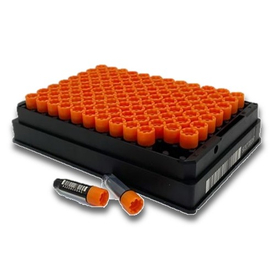
Unique design! A light science research reaction device compatible with various vial sizes.
- Other experimental equipment and supplies
- Other research software
- others
The strength is determined by the variance. Visualize quality variations through testing before mass production.
- Emulsifier/Disperser
- Vacuum degassing machine
- Dispersion/emulsification equipment/homogenizer
What are the reasons for changes in results from the lab to mass production? Causes and countermeasures for the deterioration of distributed quality during scale-up.
Despite obtaining good dispersion results in the lab, the challenge of unstable quality upon mass production occurs in many settings. The main cause of this is that the dispersion conditions are not replicated due to differences in scale. In lab equipment, the smaller size leads to higher energy density, making shear and flow more uniform, while in mass production equipment, the larger scale often results in insufficient dispersion energy at the same rotational speed and processing time. Additionally, differences in equipment structure and flow patterns can cause variations in the shear history and residence time experienced by particles, leading to differences in the dispersion state. Furthermore, simple scale-up does not ensure that critical parameters such as flow rate, residence time, and shear intensity match, making it difficult to reproduce the same results as in the lab. To address these challenges, it is essential to focus on process design based on dispersion energy density and flow conditions rather than merely increasing equipment size. By designing the system so that particles pass through the processing area under consistent conditions, it is possible to achieve reproducible dispersion quality even when the scale changes, as seen in inline continuous processing.
Quality changes with dispersion. Pre-validation of the reproducibility of resin materials through testing.
- Emulsifier/Disperser
- Vacuum degassing machine
- Dispersion/emulsification equipment/homogenizer
What are the reasons for changes in results from the lab to mass production? Causes and countermeasures for the deterioration of distributed quality during scale-up.
Despite obtaining good dispersion results in the lab, the challenge of unstable quality upon mass production occurs in many settings. The main cause of this is that the dispersion conditions are not replicated due to differences in scale. In lab equipment, the smaller size leads to higher energy density, making shear and flow more uniform, while in mass production equipment, the larger scale often results in insufficient dispersion energy at the same rotational speed and processing time. Additionally, differences in equipment structure and flow patterns can cause variations in the shear history and residence time experienced by particles, leading to differences in the dispersion state. Furthermore, simple scale-up does not ensure that critical parameters such as flow rate, residence time, and shear intensity match, making it difficult to reproduce the same results as in the lab. To address these challenges, it is essential to focus on process design based on dispersion energy density and flow conditions rather than merely increasing equipment size. By designing the system so that particles pass through the processing area under consistent conditions, it is possible to achieve reproducible dispersion quality even when the scale changes, as seen in inline continuous processing.
Verify before failing in mass production. Confirm the reproducibility of slurry dispersion in advance.
- Emulsifier/Disperser
- Vacuum degassing machine
- Dispersion/emulsification equipment/homogenizer
What are the reasons for changes in results from the lab to mass production? Causes and countermeasures for the deterioration of distributed quality during scale-up.
Despite obtaining good dispersion results in the lab, the challenge of unstable quality upon mass production occurs in many settings. The main cause of this is that the dispersion conditions are not replicated due to differences in scale. In lab equipment, the smaller size leads to higher energy density, making shear and flow more uniform, while in mass production equipment, the larger scale often results in insufficient dispersion energy at the same rotational speed and processing time. Additionally, differences in equipment structure and flow patterns can cause variations in the shear history and residence time experienced by particles, leading to differences in the dispersion state. Furthermore, simple scale-up does not ensure that critical parameters such as flow rate, residence time, and shear intensity match, making it difficult to reproduce the same results as in the lab. To address these challenges, it is essential to focus on process design based on dispersion energy density and flow conditions rather than merely increasing equipment size. By designing the system so that particles pass through the processing area under consistent conditions, it is possible to achieve reproducible dispersion quality even when the scale changes, as seen in inline continuous processing.
Decompressed at a frequency of 923MHz! Streamlining dining operations.
- Defrosting machine
The penetration depth of thawing at a frequency of 923 MHz is significantly deeper! It improves experimental efficiency.
- Defrosting machine
Decompressed at a frequency of 923MHz! Improving the quality and efficiency of in-flight meals.
- Defrosting machine
The depth of thawing at a frequency of 923 MHz is significantly deeper! Ferrite tempering device.
- Defrosting machine
The depth of thawing at a frequency of 923 MHz is significantly deeper! Improved yield.
- Defrosting machine
Defrosting at a frequency of 923 MHz! Preserving the freshness of seafood and improving quality and yield.
- Defrosting machine
The depth of thawing at a frequency of 923 MHz is significantly deeper! Ferrite tempering device.
- Defrosting machine
Defrosting at a frequency of 923MHz! Supporting the efficiency of large-scale cooking.
- Defrosting machine
Decompressed at a frequency of 923MHz! It will shorten school lunch time.
- Defrosting machine
The depth of thawing at a frequency of 923MHz is significantly deeper! Balancing quality and efficiency.
- Defrosting machine
Defrost at a frequency of 923MHz. It defrosts without compromising flavor.
- Defrosting machine
The depth of thawing at a frequency of 923 MHz is significantly deeper! For temperature management of pharmaceuticals.
- Defrosting machine
Decompressed at a frequency of 923MHz! Supporting immediate catering service.
- Defrosting machine
The wear-resistant "Ceramic Armor" and the corrosion-resistant "Blue Armor" add functionality to the materials!
- Surface treatment contract service
- Cooking equipment
Useful for the evaluation and analysis of important quality characteristics such as drug-antibody ratio (DAR), site occupancy, and in vivo changes of antibody-drug conjugates (ADCs).
- Research Antibodies
- Other protein analysis
- Other analytical and testing equipment
A versatile machine that accommodates various products! An ideal model for small businesses.
- Other filling machines
Achieving uniform mixing of fuel additives at a pilot scale.
- Mixer/agitator
- mixer
- Mixer
The power and reproducibility of inline mixing for ceramic raw material blending.
- Mixer/agitator
- mixer
- Mixer
Optimize the aggregation process! Achieve reproducibility at the pilot scale.
- Mixer/agitator
- mixer
- Mixer
Inline mixer for improving the quality and efficiency of pesticide formulation.
- Mixer/agitator
- mixer
- Mixer
Are you using a contaminated heat exchanger? This is a revolutionary heat exchanger that allows you to visually check for dirt【patented technology】.
- Heat exchanger
- Heat exchanger
- Other Heat Exchangers
Nano dispersion, from research and development to small-scale production. Reproducibility and reliability with VERSO-UHS.
- Mixer/agitator
- mixer
- Mixer
Achieve uniformity and reproducibility of battery slurry with VERSO-UHS!
- Mixer/agitator
- mixer
- Mixer
Endoglycosidases useful for the analysis and evaluation of antibody drugs and ADCs (antibody-drug conjugates) including biosimilars.
- Research Antibodies
- Other protein analysis
- Other analytical and testing equipment