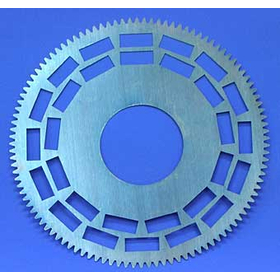
When it comes to modifying grinding pads, the DP-equipped correction carrier is used as a matter of course, but it actually has significant disadvantages as well. Do you know what they are?
The basics of polishing emphasize the importance of precision management of the polishing pad, and a commonly used tool for maintaining that precision is the DP-equipped correction carrier.
Using a correction carrier not only allows for precision adjustments but also plays a crucial role in cleaning the pad. However, depending on the situation, there are significant and dangerous disadvantages when it comes to polishing.
1. Rust
2. Slow polishing speed on the upper side
3. Requires two people for setup (or needs to be set up with a machine)
Among these three, the common factor related to "different polishing speeds on the upper and lower sides" and "setup issues" is "weight." When considering setup, it’s easy to imagine that a lighter weight can lead to improved workability and safety, even with larger equipment.
On the other hand, what is the relationship between the polishing speeds of the upper and lower sides and weight?
Polishing conditions are set in grams. Therefore, the weight of the correction carrier can negatively impact dressing and truing. The heavier the carrier, the greater the pressure applied to the lower side, leading to changes in the surface condition of the upper and lower pads.
It is undoubtedly better for the correction carrier to be lighter in order to maintain as similar a condition as possible.
Would you like to try an ultra-lightweight correction carrier for free to counteract such disadvantages?





![[Metal Etching Example] Transport Carrier](https://image.mono.ipros.com/public/product/image/9ef/2000568454/IPROS55946227285521746036.png?w=280&h=280)
![[Processing Example] Manufacturing wrapping carriers using photo etching.](https://image.mono.ipros.com/public/product/image/407/2000553254/IPROS70768016990804693977.png?w=280&h=280)