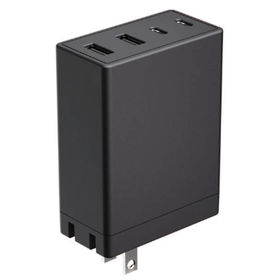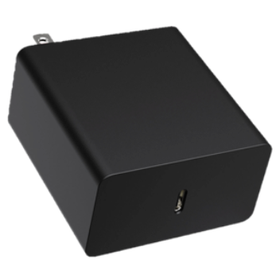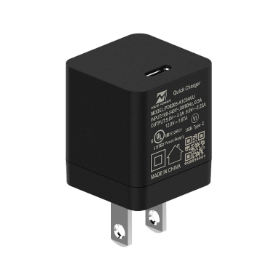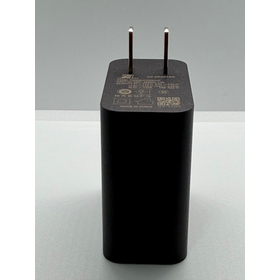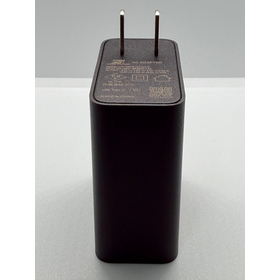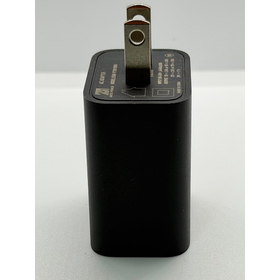
MassPower_Fast Charger_100W_1C
Product model number: PD100-1C (standard product / GaN) Output port: USB Type-C ×1 (single C output)
- Company:マスパワージャパン
- Price:Other
Last Updated: Aggregation Period:Aug 05, 2026~Sep 01, 2026
This ranking is based on the number of page views on our site.
Last Updated: Aggregation Period:Aug 05, 2026~Sep 01, 2026
This ranking is based on the number of page views on our site.
Last Updated: Aggregation Period:Aug 05, 2026~Sep 01, 2026
This ranking is based on the number of page views on our site.
451~480 item / All 534 items
MassPower_Fast Charger_100W_1C
Product model number: PD100-1C (standard product / GaN) Output port: USB Type-C ×1 (single C output)
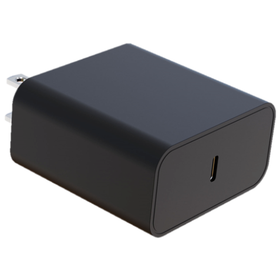
MasPower_Quick Charger_65W_1C
Product Series: PD065E (Standard Product / GaN) Item/Model Number: PD065E-D1C Output Port: USB Type-C ×1 (Single C Output)
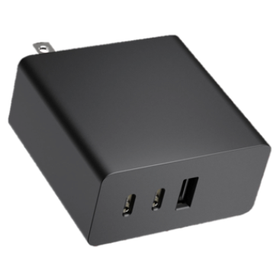
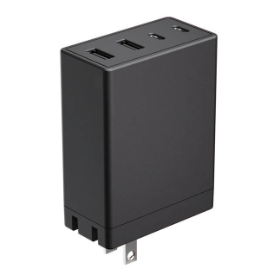
Mass Power_Quick Charger_100W_2C1A
Product Series: PD100S-B (Standard / GaN) Item/Model Number: PD100S-2C1A Port Configuration: USB Type-C ×2 + USB-A ×1
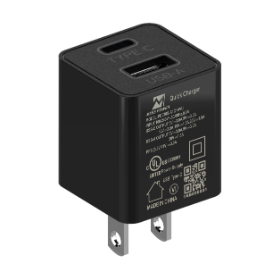
MasPower_Quick Charger_30W_1C1A
Product Series: PD030S‑A1C1A (Standard Product, GaN) Port Configuration: USB Type-C ×1 + USB-A ×1
Maspower_Quick Charger_20W_1C
Product Series: PD020S‑A1C0A (Standard Product) Item/Model Number (as shown in the image): PD020S‑A1C0AV Output Port: USB Type‑C ×1 (Single C Output)
MasPower_Quick Charger Lineup (20W to 140W)
Selection Points (Checklist to Avoid Failure) 1. When charging a laptop: Decide on the required wattage (e.g., 65W/100W/140W) first. 2. Port configuration: Single C, 1C1A, or 2C1A/2C2A (number of devices that can be charged simultaneously). 3. Simultaneous charging: The total output does not simply add up (check the limits on the distribution table). 4. PPS compatibility: Determine if a smartphone requires PPS (for fast charging). 5. Portability: Size, plug shape (foldable/fixed), and destination (AC plug).
Rapid chargers that are expected to see rapid widespread adoption as social infrastructure in the future.
A special course that provides a comprehensive understanding of large power conversion technology, heat dissipation technology, weather-resistant structures, interfaces, user authentication, billing, and more!
Helps with EV weight reduction along with Super Pine.
Boehmite - Applications: Coating materials for secondary battery separator membranes, insulating coating materials for secondary battery electrodes, plastic flame retardant additives (engineering plastics), heat-resistant and flame-retardant fillers for CCL, binder catalyst supports for automotive DPF, environmentally friendly catalysts, etc. - Helps reduce weight in EVs along with super pine.
★What are the possibilities and challenges of contactless charging from the perspective of automobile manufacturers? ★Fundamentals and research trends! Current applications in EVs! Potential in various fields.
Lecturers Part 1: Professor Kimiya Komurasaki, Graduate School of Frontier Sciences, The University of Tokyo, Department of Advanced Energy Engineering Part 2: Hiroshi Tomimura, General Manager, Product Strategy Office, UD Trucks Corporation Target Audience: Engineers, researchers, and relevant departments facing challenges with non-contact charging technology Venue: Kawasaki City Industrial Promotion Hall, Room 2 [Kanagawa, Kawasaki] 7-8 minutes walk from Keikyu and JR "Kawasaki Station" For those coming from afar (via Shinkansen): Approximately 12 minutes from JR and Keikyu Shinagawa Station to Kawasaki Station Date and Time: March 30, 2011 (Wednesday) 13:00-16:15 Capacity: 30 people *Registration will close once full. Please apply early.
The input can use both DC 12V and 24V systems, as well as PV panels, and it can boost the voltage to charge the sub-battery even when the main battery is low.
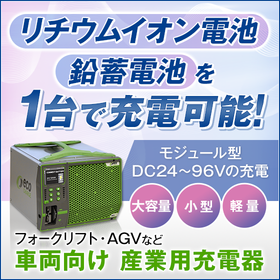
●This charger is a device that charges the DC12V sub-battery from the main battery used for engine start and PV panels installed in the vehicle. It can charge by stepping down/up from a wide range of input voltages, and when using a 12V main battery, it can reduce the load on the vehicle's alternator by also using PV panels for input. ○Charges the DC12V sub-battery from DC12V to DC24V vehicles ○Due to the boost function, it can charge from a lower voltage battery to a higher voltage DC12V battery ○Compatible with lead, AGM, and lithium-ion batteries ○Charging control from PV panels is achieved with MPPT technology for high efficiency ○Soft start function when the sub-battery voltage is low ○Charges from the main battery in conjunction with the vehicle's engine key ○Input low voltage output cutoff and automatic recovery function ○Four LEDs allow confirmation of operating status, charging status, output voltage level, and input voltage level ○Low noise equivalent to VCCI Class B ○Can be placed vertically using the included bracket as well as horizontally ○With the optional temperature sensor, it has a function to detect the temperature of the sub-battery and cut off the output.
It is important to consider impedances not shown in the circuit diagram and to collaborate with the customer to address them!
★★Shirutoku Report: Useful Information You Should Know★★ We are engaged in the development of chargers for Li-ion batteries. In addition to the Li-ion battery, the charger is connected to an inverter as part of the entire system, which requires resistance to noise voltage generated by these components. This time, we will discuss the resistance to noise voltage applied externally to the output terminals of this charger. 【Contents】 ■ It is also necessary not to resonate with noise ■ Confirm characteristics with an impedance analyzer ■ Consideration of impedances not shown in the circuit diagram is also necessary *For more details, please refer to the PDF document or feel free to contact us.*
"Free samples" are available! Please check the application method from the [PDF download] button, or apply directly from the related links.
The global market size for wireless charging was valued at 6.39 billion USD in 2022, and it is projected to grow from 7.62 billion USD in 2023 to 31.04 billion USD by 2031, with a CAGR of 19.2% during the forecast period (2024-2031). The expansion of wireless charging technology in smartphones, smartwatches, and other consumer devices is driving significant growth in the global wireless charging market. Additionally, the increasing popularity of electric vehicles that require charging batteries using wireless charging technology is also propelling the market.
Introduction of a case study on the development of specifications for mobile phone navigation (user interface).
Unic Corporation is developing specifications for "mobile phone navigation" (user interface). We will introduce our customers' requests, our company's responses, and the benefits of utilization. 【Customer Requests】 ■ We want to achieve an easy-to-use navigation system like that of a car navigation system without spending much time on consideration. 【Our Response】 (1) Proposing attractive additional features based on assumed usage scenarios. (2) Designing a user-friendly interface and screen layout. *For more details, please feel free to contact us.
USB charger common detailed data.
- Appearance: Direct plug USB charger / QC charger / PD charger (Terminology: Direct plug refers to a shape where the input plug is attached to the charger body, allowing the charger to be directly plugged into an outlet.) Additional Basic Information: - DC Output: 1. Normal output: 5V with a slightly high current, but it can charge smartphones that do not support fast charging. Note: Caution for overheating on the smartphone side! 2. When using QC/PD fast charging output: Depending on the remaining battery level of the device being charged, the charging voltage is controlled by IC as 12V 1.5A → 9V 2A → 5V 3A, allowing for a full charge in about 1 hour while protecting the smartphone. - USB Output Ports: 1. USB port (standard USB Type A): Normal 5V output; however, if it has a built-in IC that supports QC, it will provide QC fast charging. 2. Type C port (USB Type C): If it has a built-in IC that supports QC/PD fast charging, it will provide QC/PD fast charging. - Certifications: PSE (Japan), RoHS, and other country certifications.
Soundproofing fence to reduce noise generated from PCS/batteries, etc.
Noise levels of approximately 80 to 90 dB are generated from systems such as storage batteries, industrial storage batteries, and PCS. Depending on the installation location of the storage batteries, noise control measures in accordance with noise regulation laws for nearby residents will be necessary. Constructability: Freely designed to adapt on-site according to the construction environment. Aesthetic: Simple design. Environmental consideration: Materials that are gentle on the earth and kind to people. Discreet functionality: Functions subtly while blending into the landscape. We will conduct noise simulations tailored to the site and prepare noise calculation reports. Structural calculation reports and basic drawings will be provided, and layout drawings will also be addressed.
One-stop support for the introduction and operation of EV chargers in public facilities!
In public facilities, there is a demand for improving the convenience of local residents and consideration for the environment. With the spread of EVs (electric vehicles), the installation of charging facilities is an effective means to meet these needs. However, due to the specialized knowledge and effort required for selecting chargers, installation work, operation, and maintenance, there are not a few cases where implementation is hesitated. KIT-CC Corporation's EV charging infrastructure business provides total support for the introduction and operation of EV chargers in public facilities. By offering consistent services from on-site surveys to installation work, support for subsidy applications, provision of cashless charging services, and maintenance after operation, we reduce the burden on public facility personnel and support the realization of a smooth EV charging environment. 【Usage Scenarios】 - Parks - Community centers - Libraries - Government offices - Parking lots 【Effects of Implementation】 - Improved convenience for local residents - Contribution to the environment - Enhanced facility image - Potential for creating new revenue sources - Increased satisfaction for EV users
Total support from the introduction to the operation of EV chargers!
Hospitals are required to introduce EV charging facilities to improve the convenience for patients and visitors. It is particularly important to create an environment where patients and their families using the parking lot can use EVs with peace of mind. A lack of charging facilities may lead to a decrease in patient satisfaction. KIT-CC Corporation's EV chargers support everything from site surveys to construction and operational maintenance, providing an environment where EV users can comfortably utilize the service. 【Usage Scenarios】 - Hospital parking lots - Charging for EVs used for patient transportation - Addressing the EV charging needs of visitors 【Benefits of Implementation】 - Improved convenience for patients and visitors - Enhanced hospital image - Increased satisfaction for EV users
Improving the mobility and customer satisfaction of the theme park with the introduction of EV chargers!
In theme parks, it is important to extend the stay time of visitors and promote spending within the park. With the spread of EV vehicles, the availability of charging facilities may influence visitor behavior. If there are no charging facilities, EV users will need to leave the theme park to charge their vehicles, which can lead to a decrease in circulation. Our EV chargers serve as an effective means to enhance visitor convenience and extend their stay time. 【Usage Scenarios】 * Parking lots within the theme park * Around attractions * Rest areas 【Effects of Implementation】 * Increased visitor satisfaction * Longer stay times * Promotion of in-park spending
One-stop support for the introduction, operation, and maintenance of EV chargers!
In the rental car industry, the introduction of EV vehicles is important for responding to customer needs and differentiating from competitors. To promote the use of EV rentals, the development of charging infrastructure is essential. It is necessary to provide an environment where customers can use EV vehicles with peace of mind. KIT-CC Corporation's support for the installation of EV chargers offers comprehensive assistance from installation proposals and construction to operation and maintenance, thereby promoting the use of EV rentals. 【Usage Scenarios】 - Installation at rental car locations - Installation in parking lots - Providing charging services to customers 【Benefits of Implementation】 - Improved convenience for EV rental users - Differentiation from competitors - Enhanced corporate image with environmental considerations