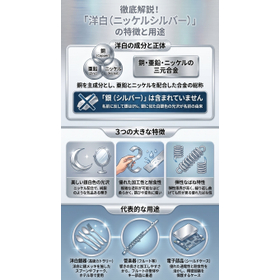
Characteristics of white metal and future expansion of its applications.
Nickel silver is a silver-white alloy composed of copper, nickel, and zinc. Although it contains no silver at all, it is often referred to as "German silver" or "nickel silver" due to its beautiful luster. Nickel silver is primarily valued for its aesthetic appeal, good workability typical of copper alloys, high corrosion resistance, and the unique strength and springiness of the alloy. Generally, it is used in items such as tableware (cutlery), musical instruments, fishing gear, and model parts due to its color, workability, and corrosion resistance. Nickel silver is easier to work with than stainless steel and is less expensive than silver. It has the potential to be used more than stainless steel in decorative items (accessories) and models in the future. Additionally, in recent years, as the prices of precious metals like gold and silver have soared, nickel silver has been chosen as an alternative material for decorative items. When precision machining is required, there is also free-cutting nickel silver available, making it a frequently mentioned option as a substitute for silver.
Although it is not visible, it is sometimes used in highly corrosive environments (such as underwater or coastal areas) and in factories as spring materials or structural components. Among copper alloys, it has excellent salt resistance and is relatively durable, making it suitable for use in places where contacts or plating are not applied.