Why has bronze been used for electronic components for many years? What are its differences from other alloys, and what applications is it suitable for?
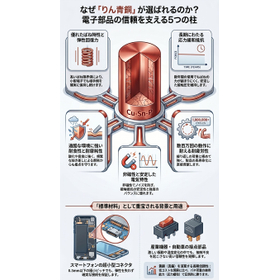
The reason why phosphor bronze is widely chosen for precision components in electronic parts (such as connectors) is not only due to its high hardness but also because it possesses excellent spring properties (elasticity), outstanding fatigue resistance, and advanced technical characteristics known as "stress relaxation resistance," which enable it to maintain stable performance over long periods.
The biggest difference between bronze and phosphor bronze lies in the presence and role of phosphorus (P). Phosphor bronze can be considered a higher-function alloy that dramatically improves the properties of traditional bronze through the deoxidizing effect of phosphorus. While maintaining the workability of bronze, it also enhances strength and toughness through alloying. The characteristics of phosphor bronze include a significant improvement in the "spring limit (the force to return to its original shape)" and "fatigue resistance" compared to bronze. It is an ideal material for components that require high reliability, such as the leaf springs and contacts of switches that must endure millions of cycles of operation.
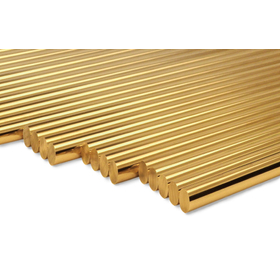
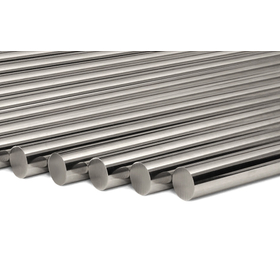
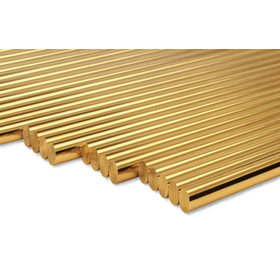
Due to these properties, phosphor bronze is predominantly used in products in the form of sheets, strips, or foils. However, product forms such as round bars and wires are also common. Round bars and wires are used in springs, screws, nuts, bearings, contacts, gears, connectors, and semiconductor devices. For more details, please contact us.



![[Medical Manufacturer Recruitment Case] Aluminum Centerless Processing](https://image.mono.ipros.com/public/product/image/326/2000165226/IPROS4423326927322927707.jpg?w=280&h=280)


![[Bar Material Cutting] Can be accommodated from a minimum of 15mm.](https://image.mono.ipros.com/public/product/image/755/2000710464/IPROS72848265717160634817.png?w=280&h=280)