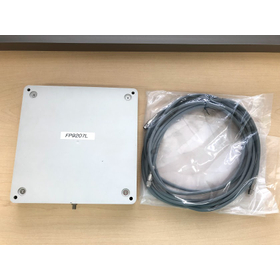
An antenna that combines portability, mobility, and usability! It reduces the burden on operators.
Our company offers the "Deployable Mesh Parabolic Antenna for FPU."
It can be folded like an umbrella for easy transport. By using a fine metal wire mesh for the reflector, its weight is reduced to less than half compared to conventional parabolic antennas, thereby reducing the burden on the operator.
Additionally, the mesh allows the reflector to be transparent, making it possible to visually confirm the transmission direction from the back of the antenna, which facilitates easy direction adjustment.
【Features】
- An antenna that combines portability, mobility, and operability
- Can be folded like an umbrella for easy transport
- The use of fine metal wire mesh for the reflector reduces the weight to less than half compared to conventional parabolic antennas
- Reduces the burden on the operator
- Significantly reduces the impact of wind pressure, improving operational efficiency
*For more details, please refer to the PDF document or feel free to contact us.





![Bendable and adhesive [new product] inconspicuous transparent film antenna](https://image.mono.ipros.com/public/product/image/d1b/2001010014/IPROS24246386326442096588.png?w=280&h=280)


![[New Product] All-Band Embedded GNSS Antenna](https://image.mono.ipros.com/public/product/image/724/2001255481/IPROS1870311018750867127.PNG?w=280&h=280)


![UHF Band RFID Mat Antenna [Ultra-thin with a thickness of 5mm]](https://image.mono.ipros.com/public/product/image/2001509626/IPROS14873298612143234298.jpg?w=280&h=280)

![UHF band RFID beam variable antenna [controls detection area]](https://image.mono.ipros.com/public/product/image/2001532315/IPROS17324852763357531657.jpg?w=280&h=280)


![UHF Band RFID Gate Antenna [Logistics Management]](https://image.mono.ipros.com/public/product/image/2057660/IPROS11649643046737371309.jpg?w=280&h=280)
![UHF Band RFID Spot Antenna [Prevention of Misreading with Pinpoint Detection]](https://image.mono.ipros.com/public/product/image/2057660/IPROS3141280733273777140.jpg?w=280&h=280)

![[Campaign] Free Rental of RFID Antennas](https://image.mono.ipros.com/public/product/image/2057660/IPROS3264484713081153919.JPG?w=280&h=280)