We have compiled a list of manufacturers, distributors, product information, reference prices, and rankings for 3D Printer.
ipros is IPROS GMS IPROS One of the largest technical database sites in Japan that collects information on.

3D Printer Product List and Ranking from 289 Manufacturers, Suppliers and Companies

Last Updated: Aggregation Period:Dec 24, 2025~Jan 20, 2026
This ranking is based on the number of page views on our site.

3D Printer Manufacturer, Suppliers and Company Rankings

Last Updated: Aggregation Period:Dec 24, 2025~Jan 20, 2026
This ranking is based on the number of page views on our site.

  1. システムクリエイト Osaka//Industrial Machinery
  2. null/null
  3. グーテンベルク Tokyo//Industrial Machinery
  4. 4 ホッティーポリマー Tokyo//Resin/Plastic
  5. 5 ミマキエンジニアリング Nagano//Industrial Electrical Equipment

3D Printer Product ranking

Last Updated: Aggregation Period:Dec 24, 2025~Jan 20, 2026
This ranking is based on the number of page views on our site.

  1. 3D Printer for Manufacturing Sites 'GX-1000 Series'
  2. High-Precision 3D Printer AGILISTA Series
  3. Industrial 3D Printer 'G-ZERO MP1' グーテンベルク
  4. 4 Compact 3D printer "G-ZERO" that can be placed on a desk. グーテンベルク
  5. 5 3D Printer for Solid Dosage Form Manufacturing M3DIMAKER HIGUCHI INC.

3D Printer Product List

466~480 item / All 905 items

Displayed results

2D imager scanner "MS282e"

Diverse scanning modes! A two-dimensional barcode scanner that can be used in a wide range of markets and applications.

The MS282e is a compact, stylish, and robust entry-level 2D imager scanner designed for long-term use. It features IP42 protection against moisture and dust, and can withstand drops from 1.5 meters, making it suitable for industrial applications. It can be used across a wide range of markets and applications, from POS systems, point cards, and mobile coupons in retail stores to hospitals and pharmacies. 【Features】 - Compact and lightweight - Reads most 1D and 2D barcodes - Reads barcodes from mobile device LCD screens - Durable and sturdy scanner: IP42, drop resistance: 1.5m - Long-lasting trigger switch: 10 million activations - Various scanning modes *For more details, please refer to the related link page or feel free to contact us.

  • image_07.png
  • image_08.png
  • image_09.png
  • MS282e_1.jpg
  • MS282e_3.jpg
  • retail application.png
  • Handheld barcode reader
  • Scanner
  • 2D Code Reader

Added to bookmarks

Bookmarks list

Bookmark has been removed

Bookmarks list

You can't add any more bookmarks

By registering as a member, you can increase the number of bookmarks you can save and organize them with labels.

Free membership registration

Super Economy 2D Imager Scanner 'MS838'

Convenient plug-and-play design! An ideal scanning tool suitable for a wide range of applications such as POS, membership card reading, and inventory management.

The MS838 is a 2D imager scanner capable of reading damaged or poorly printed barcodes. It can be easily connected to a computer via a USB cable. There is no need for additional installation or training, allowing for immediate use. It has the capability to read barcodes as small as 3 mil (0.0762 mm), making it ideal for various industrial applications in retail stores, supermarkets, pharmacies, and hotels. 【Features】 - Highly reliable, high performance, and affordable - Quickly reads 1D and 2D barcodes printed on paper or displayed on LCD screens - Supports trigger mode and presentation mode - Durable design: withstands drops from 1.5 meters and has IP52 dust and water resistance *For more details, please refer to the related link page or feel free to contact us.

  • image_12.png
  • image_13.png
  • image_14.png
  • image_15.png
  • image_16.png
  • MS838_s_01.png
  • Handheld barcode reader
  • PDAs and handheld terminals
  • Other packaging materials

Added to bookmarks

Bookmarks list

Bookmark has been removed

Bookmarks list

You can't add any more bookmarks

By registering as a member, you can increase the number of bookmarks you can save and organize them with labels.

Free membership registration

Metal and ceramics 3D printer, topology optimization, BIM/CIM

Provision of information on cutting-edge technology

We will provide a detailed explanation of the latest trends and innovative application technologies and examples related to metal 3D printers, ceramics 3D printers, topology optimization, generative design, DfAM, BIM/CIM, i-Construction, and more.

  • Technical Seminar

Added to bookmarks

Bookmarks list

Bookmark has been removed

Bookmarks list

You can't add any more bookmarks

By registering as a member, you can increase the number of bookmarks you can save and organize them with labels.

Free membership registration

FUNMAT HT

Industrial 3D printer compatible with super engineering plastics. For the production of functional parts and material research and development purposes.

The "FUNMAT" series of 3D printers that can use "super engineering plastics" (super engineering plastics) with particularly excellent performance among engineering plastics. The FUNMAT HT is the most compact desktop 3D printer in the FUNMAT series. The FUNMAT series is developed by the 3D printer manufacturer "INTAMSYS," specializing in high-performance engineering plastic 3D printing. It is an FDM 3D printer designed for the use of super engineering plastics, capable of stably printing not only super engineering plastics but also large engineering plastics that have been difficult to print due to thermal shrinkage and distortion, making it a high-performance 3D printer. It is active in various industrial scenes such as aerospace, research and development, medical, and automotive industries. *For more details, please refer to the PDF document or feel free to contact us.

  • 3D Printer

Added to bookmarks

Bookmarks list

Bookmark has been removed

Bookmarks list

You can't add any more bookmarks

By registering as a member, you can increase the number of bookmarks you can save and organize them with labels.

Free membership registration

On-site partial plating repair, on-site plating repair.

More about changing clothes than replacing! Cost-cutting with partial plating repairs.

In metal wear and scratch repairs, methods such as welding and thermal spraying are used. While the speed of buildup is fast, there is a possibility of distortion due to heat. Our partial plating does not involve heat, so there is no occurrence of distortion from heat. However, since the buildup speed is faster with welding and thermal spraying, in cases of deep scratches, buildup can be done with plating, but it may take longer than welding. Additionally, there are various applications, such as wanting to plate only a specific area (for example, the handrail of a hotel staircase where the plating has worn off, and only that part needs to be plated).

  • Printing Machinery
  • Other services

Added to bookmarks

Bookmarks list

Bookmark has been removed

Bookmarks list

You can't add any more bookmarks

By registering as a member, you can increase the number of bookmarks you can save and organize them with labels.

Free membership registration

On-site plating construction "Repair Top Process"

Various metals such as copper, nickel, zinc, and cobalt can be built up! A process that allows plating over chrome plating.

The "Repair Top Process" is a method that allows for partial plating repairs on-site without the use of a plating bath. It can be applied without disassembling or removing machine parts. Additionally, compared to bath plating, the electrodeposition speed is faster, and thermal distortion does not occur. The metals that can be built up include copper, nickel, zinc, cobalt, gold, and silver, with applicable examples such as the repair of sliding scratches on hydraulic cylinder rods. 【Features】 ■ No thermal distortion occurs ■ Faster electrodeposition speed compared to bath plating ■ The electrodeposited film is amorphous ■ Plating can be done over chrome plating ■ Can be applied without disassembling or removing machine parts *For more details, please refer to the PDF materials or feel free to contact us.

  • Surface treatment contract service

Added to bookmarks

Bookmarks list

Bookmark has been removed

Bookmarks list

You can't add any more bookmarks

By registering as a member, you can increase the number of bookmarks you can save and organize them with labels.

Free membership registration

3D printer slicing software 'Simplify3D'

This is slicing software for melt-deposition 3D printers. With high-speed calculations and high-performance path functions, you can quickly start high-quality modeling. *Demo available.

"Simplify3D" is a cost-effective software that incorporates many features necessary for Fused Deposition Modeling (FDM) 3D printers. You can start 3D printing in just a few minutes, from import to operation, modification, slicing, and preview. [Features] ■ Achieves high-quality modeling High-performance path functions enable precise modeling. The support surfaces securely hold the model while being easy to remove, and the removed surfaces have a smooth finish, reducing the need for post-processing. ■ Reduces wasted time in conversion with high-speed calculations The slicing calculation speed is top-level, allowing for the creation of high-quality slice data in just a few seconds, even for what typically takes several minutes. ■ Usable with any FDM 3D printer You can freely set the build area and nozzle temperature, so it is not limited to specific models as long as it is an FDM 3D printer. If you are not satisfied with the build quality from the included software, please consider this option. *For more details, please request a catalog or view the PDF data from the download button below.

  • 3D Printer
  • Modeler
  • simulator

Added to bookmarks

Bookmarks list

Bookmark has been removed

Bookmarks list

You can't add any more bookmarks

By registering as a member, you can increase the number of bookmarks you can save and organize them with labels.

Free membership registration

In-house Implementation Case Study Book for [Cutting, Shaping, UV Printing]

A booklet of success stories from 10 companies that achieved in-house production of prototype creation, jig manufacturing, and decorative printing on products.

This is a booklet of success stories featuring 10 companies that have implemented the "MDX Series," "SRM-20," "ARM-10," and "LEF Series," achieving in-house production of cutting, shaping, and UV printing.

  • Other machine tools
  • Other processing machines
  • Other CAD related software

Added to bookmarks

Bookmarks list

Bookmark has been removed

Bookmarks list

You can't add any more bookmarks

By registering as a member, you can increase the number of bookmarks you can save and organize them with labels.

Free membership registration

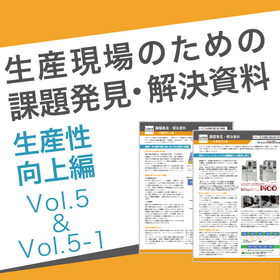
Problem-Solving Materials: Productivity Improvement Edition 5 | Challenges and Solutions for Small-Batch, Multi-Variety Processing

What are the key points and effective methods to improve productivity in low-volume, multi-variety production? A resource for identifying and solving issues in the production site.

This document is a series that proposes solutions to various challenges faced in production sites, from identifying issues to finding resolutions. In the "Productivity Improvement Edition," we offer solutions aimed at enhancing productivity by streamlining various manufacturing processes and reducing man-hours and costs. In this document, we will introduce key points and effective methods for improving productivity, focusing on the theme of "Enhancing Productivity in Low-Volume, High-Variety Production." [Document Overview] In order to enhance corporate value and differentiate from competitors, it is becoming increasingly difficult to simply implement CAD/CAM and aim for quality improvement. More customers are responding to customer needs by accommodating low-volume production, but many are facing various challenges such as shortening delivery times and reviewing costs. This document summarizes the challenges and factors associated with low-volume processing and presents methods for improving setup processes. *You can download the document using the button below.*

  • Milling machine
  • Other machine tools
  • Milling

Added to bookmarks

Bookmarks list

Bookmark has been removed

Bookmarks list

You can't add any more bookmarks

By registering as a member, you can increase the number of bookmarks you can save and organize them with labels.

Free membership registration

Problem-Solving Materials: Utilizing 3D Data 14 | Lightweighting of 3D Printed Models

Challenges of large-scale 3D printers: How to achieve both lightweight design models and model strength? A resource for identifying and solving issues in production sites.

This document is a series that proposes solutions to various challenges faced in production sites, from identifying issues to finding resolutions. In the "3D Data Utilization Edition," we will introduce various solutions to manufacturing challenges through the use of 3D data. [Document Overview] In recent years, the proliferation of 3D printers has advanced explosively. In particular, FDM (Fused Deposition Modeling) 3D printers have become more affordable and capable of producing larger models, leading to widespread use among many companies. The introduction of large machines has made it possible to produce models that were previously made in parts all at once, thereby reducing labor hours. However, the increase in production time and weight has become a challenge for large-scale printing, and as the size of printed objects increases, it is necessary to adjust the data to achieve a balance between lightweight design and strength. In this document, we will specifically introduce methods to achieve both lightweighting and strength maintenance, which are challenges in large-scale printing. *You can download the document using the button below.*

  • 3D Printer
  • Other consumables
  • plastic

Added to bookmarks

Bookmarks list

Bookmark has been removed

Bookmarks list

You can't add any more bookmarks

By registering as a member, you can increase the number of bookmarks you can save and organize them with labels.

Free membership registration

I tried out the expression of fine details in Form3!

How beautiful can a light curing 3D printer get? We tested its ability to express fine details!

"Mitarepo" is a series based on the concept of "I tried doing this!" where we introduce what can be done using various products. Each time, we deliver useful information from the wide range of product genres handled by System Create. The theme of Vol. 3 is "Trying the expressive power of fine details with Form3 Model Resin!" This time, we tested how beautifully the Form3 dedicated resin "Model Resin," which can reproduce fine details, can create shapes. In the materials, we compared the reproducibility of details and the workability of finishing processes by creating the same data under the same conditions using the widely used "Standard Resin." - Even if it can be beautifully shaped, does the finishing process become even more troublesome? - Does beautiful shaping mean higher costs? We explain these concerns with comments from technical staff and actual screens. *You can download the materials from the button below.

  • Other CAD related software
  • Data conversion software
  • Document and Data Management

Added to bookmarks

Bookmarks list

Bookmark has been removed

Bookmarks list

You can't add any more bookmarks

By registering as a member, you can increase the number of bookmarks you can save and organize them with labels.

Free membership registration

Carbon 3D Printer "Anisoprint Composer"

This is a 3D printer capable of using continuous carbon fiber composite materials. It reinforces the interior of models with proprietary technology, achieving high strength and lightweight. *Demo available.

The "Anisoprint Composer" series is a 3D printer that uses continuous fibers (carbon/basalt) to easily create high-strength and lightweight models. By adopting unique technology, it maximizes the "anisotropy" inherent in continuous fibers. [Features] ■ "CFC" for simultaneous extrusion of resin and continuous fibers By employing the unique technology "CFC (Composite Fiber Co-Extrusion)," it combines continuous fiber materials and resin materials within the 3D printer. By printing the base and surface of the model with resin and reinforcing the interior with fiber composite materials, it significantly enhances the strength of the model. ■ Ability to create lattice structures with fiber composites It allows the use of lattice shapes made from continuous fibers, enabling models to utilize "anisotropy," which exhibits very high tensile strength and bending strength in the direction of applied loads. ■ Compatible with various resins In addition to genuine PA (nylon), it can use resin filaments from various manufacturers. Materials can be selected according to the desired finish and characteristics of the model. *For more details, please request a catalog or view the PDF data via the download button below.

  • 3D Printer
  • Composite Materials
  • plastic

Added to bookmarks

Bookmarks list

Bookmark has been removed

Bookmarks list

You can't add any more bookmarks

By registering as a member, you can increase the number of bookmarks you can save and organize them with labels.

Free membership registration

Problem-Solving Materials: Utilizing 3D Data 16 | Strength of FDM Printed Models

How to incorporate "carbon materials" to solve the strength issues of 3D printers? A resource for identifying and solving challenges in the production field.

This document is a series that proposes solutions to various challenges faced in production sites, from identifying issues to finding solutions. In the "3D Data Utilization Edition," we will introduce various solutions to manufacturing challenges through the use of 3D data. [Document Overview] Among 3D printers, FDM (Fused Deposition Modeling) machines are easy to use and implement, and they have become widespread in many production sites. In recent years, elements that were considered weaknesses of FDM, such as the variety of materials and improvements in model quality, have gradually been addressed. However, the challenge posed by FDM technology is the "insufficient strength of printed models." This document compiles the issue of strength deficiency that most FDM 3D printers face and explains the advantages of carbon materials with "continuous fibers." Additionally, we will introduce 3D printers that adopt a unique printing method based on FDM. *You can download the document using the button below.

  • 3D Printer
  • fiber
  • Composite Materials

Added to bookmarks

Bookmarks list

Bookmark has been removed

Bookmarks list

You can't add any more bookmarks

By registering as a member, you can increase the number of bookmarks you can save and organize them with labels.

Free membership registration

I tried creating a small model with a large 3D printer!

[Mitarepo] I tried creating a small model with a large 3D printer!

"Mitarepo" is a series based on the concept of "I tried doing this!" where we introduce what can be done using various products. We deliver useful information each time from the wide range of product categories handled by System Create. The theme of Vol. 10 is "We tried creating small models with a large 3D printer." We used a large FDM-type 3D printer to create small models. While handling large printers, we receive a lot of feedback, and among them, many people ask, "Can I create both large and small items with just one machine? Is it really possible?" Therefore, we will explain the "finish" that you might be curious about when creating small models with a large machine, along with actual images and comments from our technical staff! *You can download the materials from the button below.

  • 3D Printer
  • Prototype Services
  • Processing Jig

Added to bookmarks

Bookmarks list

Bookmark has been removed

Bookmarks list

You can't add any more bookmarks

By registering as a member, you can increase the number of bookmarks you can save and organize them with labels.

Free membership registration

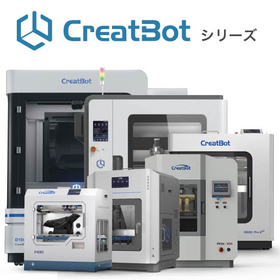
FDM method 3D printer "CreatBot" series

A 3D printer with ideal specifications required for stable modeling. It achieves reliable modeling with comprehensive standard equipment. *Demonstration available.

The CreatBot series includes six models: the "D1000 HS" and "D600 Pro2 HS," which have large build areas, and the "F430," "PEEK-250," "PEEK-300," and "F160-PEEK," which can use special materials and super engineering plastics. You can choose the optimal 3D printer according to your purpose and needs. [Features] ■ Equipped with a high-temperature nozzle that can handle up to 420℃ With dual nozzles of 420℃ and 260℃, it is possible to combine prints. (PEEK-300 can reach up to 480℃) ■ Table & chamber heater to manage internal temperature By thoroughly controlling the internal temperature, it maintains a uniform temperature throughout the entire model. It can also prevent the effects of changes in indoor temperature, which are easily influenced. ■ Auto-leveling function that keeps the distance between the table and nozzle constant By maintaining a constant distance between the nozzle and the build table, it enables uniform layering and achieves stable printing. You can feel secure even with large prints that take a long time. *The features vary by model. *For more details, please refer to the PDF data available via the download button below.

Added to bookmarks

Bookmarks list

Bookmark has been removed

Bookmarks list

You can't add any more bookmarks

By registering as a member, you can increase the number of bookmarks you can save and organize them with labels.

Free membership registration