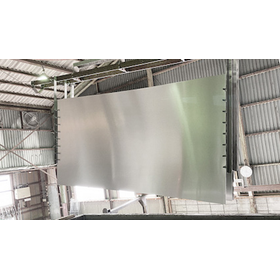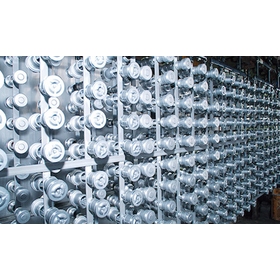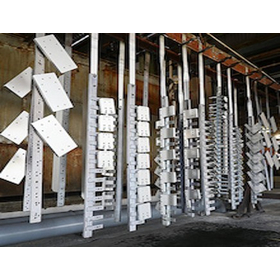
High-strength anodizing treatment that does not peel off for robots.
Contributes to improving the durability of robots through high hardness and wear-resistant anodizing treatment.
The essential difference between anodizing and plating is how the coating is formed! Anodizing involves "anodic oxidation treatment," which alters the oxide film through electrochemical participation. The coating consists of a "part that grows inward toward the material" and a "part that grows outward," and it is integrated with the material. It is mainly used for aluminum products to enhance corrosion resistance and appearance. Plating involves electrochemical treatment with metal as the cathode to generate a metallic coating. It is an image of a new metal layer being built up on the base material. It is used for decorative purposes and to enhance corrosion resistance. Hard anodizing treatment integrates with the aluminum substrate, making it difficult to peel off, and achieves high wear resistance and corrosion resistance. This contributes to improved reliability of robots and extends maintenance cycles. [Application Scenes] - Arms of industrial robots - Frames of transport robots - Housings of outdoor-use robots [Effects of Implementation] - Increased lifespan due to improved wear resistance - Enhanced reliability due to improved corrosion resistance - Reduced maintenance costs
- Company:富商 本社
- Price:Other