We have compiled a list of manufacturers, distributors, product information, reference prices, and rankings for 店舗共通動画.
ipros is IPROS GMS ・ IPROS One of the largest technical database sites in Japan that collects information on.

店舗共通動画 - List of Manufacturers, Suppliers, Companies and Products | IPROS GMS

店舗共通動画 Product List

1~4 item / All 4 items

Displayed results

The true nature of the labor shortage in the food and beverage industry: Is it the 800 hours a year lost to training?

Visualize the education costs of restaurants! Calculate ROI in one minute.

In the food service industry, the labor shortage is becoming serious, and a lot of time and effort is being spent on training new staff. Particularly in establishments that require multilingual support, the personalization of training has become a challenge, leading to increased training costs. When experienced staff interrupt their regular duties to spend time on training, it can potentially disrupt store operations. Our training cost and ROI simulation sheet allows you to visualize the costs associated with training simply by entering the hourly wage and number of staff on site, helping to identify areas for improvement. 【Usage Scenarios】 - Training new staff - Training multilingual support staff - Creating operation manuals - Safety and health education 【Benefits of Implementation】 - Reduction in training time - Reduction in training costs - Improvement in operational efficiency - Standardization of human resource development

  • Distance learning/E-learning
  • Distance learning/E-learning
  • 店舗共通動画

Added to bookmarks

Bookmarks list

Bookmark has been removed

Bookmarks list

You can't add any more bookmarks

By registering as a member, you can increase the number of bookmarks you can save and organize them with labels.

Free membership registration

The true nature of the labor shortage in the food and beverage industry: Is it the 800 hours a year taken away by training?

Visualize the education costs of restaurants! Calculate ROI in one minute.

The food service industry is facing a serious labor shortage, and training new staff and multilingual staff has become a significant burden. In particular, with the introduction of AI customer service, there is a need to acquire new skills such as operation methods and customer interaction, which tends to increase training costs. The time that experienced staff spend on training can interfere with their primary duties, potentially reducing the efficiency of store operations. Our training cost and ROI simulation sheet allows you to estimate the costs associated with training and the reduction effects from digitalization simply by inputting the hourly wage and number of staff at the restaurant. 【Usage Scenarios】 - Introduction of AI customer service systems - Training of new staff - Training of multilingual staff - Creation of customer service manuals 【Effects of Implementation】 - Reduction of training time - Reduction of labor costs - Improvement of operational efficiency - Increase in customer satisfaction

  • Distance learning/E-learning
  • Distance learning/E-learning
  • 店舗共通動画

Added to bookmarks

Bookmarks list

Bookmark has been removed

Bookmarks list

You can't add any more bookmarks

By registering as a member, you can increase the number of bookmarks you can save and organize them with labels.

Free membership registration

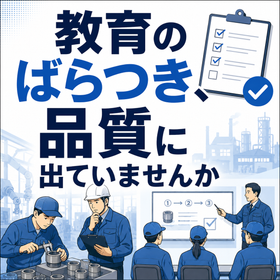
Is the variability in customer service training affecting quality in the retail industry?

Even with the same procedure manual, if the teaching method differs, the on-site judgment will gradually change as well.

In the retail industry, it is essential to maintain a consistent quality of customer service. Particularly in customer interactions, there tends to be variability in how each staff member responds, the points of consideration for customers, and the methods of conveying product knowledge. In education centered around on-the-job training (OJT), the nuances of explanations and the depth of confirmations can differ among instructors, which may lead to variations in service quality for customers. Organizing this variability in training and standardizing on-site customer service education is crucial for improving customer satisfaction. 【Usage Scenarios】 - Customer service etiquette training for new staff - Standardization of product knowledge and sales pitches - Sharing points of caution in customer interactions - Customer service in stores requiring multilingual support 【Benefits of Implementation】 - Improved customer satisfaction through uniformity in service quality - Early empowerment of staff and reduction in training costs - Standardization and efficiency of previously individualized training - Enhanced service levels across the entire store How should we organize the variability in training and standardize on-site education? Please refer to the materials for more details.

  • Distance learning/E-learning
  • Distance learning/E-learning
  • 店舗共通動画

Added to bookmarks

Bookmarks list

Bookmark has been removed

Bookmarks list

You can't add any more bookmarks

By registering as a member, you can increase the number of bookmarks you can save and organize them with labels.

Free membership registration

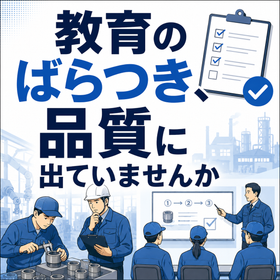
Is the variability and quality of education not reflected in retail and distribution?

Even with the same procedure manual, if the teaching method differs, the on-site judgments will gradually change.

In the retail and distribution industry, there is a demand for uniformity in the quality of customer service. Especially in customer interactions, the level of service provided by each staff member can significantly impact the overall impression of the store. With training primarily based on on-the-job training (OJT), differences in the way instructors explain and emphasize certain points can lead to subtle variations in how customers are treated. Such discrepancies in understanding can potentially affect customer satisfaction and repeat rates. It is important to organize the variations in training and standardize on-site education. 【Usage Scenarios】 - Customer service etiquette training for new staff - Standardization of product knowledge and sales pitches - Sharing procedures for handling complaints - Unifying operations in stores that require multilingual support 【Benefits of Implementation】 - Increased customer satisfaction through uniformity in service quality - Early development of staff into effective team members and reduction of training costs - Overall improvement in service levels across the store - Enhanced efficiency in training foreign staff How should we organize the variations in training and standardize on-site education? Please refer to the materials for more details.

  • Distance learning/E-learning
  • Distance learning/E-learning
  • 店舗共通動画

Added to bookmarks

Bookmarks list

Bookmark has been removed

Bookmarks list

You can't add any more bookmarks

By registering as a member, you can increase the number of bookmarks you can save and organize them with labels.

Free membership registration