721~765 item / All 936 items
Displayed results
Filter by category

Added to bookmarks
Bookmarks listBookmark has been removed
Bookmarks listYou can't add any more bookmarks
By registering as a member, you can increase the number of bookmarks you can save and organize them with labels.
Free membership registration
Contact this company
Inquiry Form721~765 item / All 936 items
Filter by category

● Can be installed in hazardous location Class 1 (Zone 1) ● Obtained domestic explosion-proof certification ● Sensors with excellent long-term stability ● Probes can be replaced without calibration (optional) ● Environmental resistance: IP65 ■ The EE100Ex temperature and humidity dew point transmitter is developed for measuring humidity (RH) and temperature (T) in explosive hazardous areas. In addition to Japanese CSA certification up to Zone 1, it has also obtained explosion-proof certifications from Europe (ATEX) and international certifications (IECEx). For more details, please download the catalog or contact us.
Added to bookmarks
Bookmarks listBookmark has been removed
Bookmarks listYou can't add any more bookmarks
By registering as a member, you can increase the number of bookmarks you can save and organize them with labels.
Free membership registration
In addition to measurement and control panels for heat treatment furnace applications and compressed air and various gas applications, we also manufacture measurement and control panels for various other applications and their peripheral devices in-house. We can also accommodate measurement control panels that contain only measuring instruments other than those sold by our company, so please feel free to contact us.
Added to bookmarks
Bookmarks listBookmark has been removed
Bookmarks listYou can't add any more bookmarks
By registering as a member, you can increase the number of bookmarks you can save and organize them with labels.
Free membership registration
● High-precision temperature and humidity measurement ● Available in wall-mounted and duct-insert types ● Temperature and humidity elements are replaceable ● Replacement elements are calibrated for both temperature and humidity ● Capable of calculating dew point temperature, absolute humidity, and mixing ratio ■ The EE212 allows for the exchange of humidity (RH) and temperature (T) sensor modules, optimized for HVAC control applications across various industries.
Added to bookmarks
Bookmarks listBookmark has been removed
Bookmarks listYou can't add any more bookmarks
By registering as a member, you can increase the number of bookmarks you can save and organize them with labels.
Free membership registration
We accept calibration for products that are not sold within the Tekune measurement range, as long as they are within our supply scope. However, please note that there may be some products for which adjustments cannot be made by our company. For inquiries regarding the feasibility of adjustments for other companies' products, please contact us through the inquiry form. For details on calibration by other companies and general calibration information, please visit the URL below.
Added to bookmarks
Bookmarks listBookmark has been removed
Bookmarks listYou can't add any more bookmarks
By registering as a member, you can increase the number of bookmarks you can save and organize them with labels.
Free membership registration
Our company maintains traceability equipment within the following range and ensures traceability at all times. *Traceability: The nature of measurement results or standard values that can be linked to established standards through an unbroken chain of comparisons where all uncertainties are documented. The standards are usually national standards or international standards. (1) Dew Point Reference Range: -90 to +70°C 1. -70 to +10°C: Calibration cycle 1 year, relevant evaluation standard AIST 2. -80 to +10°C: Calibration cycle 2 years, relevant evaluation standard NIST 3. -10 to +70°C: Calibration cycle 2 years, relevant evaluation standard AIST 4. Humidity 20 to 80%: Calibration cycle 2 years, relevant evaluation standard AIST (2) Temperature* Reference Range: 0 to +100°C (3) Oxygen* Reference Range: 100 ppm, 1% (4) CO2* Reference Range: 1000 ppm (5) SF6* Reference Range: 95%, 98% *For details regarding the calibration supply range and general calibration of items from (2) Temperature onwards, please refer to the following URL.
Added to bookmarks
Bookmarks listBookmark has been removed
Bookmarks listYou can't add any more bookmarks
By registering as a member, you can increase the number of bookmarks you can save and organize them with labels.
Free membership registration
We are registered as the first JCSS calibration provider in Japan for low dew point ranges from -10°C to -70°C. As a result, in addition to conventional ISO 9001 calibration with traceability, we are now able to perform calibrations in accordance with equipment, quality systems, and calibration methods that have been certified as appropriate by JCSS in compliance with ISO/IEC 17025, and the uncertainty of these calibrations is recognized by the government. The results are issued as calibration certificates bearing the JCSS logo. Additionally, our company is certified as an international MRA-compliant provider, and the calibration certificates issued by us with the JCSS logo are accepted internationally through the Mutual Recognition Arrangement (MRA). For more details regarding JCSS, MRA, and international standards, please visit the URL below.
Added to bookmarks
Bookmarks listBookmark has been removed
Bookmarks listYou can't add any more bookmarks
By registering as a member, you can increase the number of bookmarks you can save and organize them with labels.
Free membership registration
We are implementing a quality management system aimed at providing consistent products and services and improving customer satisfaction. In calibration, we also issue traceability-related documents in accordance with a strict system based on the same standards. For more information related to ISO 9001 and details regarding calibration in general, please visit the URL below.
Added to bookmarks
Bookmarks listBookmark has been removed
Bookmarks listYou can't add any more bookmarks
By registering as a member, you can increase the number of bookmarks you can save and organize them with labels.
Free membership registration
To maintain reliable measurements, we recommend regular calibration of each measuring instrument. Measuring instruments are subject to aging, and any instrument is likely to experience an increase in measurement error over time. It is important to ensure that this error does not affect measurement accuracy. The calibration cycle varies depending on the instrument. For the TK-100 dew point meter, we recommend calibration once a year due to the aging of the ceramic in the measurement section. However, for hygrometers that use artificial, highly stable polymers and PT100 temperature sensors, we recommend calibration every two years for mirror-type dew point meters, which primarily suffer from degradation. For more details on calibration, please refer to the URL below.
Added to bookmarks
Bookmarks listBookmark has been removed
Bookmarks listYou can't add any more bookmarks
By registering as a member, you can increase the number of bookmarks you can save and organize them with labels.
Free membership registration
We have adopted a unique automatic calibration method (double beam NDIR method). As a result, it excels in long-term stability and maintainability, with a very low annual drift of only 20 ppm/year. Its reliability is proven not only through rigorous testing but also by its market share in Europe. Please choose from the duct-mounted EE850, the wall-mounted EE800, or the agricultural EE820. You can also select options for concentration scaling and output. For more details on CO2 meters in general, please visit the URL below.
Added to bookmarks
Bookmarks listBookmark has been removed
Bookmarks listYou can't add any more bookmarks
By registering as a member, you can increase the number of bookmarks you can save and organize them with labels.
Free membership registration
When measuring the dew point and oxygen concentration in the atmosphere gas inside the furnace, the gas is sampled with a pump, impurities are removed with a filter, and then measurements are taken.
Added to bookmarks
Bookmarks listBookmark has been removed
Bookmarks listYou can't add any more bookmarks
By registering as a member, you can increase the number of bookmarks you can save and organize them with labels.
Free membership registration
Uncertainty is like the sum of factors contributing to error, so naturally, the fewer the factors contributing to error, the smaller the uncertainty will be. In other words, when repeating a "chain of calibrations" to "ensure traceability," the more calibration instances there are, the greater the uncertainty and the lower the reliability. This is because environmental factors, equipment errors, and measurement errors accumulate with each calibration. Generally, it is said that adding one more calibration doubles the uncertainty. Therefore, even when calibrating to ensure traceability, it is better to perform the calibration with equipment as close to national standards as possible. At Tekune Measurement, we possess and sell equipment that is close to national standards. For more details on uncertainty and traceability, please visit the URL below.
Added to bookmarks
Bookmarks listBookmark has been removed
Bookmarks listYou can't add any more bookmarks
By registering as a member, you can increase the number of bookmarks you can save and organize them with labels.
Free membership registration
At Tekune Measurement, we handle two types of oxygen concentration meters based on the principles of galvanic cell and zirconia methods. 〇 Galvanic Cell Type The lead anode facilitates the reduction reaction at the cathode by undergoing an oxidation reaction. It behaves as if combustion is occurring at the anode due to oxygen, generating current, which is why it is also referred to as a fuel cell type. PPM models: 2010BX, 2001RS, 2001LC, 1000RS % models: 210BX, Oxtron, 201RS, 1100BE, 201LC 〇 Zirconia Type It compares unknown process gases using known reference gases and the Nernst equation. The electromotive force of the sensor is measured to determine the oxygen concentration. Examples of PPM models: 4100, 7100, etc. Examples of % models: 111, 5100, etc. For more details on the principles of oxygen concentration measurement, please refer to the URL below.
Added to bookmarks
Bookmarks listBookmark has been removed
Bookmarks listYou can't add any more bookmarks
By registering as a member, you can increase the number of bookmarks you can save and organize them with labels.
Free membership registration
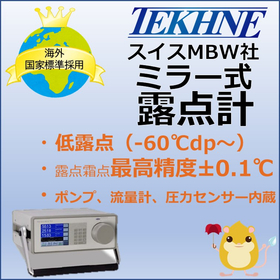
We adopt TDLAS. TDLAS stands for Tunable Diode Laser Absorption Spectroscopy, which is also known as wavelength-tunable semiconductor laser absorption spectroscopy. Laser light generated by a semiconductor laser is irradiated into a measurement cell, and the intensity of the laser light that has passed through the measurement cell is measured. This TDLAS allows for a rapid response to changes in moisture concentration and enables accurate monitoring of saturated water vapor levels. Furthermore, the use of dew point meters, which can measure moisture concentration quickly and accurately, is increasing in determining the purchase price of natural gas in Europe and the United States. The measurement range can detect low dew points down to -60 °C dp. For more details on the principles of laser dew point meters, please refer to the URL below.
Added to bookmarks
Bookmarks listBookmark has been removed
Bookmarks listYou can't add any more bookmarks
By registering as a member, you can increase the number of bookmarks you can save and organize them with labels.
Free membership registration
The principle of the phosphorus pentoxide (electrolytic) moisture analysis is utilized. (1) Phosphoric acid generates phosphorus pentoxide, hydrogen, and oxygen through electrolysis. 4H3PO4 → 2P2O5 + 6H2 + 3O2 (2) Phosphorus pentoxide absorbs water. 2P2O5 → 6H2O + 4H3PO4 The sensor is made of glass, with platinum electrodes (rhodium as an option) wound in a spiral around it. Oxygen is generated between the electrodes. The amount of water absorbed by the generated phosphorus pentoxide is balanced with the amount of hydrogen and oxygen produced, allowing for moisture measurement based on Faraday's law (the amount of substance electrolyzed is proportional to the amount of electric charge passed). It is resistant to corrosion, making it suitable for measuring moisture levels in corrosive gases. Additionally, it is a long-established dew point meter. For more details on the principle of the phosphorus pentoxide dew point meter, please refer to the following URL.
Added to bookmarks
Bookmarks listBookmark has been removed
Bookmarks listYou can't add any more bookmarks
By registering as a member, you can increase the number of bookmarks you can save and organize them with labels.
Free membership registration
● Compact modular-type analyzer, small size, easy to integrate into equipment ● Monitor interface: RS232, current output, voltage output, range identification voltage output ● Alarm output (upper limit, lower limit, system fault) ● High response speed: under 15 seconds (90%) ● Capable of measuring from 0 to 100% ■ Model 5100 is a cost-effective zirconia oxygen analyzer that can measure oxygen concentration at percent levels in environments free of corrosive and flammable gases. ■ The "Limit Current Zirconia Sensor ZR500" is built into the main unit and connects to the sample line. Additionally, an external sensor model is available as an option.
Added to bookmarks
Bookmarks listBookmark has been removed
Bookmarks listYou can't add any more bookmarks
By registering as a member, you can increase the number of bookmarks you can save and organize them with labels.
Free membership registration
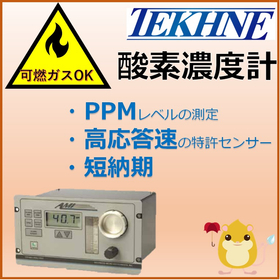
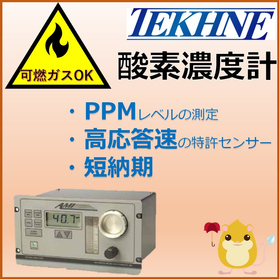
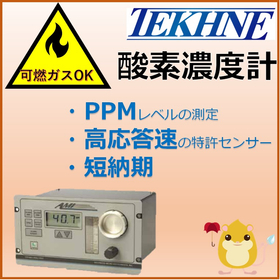
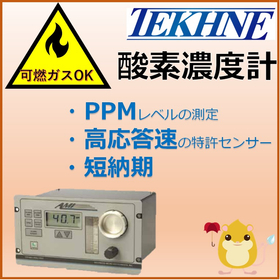
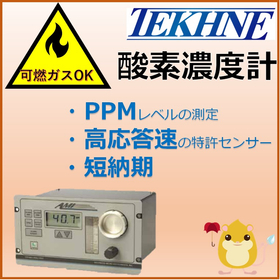
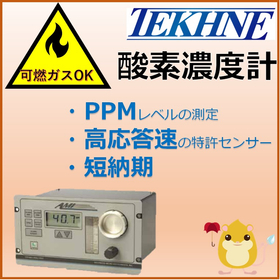
● High-speed response within 10 seconds from air to ppm levels ● Measurement capability from ppm levels to 100% ● Compact, modular-type analyzer that is small and easy to integrate into equipment ● Monitor interface with RS232, current output, voltage output, and range selection voltage output ● Alarm output (upper limit, lower limit, system fault) ● Remote sensor unit ● Long-life zirconia oxide sensor ■ This is a compact oxygen analyzer featuring a fast-response zirconia oxygen sensor with a measurement range of 0.1 ppm to 100%. It is suitable for measuring various gases and for critical process control applications. ■ The robustly designed sensor enables rapid response to significant changes in oxygen concentration, allowing for accurate measurement of ppm levels within seconds after exposure to air. ■ Equipped with digital output, analog output, and alarm contacts, it can meet various user requirements. For more details, please download the catalog or contact us.
Added to bookmarks
Bookmarks listBookmark has been removed
Bookmarks listYou can't add any more bookmarks
By registering as a member, you can increase the number of bookmarks you can save and organize them with labels.
Free membership registration
● Measurement range: 0 to 1000 ppm ● Enhanced monitoring interface (RS232, current, voltage, range voltage) ● Remote sensor model ● Alarm output (upper limit, lower limit, system fault) ● Long-life zirconia oxide sensor ■ The Model 7100 is an oxygen analyzer capable of measuring in the range of 0 to 1000 ppm. It is a compact oxygen analyzer that uses a long-life zirconia oxide sensor. For more details, please download the catalog or contact us.
Added to bookmarks
Bookmarks listBookmark has been removed
Bookmarks listYou can't add any more bookmarks
By registering as a member, you can increase the number of bookmarks you can save and organize them with labels.
Free membership registration
● Long-life zirconia sensor ● Measurement of percentage levels ● Arbitrary setting of output range ● Simple operation from the front panel ■ Model 70 is a zirconia oxygen analyzer capable of measuring from 0.1% to 25%. An optional model that can measure up to 95% is also available. ■ All necessary user operations, such as span changes during calibration and output range adjustments, can be performed from the front panel. Furthermore, the unit requires no maintenance. For more details, please download the catalog or contact us.
Added to bookmarks
Bookmarks listBookmark has been removed
Bookmarks listYou can't add any more bookmarks
By registering as a member, you can increase the number of bookmarks you can save and organize them with labels.
Free membership registration
● Measurement of percent level ● New book size 2.5kg ● Standard equipped with sampling system ● Pump - intrinsically safe explosion-proof type available ● Data logging function (up to 20,000 points) ● Various settings available via PC connection ■ Model 111 is a compact oxygen analyzer that adopts a zirconia type for measuring percent levels. To simplify flow adjustment, a needle valve and flow meter are standard equipped, allowing for easy connection to the sample gas and immediate measurement. For more details, please download the catalog or contact us.
Added to bookmarks
Bookmarks listBookmark has been removed
Bookmarks listYou can't add any more bookmarks
By registering as a member, you can increase the number of bookmarks you can save and organize them with labels.
Free membership registration
● An environment free of corrosive and flammable gases ● Wide measurement range of 75 ppb to 100% ● Long-life zirconia oxide sensor ● Measures up to 1000 ppm from the atmosphere in under 30 seconds ● Built-in flow meter and needle valve ● Comprehensive interface (current output, voltage output, range voltage output, RS232C output) ■ The MODEL OA-1S+ is a portable oxygen analyzer capable of measuring a wide range from 75 ppb to 100%. It is equipped with a high-response, long-life zirconia sensor ZR-100. It measures up to 1000 ppm from the atmosphere in under 30 seconds. Users can connect their sampling pipe to the back of the unit to measure oxygen concentration. For more details, please download the catalog or contact us.
Added to bookmarks
Bookmarks listBookmark has been removed
Bookmarks listYou can't add any more bookmarks
By registering as a member, you can increase the number of bookmarks you can save and organize them with labels.
Free membership registration
● Measurement range: 0.1 ppm to 100% ● In an environment without corrosive or flammable gases ● Operating flow rate: 0.5 to 3.0 L/min ● Measures up to 1000 ppm from the atmosphere with a 95% response in under 5 seconds ● Built-in flow meter and needle valve ● Comprehensive interface (current output, voltage output, range voltage output, RS232C output) ■ The Model OA-1 is a portable oxygen analyzer capable of measuring a wide range from 0.1 ppm to 100%. It is equipped with a high-response, long-life zirconia sensor ZR-100 inside the main unit. It measures up to 1000 ppm from the atmosphere with a 95% response in under 5 seconds. Users can connect their sampling pipe to the back of the unit to measure oxygen concentration. For more details, please download the catalog or contact us.
Added to bookmarks
Bookmarks listBookmark has been removed
Bookmarks listYou can't add any more bookmarks
By registering as a member, you can increase the number of bookmarks you can save and organize them with labels.
Free membership registration
● Measurement at ppb level possible in less than 15 minutes from the atmosphere ● Long-life zirconia oxygen sensor ● Monitor interface: RS232, current output, voltage output, range selection voltage output ● Alarm output (upper limit, lower limit, system fault) ● Remote sensor unit ● Large, bright LED, easy operation ■ This is a compact oxygen analyzer for trace oxygen concentration measurement and process control applications. With very high accuracy, fast response, and long-term stability, it provides stable measurements with minimal maintenance for critical applications requiring ppb level oxygen contamination monitoring. ■ In addition to a measurement range from 50 ppb to 100%, it is equipped with a remote sensor module featuring a high-response zirconia sensor manufactured by Neutronics. For more details, please download the catalog or contact us.
Added to bookmarks
Bookmarks listBookmark has been removed
Bookmarks listYou can't add any more bookmarks
By registering as a member, you can increase the number of bookmarks you can save and organize them with labels.
Free membership registration
In the field of space development, it is important to protect precision instruments such as rockets and satellites from the harsh environment of outer space. In particular, managing the oxygen concentration inside the equipment is essential to reduce the risks of explosion and corrosion, ensuring the safety of the instruments. Improper management of oxygen concentration can lead to equipment failure or performance degradation. Our Inert Gas Oxygen Concentration Control System (ICS) properly manages the purging amount of inert gas and controls the explosion limits, thereby enhancing the safety of equipment in space development. 【Usage Scenarios】 * Manufacturing and storage of rockets and satellites * Oxygen concentration management for space experiment facilities * Environmental control during the transportation of precision instruments 【Benefits of Implementation】 * Reduced risk of explosion and corrosion of equipment * Increased longevity of equipment * Improved safety
Added to bookmarks
Bookmarks listBookmark has been removed
Bookmarks listYou can't add any more bookmarks
By registering as a member, you can increase the number of bookmarks you can save and organize them with labels.
Free membership registration
In the field of agriculture, pest control is crucial for maintaining crop quality and ensuring safety. Particularly in pest control within enclosed spaces, it is essential to manage oxygen levels appropriately and to efficiently introduce inert gases. Improper management of oxygen levels can lead to reduced pest control effectiveness and potential damage to crops. Our Inert Gas Oxygen Concentration Control System (ICS) monitors oxygen levels and controls the flow rate of inert gas, achieving both efficient pest control and crop safety. 【Usage Scenarios】 - Pest control in warehouses and containers - Pest management in agricultural product storage facilities - Pest control in enclosed greenhouses 【Benefits of Implementation】 - Improved effectiveness of pest control - Preservation of crop quality - Optimization of inert gas usage - Increased work efficiency
Added to bookmarks
Bookmarks listBookmark has been removed
Bookmarks listYou can't add any more bookmarks
By registering as a member, you can increase the number of bookmarks you can save and organize them with labels.
Free membership registration
In the archive industry, it is important to prevent deterioration caused by oxygen for the long-term preservation of materials. In particular, paper and film materials can oxidize when exposed to oxygen, leading to discoloration and degradation. Maintaining an appropriate inert gas environment is essential to extend the lifespan of materials and connect valuable information to the future. Our Inert Gas Oxygen Concentration Control System (ICS) optimizes the preservation environment by monitoring oxygen levels and controlling the amount of inert gas introduced. 【Use Cases】 - Preservation of materials in museums and art galleries - Storage of ancient documents and rare books in libraries - Preservation of films and photographs in archive facilities 【Benefits of Implementation】 - Suppresses material degradation, enabling long-term preservation - Optimizes the use of inert gas, contributing to cost reduction - Monitors oxygen levels in real-time, allowing for early detection of anomalies
Added to bookmarks
Bookmarks listBookmark has been removed
Bookmarks listYou can't add any more bookmarks
By registering as a member, you can increase the number of bookmarks you can save and organize them with labels.
Free membership registration
In the archive industry, it is important to prevent deterioration caused by oxygen for the long-term preservation of materials. In particular, paper and film materials can oxidize when exposed to oxygen, potentially leading to discoloration and degradation. Maintaining an inert gas environment properly is essential to extend the lifespan of materials and connect valuable information to the future. Our Inert Gas Oxygen Concentration Control System (ICS) optimizes the preservation environment by monitoring oxygen levels and controlling the amount of inert gas introduced. 【Use Cases】 - Preservation of materials in museums and art galleries - Storage of ancient documents and rare books in libraries - Preservation of films and photographs in archive facilities 【Benefits of Implementation】 - Suppresses material degradation and enables long-term preservation - Optimizes the use of inert gas, contributing to cost reduction - Monitors oxygen concentration in real-time, allowing for early detection of anomalies
Added to bookmarks
Bookmarks listBookmark has been removed
Bookmarks listYou can't add any more bookmarks
By registering as a member, you can increase the number of bookmarks you can save and organize them with labels.
Free membership registration
In the lithium-ion battery industry, safety in the manufacturing process is one of the most important issues. In particular, managing the oxygen concentration in the battery manufacturing and storage environment is essential to suppress the risk of ignition. Improper management of oxygen concentration can lead to performance degradation of the batteries and, in the worst case, ignition accidents. Our Inert Gas Oxygen Concentration Control System (ICS) monitors oxygen levels and precisely controls the flow rate of inert gas to create a safe environment. 【Usage Scenarios】 - Maintaining an inert gas atmosphere in the lithium-ion battery manufacturing process - Managing oxygen concentration in battery storage warehouses - Reducing explosion risks in battery disposal facilities 【Benefits of Implementation】 - Improved safety through reduced ignition risk - Stabilization of product quality - Reduced environmental impact by decreasing VOC emissions
Added to bookmarks
Bookmarks listBookmark has been removed
Bookmarks listYou can't add any more bookmarks
By registering as a member, you can increase the number of bookmarks you can save and organize them with labels.
Free membership registration
In the chemical plant industry, handling flammable gases and combustible materials makes minimizing the risk of explosion accidents the top priority. Particularly, ensuring the safety of process equipment requires proper management of oxygen concentration. As the oxygen concentration increases, the risk of explosion rises, necessitating purging with inert gases and monitoring of oxygen levels. Our Inert Gas Oxygen Concentration Control System (ICS) supports the safe operation of plants. 【Usage Scenarios】 - Plants handling flammable gases and combustible materials - Equipment requiring explosion limit management through N2 purging - Situations where monitoring oxygen concentration within process vessels is desired 【Benefits of Implementation】 - Reducing the risk of explosion accidents - Improving plant safety - Reducing VOC emissions
Added to bookmarks
Bookmarks listBookmark has been removed
Bookmarks listYou can't add any more bookmarks
By registering as a member, you can increase the number of bookmarks you can save and organize them with labels.
Free membership registration
In the pharmaceutical industry, strict management of oxygen concentration in the manufacturing environment is required to ensure product quality and safety. In particular, controlling the environment with inert gases is essential to prevent the oxidation and degradation of active pharmaceutical ingredients and to maintain product stability. Inadequate management of oxygen concentration can lead to a decline in product quality and a reduction in shelf life. Our Inert Gas Oxygen Concentration Control System (ICS) contributes to maintaining the quality of pharmaceuticals by monitoring oxygen concentration and precisely controlling the flow rate of inert gas. 【Usage Scenarios】 - Inert gas purging in the pharmaceutical manufacturing process - Oxygen concentration management in pharmaceutical storage areas - Oxygen concentration management during the filling process 【Benefits of Implementation】 - Reduces the risk of pharmaceutical quality deterioration - Contributes to extending product shelf life - Improves the safety of the manufacturing process
Added to bookmarks
Bookmarks listBookmark has been removed
Bookmarks listYou can't add any more bookmarks
By registering as a member, you can increase the number of bookmarks you can save and organize them with labels.
Free membership registration
In the wine cellar industry, managing oxygen concentration is crucial for maintaining wine quality. Oxygen promotes the oxidation of wine, which can compromise its flavor and aroma. Proper oxygen concentration management is essential for the long-term storage of wine. Our Inert Gas Oxygen Concentration Control System (ICS) monitors oxygen levels and controls the amount of inert gas introduced, preventing the degradation of wine quality. 【Usage Scenarios】 * Inside wine cellars * Wine storage facilities * Wine bottling processes 【Benefits of Implementation】 * Prevention of wine oxidation * Stabilization of quality * Achievement of long-term storage
Added to bookmarks
Bookmarks listBookmark has been removed
Bookmarks listYou can't add any more bookmarks
By registering as a member, you can increase the number of bookmarks you can save and organize them with labels.
Free membership registration
In facilities that handle artworks, such as art museums and galleries, the long-term preservation of exhibits is crucial. Artworks can deteriorate when exposed to oxygen, humidity, and harmful substances. In particular, oxygen promotes oxidation, which can lead to discoloration and cracking. Our Inert Gas Oxygen Concentration Control System (ICS) properly manages the oxygen levels within display cases, helping to suppress the deterioration of artworks. 【Usage Scenarios】 * Inside display cases * Storage rooms * During packaging and transportation 【Benefits of Implementation】 * Long-term preservation of artworks * Reduced risk of deterioration * Maintenance of exhibit value
Added to bookmarks
Bookmarks listBookmark has been removed
Bookmarks listYou can't add any more bookmarks
By registering as a member, you can increase the number of bookmarks you can save and organize them with labels.
Free membership registration
In data centers, the proper operation of fire extinguishing systems is essential to minimize damage in the event of a fire. Particularly with inert gas extinguishing systems, it is important to properly manage the oxygen concentration in the room before the gas is released to maximize extinguishing effectiveness. If the oxygen concentration is not properly managed, the extinguishing effect may decrease, or it may lead to equipment malfunction. Our Inert Gas Oxygen Concentration Control System (ICS) monitors the oxygen concentration and optimally controls the amount of inert gas introduced, thereby reducing the fire risk in data centers. 【Usage Scenarios】 - Fire extinguishing systems in data centers - Server rooms, network equipment rooms - Areas with high fire risk 【Benefits of Implementation】 - Improved extinguishing effectiveness during a fire - Prevention of equipment malfunction - Enhanced safety - Reduction of VOC emissions
Added to bookmarks
Bookmarks listBookmark has been removed
Bookmarks listYou can't add any more bookmarks
By registering as a member, you can increase the number of bookmarks you can save and organize them with labels.
Free membership registration
In the semiconductor manufacturing industry, strict management of oxygen concentration in the manufacturing process is essential to improve product quality and yield. In particular, maintaining an inert gas environment is crucial to suppress oxidation and prevent performance degradation of products. Improper management of oxygen concentration can lead to product defects and performance decline. Our Inert Gas Oxygen Concentration Control System (ICS) effectively prevents oxidation in the semiconductor manufacturing process by monitoring oxygen concentration and controlling the flow rate of inert gas. 【Application Scenarios】 - Inert gas purging in semiconductor manufacturing processes - Improved safety through explosion limit management - Reduction of VOC emissions 【Benefits of Implementation】 - Improved product quality and yield - Enhanced safety of the manufacturing process - Reduced environmental impact through decreased VOC emissions
Added to bookmarks
Bookmarks listBookmark has been removed
Bookmarks listYou can't add any more bookmarks
By registering as a member, you can increase the number of bookmarks you can save and organize them with labels.
Free membership registration
In the food storage industry, proper environmental management is essential to maintain food quality and extend shelf life. In particular, oxygen promotes the oxidation of food, leading to a loss of freshness and flavor. Improper management of oxygen concentration can result in food deterioration and waste, potentially causing significant losses. Our Inert Gas Oxygen Concentration Control System (ICS) precisely monitors the oxygen levels in food storage facilities and contributes to preserving food freshness by introducing inert gases. 【Usage Scenarios】 - Food storage facilities - Refrigerated and frozen warehouses - Food processing plants 【Benefits of Implementation】 - Preservation of food freshness - Suppression of quality degradation - Extension of shelf life - Reduction of waste loss
Added to bookmarks
Bookmarks listBookmark has been removed
Bookmarks listYou can't add any more bookmarks
By registering as a member, you can increase the number of bookmarks you can save and organize them with labels.
Free membership registration
In the aviation industry, ensuring safety through oxygen concentration management is crucial for the protection of cargo in the cargo hold. This is especially important when transporting flammable goods or precision instruments, where adjusting oxygen levels with inert gas is essential. If oxygen concentration is not properly managed, there is an increased risk of cargo damage and, in the worst case, fire hazards. Our Inert Gas Oxygen Concentration Control System (ICS) monitors the oxygen levels in the cargo hold and controls the amount of inert gas introduced to safely protect the cargo. 【Usage Scenarios】 * Aircraft cargo holds * Transportation of flammable goods and precision instruments * Transportation of cargo with explosion risks 【Benefits of Implementation】 * Optimizes oxygen concentration in the cargo hold, enhancing cargo safety * Reduces explosion risks * Decreases VOC emissions
Added to bookmarks
Bookmarks listBookmark has been removed
Bookmarks listYou can't add any more bookmarks
By registering as a member, you can increase the number of bookmarks you can save and organize them with labels.
Free membership registration
● Proper management of N2 purge volume for various process equipment ● Improved safety through explosion limit management ● Domestic explosion-proof certification obtained ■ This oxygen concentration meter is designed with double safety in mind, equipped with two sensors to handle unexpected situations. ■ It features a feedback control function for the flow rate of inert gas introduced into the process vessel. ■ This oxygen analyzer employs a unique pinhole-type galvanic sensor that is resistant to high temperatures, high pressures, and impurities, with a fast response time. ■ By controlling the appropriate flow rate of inert gas, it can reduce VOCs that are discharged simultaneously with the inert gas. ■ The calibration of the oxygen sensor is fully automatic, and it can output predictions for sensor replacement timing and alerts for replacement timing. ■ It includes three contacts for remote status indication, four factory-set contacts, and five user-set contacts. For further details, please download the catalog or contact us.
Added to bookmarks
Bookmarks listBookmark has been removed
Bookmarks listYou can't add any more bookmarks
By registering as a member, you can increase the number of bookmarks you can save and organize them with labels.
Free membership registration
In the operating room, managing the concentration of anesthetic gases and other gases is crucial to ensure patient safety. In particular, a decrease in oxygen concentration can have serious effects on the patient's health. Being able to continue monitoring oxygen concentration during a power outage is essential for enhancing the safety of surgeries. The Model221R is equipped with a backup battery, allowing for continuous monitoring of oxygen levels even in the event of a power issue. 【Usage Scenarios】 - Operating Room - Anesthesiology - Intensive Care Unit 【Benefits of Implementation】 - Monitors oxygen concentration even during power outages, ensuring patient safety. - Reduces the burden on healthcare professionals through accurate oxygen concentration measurements. - Complies with UL standards, ensuring high safety.
Added to bookmarks
Bookmarks listBookmark has been removed
Bookmarks listYou can't add any more bookmarks
By registering as a member, you can increase the number of bookmarks you can save and organize them with labels.
Free membership registration
In underwater operations, proper management of oxygen levels is essential to ensure the safety of workers. Oxygen deficiency can lead to loss of consciousness and suffocation, potentially resulting in serious accidents. The Model221R is designed to reduce the risk of oxygen deficiency during underwater work. It is equipped with a backup battery, allowing for continuous monitoring even in situations where power supply is unstable. 【Usage Scenarios】 * Underwater work sites * Underwater surveys * Underwater construction 【Benefits of Implementation】 * Ensuring worker safety * Reducing the risk of accidents * Preventing work interruptions
Added to bookmarks
Bookmarks listBookmark has been removed
Bookmarks listYou can't add any more bookmarks
By registering as a member, you can increase the number of bookmarks you can save and organize them with labels.
Free membership registration
In space development experiments, the safety of the experimental environment is extremely important. Particularly in experiments conducted in enclosed spaces or under special conditions, proper management of oxygen concentration is essential. If oxygen concentration is not properly managed, it can lead to experimental failure and, in the worst case, human casualties. The Model221R is equipped with a backup battery, allowing it to continuously monitor oxygen concentration even in situations where power supply is unstable. It complies with UL standards, ensuring high safety. 【Usage Scenarios】 * Space experiment facilities * High-altitude experiments * Experiments in enclosed environments 【Benefits of Implementation】 * Improved safety of the experimental environment * Increased reliability of experimental data * Preparedness for emergencies
Added to bookmarks
Bookmarks listBookmark has been removed
Bookmarks listYou can't add any more bookmarks
By registering as a member, you can increase the number of bookmarks you can save and organize them with labels.
Free membership registration
In the storage of grains and feed in agricultural silos, oxygen deficiency in a sealed space not only threatens the safety of workers but can also lead to the deterioration of the stored materials. Particularly in environments with long-term storage or where the decomposition of organic matter is progressing, a decrease in oxygen concentration is likely to occur. The Model221R contributes to the management of oxygen concentration in such situations. 【Usage Scenarios】 - Storage warehouses for grains and feed - Inside sealed silos - Safety management for workers 【Benefits of Implementation】 - Continuous monitoring of oxygen concentration to detect abnormalities early - Ensuring the safety of workers - Reducing the risk of quality deterioration of stored materials
Added to bookmarks
Bookmarks listBookmark has been removed
Bookmarks listYou can't add any more bookmarks
By registering as a member, you can increase the number of bookmarks you can save and organize them with labels.
Free membership registration
In a wine cellar, proper environmental management is crucial for maintaining the quality of wine. In particular, oxygen concentration affects the oxidation of wine and can compromise its flavor. The Model221R helps to appropriately manage oxygen levels during long-term storage of wine, preventing deterioration of its quality. 【Usage Scenarios】 * Inside the wine cellar * Wine storage room * Wine quality management 【Benefits of Implementation】 * Maintenance of wine quality * Stabilization of quality during long-term storage * Preservation of wine value
Added to bookmarks
Bookmarks listBookmark has been removed
Bookmarks listYou can't add any more bookmarks
By registering as a member, you can increase the number of bookmarks you can save and organize them with labels.
Free membership registration
In the food processing industry, particularly in fermentation processes, proper oxygen concentration management is crucial for ensuring quality and safety. An excess or deficiency of oxygen concentration in the fermentation environment can lead to product quality deterioration and manufacturing process issues. The Model221R is designed to accurately measure oxygen concentration in fermentation processes to maintain a safe environment. 【Usage Scenarios】 - Fermented food manufacturing plants - Food storage facilities - Fermentation tanks 【Benefits of Implementation】 - Optimization of fermentation processes - Improvement of product quality - Assurance of a safe working environment
Added to bookmarks
Bookmarks listBookmark has been removed
Bookmarks listYou can't add any more bookmarks
By registering as a member, you can increase the number of bookmarks you can save and organize them with labels.
Free membership registration
In the chemical plant industry, it is essential to constantly manage the risk of asphyxiation accidents due to gas leaks. In particular, leaks of flammable or toxic gases not only threaten the safety of workers but can also lead to a complete shutdown of the plant. The Model 221R is equipped with a backup battery to handle any potential power issues, ensuring stable oxygen concentration measurements. This contributes to rapid response in the event of a leak and the maintenance of a safe working environment. 【Usage Scenarios】 * Gas leak detection within chemical plants * Ensuring worker safety * Continuation of plant operations 【Benefits of Implementation】 * Rapid response in the event of a leak * Ensuring worker safety * Reducing the risk of plant shutdown
Added to bookmarks
Bookmarks listBookmark has been removed
Bookmarks listYou can't add any more bookmarks
By registering as a member, you can increase the number of bookmarks you can save and organize them with labels.
Free membership registration
In tank cleaning operations, managing oxygen levels through ventilation is essential for ensuring worker safety. Particularly in sealed tanks, the risk of accidents due to oxygen deficiency increases. The Model 221R continuously monitors oxygen levels with a backup battery, providing a safe working environment even in unstable power supply conditions. 【Usage Scenarios】 - During ventilation work inside tanks - Monitoring oxygen levels during cleaning operations - Safety management for workers 【Benefits of Implementation】 - Reduces the risk of accidents due to oxygen deficiency - Ensures the safety of workers - Minimizes work interruptions and supports efficient operations
Added to bookmarks
Bookmarks listBookmark has been removed
Bookmarks listYou can't add any more bookmarks
By registering as a member, you can increase the number of bookmarks you can save and organize them with labels.
Free membership registration
In the sewer industry, inspection work involves tasks in confined spaces such as manholes, which carry the risk of accidents due to oxygen deficiency. Accurate measurement and management of oxygen levels are essential to ensure a safe working environment. The Model 221R is equipped with a power backup function, allowing it to continuously monitor oxygen levels even during power outages. It complies with UL standards, enabling reliable measurements. 【Usage Scenarios】 - Inspection inside manholes - Inspection within wastewater treatment facilities - Inspection in underground tunnels 【Benefits of Implementation】 - Ensuring the safety of workers - Continuous management of oxygen levels - Improved reliability due to compliance with UL standards
Added to bookmarks
Bookmarks listBookmark has been removed
Bookmarks listYou can't add any more bookmarks
By registering as a member, you can increase the number of bookmarks you can save and organize them with labels.
Free membership registration