iPROS Manufacturing
  • Search for products by classification category

    • Electronic Components and Modules
      Electronic Components and Modules
      58033items
    • Machinery Parts
      Machinery Parts
      73350items
    • Manufacturing and processing machinery
      Manufacturing and processing machinery
      97821items
    • Scientific and Physics Equipment
      Scientific and Physics Equipment
      33899items
    • Materials
      Materials
      36089items
    • Measurement and Analysis
      Measurement and Analysis
      53131items
    • Image Processing
      Image Processing
      14870items
    • Control and Electrical Equipment
      Control and Electrical Equipment
      51604items
    • Tools, consumables, and supplies
      Tools, consumables, and supplies
      63691items
    • Design and production support
      Design and production support
      12158items
    • IT/Network
      IT/Network
      42185items
    • Office
      Office
      13642items
    • Business support services
      Business support services
      32668items
    • Seminars and Skill Development
      Seminars and Skill Development
      5911items
    • Pharmaceutical and food related
      Pharmaceutical and food related
      27139items
    • others
      71909items
  • Search for companies by industry

    • Manufacturing and processing contract
      7345
    • others
      5017
    • Industrial Machinery
      4430
    • Machine elements and parts
      3281
    • Other manufacturing
      2879
    • IT/Telecommunications
      2543
    • Trading company/Wholesale
      2466
    • Industrial Electrical Equipment
      2310
    • Building materials, supplies and fixtures
      1812
    • software
      1641
    • Electronic Components and Semiconductors
      1563
    • Resin/Plastic
      1484
    • Service Industry
      1436
    • Testing, Analysis and Measurement
      1131
    • Ferrous/Non-ferrous metals
      977
    • environment
      704
    • Chemical
      630
    • Automobiles and Transportation Equipment
      560
    • Printing Industry
      509
    • Information and Communications
      453
    • Consumer Electronics
      419
    • Energy
      326
    • Rubber products
      313
    • Food Machinery
      303
    • Optical Instruments
      280
    • robot
      271
    • fiber
      251
    • Paper and pulp
      232
    • Electricity, Gas and Water Industry
      169
    • Pharmaceuticals and Biotechnology
      167
    • Warehousing and transport related industries
      146
    • Glass and clay products
      141
    • Food and Beverage
      130
    • CAD/CAM
      120
    • retail
      109
    • Educational and Research Institutions
      107
    • Medical Devices
      101
    • Ceramics
      96
    • wood
      89
    • Transportation
      83
    • Medical and Welfare
      63
    • Petroleum and coal products
      62
    • Shipbuilding and heavy machinery
      52
    • Aviation & Aerospace
      47
    • Fisheries, Agriculture and Forestry
      41
    • Public interest/special/independent administrative agency
      29
    • equipment
      26
    • self-employed
      24
    • Government
      21
    • Materials
      20
    • Research and development equipment and devices
      19
    • Mining
      17
    • Finance, securities and insurance
      13
    • Individual
      10
    • Restaurants and accommodations
      9
    • cosmetics
      9
    • Police, Fire Department, Self-Defense Forces
      7
    • Laboratory Equipment and Consumables
      3
    • Contracted research
      3
    • Raw materials for reagents and chemicals
      2
  • Special Features
  • Ranking

    • Overall Products Ranking
    • Overall Company Ranking
Search for Products
  • Search for products by classification category

  • Electronic Components and Modules
  • Machinery Parts
  • Manufacturing and processing machinery
  • Scientific and Physics Equipment
  • Materials
  • Measurement and Analysis
  • Image Processing
  • Control and Electrical Equipment
  • Tools, consumables, and supplies
  • Design and production support
  • IT/Network
  • Office
  • Business support services
  • Seminars and Skill Development
  • Pharmaceutical and food related
  • others
Search for Companies
  • Search for companies by industry

  • Manufacturing and processing contract
  • others
  • Industrial Machinery
  • Machine elements and parts
  • Other manufacturing
  • IT/Telecommunications
  • Trading company/Wholesale
  • Industrial Electrical Equipment
  • Building materials, supplies and fixtures
  • software
  • Electronic Components and Semiconductors
  • Resin/Plastic
  • Service Industry
  • Testing, Analysis and Measurement
  • Ferrous/Non-ferrous metals
  • environment
  • Chemical
  • Automobiles and Transportation Equipment
  • Printing Industry
  • Information and Communications
  • Consumer Electronics
  • Energy
  • Rubber products
  • Food Machinery
  • Optical Instruments
  • robot
  • fiber
  • Paper and pulp
  • Electricity, Gas and Water Industry
  • Pharmaceuticals and Biotechnology
  • Warehousing and transport related industries
  • Glass and clay products
  • Food and Beverage
  • CAD/CAM
  • retail
  • Educational and Research Institutions
  • Medical Devices
  • Ceramics
  • wood
  • Transportation
  • Medical and Welfare
  • Petroleum and coal products
  • Shipbuilding and heavy machinery
  • Aviation & Aerospace
  • Fisheries, Agriculture and Forestry
  • Public interest/special/independent administrative agency
  • equipment
  • self-employed
  • Government
  • Materials
  • Research and development equipment and devices
  • Mining
  • Finance, securities and insurance
  • Individual
  • Restaurants and accommodations
  • cosmetics
  • Police, Fire Department, Self-Defense Forces
  • Laboratory Equipment and Consumables
  • Contracted research
  • Raw materials for reagents and chemicals
Special Features
Ranking
  • Overall Products Ranking
  • Overall Company Ranking
  • privacy policy
  • terms of service
  • About Us
  • Careers
  • Advertising
  1. Home
  2. Ferrous/Non-ferrous metals
  3. 松井製作所
  4. Product/Service List
Ferrous/Non-ferrous metals
  • Added to bookmarks

    Bookmarks list

    Bookmark has been removed

    Bookmarks list

    You can't add any more bookmarks

    By registering as a member, you can increase the number of bookmarks you can save and organize them with labels.

    Free membership registration

松井製作所

EstablishmentMarch 1961
capital3300Ten thousand
number of employees81
addressOsaka/Joto-ku, Osaka-shi/4-1-23 Nagata
phone06-6961-6043
  • Special site
  • Official site
last updated:Sep 30, 2025
松井製作所logo
  • Contact this company

    Contact Us Online
  • Before making an inquiry

    Download PDF
  • Company information
  • Products/Services(1735)
  • catalog(71)
  • news(14)

松井製作所 List of Products and Services

  • category

316~360 item / All 380 items

Displayed results

Filter by category

Forging Forging
Machining Machining
Pipe processing Pipe processing
Brazing process Brazing process
Assembly and Inspection Assembly and Inspection
Unit product Unit product
Others Others
YouTube YouTube
YouTube

YouTube

This is an introduction to the videos published on our YouTube channel "Matsui Manufacturing Channel"!
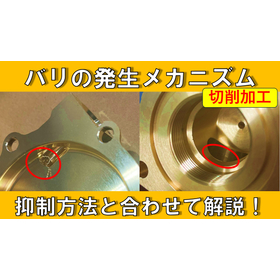
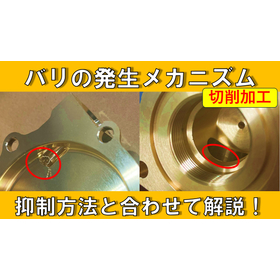
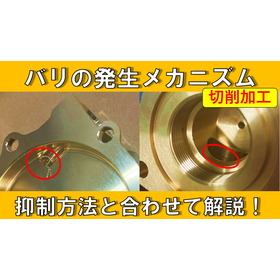
Mechanisms of Energy Generation and Countermeasures for the Energy Industry

Explaining the causes and countermeasures of Bali in a video!
In the energy industry, the stable operation and safety of equipment are the top priorities. The occurrence of burrs in machining can lead to a decline in the quality of parts and failures, which may ultimately compromise the reliability of the equipment. Particularly in components used in high-pressure or high-temperature environments, the presence of burrs increases the risk of serious accidents. This video aims to contribute to improving equipment reliability by understanding the mechanisms of burr formation and implementing appropriate measures. 【Application Scenes】 - Power plants - Oil and gas-related equipment - Renewable energy equipment 【Effects of Implementation】 - Improved part quality - Stable operation of equipment - Reduced maintenance costs

Added to bookmarks

Bookmarks list

Bookmark has been removed

Bookmarks list

You can't add any more bookmarks

By registering as a member, you can increase the number of bookmarks you can save and organize them with labels.

Free membership registration

Mechanism of Occurrence and Countermeasures for Bacteria in Bicycles

Explaining the causes and countermeasures of "bali" in a video!

In the bicycle industry, weight reduction is an important factor in improving performance and customer satisfaction. Particularly, as parts become smaller and thinner, burrs that occur after machining not only compromise product quality but can also lead to decreased workability in the assembly process and, in the worst case, product damage. This video explains the mechanisms of burr formation and methods for suppression. It contributes to the reduction of burr removal labor and the improvement of product quality. 【Usage Scenarios】 - Bicycle frames - Gear components - Brake components - Other lightweight parts that have been machined 【Effects of Implementation】 - Reduction of burr removal labor - Improvement of product quality - Contribution to performance enhancement through weight reduction

Added to bookmarks

Bookmarks list

Bookmark has been removed

Bookmarks list

You can't add any more bookmarks

By registering as a member, you can increase the number of bookmarks you can save and organize them with labels.

Free membership registration

Mechanism of Bali's Occurrence and Countermeasures for the Camera

Explaining the causes and countermeasures of Bali in a video!

In the camera industry, as functionality increases, the quality of precision parts becomes crucial. Particularly, as miniaturization and high density progress, the occurrence of burrs during cutting processes can negatively impact product performance and reliability. The emergence of burrs can lead to assembly defects and functional degradation, which may result in reduced yield. This video explains the mechanisms of burr formation and methods for suppression, contributing to the improvement of camera parts quality. 【Application Scenarios】 - Measures against burrs in the cutting process of camera parts - Enhancing product functionality through high-precision part processing - Reducing the labor required for deburring 【Effects of Implementation】 - Suppressing the occurrence of burrs and improving product quality - Increasing yield - Cost reduction through the reduction of deburring labor

Added to bookmarks

Bookmarks list

Bookmark has been removed

Bookmarks list

You can't add any more bookmarks

By registering as a member, you can increase the number of bookmarks you can save and organize them with labels.

Free membership registration

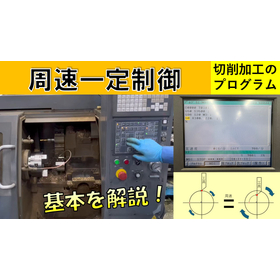
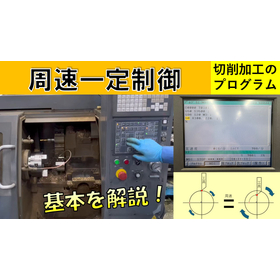
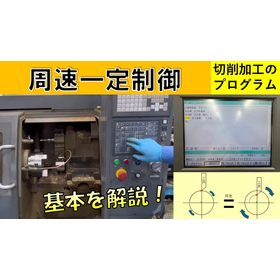
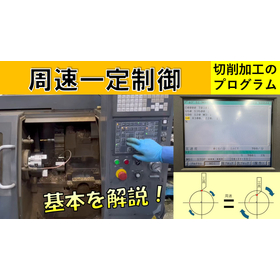
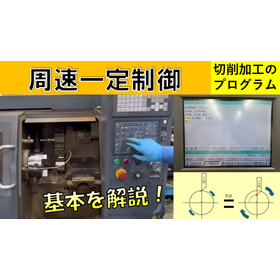
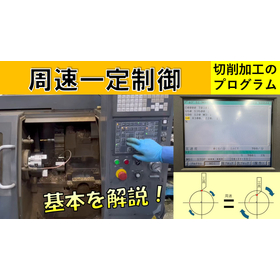
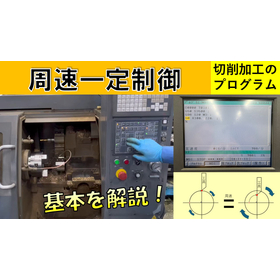
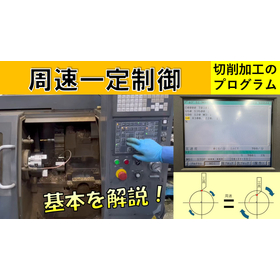
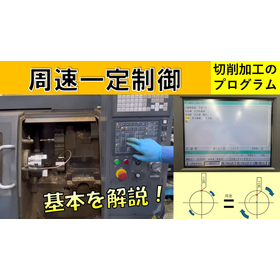
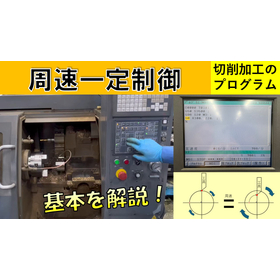
Basic Principles of Constant Peripheral Speed Control for Aerospace Applications

Explanation of constant speed control for NC lathes in a video!

In the aerospace industry, high precision of parts is required. Constant surface speed control in NC lathe machining is important for optimizing cutting speed and improving machining accuracy. Inappropriate cutting conditions can lead to dimensional errors and deterioration of surface roughness in parts, potentially compromising product quality. This video explains the basics of constant surface speed control, helping to understand its importance and how to utilize it. 【Application Scenarios】 - Cutting processing of aerospace parts - High-precision machining with NC lathes - Optimization of cutting conditions 【Effects of Implementation】 - Improvement of machining accuracy - Extension of tool life - Reduction of machining time

Added to bookmarks

Bookmarks list

Bookmark has been removed

Bookmarks list

You can't add any more bookmarks

By registering as a member, you can increase the number of bookmarks you can save and organize them with labels.

Free membership registration

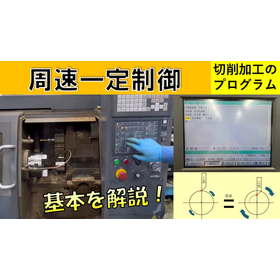
Explaining the Basics of Constant Speed Control for the Automotive Industry!

Explanation of constant speed control for NC lathes in a video!

In the automotive industry, there is a demand for increased efficiency in parts processing and improved quality. Understanding and appropriately utilizing constant surface speed control in cutting processes with NC lathes leads to reduced machining time, extended tool life, and the production of high-quality parts. Understanding constant surface speed control contributes to the stable supply of automotive parts. 【Application Scenarios】 - Cutting processing of automotive parts using NC lathes - Reduction of machining time - Extension of tool life 【Effects of Implementation】 - Increased productivity due to reduced machining time - Reduction in tool costs - Stable supply of high-quality parts

Added to bookmarks

Bookmarks list

Bookmark has been removed

Bookmarks list

You can't add any more bookmarks

By registering as a member, you can increase the number of bookmarks you can save and organize them with labels.

Free membership registration

Basic Principles of Constant Peripheral Speed Control for Medical Devices

Contributing to the improvement of precision in microfabrication!

In the medical device industry, precise component machining is required, and optimizing cutting speed is particularly important in micro-machining. Constant peripheral speed control is essential for maintaining a consistent load on the cutting tool and enhancing machining accuracy. Inappropriate cutting conditions can lead to dimensional errors and deterioration of surface roughness in components, potentially affecting the performance of medical devices. This video explains the basics of constant peripheral speed control and supports problem-solving in micro-machining. 【Application Scenarios】 - Micro-machining of medical device components - Precision machining using NC lathes - Quality improvement in cutting processes 【Benefits of Implementation】 - Improved machining accuracy - Extended tool life - Reduced machining time

Added to bookmarks

Bookmarks list

Bookmark has been removed

Bookmarks list

You can't add any more bookmarks

By registering as a member, you can increase the number of bookmarks you can save and organize them with labels.

Free membership registration

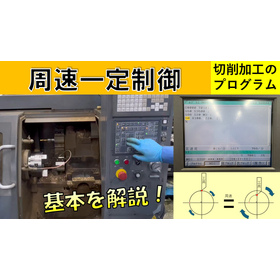
Explaining the basics of constant peripheral speed control for machine tools!

I will answer the question, 'What is constant speed control?'

In the machine tool industry, processing accuracy and efficiency greatly influence product quality and productivity. Particularly when using CNC lathes, proper program settings are essential. Constant surface speed control is an important technology for optimizing the performance of cutting processes. This video explains the basics of constant surface speed control, helping viewers understand its significance and how to utilize it. This video is recommended for those who want to learn about CNC lathe programming and those looking to improve processing efficiency. 【Usage Scenarios】 - During cutting processes on CNC lathes - Optimization of processing conditions - Reduction of processing time 【Effects of Implementation】 - Improvement in processing accuracy through optimization of cutting speed - Extension of tool life - Increased productivity through reduced processing time

Added to bookmarks

Bookmarks list

Bookmark has been removed

Bookmarks list

You can't add any more bookmarks

By registering as a member, you can increase the number of bookmarks you can save and organize them with labels.

Free membership registration

Basic Principles of Constant Speed Control for Precision Instruments

Explanation of constant speed control for NC lathes in a video!

In the precision machinery industry, a precise understanding of cutting processes using NC lathes is essential to balance product quality and accuracy. Particularly in high-precision component machining, optimizing cutting speed is crucial, and constant peripheral speed control is an important technology for this purpose. Inappropriate cutting conditions can lead to decreased machining accuracy and shortened tool life. This video explains the constant peripheral speed control of NC lathes! 【Usage Scenarios】 * Machining of precision machinery components * When high-precision cutting is required * For those who want to learn NC lathe programming 【Benefits of Introduction】 * Improved understanding of cutting processes * Enhanced machining accuracy and quality * Efficient utilization of NC lathes

Added to bookmarks

Bookmarks list

Bookmark has been removed

Bookmarks list

You can't add any more bookmarks

By registering as a member, you can increase the number of bookmarks you can save and organize them with labels.

Free membership registration

Explaining the basics of constant speed control for semiconductor manufacturing!

Explanation of constant speed control for NC lathes in a video!

In the semiconductor manufacturing industry, there is always a demand for improved product quality and yield. In precision machining using NC lathes, optimizing cutting conditions is one of the key factors that influence yield. By understanding and appropriately utilizing constant peripheral speed control, it is expected to enhance machining accuracy and suppress the occurrence of defective products. This video explains the basics of constant peripheral speed control, its importance, and the scenarios in which it is used in an easy-to-understand manner. 【Usage Scenarios】 - Machining of semiconductor manufacturing components using NC lathes - Yield improvement through enhanced machining accuracy - Optimization of cutting conditions 【Benefits of Implementation】 - Reduction of machining time - Extension of tool life - Reduction of defective products

Added to bookmarks

Bookmarks list

Bookmark has been removed

Bookmarks list

You can't add any more bookmarks

By registering as a member, you can increase the number of bookmarks you can save and organize them with labels.

Free membership registration

Explaining the basics of constant peripheral speed control for molds!

I will answer the question, 'What is constant speed control?'

In the mold industry, there is a demand for improved machining accuracy and tool life. In particular, the optimization of cutting processes in mold manufacturing significantly affects product quality and cost. Inappropriate cutting conditions can lead to premature tool wear and a decrease in machining accuracy. Our video explains "constant surface speed control" in NC lathes and supports solving challenges in mold processing. 【Application Scenarios】 - Cutting processing of molds - Extension of tool life - Improvement of machining accuracy 【Effects of Implementation】 - Promotion of understanding of constant surface speed control - Setting appropriate cutting conditions - Optimization of tool life

Added to bookmarks

Bookmarks list

Bookmark has been removed

Bookmarks list

You can't add any more bookmarks

By registering as a member, you can increase the number of bookmarks you can save and organize them with labels.

Free membership registration

Explaining the basics of constant speed control for robots!

Explanation of constant speed control for NC lathes in a video!

In the robotics industry, precise component machining is required, and machining technology using NC lathes is important. In particular, for machining parts that require high precision, such as movable parts of robots and precise sensor components, constant surface speed control is essential. By understanding and properly programming constant surface speed control, machining accuracy can be improved, and product quality can be enhanced. This video explains the basics of constant surface speed control and provides useful information for creating NC lathe programs. 【Application Scenarios】 - Precision component machining for robots - High-precision machining using NC lathes - Understanding constant surface speed control 【Effects of Implementation】 - Improvement in machining accuracy - Enhancement of product quality - Increased efficiency in NC lathe programming

Added to bookmarks

Bookmarks list

Bookmark has been removed

Bookmarks list

You can't add any more bookmarks

By registering as a member, you can increase the number of bookmarks you can save and organize them with labels.

Free membership registration

Explaining the basics of constant speed control for home appliances!

Explanation of constant speed control for NC lathes in a video!

In the home appliance industry, there is a demand for reduced processing time and stabilized quality in mass production of products. Particularly in cutting processes using NC lathes, optimizing processing conditions is crucial. Inappropriate processing conditions can lead to increased processing time and a decline in product quality. This video will explain the "constant peripheral speed control" of NC lathes. 【Usage Scenarios】 - Processing of metal parts for home appliances - Mass production processing using NC lathes - Reduction of processing time 【Effects of Implementation】 - Reduction of processing time - Improvement of processing accuracy - Stabilization of quality

Added to bookmarks

Bookmarks list

Bookmark has been removed

Bookmarks list

You can't add any more bookmarks

By registering as a member, you can increase the number of bookmarks you can save and organize them with labels.

Free membership registration

Basic Principles of Constant Speed Control for the Energy Industry

Explaining the basics of constant speed control in a video!

In the energy industry, stable operation and longevity of equipment are required. Particularly for parts used in harsh environments, machining accuracy and durability are crucial. Constant surface speed control in NC lathe machining contributes to improving the durability of parts by optimizing cutting conditions and enhancing machining accuracy. This video explains the basics of constant surface speed control and clearly describes its importance and how to utilize it. 【Usage Scenarios】 - When high-precision part machining is required - Manufacturing of parts that require durability - Improving efficiency in NC lathe machining 【Effects of Implementation】 - Improvement in machining accuracy - Extension of tool life - Enhanced durability of parts - Cost reduction

Added to bookmarks

Bookmarks list

Bookmark has been removed

Bookmarks list

You can't add any more bookmarks

By registering as a member, you can increase the number of bookmarks you can save and organize them with labels.

Free membership registration

Explaining the basics of constant speed control for clocks!

Explaining the basics of cutting processing that contributes to miniaturization!

In the watch industry, miniaturization and high precision of components are required. In particular, cutting processing technology is essential to achieve complex shapes within limited space. Constant cutting speed control is an important technology for improving the efficiency and precision of cutting processes. Inappropriate cutting conditions can shorten tool life or reduce processing accuracy. Our video explains the basics of constant cutting speed control and supports problem-solving in the manufacturing of watch components. 【Usage Scenarios】 - Cutting processing of watch components - Manufacturing of small precision parts - Processing with NC lathes 【Benefits of Implementation】 - Reduction of processing time - Extension of tool life - Improvement of processing accuracy

Added to bookmarks

Bookmarks list

Bookmark has been removed

Bookmarks list

You can't add any more bookmarks

By registering as a member, you can increase the number of bookmarks you can save and organize them with labels.

Free membership registration

Explaining the basics of constant speed control for shipbuilding!

I will answer the question, 'What is constant speed control?'

In the shipbuilding industry, high precision and efficiency are required in the manufacturing of large structures. Particularly in the machining of large components, reducing processing time and improving quality are critical challenges. Constant surface speed control contributes to shortening processing time and extending tool life by maintaining a constant cutting speed. This video explains the basics of constant surface speed control and supports solving machining challenges in the shipbuilding industry. 【Usage Scenarios】 - Machining of large components - Manufacturing of parts requiring high precision - Reduction of processing time 【Benefits of Implementation】 - Reduction of processing time - Extension of tool life - Improvement of machining accuracy

Added to bookmarks

Bookmarks list

Bookmark has been removed

Bookmarks list

You can't add any more bookmarks

By registering as a member, you can increase the number of bookmarks you can save and organize them with labels.

Free membership registration

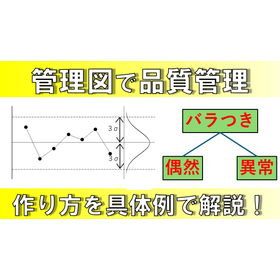
Explaining the Basics of Control Charts for the Manufacturing Industry!

Explaining the basics of control charts with examples! Useful for process management.

In manufacturing process management, maintaining and improving quality is extremely important. Control charts are effective tools for understanding process stability and early detection of abnormalities. By properly utilizing control charts, it is possible to suppress the occurrence of defective products and contribute to improved production efficiency. This video clearly explains the basics of control charts and introduces specific ways to utilize them in process management through examples. 【Usage Scenarios】 - Quality control in manufacturing processes - Reduction of defect rates - Evaluation of process stability 【Effects of Implementation】 - Early detection of process abnormalities - Acceleration of the PDCA cycle for quality improvement - Increased productivity

Added to bookmarks

Bookmarks list

Bookmark has been removed

Bookmarks list

You can't add any more bookmarks

By registering as a member, you can increase the number of bookmarks you can save and organize them with labels.

Free membership registration

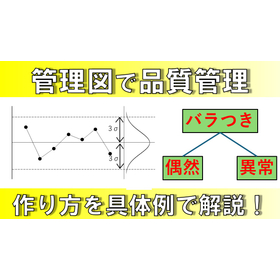
Explaining the basics of management charts for energy facilities!

Explaining the basics of control charts with examples! Useful for quality management in equipment maintenance.

In the energy equipment industry, stable operation of equipment is crucial for maintenance. Therefore, it is necessary to grasp daily inspection data and abnormal values to detect equipment anomalies early. Control charts help visualize the operational status of equipment and assist in the early detection of signs of abnormalities. This video explains the basics of control charts and supports the improvement of quality management in equipment maintenance. 【Usage Scenarios】 - Monitoring equipment operational status - Early detection of abnormal values - Improvement of quality management 【Effects of Implementation】 - Maintenance of stable equipment operation - Reduction of failure risks - Enhancement of quality management capabilities

Added to bookmarks

Bookmarks list

Bookmark has been removed

Bookmarks list

You can't add any more bookmarks

By registering as a member, you can increase the number of bookmarks you can save and organize them with labels.

Free membership registration

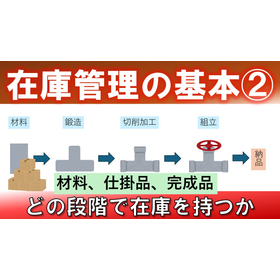
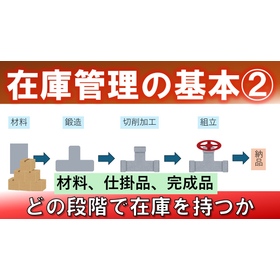
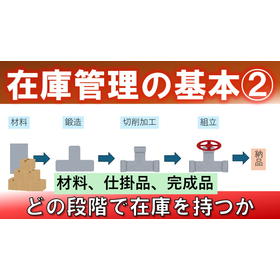
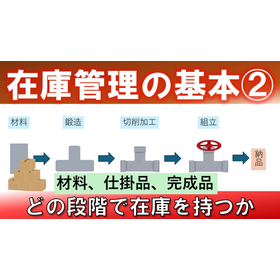
Basic Inventory Management for Electronic Equipment Manufacturing

Solve your inventory management problems!

In the electronics manufacturing industry, proper inventory management of components is crucial. Excess inventory can lead to increased costs, while insufficient inventory can cause production delays. This video explains at which stage—materials, work-in-progress, or finished goods—inventory should be held, and outlines the basics of inventory management. 【Usage Scenarios】 * Optimization of inventory management in parts procurement * Improvement of production efficiency 【Benefits of Implementation】 * Reduction of inventory costs * Increase in productivity

Added to bookmarks

Bookmarks list

Bookmark has been removed

Bookmarks list

You can't add any more bookmarks

By registering as a member, you can increase the number of bookmarks you can save and organize them with labels.

Free membership registration

Basic Inventory Management for Automobile Manufacturing

Solve your inventory management problems!

In the automotive manufacturing industry, the Just-In-Time (JIT) production method is essential for minimizing parts inventory and achieving efficient production. However, improper inventory management can lead to shortages or excess stock of parts, potentially resulting in production line stoppages and increased costs. This video explains at which stage—materials, work-in-progress, or finished goods—inventory should be held, and you can learn the basics of inventory management that support the Just-In-Time production method. 【Usage Scenarios】 - Optimization of parts supply in Just-In-Time production - Reduction of inventory costs - Risk avoidance of production stoppages due to parts shortages 【Effects of Implementation】 - Cost reduction through proper inventory management - Improvement of production efficiency - Realization of stable parts supply

Added to bookmarks

Bookmarks list

Bookmark has been removed

Bookmarks list

You can't add any more bookmarks

By registering as a member, you can increase the number of bookmarks you can save and organize them with labels.

Free membership registration

Basic Inventory Management for Aerospace

Explaining the basics of inventory management!

In the aerospace industry, the quality and delivery time of parts are extremely important. To ensure a stable supply of high-precision products, proper inventory management is essential. This video explains at which stage—materials, work-in-progress, or finished products—inventory should be held. 【Usage Scenarios】 * Manufacturing of aerospace parts * Strict quality control * Adherence to delivery deadlines 【Benefits of Implementation】 * Optimization of inventory costs * Securing necessary products * Improvement of manufacturing efficiency

Added to bookmarks

Bookmarks list

Bookmark has been removed

Bookmarks list

You can't add any more bookmarks

By registering as a member, you can increase the number of bookmarks you can save and organize them with labels.

Free membership registration

Basic Inventory Management for Shipbuilding

Inventory management for large components, solving your problems!

In the shipbuilding industry, the procurement and inventory management of large components are crucial factors that determine the success or failure of a project. In particular, delays in component delivery and increased storage costs can lead to overall project delays and cost increases. Proper inventory management can address these challenges and enable efficient project operations. This video explains at which stage—materials, work-in-progress, or finished goods—inventory should be held. [Usage Scenarios] - Procurement and storage of large components - Project progress management - Cost reduction [Effects of Implementation] - Optimization of inventory value - Mitigation of delivery delay risks - Cost reduction

Added to bookmarks

Bookmarks list

Bookmark has been removed

Bookmarks list

You can't add any more bookmarks

By registering as a member, you can increase the number of bookmarks you can save and organize them with labels.

Free membership registration

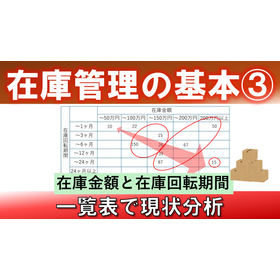
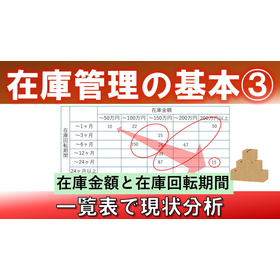
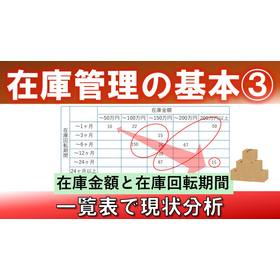
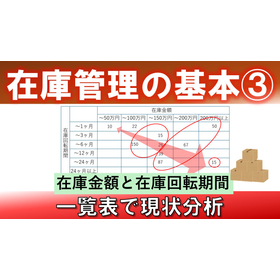
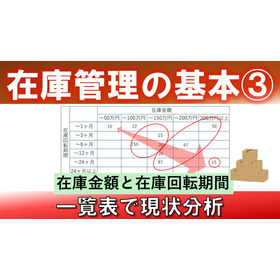
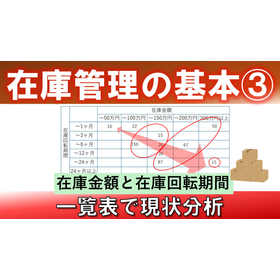
Inventory Amount and Inventory Turnover Period Table for Retail Industry

Explaining the current inventory analysis method in a video!

In the retail industry, proper inventory management is crucial to respond to fluctuations in product demand. Excess inventory increases storage costs, while insufficient inventory leads to lost sales opportunities. By understanding the basics of inventory management and analyzing inventory value and turnover periods, these challenges can be addressed. This video explains how to analyze the current state of inventory based on inventory value and turnover periods as part of the fundamentals of inventory management! 【Usage Scenarios】 - Product ordering operations - Review of inventory management - Reduction of inventory value 【Benefits of Implementation】 - Optimization of inventory - Reduction of lost opportunities - Reduction of storage costs

Added to bookmarks

Bookmarks list

Bookmark has been removed

Bookmarks list

You can't add any more bookmarks

By registering as a member, you can increase the number of bookmarks you can save and organize them with labels.

Free membership registration

Current Analysis of Inventory Management for the Manufacturing Industry Video

Solving inventory management challenges! Explaining methods for current situation analysis.

In the manufacturing industry, inventory management is a crucial element for cost reduction. Challenges such as the inability to reduce inventory value while facing shortages of necessary products can lead to decreased production efficiency and lost opportunities. In this video, we will explain how to analyze the current state of inventory based on inventory value and inventory turnover period as a fundamental aspect of inventory management. 【Usage Scenarios】 * Want to optimize inventory value * Want to understand inventory turnover period * Want to solve inventory management issues 【Benefits of Implementation】 * Ability to grasp the current state of inventory * Enables appropriate inventory management * Contributes to cost reduction

Added to bookmarks

Bookmarks list

Bookmark has been removed

Bookmarks list

You can't add any more bookmarks

By registering as a member, you can increase the number of bookmarks you can save and organize them with labels.

Free membership registration

Improving Cash Flow with Inventory Management Videos for Wholesalers

Learn the basics of inventory management and improve cash flow!

In wholesale, proper inventory management is crucial for stabilizing cash flow. Excess inventory ties up funds, while shortages lead to lost sales opportunities. This video explains how to analyze the current situation by focusing on inventory value and inventory turnover period. Through this analysis, we aim to optimize inventory and improve cash flow. 【Usage Scenarios】 * Inventory value is not decreasing * There are always products that are in short supply 【Benefits of Implementation】 * Understand the current state of inventory and identify areas for improvement * Contribute to improving cash flow

Added to bookmarks

Bookmarks list

Bookmark has been removed

Bookmarks list

You can't add any more bookmarks

By registering as a member, you can increase the number of bookmarks you can save and organize them with labels.

Free membership registration

Video on Current Analysis of Inventory Management for Automotive Parts Management

Analyze inventory value and inventory turnover period to improve parts management!

In automotive parts management, proper inventory management is essential. Excess inventory increases storage costs, while insufficient inventory can lead to production line stoppages. This video explains how to analyze the current situation by focusing on inventory value and inventory turnover period. Through this analysis, you can understand the surplus and shortage of parts and achieve efficient inventory management. 【Usage Scenarios】 - Inventory management of automotive parts - Planning for parts procurement - Reducing inventory costs 【Benefits of Implementation】 - Optimization of inventory - Cost reduction - Stabilization of parts supply

Added to bookmarks

Bookmarks list

Bookmark has been removed

Bookmarks list

You can't add any more bookmarks

By registering as a member, you can increase the number of bookmarks you can save and organize them with labels.

Free membership registration

List of Inventory Amounts and Inventory Turnover Periods for Electronic Devices

Video materials useful for analyzing the current state of inventory management.

In the electronics industry, proper inventory management is essential for cost reduction and an efficient production system. Challenges such as inventory amounts not decreasing while necessary products are in short supply can lead to missed opportunities. This video explains how to analyze the current situation using inventory amounts and inventory turnover periods as the basics of inventory management. This video material will be helpful for improving inventory management. 【Usage Scenarios】 * Inventory management departments of electronics manufacturers * Procurement personnel for components * Production management departments 【Effects of Implementation】 * It becomes easier to understand the current state of inventory. * You can identify issues in inventory management. * You can improve inventory turnover rates.

Added to bookmarks

Bookmarks list

Bookmark has been removed

Bookmarks list

You can't add any more bookmarks

By registering as a member, you can increase the number of bookmarks you can save and organize them with labels.

Free membership registration

Inventory Management Current Situation Analysis Video for the Logistics Industry

Explaining solutions to inventory management challenges in a video!

In the logistics industry, optimizing inventory is crucial for achieving efficient transportation. Excess inventory increases storage costs, while insufficient inventory leads to missed opportunities. This video explains how to analyze the current situation by focusing on inventory value and inventory turnover period. By understanding this analysis method, you can identify challenges in inventory management and implement improvements. 【Usage Scenarios】 - Inventory management within warehouses - Improvement of transportation efficiency - Reduction of inventory costs 【Effects of Implementation】 - Visualization of inventory - Reduction of unnecessary inventory - Understanding optimal inventory levels

Added to bookmarks

Bookmarks list

Bookmark has been removed

Bookmarks list

You can't add any more bookmarks

By registering as a member, you can increase the number of bookmarks you can save and organize them with labels.

Free membership registration

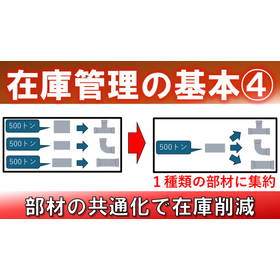
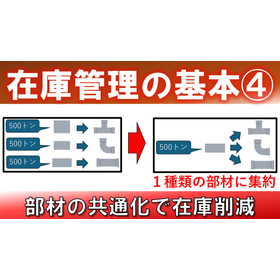
Inventory Reduction Video Materials for Automotive Modules

"What are the benefits of standardizing materials?" I will answer that!

In the automotive module industry, inventory management tends to become complicated due to the large number of parts. In particular, addressing the diverse range of vehicle models and options poses challenges in ensuring adequate inventory levels and securing storage space. Standardizing components is crucial for solving these issues and achieving efficient inventory management. This video explains the concept of component standardization as a fundamental aspect of inventory management. 【Usage Scenarios】 * Inventory management in automotive module manufacturing * Companies facing challenges in inventory management due to a wide variety of parts * Companies aiming to reduce inventory costs 【Benefits of Implementation】 * Reduction in inventory costs * Resolution of excess and shortage of parts * Optimization of storage space

Added to bookmarks

Bookmarks list

Bookmark has been removed

Bookmarks list

You can't add any more bookmarks

By registering as a member, you can increase the number of bookmarks you can save and organize them with labels.

Free membership registration

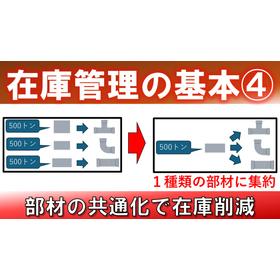
Reduce inventory by standardizing components for home appliance manufacturers!

"What are the benefits of standardizing components?" I will answer that!

In the home appliance industry, product diversification has become a challenge alongside inventory management of parts. Particularly, using different parts for multiple products can increase the variety of inventory and potentially raise management costs. Standardizing materials is an effective means to reduce the types of inventory and streamline management. This video explains the standardization of materials as a fundamental aspect of inventory management. 【Usage Scenarios】 * Design and manufacturing departments of home appliances * Inventory management departments * Companies aiming for cost reduction 【Effects of Implementation】 * Reduction in inventory value * Decrease in procurement costs for parts * Streamlining of inventory management operations

Added to bookmarks

Bookmarks list

Bookmark has been removed

Bookmarks list

You can't add any more bookmarks

By registering as a member, you can increase the number of bookmarks you can save and organize them with labels.

Free membership registration

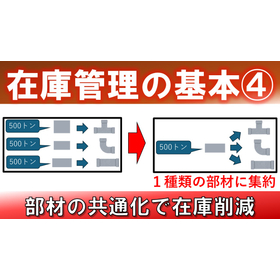
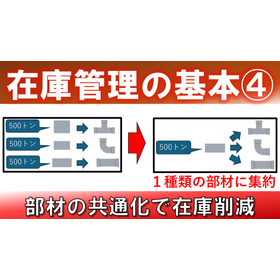
Reduce inventory by standardizing components for aerospace!

Introducing the benefits of standardizing materials!

In the aerospace industry, product quality and safety are the top priorities, and compliance with strict standards is required. Adhering to standards is also a significant challenge in parts procurement and inventory management. Optimizing inventory management contributes not only to cost reduction but also to maintaining quality. This video explains the standardization of materials as a fundamental aspect of inventory management. 【Usage Scenarios】 * Manufacturing aerospace components * Parts management in compliance with standards * Reducing inventory costs 【Benefits of Implementation】 * Cost reduction through inventory optimization * Stable supply of compliant parts * Improvement in quality management

Added to bookmarks

Bookmarks list

Bookmark has been removed

Bookmarks list

You can't add any more bookmarks

By registering as a member, you can increase the number of bookmarks you can save and organize them with labels.

Free membership registration

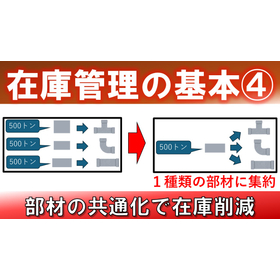
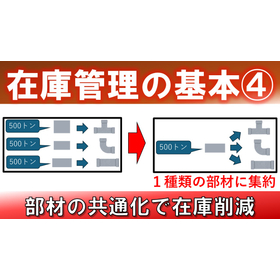
Reduce inventory by standardizing components for medical devices!

"What are the benefits of standardizing components?" I will answer that!

In the medical device industry, compatibility of components is crucial to ensure the reliability and safety of products. In particular, medical devices often have various standards and specifications, making the procurement and inventory management of components complex. By considering the compatibility of materials, it leads to optimization of inventory and cost reduction. This video explains the standardization of materials as a fundamental aspect of inventory management. 【Usage Scenarios】 - Component procurement in medical device manufacturing - Component replacement during repair and maintenance - Responding to a diverse product lineup 【Effects of Implementation】 - Reduction in inventory costs - Decrease in component procurement costs - Stable supply of products

Added to bookmarks

Bookmarks list

Bookmark has been removed

Bookmarks list

You can't add any more bookmarks

By registering as a member, you can increase the number of bookmarks you can save and organize them with labels.

Free membership registration

Reduce inventory by standardizing components for electronic devices!

Solving inventory management challenges! Introducing the benefits of standardizing materials.

In the electronics industry, the diversification of components and the complexity of inventory management have become challenges. In particular, to meet the diverse needs of products, it is necessary to hold many types of components, which can lead to issues such as increased inventory costs and shortages of necessary parts. This video explains the standardization of materials as a fundamental aspect of inventory management in manufacturing. Standardizing materials is an effective means of reducing the variety of inventory and lowering management costs. 【Usage Scenarios】 - Inventory management departments of electronics manufacturers - Procurement personnel for components - Personnel in the manufacturing department 【Benefits of Implementation】 - Reduction in inventory costs - Improved efficiency in component procurement - Decreased risk of stockouts

Added to bookmarks

Bookmarks list

Bookmark has been removed

Bookmarks list

You can't add any more bookmarks

By registering as a member, you can increase the number of bookmarks you can save and organize them with labels.

Free membership registration

【For Machine Tools】Inventory Reduction! Standardization of Components

Standardizing materials to solve inventory management issues!

In the machine tool industry, managing a diverse range of components can be a challenge in unit manufacturing. Issues such as increased inventory costs and shortages of necessary components can lead to decreased production efficiency. This video explains the standardization of components as a fundamental aspect of inventory management in manufacturing. Standardizing components contributes to inventory optimization and the establishment of an efficient production system. 【Usage Scenarios】 * Inventory management in unit manufacturing of machine tools * Procurement of components in small-batch, high-variety production * Companies aiming for cost reduction 【Benefits of Implementation】 * Reduction in inventory costs * Rapid procurement of necessary components * Improvement in production efficiency

Added to bookmarks

Bookmarks list

Bookmark has been removed

Bookmarks list

You can't add any more bookmarks

By registering as a member, you can increase the number of bookmarks you can save and organize them with labels.

Free membership registration

Reduce inventory with the standardization of components for furniture!

"What are the benefits of standardizing components?" I will answer that!

In the furniture industry, the management of hardware inventory significantly impacts product quality and delivery times. Particularly, to accommodate a variety of designs and sizes of furniture, the types of hardware tend to increase, making inventory management more complex. Excess inventory can lead to pressure on storage space and increased costs, while insufficient inventory may cause production delays. This video will explain the standardization of components as a fundamental aspect of inventory management in manufacturing. 【Usage Scenarios】 - Furniture manufacturers - Personnel responsible for hardware inventory management - Companies aiming for cost reduction 【Benefits of Implementation】 - Reduction in inventory costs - Stable supply of products - Improvement in operational efficiency

Added to bookmarks

Bookmarks list

Bookmark has been removed

Bookmarks list

You can't add any more bookmarks

By registering as a member, you can increase the number of bookmarks you can save and organize them with labels.

Free membership registration

Standardization of components for inventory reduction for robots

Improving inventory management of sensor components through standardization of materials!

In the robotics industry, the diversification of sensor components and the resulting complexity in inventory management have become challenges. Particularly for robots that require high-precision sensors, the procurement and inventory management of components significantly impact product quality and cost. Optimizing inventory management is crucial for enhancing product competitiveness. This video explains the standardization of materials as a fundamental aspect of inventory management. 【Usage Scenarios】 * Inventory management of robot sensor components * When there are many types of components, making management complicated * When wanting to reduce inventory costs 【Effects of Implementation】 * Reduction in inventory costs * Reduction in component procurement costs * Improvement in product quality

Added to bookmarks

Bookmarks list

Bookmark has been removed

Bookmarks list

You can't add any more bookmarks

By registering as a member, you can increase the number of bookmarks you can save and organize them with labels.

Free membership registration

Reduction of inventory through standardization of components for the energy industry!

"What are the benefits of standardizing components?" I will answer that!

In the energy industry, the diversification of materials used in piping can lead to complexities in inventory management. Particularly when using a wide variety of piping components, it is easy to experience either excess or shortages in inventory, which can result in increased costs. This video explains the standardization of materials as a fundamental aspect of inventory management in manufacturing. [Usage Scenarios] - Inventory management of piping components - Cost reduction - Inventory optimization [Benefits of Implementation] - Reduction in inventory costs - Stable supply of products - Improvement in operational efficiency

Added to bookmarks

Bookmarks list

Bookmark has been removed

Bookmarks list

You can't add any more bookmarks

By registering as a member, you can increase the number of bookmarks you can save and organize them with labels.

Free membership registration

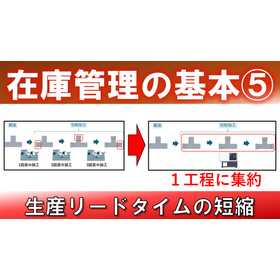
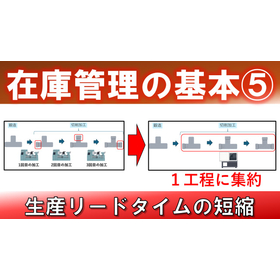
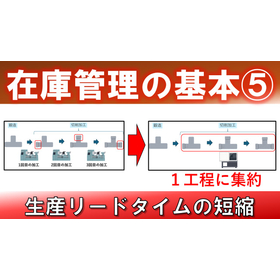
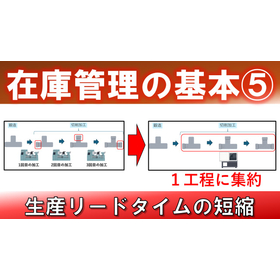
Shortening production lead times for inventory reduction in automotive parts procurement.

Improving inventory management of automotive parts by shortening production lead times!

In the field of automotive parts procurement, issues such as excess inventory and stockouts can arise. The length of production lead time increases the difficulty of inventory management and is one of the factors that generates extra costs. This video explains the shortening of production lead time as a fundamental aspect of inventory management. By reducing production lead time, it leads to a decrease in inventory costs and ensures the availability of necessary parts. Our video materials contribute to solving inventory management challenges in automotive parts procurement. 【Usage Scenarios】 - Parts procurement departments of automotive manufacturers - Supply chain management departments - Inventory management personnel 【Benefits of Implementation】 - Reduction in inventory costs - Decrease in stockout risks - Improvement in production efficiency

Added to bookmarks

Bookmarks list

Bookmark has been removed

Bookmarks list

You can't add any more bookmarks

By registering as a member, you can increase the number of bookmarks you can save and organize them with labels.

Free membership registration

Reduce inventory with shorter lead times for electronic devices!

Explaining the benefits of reducing production lead time!

In the electronics industry, streamlining the manufacturing process is essential for cost reduction and shortening delivery times. Particularly, in the context of increasing component counts and more complex processes, long production lead times can lead to increased inventory and potential opportunity losses. This video explains the shortening of production lead times as a fundamental aspect of inventory management. 【Usage Scenarios】 - Inventory management in the manufacturing process of electronic devices - Reducing lead times from component procurement to manufacturing and delivery 【Benefits of Implementation】 - Reduction in inventory costs - Stabilization of product supply systems - Improvement in customer satisfaction

Added to bookmarks

Bookmarks list

Bookmark has been removed

Bookmarks list

You can't add any more bookmarks

By registering as a member, you can increase the number of bookmarks you can save and organize them with labels.

Free membership registration

Shortening production lead times to reduce inventory for the aerospace sector.

Improving inventory management of aerospace parts by shortening production lead times!

In the aerospace industry, the quality and delivery time of parts are extremely important. In parts supply, optimizing inventory is essential. Reducing production lead time is crucial for improving inventory turnover, reducing storage costs, and supplying the necessary parts when needed. This video explains the reduction of production lead time as a fundamental aspect of inventory management. 【Usage Scenarios】 * Manufacturing of aerospace parts * Inventory management in parts supply * Delivery time management 【Benefits of Implementation】 * Reduction of inventory costs * Timely supply of necessary parts * Decreased risk of stockouts

Added to bookmarks

Bookmarks list

Bookmark has been removed

Bookmarks list

You can't add any more bookmarks

By registering as a member, you can increase the number of bookmarks you can save and organize them with labels.

Free membership registration

Production lead time reduction for the machinery manufacturing industry! Manage delivery deadlines!

Explaining the benefits of reducing production lead time!

In the machinery manufacturing industry, effective deadline management is crucial to meet the diverse needs of customers. A long production lead time can lead to delays in delivery and increased inventory, potentially resulting in decreased customer satisfaction and higher costs. This video explains the shortening of production lead times as a fundamental aspect of inventory management. 【Usage Scenarios】 - Companies facing challenges in deadline management - Companies aiming to reduce inventory - Companies looking to improve production efficiency 【Benefits of Implementation】 - Mitigation of the risk of delivery delays - Reduction of inventory costs - Improvement in customer satisfaction

Added to bookmarks

Bookmarks list

Bookmark has been removed

Bookmarks list

You can't add any more bookmarks

By registering as a member, you can increase the number of bookmarks you can save and organize them with labels.

Free membership registration

Reduce inventory by shortening production lead times for logistics!

"What are the benefits of shortening production lead time?" I will answer that!

In the logistics industry, improving transportation efficiency is always a priority. In particular, optimizing inventory management is a crucial issue that directly relates to reducing transportation costs. Excess inventory can lead to pressure on storage space and increased management costs, while insufficient inventory can result in lost opportunities. This video explains the shortening of production lead times as a fundamental aspect of inventory management in the manufacturing sector, which can help improve inventory management in logistics. 【Usage Scenarios】 - Optimization of inventory management - Reduction of transportation costs - Effective use of storage space 【Effects of Implementation】 - Proper inventory levels - Cost reduction - Improved operational efficiency

Added to bookmarks

Bookmarks list

Bookmark has been removed

Bookmarks list

You can't add any more bookmarks

By registering as a member, you can increase the number of bookmarks you can save and organize them with labels.

Free membership registration

Reduce processing time by shortening production lead time for metalworking!

"What are the benefits of reducing production lead time?" I will answer!

In the metal processing industry, there is always a demand for shorter delivery times and cost reductions. In particular, optimizing processing time is a crucial challenge for improving production efficiency. Reducing production lead times also contributes to better inventory management, ultimately leading to cost savings. This video explains the reduction of production lead times as a fundamental aspect of inventory management. [Usage Scenarios] * Shortening processing time in the manufacturing of metal products * Streamlining inventory management [Effects of Implementation] * Shorter delivery times * Cost reductions * Improved inventory management

Added to bookmarks

Bookmarks list

Bookmark has been removed

Bookmarks list

You can't add any more bookmarks

By registering as a member, you can increase the number of bookmarks you can save and organize them with labels.

Free membership registration

Reduce inventory by shortening production lead times for equipment maintenance!

Solve inventory management challenges! What are the benefits of reducing production lead time?

In the energy industry's equipment maintenance, proper parts management is essential for stable operation of equipment. Excess inventory can lead to increased costs, and a shortage of necessary parts may result in equipment downtime. Reducing production lead times contributes to more efficient inventory management and helps address these challenges. 【Usage Scenarios】 - Parts procurement for regular equipment maintenance - Response to unexpected failures - Reduction of excess inventory of parts 【Benefits of Implementation】 - Ability to procure necessary parts when needed - Reduction of inventory costs - Improvement of equipment operating rates

Added to bookmarks

Bookmarks list

Bookmark has been removed

Bookmarks list

You can't add any more bookmarks

By registering as a member, you can increase the number of bookmarks you can save and organize them with labels.

Free membership registration

Reduce inventory by shortening production lead times for furniture manufacturing!

"What are the benefits of reducing production lead time?" I will answer that!

In the furniture manufacturing industry, streamlining material procurement directly leads to cost reduction and shorter delivery times. Particularly when the procurement lead times for materials such as wood and metal parts are long, it can lead to complicated inventory management and delays in production planning. This video explains how to shorten production lead times and provides information that can help improve inventory management. 【Usage Scenarios】 * Inventory management in the procurement of materials such as wood and metal parts * Wanting to prevent delays in production planning * Aiming for cost reduction 【Benefits of Implementation】 * Reduction in inventory costs * Prevention of shortages of necessary products * Improvement in production efficiency

Added to bookmarks

Bookmarks list

Bookmark has been removed

Bookmarks list

You can't add any more bookmarks

By registering as a member, you can increase the number of bookmarks you can save and organize them with labels.

Free membership registration

Improving Quality by Reducing Defective Products for the Automotive Industry!

Explaining the relationship between reducing defective products and inventory management!

In the automotive industry, reducing defective products is essential to provide high-quality products. The occurrence of defects not only undermines customer trust but also increases repair costs and the risk of recalls, negatively impacting the company's performance. This video explains the reduction of defective products as a fundamental aspect of inventory management. 【Usage Scenarios】 * Want to improve the defect rate in the manufacturing process of automotive parts * Aim to streamline inventory management * Want to strengthen quality control systems 【Benefits of Implementation】 * Cost reduction through the reduction of defective products * Improvement in customer satisfaction * Enhancement of the company's brand image

Added to bookmarks

Bookmarks list

Bookmark has been removed

Bookmarks list

You can't add any more bookmarks

By registering as a member, you can increase the number of bookmarks you can save and organize them with labels.

Free membership registration
Prev 1...56789 Next
  • 10個まで5日で出荷 ロータリーエンコーダ 9,500円~16,600円(税別) Φ30、Φ40mm 100~4000P/R 磁気式インクリメンタル形
  • 少量~量産 精密~通常溶接 金属の溶接・接合はお任せください! 太陽イービーテックは、電子ビーム溶接、TIG溶接、真空ろう付け、トーチろう付けなど様々な加工に対応します。
    • Contact this company

      Contact Us Online
    • Before making an inquiry

      Download PDF

    Products

    • Search for Products

    Company

    • Search for Companies

    Special Features

    • Special Features

    Ranking

    • Overall Products Ranking
    • Overall Company Ranking

    support

    • site map
    IPROS
    • privacy policy Regarding external transmission of information
    • terms of service
    • About Us
    • Careers
    • Advertising
    COPYRIGHT © 2001-2026 IPROS CORPORATION ALL RIGHTS RESERVED.
    Please note that the English text on this page is automatically translated and may contain inaccuracies.