46~60 item / All 60 items
Displayed results
Filter by category

Added to bookmarks
Bookmarks listBookmark has been removed
Bookmarks listYou can't add any more bookmarks
By registering as a member, you can increase the number of bookmarks you can save and organize them with labels.
Free membership registration
Contact this company
Inquiry FormBefore making an inquiry
Download Profile46~60 item / All 60 items
Filter by category

In the fertilizer industry, moisture control is crucial for maintaining product quality. Fertilizers can clump together or deteriorate in quality due to humidity. Our "Single Stitch Poly Insertion Type" protects fertilizers from moisture by setting the poly bag inside, thus preserving quality. 【Usage Scenarios】 - Storage of fertilizers - Transportation of fertilizers - Temporary outdoor storage 【Benefits of Implementation】 - Suppression of fertilizer quality deterioration - Improved product reliability - Increased customer satisfaction
Added to bookmarks
Bookmarks listBookmark has been removed
Bookmarks listYou can't add any more bookmarks
By registering as a member, you can increase the number of bookmarks you can save and organize them with labels.
Free membership registration
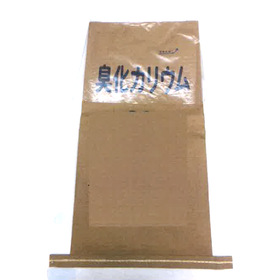
The "Single Sewing Poly Insert Type" is a general paper bag with one side sewn by a sewing machine. It is produced simultaneously (the lengths of the craft and poly are the same). By inserting a poly bag, it is possible to enhance moisture resistance. Additionally, there are removable types and sewing-in types for hand-inserted bottom seal products. 【Features】 ■ A general paper bag with one side sewn by a sewing machine ■ Simultaneous production (the lengths of the craft and poly are the same) ■ It is possible to enhance moisture resistance by inserting a poly bag *For more details, please feel free to contact us.
Added to bookmarks
Bookmarks listBookmark has been removed
Bookmarks listYou can't add any more bookmarks
By registering as a member, you can increase the number of bookmarks you can save and organize them with labels.
Free membership registration
The "Overtape Bag" is a paper bag sealed with overtape. It is also possible to add a gusset, and we have a track record of containing items such as pharmaceuticals and chemicals. Our company manufactures various bag products, including large paper bags for heavy packaging, small square-bottom paper bags, and resin cross bags. Please feel free to consult us if you have any requests. 【Features】 ■ Paper bag sealed with overtape ■ Gusset can be added ■ Contents: Proven track record with pharmaceuticals and chemicals *For more details, please feel free to contact us.
Added to bookmarks
Bookmarks listBookmark has been removed
Bookmarks listYou can't add any more bookmarks
By registering as a member, you can increase the number of bookmarks you can save and organize them with labels.
Free membership registration
Container bags (also known as container backs) are commonly referred to as FIBC (Flexible Intermediate Bulk Containers) in short. In this document, we introduce the "requirements for transportation" and "requirements to accommodate the contents" for pharmaceutical chemical products, optical resins, food ingredients, and how these are addressed. [Contents (excerpt)] - Requirements for containers used for pharmaceutical materials - Requirements for containers used for optical and electronic material resins - Requirements for food containers - Production bases for high-quality containers, etc. *For more details, please refer to the PDF document or feel free to contact us.
Added to bookmarks
Bookmarks listBookmark has been removed
Bookmarks listYou can't add any more bookmarks
By registering as a member, you can increase the number of bookmarks you can save and organize them with labels.
Free membership registration
Container bags are commonly referred to as "frecon," but officially, they are called flexible intermediate bulk containers or FIBCs (FLEXIBLE INTERMEDIATE BULK CONTAINERS). What are the requirements for transporting pharmaceutical intermediate raw materials using container bags and similar methods? This document outlines the response of Naikai Corporation, which delivers pharmaceutical chemical products and optical resins in high-quality packaging, to the use of containers for pharmaceutical materials. It introduces methods and measures for confirming the presence of organic substances that may affect biological reactions and environmental substances that could influence genetic reactions. [Examples of Responses (Excerpt)] ■ Limitations on raw resin and additives for outer bags ■ Visible foreign substances generated during the manufacturing process of outer bags are thoroughly removed during the inspection process ■ Conduct leaching tests on inner bag materials at inspection agencies in Japan ■ Prevent secondary adhesion of foreign substances during inspections by wearing anti-static coveralls, masks, goggles, etc. *For more details, please refer to the PDF document or feel free to contact us.
Added to bookmarks
Bookmarks listBookmark has been removed
Bookmarks listYou can't add any more bookmarks
By registering as a member, you can increase the number of bookmarks you can save and organize them with labels.
Free membership registration
Container bags are commonly referred to as "Furecon" for short, but officially, they are called Flexible Intermediate Bulk Containers (FIBCs). What are the requirements to accommodate contents such as optical resins and electronic materials resin raw materials? This document presents the measures taken by Naikai Corporation to deliver high-quality packaging for pharmaceutical chemicals, optical resins, food raw materials, and more, specifically for containers used for optical and electronic materials resins. We introduce our countermeasures against micron-level foreign matter contamination that can affect pickup, as well as contamination from metal powders. [Examples of Measures (Excerpt)] ■ Limiting raw resin and additives for the outer bag ■ Researching and selecting inner bag materials with minimal additives, preferably additive-free grades ■ Workers wear anti-static coveralls to prevent secondary attachment of foreign matter during inspections ■ Visible foreign matter generated during the manufacturing process of the outer bag is thoroughly removed during the inspection process *For more details, please refer to the PDF document or feel free to contact us.
Added to bookmarks
Bookmarks listBookmark has been removed
Bookmarks listYou can't add any more bookmarks
By registering as a member, you can increase the number of bookmarks you can save and organize them with labels.
Free membership registration
Container bags are commonly referred to as "Furekon" for short, but officially, they are called Flexible Intermediate Bulk Containers (FIBCs). What are the requirements when transporting food ingredients using container bags and similar methods? This document outlines the measures taken by Naikai Corporation to deliver packaging for pharmaceutical chemicals, optical resins, and food ingredients in a high-quality manner, specifically regarding food containers. It introduces safety measures for materials that come into contact with the contents, as well as strategies to prevent the adhesion of hair, bacteria, and other contaminants. 【Examples of Measures (Excerpt)】 - Limit raw resin and additives for the outer bag - Encourage handwashing before entering the product inspection room and inner bag inspection room - Select resin raw materials for the inner bag that meet the standards of the Food Sanitation Act - Visibly detectable foreign substances generated during the manufacturing process of the outer bag are thoroughly removed during the inspection process *For more details, please refer to the PDF document or feel free to contact us.
Added to bookmarks
Bookmarks listBookmark has been removed
Bookmarks listYou can't add any more bookmarks
By registering as a member, you can increase the number of bookmarks you can save and organize them with labels.
Free membership registration
What are the requirements to address the contents such as optical resins and electronic materials resin raw materials? This document introduces common challenges and solutions for various contents of container bags, including pharmaceutical chemical products, optical resins, and food raw materials. 【Do you have any concerns when transporting resins?】 ■ Micron-level foreign matter contamination that can affect pickup... ■ Contamination from metals generated during raw material production or metal substances inside inner bags... ⇒ Solutions are available! *For specific countermeasure methods, please refer to the PDF document or feel free to contact us.
Added to bookmarks
Bookmarks listBookmark has been removed
Bookmarks listYou can't add any more bookmarks
By registering as a member, you can increase the number of bookmarks you can save and organize them with labels.
Free membership registration
The "Domestic Cross Container" is of high quality and can accommodate small lot production, allowing us to deliver products that meet our customers' wishes. Produced in domestic factories using domestic materials, our quality and performance are guaranteed. Additionally, domestic materials are available in a wide variety of "colors" and "materials" to meet diverse requests. Please feel free to consult us when placing an order. 【Features】 ■ Reliable quality ■ Abundance of materials that can produce a variety of products and a system that allows for small lot production ■ Over 30 years of experience in producing a wide range of products ■ Domestic materials are available in a rich variety of "colors" and "materials" to meet diverse requests *For more details, please refer to the PDF document or feel free to contact us.
Added to bookmarks
Bookmarks listBookmark has been removed
Bookmarks listYou can't add any more bookmarks
By registering as a member, you can increase the number of bookmarks you can save and organize them with labels.
Free membership registration
There are occasional reports of "sudden clogging during filling of the container bag, resulting in overflow." This occurs when the filling material comes into contact with the inner bag, causing it to be dragged down, leading to a shortage of the upper inner bag and preventing the contents from spreading evenly to the top corners. As a countermeasure, it is important to fully inflate the inner bag with air, ensure that it properly conforms to the container bag, and maintain this state. This allows the contents to fill the inner bag completely. Additionally, there is a solution by securing (sewing) the outer bag of the container bag to the inner bag. 【Countermeasures】 ■ Fully inflate the inner bag with air, ensure that it properly conforms to the container bag, and maintain this state. ■ Secure (sew) the outer bag of the container bag to the inner bag. *For more details, please refer to the PDF document or feel free to contact us.
Added to bookmarks
Bookmarks listBookmark has been removed
Bookmarks listYou can't add any more bookmarks
By registering as a member, you can increase the number of bookmarks you can save and organize them with labels.
Free membership registration
When discharging the product, the inner bag shifts and comes out from the discharge port. We are adjusting it using a hoist crane, but it has exceeded the limit, causing the inner bag to bend and get stuck above the receiving hopper opening. As a countermeasure, we can sew tape in the center of the belt to prevent the tied part of the inner bag in the charging tube from falling down, and connect it below the knot of the inner bag in the charging tube, which will stop the inner bag from dropping. However, if there are height restrictions for lifting, it may get stuck at the receiving hopper opening. In that case, by attaching a flap to the "Smart Liner" produced by our company, it becomes possible to integrate the outer bag of the container back with the inner bag, preventing the inner bag from shifting while significantly improving the filling performance. 【Countermeasures】 - Sew tape in the center of the belt to prevent the tied part of the inner bag in the charging tube from falling down, and connect it below the knot of the inner bag in the charging tube. - Attach a flap to the "Smart Liner" produced by our company. *For more details, please refer to the PDF document or feel free to contact us.
Added to bookmarks
Bookmarks listBookmark has been removed
Bookmarks listYou can't add any more bookmarks
By registering as a member, you can increase the number of bookmarks you can save and organize them with labels.
Free membership registration
The flexible cross container is made by sewing the raw material with sewing thread to create a bag, making it a common source of foreign substances. The raw material used for the container bag itself is made of polypropylene or polyethylene, which can generate static electricity. Therefore, even if you think you have disposed of the cut sewing thread, it can still stick to your fingers or adhere to the raw material, which is troublesome. As a countermeasure, it is effective to place a trash can near the sewing machine and cover it with a wet towel or similar item to dissipate static electricity. At Naikai Corporation, we have established a specialized inspection process to remove foreign substances and produce clean products. [Countermeasures] - Create a trash can near the sewing machine - Cover the trash can with a wet towel or similar item to dissipate static electricity - Daily education is important to ensure that items are properly disposed of in the trash can *For more details, please refer to the PDF document or feel free to contact us.
Added to bookmarks
Bookmarks listBookmark has been removed
Bookmarks listYou can't add any more bookmarks
By registering as a member, you can increase the number of bookmarks you can save and organize them with labels.
Free membership registration
The base material comes in both laminated and non-laminated versions. Laminated base materials are already laminated on one side, which reduces the risk of frayed yarns falling off, leading to many cases where flash cutting is deemed acceptable. However, if there are issues with temperature management during lamination, it becomes difficult to completely prevent detachment from the cut edge, regardless of whether it is laminated. Countermeasures include "performing heat cutting or thermal treatment on the cut edge as needed, even for laminated base materials" and "folding back the base material to sew it in a way that the cut edge does not appear." At Naikai Corporation, thermal treatment is implemented for all products regarding no-contamination products from a risk avoidance perspective. 【Countermeasures】 ■ Perform heat cutting or thermal treatment on the cut edge as needed, even for laminated base materials. ■ Inspect and cut away any foreign substances that have occurred or are likely to occur. ■ Fold back the base material to sew it in a way that the cut edge does not appear. *For more details, please refer to the PDF document or feel free to contact us.
Added to bookmarks
Bookmarks listBookmark has been removed
Bookmarks listYou can't add any more bookmarks
By registering as a member, you can increase the number of bookmarks you can save and organize them with labels.
Free membership registration
When cutting the original material, it is particularly likely to occur in areas such as the top and bottom surfaces where the input and output tubes are sewn, as well as in the cross-cut (kiku-wari) sections. There are cases where automatic heat press cutting is performed with cutting equipment or where a dedicated iron is used manually, but in either case, if not managed properly, there may be occurrences of burnt spots. If this detaches during the manufacturing process of container bags or during filling and discharging at the customer's site, it can lead to foreign matter contamination. Countermeasures include "managing the cutting heater temperature and cutting speed, and education" or "covering the surface with an over-tape and sewing it." At our overseas factories, we suppress occurrences through technical guidance at the cutting site and foreign matter inspections. Please feel free to consult us. *For more details, please refer to the PDF materials or feel free to contact us.
Added to bookmarks
Bookmarks listBookmark has been removed
Bookmarks listYou can't add any more bookmarks
By registering as a member, you can increase the number of bookmarks you can save and organize them with labels.
Free membership registration
It is not uncommon for hair and body hair to adhere to the outer and inner surfaces of container bags. This is due to the fact that the fabric used for container bags is made of polypropylene or polyethylene, which generates static electricity, similar to the principle where hair is attracted to a desk mat used in elementary school. As a countermeasure, it is important to use anti-static materials, select the best work clothing, and analyze and identify hazardous areas and causes based on past cases. Naikai Corporation is capable of producing container bags with zero foreign matter for pharmaceutical, optical, and semiconductor applications. If you need container bags for such applications, please feel free to contact us. [Countermeasures] - Use anti-static materials and select the best work clothing - Analyze and identify hazardous areas and causes based on past cases *For more details, please refer to the PDF document or feel free to contact us.
Added to bookmarks
Bookmarks listBookmark has been removed
Bookmarks listYou can't add any more bookmarks
By registering as a member, you can increase the number of bookmarks you can save and organize them with labels.
Free membership registration