136~151 item / All 151 items
Displayed results
Filter by category

Added to bookmarks
Bookmarks listBookmark has been removed
Bookmarks listYou can't add any more bookmarks
By registering as a member, you can increase the number of bookmarks you can save and organize them with labels.
Free membership registrationContact this company
Inquiry Form136~151 item / All 151 items
Filter by category

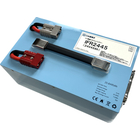
Lithium conversion with the charger as is. It is possible to replace existing lead-acid battery chargers with lithium ones. This significantly reduces the introduction costs. Achieving 24-hour operation with "topping up" charging. Short-duration topping up charging, which was strictly prohibited for lead-acid batteries, is now possible. This allows for recovery during brief breaks, minimizing the downtime of AGVs. Upgrade options for non-contact and rapid charging are also available. For sites aiming for further automation, we also offer customization for integration with non-contact power supply systems and rapid charging specifications. Maintenance labor reduced by 90%. No need for water replenishment or management of distilled water. The risk of floor corrosion due to battery liquid leaks is eliminated, maintaining a clean warehouse environment. Custom solutions available for small lots or from one unit. For AGVs with special shapes or older vehicles that do not fit standard products, we design and manufacture optimal sizes and capacities from one unit under our domestic inspection system.
Added to bookmarks
Bookmarks listBookmark has been removed
Bookmarks listYou can't add any more bookmarks
By registering as a member, you can increase the number of bookmarks you can save and organize them with labels.
Free membership registration
"I want to miniaturize the AGV, but the battery takes up too much space." "Compact AGVs have a small battery capacity and frequently run out of charge." Our high-density lithium-ion batteries solve these dilemmas in logistics settings. Despite their thin and compact design that fits into limited internal spaces, they maintain a high energy density. Furthermore, with rapid charging capabilities that allow for full recovery in a short time, we enable operations close to 24-hour functionality without increasing battery size. We respond to the design and operational needs of "wanting to be smaller and more mobile" with reliable quality through domestic in-house inspections.
Added to bookmarks
Bookmarks listBookmark has been removed
Bookmarks listYou can't add any more bookmarks
By registering as a member, you can increase the number of bookmarks you can save and organize them with labels.
Free membership registration
Overwhelming energy density (lightweight and compact) Achieving the same amount of electrical energy as lead batteries with overwhelming lightness. It is now possible to reduce the total weight of the vehicle by several hundred kilograms, minimizing damage to the floor and loss of driving energy. Improved loading efficiency (maximizing payload) With lighter batteries, it is possible to carry more cargo or higher-functionality optional equipment. This greatly contributes to improved work efficiency. Low center of gravity design and layout flexibility Not only lightweight, but also customizable in shape. This allows for optimal placement within the vehicle, supporting advanced vehicle balance design such as improved stability during turns. Easy weight reduction without charger replacement Our batteries can be designed to use existing lead battery chargers as is. This enables upgrades to lightweight and lithium technology while keeping capital investment to a minimum. Reliability through domestic self-inspection While pursuing weight reduction, we maintain robustness and safety suitable for industrial applications. We deliver only products that have passed strict inspection standards.
Added to bookmarks
Bookmarks listBookmark has been removed
Bookmarks listYou can't add any more bookmarks
By registering as a member, you can increase the number of bookmarks you can save and organize them with labels.
Free membership registration
Existing chargers can be reused as is. The cost of replacing with a lithium-specific charger and the electrical work for installation will be reduced to "zero." A smooth transition utilizing existing infrastructure is possible. No modifications needed on the vehicle side (plug-in replacement). By customizing the shape and voltage to match existing lead batteries, operations can start simply by swapping them out without changing the circuit design on the vehicle side. Extending lifespan reduces the "number of replacements." With a cycle life more than three times that of lead batteries, future battery replacement costs can be significantly minimized. Support for small lots and shortest delivery times. Replacement can be done from just one unit. Instead of changing all vehicles at once, it is possible to first trial with one unit and then gradually proceed with lithium conversion according to your budget. "Fail-proof" implementation support through domestic in-house inspection. Vehicle specifications are checked in advance, and shipments are made with optimal settings. Hidden costs due to post-implementation troubles are thoroughly eliminated.
Added to bookmarks
Bookmarks listBookmark has been removed
Bookmarks listYou can't add any more bookmarks
By registering as a member, you can increase the number of bookmarks you can save and organize them with labels.
Free membership registration
Overwhelming charging speed (supports fast charging) Compared to lead batteries, the ability to accept electricity (charging acceptance) is extremely high, allowing for full charging in a short time. You can secure the power needed for the next operation during brief moments like lunch breaks or shift changes. Damage-free "topping up" charging It allows for "frequent charging," which was a cause of reduced lifespan for lead batteries. There is no memory effect, enabling a shift to operations where you can charge during gaps without worrying about battery levels. High output maintained until the end of discharge While lead batteries experience power reduction as the charge decreases, lithium batteries maintain stable voltage until the very end. Strong operation and elevation are possible right up until just before charging. Effective use of existing charging infrastructure With a unique BMS (Battery Management System), charging efficiency is improved while utilizing existing lead battery chargers. You can introduce "fast charging" without significantly changing the equipment. Support for complete automation of charging operations Because charging time is short, it pairs excellently with automatic charging systems and contactless power supply. It is ideal for building a "non-stop site" that does not rely on human intervention.
Added to bookmarks
Bookmarks listBookmark has been removed
Bookmarks listYou can't add any more bookmarks
By registering as a member, you can increase the number of bookmarks you can save and organize them with labels.
Free membership registration
Zero contact wear and maintenance-free Since there are no physical contacts, issues such as contact failure due to wear or electrical disturbances caused by dirt do not occur. This significantly reduces the hassle and cost of parts replacement. High compatibility that allows for "a few centimeters of misalignment" The BMS flexibly controls the voltage and current fluctuations unique to non-contact power supply. Even if the stopping position is slightly misaligned, it is designed to reliably start rapid charging. Optimized for short-duration, high-frequency "topping up" charging Leveraging the characteristics of lithium-ion batteries, it automatically charges every time the vehicle stops. There is no need to increase the battery capacity, achieving both vehicle miniaturization and longevity. Support for retrofitting existing vehicles to wireless charging With custom solutions starting from a single unit, we also offer design and inspection services to upgrade existing wired charging AGVs to non-contact charging specifications.
Added to bookmarks
Bookmarks listBookmark has been removed
Bookmarks listYou can't add any more bookmarks
By registering as a member, you can increase the number of bookmarks you can save and organize them with labels.
Free membership registration
Shape Customization Custom shape design is possible to fit installation spaces, such as "thin," "elongated," and "L-shaped." You can build an optimal power supply without compromising the design of your AGV or conveyor. Flexible support for special voltage and capacity settings In addition to standard voltages like 12V, 24V, and 48V, we accept special voltage settings tailored to your system, as well as optimal capacity designs calculated based on operating time, starting from just one unit. High-quality assurance through in-house inspection We overturn the common belief that "small lots equal quality concerns." Using our own inspection equipment, we thoroughly conduct charge and discharge tests and safety checks, ensuring reliable quality suitable for industrial applications. Optimization of BMS (Battery Management System) Detailed customization in control aspects, such as communication protocols and protection function thresholds, is also possible. We provide batteries that are highly compatible with your system. From prototype to small-scale mass production We start with a prototype of one unit, and after evaluation, we move to small-scale production of several to dozens of units. We have a flexible supply system in place that aligns with the growth speed of your business.
Added to bookmarks
Bookmarks listBookmark has been removed
Bookmarks listYou can't add any more bookmarks
By registering as a member, you can increase the number of bookmarks you can save and organize them with labels.
Free membership registration
Support for various size specifications We manufacture to your desired dimensions for height, width, and depth without being constrained by existing standard products. We eliminate the stress of not fitting within just a few millimeters. Realization of special shapes (thin, elongated, deformed) With combinations of cells, we enable flexible layouts such as "ultra-thin" for ultra-low AGVs and "ultra-narrow" to fit within robot arms. Optimization of weight balance To enhance vehicle stability, we can design weight distribution considering balance, such as by splitting the battery into left and right (twin pack configuration). Customization of voltage and capacity simultaneously We provide optimal capacity settings calculated based on the required operating time, not just the shape. Reliable implementation through domestic in-house inspection Even for special shapes, we thoroughly conduct vibration, impact, and charge/discharge tests at our domestic facilities. We deliver robust products that are worthy of industrial use.
Added to bookmarks
Bookmarks listBookmark has been removed
Bookmarks listYou can't add any more bookmarks
By registering as a member, you can increase the number of bookmarks you can save and organize them with labels.
Free membership registration
Overwhelming power compatible with high C-rate Handles peak currents generated during excavation and heavy load lifting. Achieves engine-equivalent response without compromising work efficiency. Vibration and shock resistance "Heavy Duty" Optimizes the method of securing internal cells and wiring layout, Preventing failures caused by shocks during off-road driving and excavation. Environmental resistance (IP rating, thermal measures) Ensures high dust and water resistance, anticipating sites exposed to mud, water, and dust. Maintains stable output even during outdoor work in summer through heat dissipation design. "Shape flexibility" utilizing engine space Customizes the housing size to fit the available space in the engine room. Flexibly accommodates EV conversions (electrification modifications) of existing vehicles. Collaboration with vehicle control (CAN communication compatible) Shares information in real-time with the vehicle's controller through communication interfaces like CAN. Enables safe and advanced power management.
Added to bookmarks
Bookmarks listBookmark has been removed
Bookmarks listYou can't add any more bookmarks
By registering as a member, you can increase the number of bookmarks you can save and organize them with labels.
Free membership registration
Reduction of burden in exchange operations Carrying heavy spare batteries, which was common with lead batteries, is alleviated with lithium batteries due to significant weight reduction, thus easing the workload. Elimination of psychological pressure from "forgetting to charge" You are freed from the strict constraints of long charging times. Since recovery can be achieved with short charging periods, even if you forget to charge, you can restore functionality quickly, reducing the pressure of operational schedules. Significant cut in management workload Complicated maintenance tasks such as scheduling for equal charging and checking specific gravity in winter are no longer necessary. The Battery Management System (BMS) automatically monitors the condition, allowing humans to simply "operate it."
Added to bookmarks
Bookmarks listBookmark has been removed
Bookmarks listYou can't add any more bookmarks
By registering as a member, you can increase the number of bookmarks you can save and organize them with labels.
Free membership registration
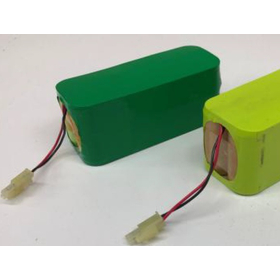
Restore alternative battery packs that fit existing spaces using the latest cells. This allows you to avoid costly equipment replacements and enables continued maintenance. Small lot production We flexibly respond to the need for "just a few as spares." Large order quantities are not necessary. Complete reproduction of shape and connectors We meticulously reproduce special-shaped plastic cases, unique connectors, and even the lengths of lead wires. You can resume operation simply by swapping them out on the day they arrive. Performance improvement with the latest cells Compared to older cells, the latest cells have higher energy density, which can provide added value such as "extended operating time" and "longer lifespan" even in the same size. Optimal design of safety circuits (BMS) We not only connect the cells but also incorporate overcharge and over-discharge protection circuits. We optimize the protective functions to ensure safe use even in older charging environments. Design based on physical analysis is also possible Even if specifications or drawings are not available, we can analyze your used battery pack and design a replacement. Please understand that we may not be able to meet all requests.
Added to bookmarks
Bookmarks listBookmark has been removed
Bookmarks listYou can't add any more bookmarks
By registering as a member, you can increase the number of bookmarks you can save and organize them with labels.
Free membership registration
Clean & Safety: The completely sealed structure eliminates the risk of hydrogen gas generation during charging, as seen with lead batteries, and the risk of sulfuric acid leakage. It is ideal for environments that require advanced hygiene management, such as semiconductor factories, pharmaceuticals, and food factories. Continued Use of Existing Chargers: There is no need to refresh the charging system, which was the biggest barrier to lithium adoption. Existing chargers for lead batteries can be utilized as is, significantly reducing implementation costs and enabling a quick replacement. BMS Designed Specifically for AGV/AMR: It incorporates a dedicated Battery Management System (BMS) that responds to the unique load fluctuations and regenerative braking of transport vehicles. While ensuring safety, it supports 24-hour operation with lithium's unique "opportunity charging." Maintenance-Free: There is no need for maintenance tasks such as replenishing distilled water or cleaning around the terminals.
Added to bookmarks
Bookmarks listBookmark has been removed
Bookmarks listYou can't add any more bookmarks
By registering as a member, you can increase the number of bookmarks you can save and organize them with labels.
Free membership registration
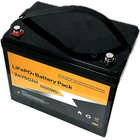
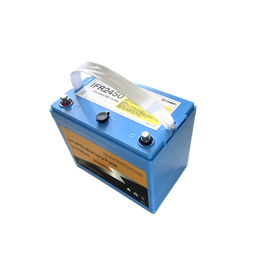
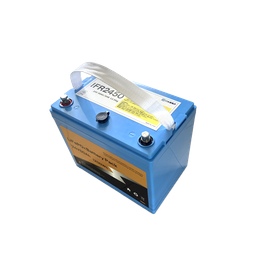
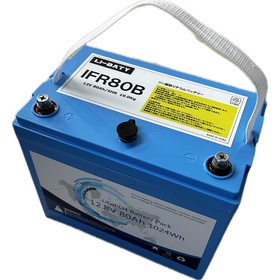
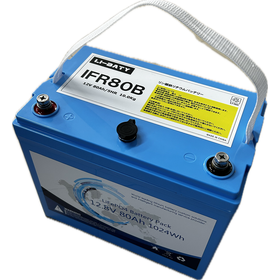
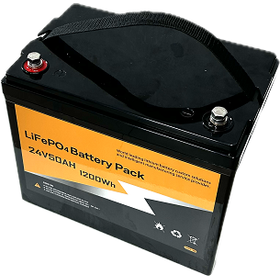
Lead batteries have a short cycle life and gradually experience capacity degradation, requiring management and maintenance. Why not switch to lithium batteries to reduce maintenance and replacement costs? <Advantages compared to lead-acid batteries> - Lightweight: Can be reduced to less than half the weight of conventional lead batteries. - Long operating time: Can maintain high voltage for a longer period, resulting in extended operating time until the equipment's stop voltage. - Reduced replacement frequency: Durable against deep discharges, significantly extending cycle life compared to lead batteries. - Easy storage: Low self-discharge means no need for recharging after vacations or equipment maintenance. - Resistant to temperature variations: Can be used in temperature environments ranging from 5°C to 40°C. - Cost control: Initial costs are high, but running costs can be minimized. - No need for equipment changes: Existing equipment and peripherals such as chargers can be used as is.
Added to bookmarks
Bookmarks listBookmark has been removed
Bookmarks listYou can't add any more bookmarks
By registering as a member, you can increase the number of bookmarks you can save and organize them with labels.
Free membership registration
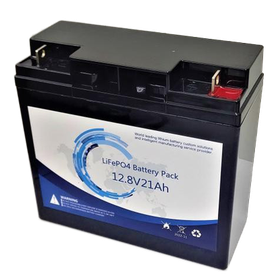
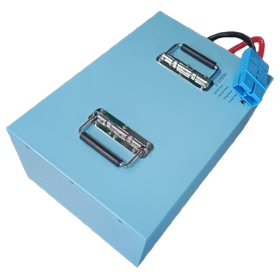
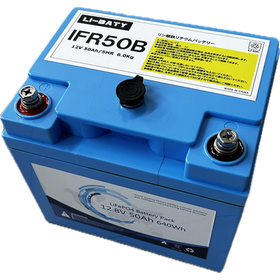
Lead batteries have a short cycle life and gradually experience capacity degradation, requiring management and maintenance. Would you consider switching to lithium batteries to reduce maintenance and replacement costs? <Advantages compared to lead-acid batteries> - Lightweight: Can be reduced to less than half the weight of a standard lead battery. - Long operating time: Can maintain high voltage for a longer period, resulting in extended operating time until the equipment's stop voltage. - Reduced replacement frequency: Durable against deep discharges, significantly extending cycle life compared to lead batteries. - Easy storage: Low self-discharge means no need for recharging after vacations or equipment maintenance. - Resistant to temperature variations: Can be used in temperature environments ranging from 5°C to 40°C. - Cost control: Initial costs are high, but running costs can be minimized. - No need for equipment changes: The main equipment and peripheral devices such as chargers can be used as is.
Added to bookmarks
Bookmarks listBookmark has been removed
Bookmarks listYou can't add any more bookmarks
By registering as a member, you can increase the number of bookmarks you can save and organize them with labels.
Free membership registration
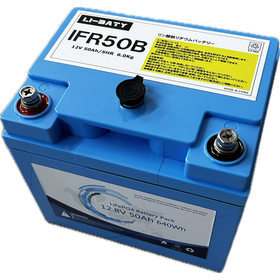
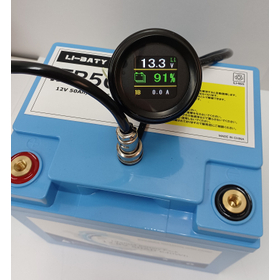
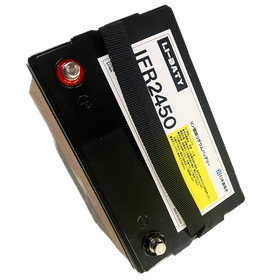
Lead batteries have a short cycle life and gradually experience capacity decline, requiring management and maintenance. Would you consider switching to lithium batteries to reduce maintenance and replacement costs? <Advantages compared to lead-acid batteries> - Lightweight: Can be reduced to less than half the weight of a standard lead battery. - Long operating time: Can maintain high voltage for a longer period, resulting in extended operating time until the equipment's stop voltage. - Reduced replacement frequency: Durable against deep discharges, significantly extending cycle life compared to lead batteries. - Easy storage: Low self-discharge means no need for recharging after vacations or equipment maintenance. - Resistant to temperature variations: Can be used in temperature environments ranging from 5°C to 40°C. - Cost control: Initial costs are high, but running costs can be minimized. - No need for equipment changes: The main equipment and peripheral devices such as chargers can be used as is.
Added to bookmarks
Bookmarks listBookmark has been removed
Bookmarks listYou can't add any more bookmarks
By registering as a member, you can increase the number of bookmarks you can save and organize them with labels.
Free membership registration
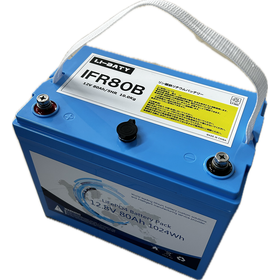
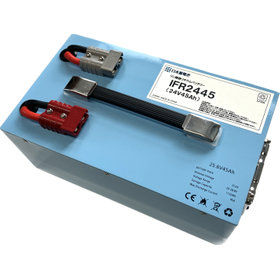
Lead batteries have a short cycle life and gradually experience capacity degradation, requiring management and maintenance. Would you consider switching to lithium batteries to reduce maintenance and replacement costs? <Advantages compared to lead-acid batteries> - Lightweight: Can be reduced to less than half the weight of a standard lead battery. - Long operating time: Can maintain high voltage for a longer duration, resulting in extended operating time until the equipment's shutdown voltage. - Reduced replacement frequency: Durable against deep discharges, significantly extending cycle life compared to lead batteries. - Easy storage: Low self-discharge means no need for recharging after vacations or equipment maintenance. - Resistant to temperature changes: Can be used in temperature environments ranging from 5°C to 40°C. - Cost control: Initial costs are high, but running costs can be minimized. - No need for equipment changes: Existing equipment and peripherals such as chargers can be used as is.
Added to bookmarks
Bookmarks listBookmark has been removed
Bookmarks listYou can't add any more bookmarks
By registering as a member, you can increase the number of bookmarks you can save and organize them with labels.
Free membership registration