91~135 item / All 213 items
Displayed results
Filter by category

Added to bookmarks
Bookmarks listBookmark has been removed
Bookmarks listYou can't add any more bookmarks
By registering as a member, you can increase the number of bookmarks you can save and organize them with labels.
Free membership registration
Contact this company
Inquiry FormBefore making an inquiry
Download Profile91~135 item / All 213 items
Filter by category
The steel manufacturer was using a hydraulic diaphragm pump to transport 98% sulfuric acid over long distances within the steelworks. However, there were challenges such as "damage that may occur unknowingly due to corrosion from sulfuric acid" and "the need for pump overhauls every three years, incurring costs each time." For solutions to these challenges and requests, please download and view the PDF materials. 【Customer's Challenges and Requests】 ■ An accumulator was installed to eliminate pulsation, but it may be damaged unknowingly due to corrosion from sulfuric acid. ■ Due to long-distance piping, a high-pressure pump is used to account for pressure loss, and continuing operation without the accumulator functioning poses a risk of pipe damage, which is very dangerous. ■ Pump overhauls are required every three years, incurring costs each time. *For more details, please refer to the PDF materials or feel free to contact us.
Added to bookmarks
Bookmarks listBookmark has been removed
Bookmarks listYou can't add any more bookmarks
By registering as a member, you can increase the number of bookmarks you can save and organize them with labels.
Free membership registration
At the paper manufacturing company, they are transporting fillers to be added to the paper during the process of turning pulp into paper. Traditionally, they have been using metal spiral pumps, but there has been a problem where "the stainless steel impeller is quickly eroded and needs to be replaced every three months." For solutions to the challenges and requests, please download and view the PDF materials. 【Customer's Challenges and Requests】 ■ The filler is a mineral-based slurry with high hardness, causing the stainless steel impeller to erode quickly and requiring replacement every three months. ■ They have tried processing to increase the hardness of the impeller, but no improvements have been observed. *For more details, please refer to the PDF materials or feel free to contact us.
Added to bookmarks
Bookmarks listBookmark has been removed
Bookmarks listYou can't add any more bookmarks
By registering as a member, you can increase the number of bookmarks you can save and organize them with labels.
Free membership registration
At the National University (Graduate School of Environmental and Life Science), a culture solution containing nutrients that serve as food for microorganisms was being pumped into a column filled with soil samples. It was necessary to collect data continuously for over a month, and it was ideal for the flow rate to remain constant during that time. For solutions to the issues and requests, please download and refer to the PDF materials. 【Customer's Issues and Requests】 ■ Looking for a pump with minimal fluctuations in flow rate and pressure to collect data under consistent conditions. ■ It is ideal for the flow rate to remain constant during the continuous data collection for over a month. *For more details, please refer to the PDF materials or feel free to contact us.
Added to bookmarks
Bookmarks listBookmark has been removed
Bookmarks listYou can't add any more bookmarks
By registering as a member, you can increase the number of bookmarks you can save and organize them with labels.
Free membership registration
At the material manufacturer, dispersion was performed using a bead mill to micronize ceramics. However, there were challenges such as "the beads becoming unevenly distributed in the disperser due to pump pulsation, leading to over-dispersion," and "beads flowing out from the outlet side of the bead mill and getting caught in the pump, causing abnormal stops." For solutions to these challenges and requests, please download and refer to the PDF materials. 【Customer's Challenges and Requests】 ■ Beads are unevenly distributed in the disperser due to pump pulsation, leading to over-dispersion. ■ Beads flow out from the outlet side of the bead mill and can get caught in the pump, causing abnormal stops. ■ Due to small-batch production of various types, frequent liquid changes are necessary, resulting in a high cleaning frequency. *For more details, please refer to the PDF materials or feel free to contact us.
Added to bookmarks
Bookmarks listBookmark has been removed
Bookmarks listYou can't add any more bookmarks
By registering as a member, you can increase the number of bookmarks you can save and organize them with labels.
Free membership registration
The electronic components manufacturer was using a gear-type pump to supply a slurry-like high-viscosity liquid (3000 mPa·s) to the coating machine. However, there were issues such as "the slurry particles getting clogged in the pump, causing it to stop" and "severe wear of the pump, leading to a decrease in flow rate in a short time." For solutions to these issues and requests, please download and view the PDF materials. 【Customer's Issues and Requests】 ■ Slurry particles sometimes clogged the pump, causing it to stop. ■ The pump experienced severe wear, resulting in a decrease in flow rate in a short time. *For more details, please refer to the PDF materials or feel free to contact us.
Added to bookmarks
Bookmarks listBookmark has been removed
Bookmarks listYou can't add any more bookmarks
By registering as a member, you can increase the number of bookmarks you can save and organize them with labels.
Free membership registration
The request from the chemical plant manufacturer was to circulate sulfuric acid at a temperature of 150°C and a concentration of 75% in the laboratory's experimental line. However, there were challenges such as wanting to "maintain a constant flow rate" and that "there were no products from other companies that met the conditions." For solutions to the challenges and requests, please download and view the PDF materials. 【Customer's Challenges and Requests】 ■ Want to maintain a constant flow rate ■ Due to the need for high corrosion resistance, they prefer PTFE lining as the material ■ They anticipate operating for about 10 hours a day ■ There were no products from other companies that met the conditions *For more details, please refer to the PDF materials or feel free to contact us.
Added to bookmarks
Bookmarks listBookmark has been removed
Bookmarks listYou can't add any more bookmarks
By registering as a member, you can increase the number of bookmarks you can save and organize them with labels.
Free membership registration
The dental materials manufacturer requested to inject the same amount of liquid from six locations at the top of the mixing tank during the manufacturing process of dental materials. However, there was a challenge in finding a manufacturer that could produce a six-channel diaphragm pump. Please download the PDF document to view the solution to the challenge and request. 【Customer's Challenge/Request】 ■Could not find a manufacturer to produce a six-channel diaphragm pump. *For more details, please refer to the PDF document or feel free to contact us.
Added to bookmarks
Bookmarks listBookmark has been removed
Bookmarks listYou can't add any more bookmarks
By registering as a member, you can increase the number of bookmarks you can save and organize them with labels.
Free membership registration
The steel manufacturer found that the rainwater falling on the premises of the steelworks was highly alkaline, and it was necessary to perform neutralization treatment to reuse this rainwater on-site. However, after consulting with multiple manufacturers, they faced challenges such as "the treatment volume and pH fluctuate significantly due to weather conditions, requiring a wide control range." For solutions to the challenges and requests, please download and view the PDF materials. 【Customer's Challenges and Requests】 ■ Minimize the installation area of the equipment ■ If using a tank for pH neutralization treatment (tank method), a large tank of over 100 tons would be required, increasing the installation area ■ Due to significant fluctuations in treatment volume and pH caused by weather, it is necessary to accommodate a wide control range *For more details, please refer to the PDF materials or feel free to contact us.
Added to bookmarks
Bookmarks listBookmark has been removed
Bookmarks listYou can't add any more bookmarks
By registering as a member, you can increase the number of bookmarks you can save and organize them with labels.
Free membership registration
The request from the petrochemical manufacturer was to transfer organic solvents (dichloromethane) containing micro-particles of a few microns. Furthermore, they requested that "the flow rate be 50L/min and the discharge pressure be 0.5MPa" and that "they want to monitor and record the actual flow rate." For solutions to the challenges and requests, please download and view the PDF materials. 【Customer's Challenges and Requests】 ■ Flow rate of 50L/min and discharge pressure of 0.5MPa required ■ Want to monitor and record the actual flow rate *For more details, please refer to the PDF materials or feel free to contact us.
Added to bookmarks
Bookmarks listBookmark has been removed
Bookmarks listYou can't add any more bookmarks
By registering as a member, you can increase the number of bookmarks you can save and organize them with labels.
Free membership registration
The resin product manufacturer requested to use a pump to inject additives into the resin extrusion molding machine. However, there were challenges such as "the injection point requires a pressure of over 5MPa" and "the viscosity increases when the liquid temperature drops, so it needs to be maintained at 70-90°C." For solutions to the challenges and requests, please download and view the PDF materials. 【Customer's Challenges and Requests】 ■ The injection point requires a pressure of over 5MPa ■ If the pump has pulsation, it causes uneven injection, so we want to inject a constant amount continuously ■ The viscosity increases when the liquid temperature drops, so it needs to be maintained at 70-90°C ■ Due to high temperature and high pressure, we want to implement safety measures ■ We want it to be movable rather than fixed in one location *For more details, please refer to the PDF materials or feel free to contact us.
Added to bookmarks
Bookmarks listBookmark has been removed
Bookmarks listYou can't add any more bookmarks
By registering as a member, you can increase the number of bookmarks you can save and organize them with labels.
Free membership registration
The food manufacturer was transferring concentrated fruit juice (with a maximum viscosity of 20,000 mPa·s) from the raw material tank to the filling machine tank at a flow rate of 2 tons per hour. However, the existing rotary pump had issues where wear particles were generated from the pump's mechanical seal, which could mix into the liquid, necessitating frequent disassembly and inspection. For solutions to the challenges and requests, please download and view the PDF document. 【Customer's Challenges and Requests】 ■ There was a risk of bacterial contamination every time the pump was disassembled, as it came into contact with outside air. ■ Maintenance costs were high due to the need for specialized maintenance personnel and the high cost of replacement parts. ■ Frequent disassembly and inspection were required because wear particles from the pump's mechanical seal could mix into the liquid. *For more details, please refer to the PDF document or feel free to contact us.
Added to bookmarks
Bookmarks listBookmark has been removed
Bookmarks listYou can't add any more bookmarks
By registering as a member, you can increase the number of bookmarks you can save and organize them with labels.
Free membership registration
The request from the construction pipe manufacturer was to create a device for conducting quality conformity tests on resin pipes for construction. Additionally, there was a request to "continuously flow chlorine water through the pipes for several months," with the conditions kept constant and testing conducted at three different temperatures. For solutions to the challenges and requests, please download and view the PDF materials. 【Customer's Challenges and Requests】 ■ Continuously flow chlorine water through the pipes for several months ■ Keep the conditions of residual chlorine concentration, pH value, water volume, and delivery pressure constant, and conduct tests at three different temperatures (95°C, 105°C, 115°C) *For more details, please refer to the PDF materials or feel free to contact us.
Added to bookmarks
Bookmarks listBookmark has been removed
Bookmarks listYou can't add any more bookmarks
By registering as a member, you can increase the number of bookmarks you can save and organize them with labels.
Free membership registration
The local government (sewage treatment plant) was using a plunger pump to add a chelating agent (ferrous sulfate solution) to prevent the leaching of heavy metals contained in the incineration ash after incinerating sludge at the sewage treatment plant. However, there were issues such as "the piping vibrated due to the pump's pulsation, causing loosening and leaks" and "the pump had run dry and malfunctioned when the chemical tank was empty." For solutions to the issues and requests, please download and view the PDF materials. 【Customer's Issues and Requests】 ■ The piping vibrated due to the pump's pulsation, causing loosening and leaks. ■ The pump had run dry and malfunctioned when the chemical tank was empty. *For more details, please refer to the PDF materials or feel free to contact us.
Added to bookmarks
Bookmarks listBookmark has been removed
Bookmarks listYou can't add any more bookmarks
By registering as a member, you can increase the number of bookmarks you can save and organize them with labels.
Free membership registration
The request from the water treatment equipment manufacturer was for a ballast water treatment system to be installed on ships, with the desire to inject chemicals into seawater. However, there were challenges such as the need for "high reliability to strictly adhere to the discharge standards stipulated by the treaty" and "the treated water must be discharged directly into the sea, so it must be treated reliably." Please download the PDF document to see the solutions to the challenges and requests. 【Customer's Challenges and Requests】 ■ High reliability is required to strictly adhere to the discharge standards stipulated by the treaty. ■ Due to significant fluctuations in treatment volume, a wide control range for chemical injection is desired. ■ The treated water must be discharged directly into the sea, so it must be treated reliably. ■ Due to limited space on the ship, a compact system is desired. ■ To reduce maintenance burden, a robust and simple piping system is desired. *For more details, please refer to the PDF document or feel free to contact us.
Added to bookmarks
Bookmarks listBookmark has been removed
Bookmarks listYou can't add any more bookmarks
By registering as a member, you can increase the number of bookmarks you can save and organize them with labels.
Free membership registration
The beverage manufacturer was supplying sample water to the residual chlorine meter to measure the chlorine concentration of the rinsing water used for bottle washing. Currently, they are using a bypass piping system without a pump, but there are issues such as "the flow rate of the sample water is unstable, making it impossible to accurately measure the chlorine concentration" and "when emptying and cleaning the bottle washing tank, air and dirt get mixed into the residual chlorine meter." For solutions to the issues and requests, please download and view the PDF document. 【Customer's Issues and Requests】 ■ The flow rate of the sample water is unstable, making it impossible to accurately measure the chlorine concentration. ■ When emptying and cleaning the bottle washing tank, air and dirt get mixed into the residual chlorine meter. *For more details, please refer to the PDF document or feel free to contact us.
Added to bookmarks
Bookmarks listBookmark has been removed
Bookmarks listYou can't add any more bookmarks
By registering as a member, you can increase the number of bookmarks you can save and organize them with labels.
Free membership registration
The local government (water purification plant) was using a diaphragm pump as a chemical injection pump when adding sodium hypochlorite as a disinfectant and polyaluminum chloride as a coagulant. However, there were challenges such as "the pulsation of the pump makes it impossible to measure the injection amount with a flow meter" and "it is necessary to go from the facility management building to the water purification tank to check the concentration." For solutions to the challenges and requests, please download and view the PDF materials. 【Customer's Challenges and Requests】 ■ The pulsation of the pump makes it impossible to measure the injection amount with a flow meter. ■ It is necessary to go from the facility management building to the water purification tank to check the concentration. *For more details, please refer to the PDF materials or feel free to contact us.
Added to bookmarks
Bookmarks listBookmark has been removed
Bookmarks listYou can't add any more bookmarks
By registering as a member, you can increase the number of bookmarks you can save and organize them with labels.
Free membership registration
The electronic components manufacturer was looking for a pump to supply liquid to a die coater, where UV-curable resin is applied in the manufacturing process of LCD display films. They tried a rotary positive displacement pump, but encountered issues such as the liquid gelling in the rotating part and curing at the shaft seal, causing the pump to stop, making it unusable. For solutions to the challenges and requests, please download and view the PDF materials. 【Customer's Challenges and Requests】 - UV-curable resin has the property of solidifying when shear stress is applied, making it difficult to handle. - They tried a rotary positive displacement pump, but encountered issues such as the liquid gelling in the rotating part and curing at the shaft seal, causing the pump to stop, making it unusable. - Since the method involves applying the entire amount of liquid supplied by the pump, they want to transfer the specified amount with high precision in a continuous and constant flow. *For more details, please refer to the PDF materials or feel free to contact us.
Added to bookmarks
Bookmarks listBookmark has been removed
Bookmarks listYou can't add any more bookmarks
By registering as a member, you can increase the number of bookmarks you can save and organize them with labels.
Free membership registration
The request from the OA machine manufacturer was to supply raw materials to the dispersion machine on the color toner manufacturing line. However, we faced several challenges after trying various pumps: "The air-driven pump has too high a flow rate," and "Even with a damper, we couldn't suppress the pulsation, resulting in intermittent flow." For solutions to the challenges and requests, please download and view the PDF materials. 【Customer's Challenges and Requests】 ■ The air-driven pump has too high a flow rate. ■ Even with a damper, we couldn't suppress the pulsation, resulting in intermittent flow. ■ The tube pump not only has pulsation but also the tube wears out due to the slurry liquid, causing rubber debris to mix in. *For more details, please refer to the PDF materials or feel free to contact us.
Added to bookmarks
Bookmarks listBookmark has been removed
Bookmarks listYou can't add any more bookmarks
By registering as a member, you can increase the number of bookmarks you can save and organize them with labels.
Free membership registration
Battery manufacturers supplying carbon slurry (negative electrode material) to bead mills via pumps have traditionally used rotary positive displacement pumps. However, the particles contained in the liquid quickly wear down the pump components, necessitating frequent part replacements and regular disassembly for cleaning, and they faced difficulties due to poor cleanability of the shaft seal area. For solutions to these challenges and requests, please download and refer to the PDF document. [Customer Challenges and Requests] ■ There was a need for frequent disassembly and cleaning, but they were troubled by the poor cleanability of the shaft seal area. ■ The components of the pump quickly wore out due to particles in the liquid, leading to frequent part replacements. ■ Since they were using a screenless type bead mill, small beads occasionally leaked out, causing beads to get caught inside the pump, leading to abnormal stops or pump failures. *For more details, please refer to the PDF document or feel free to contact us.
Added to bookmarks
Bookmarks listBookmark has been removed
Bookmarks listYou can't add any more bookmarks
By registering as a member, you can increase the number of bookmarks you can save and organize them with labels.
Free membership registration
The food manufacturer requested to transfer concentrated nitric acid for use as a CIP cleaning solution to a dilution tank. However, they had been using a diaphragm pump with an air chamber to suppress pulsation, but if maintenance on the air chamber is neglected, the pulsation dampening effect is lost. This led to vibrations causing cracks in the piping, resulting in nitric acid leaks and rusting of the equipment. For solutions to the issues and requests, please download and view the PDF materials. [Customer's Issues and Requests] ■ Neglecting maintenance on the air chamber leads to the loss of pulsation dampening effect, causing vibrations that crack the piping, resulting in nitric acid leaks and rusting of the equipment. *For more details, please refer to the PDF materials or feel free to contact us.
Added to bookmarks
Bookmarks listBookmark has been removed
Bookmarks listYou can't add any more bookmarks
By registering as a member, you can increase the number of bookmarks you can save and organize them with labels.
Free membership registration
The electronic materials manufacturer was using a rotary positive displacement pump for the liquid supply in the process of applying negative electrode materials for lithium-ion batteries onto sheets with a die coater. However, there were challenges and requests such as, "While the existing pump has no issues with initial performance, the flow rate decreases and pulsation occurs as the operating time increases," and "We want to use a pump that can maintain high liquid delivery accuracy over a long period." For solutions to these challenges and requests, please download and view the PDF materials. 【Customer's Challenges and Requests】 ■ We want to use a pump that can maintain high liquid delivery accuracy over a long period. ■ Since the die coater uses a full coating method, the pump's liquid delivery accuracy directly affects the coating quality. ■ While the existing pump has no issues with initial performance, the flow rate decreases and pulsation occurs as the operating time increases. *For more details, please refer to the PDF materials or feel free to contact us.
Added to bookmarks
Bookmarks listBookmark has been removed
Bookmarks listYou can't add any more bookmarks
By registering as a member, you can increase the number of bookmarks you can save and organize them with labels.
Free membership registration
The request from the chemical manufacturer was to transport caustic soda through long-distance, high-head piping (with a total head of 85m) and inject it into the main pipeline. However, there were challenges such as "Since it is a hazardous liquid, pumps that pose a risk of liquid leakage cannot be used" and "Air chambers cannot be used at high heads (as air would dissolve into the transported liquid), so pulsating pumps cannot be used." Please download the PDF document to see the solutions to these challenges. [Customer's Challenges] - Since it is a hazardous liquid, pumps that pose a risk of liquid leakage cannot be used. - Pulsating pumps cannot be used because air chambers cannot be used at high heads. *For more details, please refer to the PDF document or feel free to contact us.
Added to bookmarks
Bookmarks listBookmark has been removed
Bookmarks listYou can't add any more bookmarks
By registering as a member, you can increase the number of bookmarks you can save and organize them with labels.
Free membership registration
The request from the cosmetics manufacturer was to create a device that mixes a liquid containing fine particles of titanium dioxide with an oil-based liquid during the manufacturing process of cosmetics. Additionally, there were requests such as "I want to insulate the tank and piping because the liquid solidifies at low temperatures" and "I want to continuously mix the two liquids in the piping and accurately control the mixing ratio." Please download the PDF document to view the solutions to the challenges and requests. 【Customer's Challenges and Requests】 ■ I want to insulate the tank and piping because the liquid solidifies at low temperatures. ■ I want to continuously mix the two liquids in the piping and accurately control the mixing ratio. *For more details, please refer to the PDF document or feel free to contact us.
Added to bookmarks
Bookmarks listBookmark has been removed
Bookmarks listYou can't add any more bookmarks
By registering as a member, you can increase the number of bookmarks you can save and organize them with labels.
Free membership registration
A chemical manufacturer requested to safely dilute sodium hydroxide (caustic soda) from a concentration of 48% to 25%. However, there were concerns that "there is a risk of intense heat generation during dilution, which could cause the liquid to splatter" and "there is a risk of serious injury if the liquid comes into contact with the human body." For solutions to these issues, please download and refer to the PDF document. [Customer's Issues] ■ There is a risk of intense heat generation during dilution, which could cause the liquid to splatter. ■ There is a risk of serious injury if the liquid comes into contact with the human body. *For more details, please refer to the PDF document or feel free to contact us.
Added to bookmarks
Bookmarks listBookmark has been removed
Bookmarks listYou can't add any more bookmarks
By registering as a member, you can increase the number of bookmarks you can save and organize them with labels.
Free membership registration
In a paper manufacturing process where dyes are transferred and injected, the paper company has traditionally used plunger pumps. As a result, there were challenges such as "the existing pump has pulsation, so flow meters cannot be used," "overfeed phenomena occur, causing flow to be unstable," and "there may be response delays (discharge delays and liquid dripping) when starting and stopping the pump." For solutions to these challenges, please download and view the PDF materials. 【Customer Challenges】 ■ The existing pump has pulsation, so flow meters cannot be used. ■ Measurements are taken with a graduated cylinder each time, and the pump's discharge amount is manually adjusted. ■ Due to long-distance piping and small pipe diameter, overfeed phenomena occur, causing flow to be unstable. ■ There may be response delays when starting and stopping the pump. *For more details, please refer to the PDF materials or feel free to contact us.
Added to bookmarks
Bookmarks listBookmark has been removed
Bookmarks listYou can't add any more bookmarks
By registering as a member, you can increase the number of bookmarks you can save and organize them with labels.
Free membership registration
In the tire manufacturing process, rubber product manufacturers spray release agents using air-driven pumps for liquid supply. As a result, there were challenges such as "the air-driven pump causes fluctuations in flow rate due to pressure variations on the discharge side, which can lead to excessive spraying" and "release agents are expensive, so we want to eliminate waste and reduce costs." For solutions to these challenges, please download and view the PDF materials. [Customer Challenges] ■ The air-driven pump causes fluctuations in flow rate due to pressure variations on the discharge side, which can lead to excessive spraying. ■ Release agents are expensive, so we want to eliminate waste and reduce costs. *For more details, please refer to the PDF materials or feel free to contact us.
Added to bookmarks
Bookmarks listBookmark has been removed
Bookmarks listYou can't add any more bookmarks
By registering as a member, you can increase the number of bookmarks you can save and organize them with labels.
Free membership registration
The request from the material manufacturer was to circulate the coating liquid to the gravure coater's liquid receiving pan during the manufacturing process of functional films. However, there were challenges such as "when the liquid level in the receiving pan becomes turbulent, it causes uneven coating thickness, so we want to supply it at a constant flow rate with as little pulsation as possible" and "we want to improve workability because frequent cleaning is necessary." For solutions to these challenges, please download and view the PDF document. [Customer's Challenges] - When the liquid level in the receiving pan becomes turbulent, it causes uneven coating thickness, so we want to supply it at a constant flow rate with as little pulsation as possible. - We want to improve workability because frequent cleaning is necessary. - Since we need to keep the ceramic particles in constant circulation to prevent them from settling, the pump wears out quickly and is prone to breaking. *For more details, please refer to the PDF document or feel free to contact us.
Added to bookmarks
Bookmarks listBookmark has been removed
Bookmarks listYou can't add any more bookmarks
By registering as a member, you can increase the number of bookmarks you can save and organize them with labels.
Free membership registration
The request from the steel manufacturer was to mix four types of liquids to apply a coating agent on the surface of electrical steel sheets and supply it to a roll coater. However, each liquid was transferred to a tank using a hydraulic diaphragm pump, and after stirring and mixing, it was supplied to the roll coater. As a result, there were issues such as "variations in concentration due to uneven stirring in the tank" and "the operator had to constantly monitor the concentration in the stirring tank and manually adjust the four pumps." For solutions to these issues, please download and refer to the PDF document. [Customer's Issues] ■ Variations in concentration due to uneven stirring in the tank ■ The operator must constantly monitor the concentration in the stirring tank and manually adjust the four pumps *For more details, please refer to the PDF document or feel free to contact us.
Added to bookmarks
Bookmarks listBookmark has been removed
Bookmarks listYou can't add any more bookmarks
By registering as a member, you can increase the number of bookmarks you can save and organize them with labels.
Free membership registration
The request from the casting manufacturer was to add a hardener to the sand in the process of making sand molds for casting. However, there was a challenge where the hardener leaked from the pump's shaft seal, came into contact with air, and hardened, causing the pump to fail. The hardener was supplied using a gear pump, and the injection amount was controlled by an electromagnetic valve. For the solution to this issue, please download and refer to the PDF materials. 【Customer's Issue】 ■ The hardener leaking from the pump's shaft seal comes into contact with air and hardens, causing the pump to fail. *For more details, please refer to the PDF materials or feel free to contact us.
Added to bookmarks
Bookmarks listBookmark has been removed
Bookmarks listYou can't add any more bookmarks
By registering as a member, you can increase the number of bookmarks you can save and organize them with labels.
Free membership registration
The request from the steel manufacturer was to send 98°C hydrochloric acid containing metal powder to a concentration analyzer in order to manage the concentration during the acid pickling process. However, due to the use of an air-driven diaphragm pump, there were challenges such as "the diaphragm quickly tearing due to the high-temperature hydrochloric acid containing metal powder, necessitating frequent diaphragm replacements." For solutions to these challenges, please download and view the PDF document. [Customer Challenges] ■ The diaphragm tears quickly due to the high-temperature hydrochloric acid containing metal powder, requiring frequent diaphragm replacements. ■ The measurement values were unstable due to the pulsation of the pump. *For more details, please refer to the PDF document or feel free to contact us.
Added to bookmarks
Bookmarks listBookmark has been removed
Bookmarks listYou can't add any more bookmarks
By registering as a member, you can increase the number of bookmarks you can save and organize them with labels.
Free membership registration
In the process of diluting concentrated sulfuric acid with industrial water, a diaphragm pump is used. At a chemical manufacturer, an air chamber was installed on the piping to suppress the pump's pulsation. As a result, there were challenges such as the need to frequently inspect the air chamber and replenish air, and the occurrence of flow errors due to pulsation, which could cause the equipment to stop. For solutions to these challenges, please download and view the PDF materials. 【Customer Challenges】 ■ Need to frequently inspect the air chamber and replenish air ■ If air replenishment is neglected, pulsation occurs and liquid may relieve at abnormal pressure, preventing the injection of the specified amount of sulfuric acid and achieving the desired concentration ■ Flow errors may occur due to pulsation, which can cause the equipment to stop *For more details, please refer to the PDF materials or feel free to contact us.
Added to bookmarks
Bookmarks listBookmark has been removed
Bookmarks listYou can't add any more bookmarks
By registering as a member, you can increase the number of bookmarks you can save and organize them with labels.
Free membership registration
A manufacturer of automotive parts that applies coatings to automotive components was using a plunger pump for liquid supply. As a result, there were challenges such as "wear of the sliding parts causing liquid leakage" and "using an air chamber but the pulsation not completely disappearing, leading to uneven coating." For solutions to these challenges, please download and view the PDF materials. [Customer Challenges] ■ Wear of sliding parts (plunger, plunger seal) causing liquid leakage ■ Pulsation not completely disappearing, leading to uneven coating ■ Considered using a rotary pump without pulsation, but could not use it due to color variation caused by shear and friction heat *For more details, please refer to the PDF materials or feel free to contact us.
Added to bookmarks
Bookmarks listBookmark has been removed
Bookmarks listYou can't add any more bookmarks
By registering as a member, you can increase the number of bookmarks you can save and organize them with labels.
Free membership registration
In an electronic component manufacturer that applies electronic materials to substrates using a die coater, a rotary metering pump was used for liquid supply. As a result, there were issues such as "wear particles from the pump contaminating the liquid, leading to metal contamination," "a decrease in liquid supply due to pump wear, causing variations in film thickness," and "time-consuming disassembly, cleaning, and reassembly." For solutions to these issues, please download and view the PDF document. [Customer's Issues and Requests] ■ Wear particles from the pump contaminating the liquid, leading to metal contamination ■ Decrease in liquid supply due to pump wear, causing variations in film thickness ■ Time-consuming disassembly, cleaning, and reassembly *For more details, please refer to the PDF document or feel free to contact us.
Added to bookmarks
Bookmarks listBookmark has been removed
Bookmarks listYou can't add any more bookmarks
By registering as a member, you can increase the number of bookmarks you can save and organize them with labels.
Free membership registration
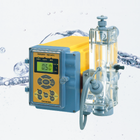
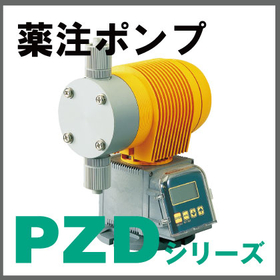
The PZD series of medication injection pumps, equipped with excellent features, is a solenoid pump from Takumina, which has a proven track record in chemical injection pumps. A solenoid pump uses an electromagnet as its power source, creating a reciprocating motion of the diaphragm by attracting the pump shaft when energized, allowing for precise liquid transfer. It is suitable for cases where a wide range of discharge control is desired or when complex control via external signals is needed. 【Features】 - A wide variety of wetted materials to accommodate various chemicals and applications. - Compatible with high-viscosity liquids such as polymer coagulants. - Allows for diverse proportional control without the need for a regulator. - Enables accurate chemical injection through calibration based on actual discharge volume. - Capable of setting injection amounts in three patterns (based on stroke speed, discharge volume, and percentage). - Free power supply, AC100-240V (±10%). - IEC standard: IP65 equivalent waterproof and dustproof structure. Additionally, all models come with a one-touch calibration function based on actual discharge volume! Please feel free to contact us as we will help you select and introduce the most suitable product for your needs.
Added to bookmarks
Bookmarks listBookmark has been removed
Bookmarks listYou can't add any more bookmarks
By registering as a member, you can increase the number of bookmarks you can save and organize them with labels.
Free membership registration
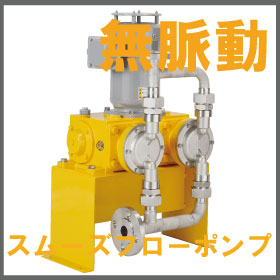
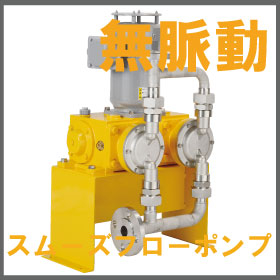
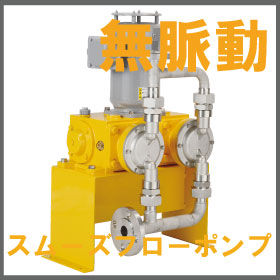
In the food processing industry, accurate and stable injection of additives is required to maintain quality and improve manufacturing efficiency. Particularly in long-distance transport, high-pressure injection, or trace addition, variations in injection volume and changes in liquid quality can affect product quality. Our Smooth Flow Pump 'PL' addresses these challenges, achieving stable supply of additives and automation and continuous processes. 【Usage Scenarios】 - Long-distance transport of food additives - Additive injection under high pressure - Automatic continuous injection into manufacturing lines - Precise adjustment of addition amounts for quality control 【Benefits of Implementation】 - Improved quality through stable and accurate supply of additives - Increased productivity through automation and continuous processes - Reduced risk of liquid leakage and foreign matter contamination - Decreased maintenance workload
Added to bookmarks
Bookmarks listBookmark has been removed
Bookmarks listYou can't add any more bookmarks
By registering as a member, you can increase the number of bookmarks you can save and organize them with labels.
Free membership registration
In the petrochemical industry, the catalyst supply process requires accurate and stable supply of catalysts to maintain reaction efficiency and stabilize product quality. In particular, depending on the characteristics of the catalyst, pressure fluctuations and pulsations during supply can affect the reaction or put a load on the piping. Additionally, in cases where long-distance transfer or precise additive quantity management is necessary, conventional pumps may struggle to meet these needs. Our Smooth Flow Pump 'PL' direct type addresses these challenges, supporting stable catalyst supply and process efficiency. 【Usage Scenarios】 - Long-distance transfer of catalysts - Catalyst injection under high pressure - Precise control of catalyst addition amounts - Transfer of slurry-type catalysts 【Benefits of Implementation】 - Improved reaction efficiency through stabilization of catalyst supply - Uniformity of product quality - Reduced load on piping - Labor savings through automation and continuous processes
Added to bookmarks
Bookmarks listBookmark has been removed
Bookmarks listYou can't add any more bookmarks
By registering as a member, you can increase the number of bookmarks you can save and organize them with labels.
Free membership registration
In a paper mill, the accurate mixing and stable supply of various chemicals are crucial for maintaining product quality. Particularly in long-distance transport and additive injection, challenges such as flow rate fluctuations, liquid leaks, and foreign matter contamination can impact production efficiency and product uniformity. Our Smooth Flow Pump "PL" addresses these challenges and supports the automation and continuous operation of processes. 【Application Scenarios】 - Long-distance transport of chemicals - Injection of additives - Supply of water treatment chemicals - Automatic supply to process lines 【Benefits of Implementation】 - Prevention of foreign matter contamination - Mitigation of flow rate reduction due to pressure fluctuations - Elimination of liquid leaks - Prevention of changes in liquid quality - Improved efficiency through inline processing
Added to bookmarks
Bookmarks listBookmark has been removed
Bookmarks listYou can't add any more bookmarks
By registering as a member, you can increase the number of bookmarks you can save and organize them with labels.
Free membership registration
In the paint and ink manufacturing industry, the uniform transfer and precise injection of pigment dispersion liquids are essential for product quality stability. In particular, preventing pigment sedimentation and adhesion within pipes while maintaining a stable flow rate for long-distance transfer and additive injection is a significant challenge for maintaining production efficiency and product consistency. Conventional pumps have faced issues with variability in discharge volume due to the transfer of slurry-like fluids and pulsation. Our Smooth Flow Pump 'PL' addresses these challenges, enabling the inline processing, automation, and continuous operation of pigment dispersion liquids. 【Application Scenarios】 - Long-distance transfer of pigment dispersion liquids - Accurate injection of additives - Transfer of slurry-like fluids - Automation and continuous operation of processes 【Benefits of Implementation】 - Stabilization of pigment dispersion liquid quality - Improvement in production efficiency - Reduction in maintenance workload - Cost and space savings
Added to bookmarks
Bookmarks listBookmark has been removed
Bookmarks listYou can't add any more bookmarks
By registering as a member, you can increase the number of bookmarks you can save and organize them with labels.
Free membership registration
In water treatment facilities, the accurate and stable dosing of chemicals is essential for maintaining treatment effectiveness. Particularly in long-distance transport and additive injection, variations in chemical concentration and supply amounts can lead to decreased treatment efficiency and increased environmental impact. Our Smooth Flow Pump 'PL' is the ideal pump for the precise supply and injection of a wide range of chemical solutions, including long-distance transport of water treatment chemicals and additive injection. It enables the inline, automation, and continuous processing of processes that were difficult with conventional pumps, improving quality, productivity, and ease of use. 【Usage Scenarios】 - Long-distance transport of water treatment chemicals - Injection of various additives - Continuous supply to process lines
Added to bookmarks
Bookmarks listBookmark has been removed
Bookmarks listYou can't add any more bookmarks
By registering as a member, you can increase the number of bookmarks you can save and organize them with labels.
Free membership registration
In the field of biotechnology, stable supply of culture media and precise injection of additives are required in cell culture and media preparation. In particular, changes in the components of the culture media and contamination can significantly affect the reliability of experimental results. Our Smooth Flow Pump 'PL' addresses these challenges by preventing foreign matter contamination, avoiding flow rate reduction due to pressure fluctuations, and eliminating liquid leakage or changes in liquid quality, thereby ensuring stable supply while maintaining the quality of the culture media. 【Usage Scenarios】 - Media supply in cell culture processes - Precise injection of additives - Transport of culture media over long distances - Small-scale supply during research and development phases 【Benefits of Implementation】 - Maintenance and stabilization of culture media quality - Improvement in experimental accuracy - Increased efficiency through automation and continuous processes - Reduction of contamination risks
Added to bookmarks
Bookmarks listBookmark has been removed
Bookmarks listYou can't add any more bookmarks
By registering as a member, you can increase the number of bookmarks you can save and organize them with labels.
Free membership registration
In the agriculture and fertilizer industry, there is a demand for the accurate and stable supply of liquid fertilizers necessary for crop growth. In particular, uniform distribution over a wide area and the appropriate injection of additives according to the growth stage are directly linked to yield and quality, making high reliability essential. Conventional pumps often face challenges such as flow reduction due to pressure fluctuations during transfer and changes in the properties of the chemicals, which can hinder stable distribution operations. Our Smooth Flow Pump 'PL' addresses these issues, enabling efficient and accurate long-distance transfer of liquid fertilizers and injection of additives. 【Usage Scenarios】 - Long-distance transfer of liquid fertilizers over a wide area - Injection of additives tailored to growth stages - Automated liquid fertilizer supply systems 【Benefits of Implementation】 - Promotion of crop growth through uniform liquid fertilizer distribution - Stabilization of quality through improved precision in additive injection - Labor-saving through automation and continuous operation of tasks
Added to bookmarks
Bookmarks listBookmark has been removed
Bookmarks listYou can't add any more bookmarks
By registering as a member, you can increase the number of bookmarks you can save and organize them with labels.
Free membership registration
In the cosmetics manufacturing industry, it is essential to accurately and uniformly add additives such as fragrances to maintain product quality. Particularly, to produce products of stable quality without compromising the delicate characteristics of fragrances, precise injection and transfer are indispensable. Improper addition can lead to variations in scent and a decline in product quality. Our Smooth Flow Pump "PL" is an ideal pump for long-distance transfer of a wide range of chemicals and the injection of additives, enabling the inline automation and continuous processing of procedures that were difficult with conventional pumps, thereby improving quality, productivity, and ease of use. 【Usage Scenarios】 - Precise addition and injection of fragrances - Long-distance transfer of raw materials - Automatic supply to manufacturing lines 【Benefits of Implementation】 - Quality stability through uniform addition of fragrances - Labor savings through automation of the transfer process - Reduced risk of liquid leakage and foreign matter contamination
Added to bookmarks
Bookmarks listBookmark has been removed
Bookmarks listYou can't add any more bookmarks
By registering as a member, you can increase the number of bookmarks you can save and organize them with labels.
Free membership registration
In the transportation of raw materials in chemical plants, stable long-distance transport of various chemicals and precise additive injection are required. The continuous and automated processes are essential for improving production efficiency and reducing human errors. In particular, maintaining the quality of the liquid during transport, preventing leaks, and avoiding foreign matter contamination are emphasized as crucial for ensuring product quality and safety. Our Smooth Flow Pump "PL" addresses these challenges and enables the inline, automated, and continuous processes. 【Usage Scenarios】 - Long-distance transport of various chemical products - Precise injection of additives - Transport of fluids including slurries - Direct integration into process lines 【Benefits of Implementation】 - Increased productivity through automation and continuous transport processes - Reduced risk of quality changes and foreign matter contamination in liquids - Decreased risk of failures due to leaks and dry running - Reduction in maintenance workload and space-saving
Added to bookmarks
Bookmarks listBookmark has been removed
Bookmarks listYou can't add any more bookmarks
By registering as a member, you can increase the number of bookmarks you can save and organize them with labels.
Free membership registration
In pharmaceutical factories, high-precision and stable liquid transfer is required to ensure a stable supply of active pharmaceutical ingredients (APIs) and maintain quality. Particularly in the API supply process, accurate dosing of small amounts of liquid and preventing degradation of the liquid during long-distance transport are crucial. Traditional pumps have faced challenges such as flow fluctuations due to pulsation, degradation from contact with the liquid, and leaks, which could impact productivity and quality. The Smooth Flow Pump 'PL' addresses these challenges and enables the inline, automated, and continuous supply process of APIs. 【Application Scenarios】 - Long-distance transport of APIs - Accurate dosing of additives - High-pressure, pulsation-free metering 【Benefits of Implementation】 - Reduced risk of liquid degradation and contamination - Increased productivity through stable flow supply - Reduced maintenance workload and space-saving
Added to bookmarks
Bookmarks listBookmark has been removed
Bookmarks listYou can't add any more bookmarks
By registering as a member, you can increase the number of bookmarks you can save and organize them with labels.
Free membership registration
In the semiconductor manufacturing industry, as miniaturization and high integration progress, maintaining the purity of chemicals in the manufacturing process and precise supply has become extremely important. Particularly in the transfer of high-purity chemicals, preventing contamination and changes in liquid quality directly impacts product yield and reliability. Conventional pumps have faced challenges such as the risk of foreign matter contamination, flow instability due to pressure fluctuations, and liquid leakage. Our Smooth Flow Pump 'PL' addresses these issues and enables stable supply of high-purity chemicals in the semiconductor manufacturing process. 【Usage Scenarios】 - Long-distance transfer of high-purity chemicals - Precise injection of additives - Processes where contamination must be avoided - Transfer of chemicals where changes in liquid quality must be avoided 【Benefits of Implementation】 - Maintenance of chemical purity - Stabilization of processes through stable flow supply - Reduction of liquid leakage risk - Contribution to improved yield
Added to bookmarks
Bookmarks listBookmark has been removed
Bookmarks listYou can't add any more bookmarks
By registering as a member, you can increase the number of bookmarks you can save and organize them with labels.
Free membership registration