856~900 item / All 1050 items
Displayed results
Filter by category

Added to bookmarks
Bookmarks listBookmark has been removed
Bookmarks listYou can't add any more bookmarks
By registering as a member, you can increase the number of bookmarks you can save and organize them with labels.
Free membership registration
Contact this company
Inquiry FormBefore making an inquiry
Download Profile856~900 item / All 1050 items
Filter by category

In library collection management, accurate understanding of materials and rapid searching are required. In particular, managing a large number of collections efficiently and responding quickly to user needs poses challenges, as traditional management methods using barcodes or visual checks can be extremely time-consuming and labor-intensive. Additionally, it is not uncommon to experience delays in recording loan and return transactions or in confirming the location of specific materials. Our company offers solutions utilizing RFID IC tags to address these challenges and support the efficiency of library operations. 【Usage Scenarios】 - Accelerating inventory work of collections - Reducing search time for materials - Preventing recording omissions during loans and returns - Early detection of lost materials 【Benefits of Implementation】 - Reduction in time and effort required for collection management - Improved service for users - Enhanced accuracy in material management
Added to bookmarks
Bookmarks listBookmark has been removed
Bookmarks listYou can't add any more bookmarks
By registering as a member, you can increase the number of bookmarks you can save and organize them with labels.
Free membership registration
In the event and entertainment industry, managing a large number of supplies and equipment is required. The types and quantities of supplies used vary for each event, and recording them in a management ledger or visually checking them not only takes time and effort but also carries the risk of loss or damage. Additionally, managing the borrowing and returning of equipment can become complicated, making it difficult to accurately grasp the inventory situation. By utilizing RFID technology, it becomes possible to quickly and accurately confirm the location of supplies and manage their entry and exit. 【Usage Scenarios】 - Rapid inventory of equipment and supplies at event venues - Streamlining the management of rental supplies for lending and returning - Managing the location of stage costumes and props - Managing supplies for exhibition booths 【Benefits of Implementation】 - Reduction of time and effort required for supply management - Prevention of loss and misplacement of supplies - Real-time understanding of accurate inventory status - Acceleration of event preparation and dismantling tasks
Added to bookmarks
Bookmarks listBookmark has been removed
Bookmarks listYou can't add any more bookmarks
By registering as a member, you can increase the number of bookmarks you can save and organize them with labels.
Free membership registration
In the agricultural sector, tracking the location of farm equipment and managing maintenance history can be time-consuming and labor-intensive. This is especially true when owning a large number of farm tools or sharing them among multiple workers, as the complexity of management can lead to difficulties in locating equipment when needed or overlooking maintenance schedules. These challenges can result in decreased work efficiency and potentially shorten the lifespan of the equipment. Our company supports the resolution of these issues through solutions utilizing RFID IC tags. 【Use Cases】 - Confirming the location of farm equipment on vast premises - Recording and managing maintenance history of farm equipment - Managing the lending and return of farm equipment - Theft prevention measures for farm equipment 【Benefits of Implementation】 - Reduced search time for farm equipment - Decreased omissions and errors in management ledgers - Extended lifespan of equipment through proper maintenance - Improved efficiency in asset management
Added to bookmarks
Bookmarks listBookmark has been removed
Bookmarks listYou can't add any more bookmarks
By registering as a member, you can increase the number of bookmarks you can save and organize them with labels.
Free membership registration
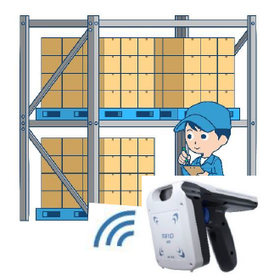
In manufacturing parts management, accurate inventory tracking and swift inbound and outbound operations are essential. Particularly in environments with low-volume, high-variety production or complex supply chains, issues such as incorrect shipments, loss of parts, and excess inventory are likely to occur, directly leading to production delays and increased costs. Our white paper specifically introduces how utilizing RFID technology can address these challenges and streamline parts management operations. - What is RFID? Features and differences from barcodes - Challenges in rental product management - Overall image utilizing RFID - Effects of RFID implementation (receiving, shipping, inventory management, stocktaking)
Added to bookmarks
Bookmarks listBookmark has been removed
Bookmarks listYou can't add any more bookmarks
By registering as a member, you can increase the number of bookmarks you can save and organize them with labels.
Free membership registration
In the retail industry, accurate inventory management and prompt product replenishment lead to improved customer satisfaction and reduced opportunity loss. Particularly when dealing with a wide variety of products, it can be challenging to grasp real-time inventory status. This can result in stockouts and excess inventory, leading to issues such as lost sales opportunities and increased storage costs. Our white paper specifically outlines how utilizing RFID can address these challenges and promote inventory visibility. - What is RFID? Characteristics and differences from barcodes - Challenges in managing rental products - Overall image utilizing RFID - Effects of RFID implementation (receiving, shipping, inventory management, stocktaking)
Added to bookmarks
Bookmarks listBookmark has been removed
Bookmarks listYou can't add any more bookmarks
By registering as a member, you can increase the number of bookmarks you can save and organize them with labels.
Free membership registration
In the pharmaceutical industry, strict quality control and traceability are required to ensure the safety and reliability of products. It is particularly important to reduce the risk of counterfeiting and maintain consistency throughout the supply chain. Inadequate management can lead to health hazards for patients and damage to brand image. This white paper introduces methods for preventing drug counterfeiting and improving operational efficiency through the management of rental products and the handling of checkouts and returns using RFID. - What is RFID? Features and differences from barcodes - Challenges in rental product management - Overall image utilizing RFID - Effects of RFID implementation (receiving, shipping, inventory management, stocktaking)
Added to bookmarks
Bookmarks listBookmark has been removed
Bookmarks listYou can't add any more bookmarks
By registering as a member, you can increase the number of bookmarks you can save and organize them with labels.
Free membership registration
In the food industry, strict freshness management is required to maintain quality and ensure safety. Particularly in the handling of fresh foods and products that require temperature control, accurate information gathering and prompt responses are essential for inventory management and stock handling. Inadequate management can lead to a decline in quality, an increase in food waste, and potentially a loss of trust from customers. Our white paper introduces methods to address these challenges through the use of RFID for managing rental products and tracking their check-out and return, thereby achieving operational efficiency in logistics warehouses. - What is RFID? Features and differences from barcodes - Challenges in rental product management - Overall image utilizing RFID - Effects of RFID implementation (receiving, shipping, inventory management, stocktaking)
Added to bookmarks
Bookmarks listBookmark has been removed
Bookmarks listYou can't add any more bookmarks
By registering as a member, you can increase the number of bookmarks you can save and organize them with labels.
Free membership registration
In the automotive industry, there is a demand for the management of numerous parts and the assurance of traceability. In particular, the accurate tracking of parts is crucial for the smooth operation of production lines and quality control. Incorrect delivery of parts or inventory shortages can lead to production delays and increased costs. This white paper will introduce the efficiency of parts management utilizing RFID, highlighting current challenges and implementation effects with specific examples and illustrations. 〇 What is RFID? Characteristics and differences from barcodes 〇 Challenges in rental product management 〇 Overall image utilizing RFID 〇 Effects of RFID implementation (receiving, shipping, inventory management, stocktaking)
Added to bookmarks
Bookmarks listBookmark has been removed
Bookmarks listYou can't add any more bookmarks
By registering as a member, you can increase the number of bookmarks you can save and organize them with labels.
Free membership registration
In the construction materials industry, accurate material identification on-site and the associated efficiency in inventory management are required. Particularly in sites where a wide variety of materials are mixed, visual confirmation and manual recording can lead to errors and time loss. Accurate material identification is essential for preventing project delays and reducing costs. This white paper clearly explains the current challenges and the benefits of implementing RFID for the identification and management of construction materials, using specific examples and illustrations. - What is RFID? Features and differences from barcodes - Challenges in rental product management - Overall image utilizing RFID - Effects of RFID implementation (receiving, shipping, inventory management, stocktaking)
Added to bookmarks
Bookmarks listBookmark has been removed
Bookmarks listYou can't add any more bookmarks
By registering as a member, you can increase the number of bookmarks you can save and organize them with labels.
Free membership registration
In the publishing and media industry, accurate inventory management and rapid distribution of books are essential. In particular, efficiently managing a large number of books and smoothly conducting inventory checks and inbound/outbound operations directly contribute to operational efficiency and cost reduction. However, traditional barcode management has the challenge of requiring individual scanning, which can be time-consuming and labor-intensive when handling a large volume of books. Our RFID utilization white paper specifically explains how RFID technology, which allows for non-contact reading of multiple tags simultaneously, can address these challenges. - What is RFID? Features and differences from barcodes - Challenges in rental product management - Overall image utilizing RFID - Effects of RFID implementation (receiving, shipping, inventory management, stocktaking)
Added to bookmarks
Bookmarks listBookmark has been removed
Bookmarks listYou can't add any more bookmarks
By registering as a member, you can increase the number of bookmarks you can save and organize them with labels.
Free membership registration
In the rental industry, it is essential to manage a large number of assets accurately and efficiently. In particular, the processes of product check-in and check-out, understanding inventory status, and conducting stocktaking are fundamental to operations, and the accuracy and speed of these processes directly impact customer satisfaction and profitability. Current management methods may face challenges such as errors due to human mistakes and the time required for verification. This white paper introduces how to solve these issues and streamline asset management operations for rental products by utilizing RFID technology. 【Use Cases】 - Management of check-in and check-out for rental products - Real-time understanding of inventory status - Implementation of efficient stocktaking - Improvement of accuracy in check-out and return management 【Benefits of Implementation】 - Labor-saving in management tasks and reduction of human errors - Faster confirmation of asset locations - Reduction of opportunity loss due to improved accuracy of inventory information - Overall acceleration of business operations
Added to bookmarks
Bookmarks listBookmark has been removed
Bookmarks listYou can't add any more bookmarks
By registering as a member, you can increase the number of bookmarks you can save and organize them with labels.
Free membership registration
In the recycling industry, accurate tracking and management of waste are crucial for compliance with regulations and effective resource utilization. In particular, understanding the processes from the generation to the processing of various types of waste and ensuring traceability are required for both operational efficiency and compliance enhancement. However, manual record-keeping and barcode management often lead to issues such as reading errors and increased workload. Our white paper introduces how utilizing RFID can solve these challenges and streamline operations. - What is RFID? Characteristics and differences from barcodes - Challenges in rental product management - Overall image utilizing RFID - Effects of RFID implementation (receiving, shipping, inventory management, stocktaking)
Added to bookmarks
Bookmarks listBookmark has been removed
Bookmarks listYou can't add any more bookmarks
By registering as a member, you can increase the number of bookmarks you can save and organize them with labels.
Free membership registration
In the event industry, it is essential to efficiently manage a large number of equipment and ensure smooth operations. In particular, accuracy and speed are crucial in managing the lending and returning of equipment, as well as in the inventory work after the event concludes. Missing equipment or overlooked returns can cause delays in preparations for the next event. Our white paper introduces how utilizing RFID can address these challenges and improve operational efficiency. - What is RFID? Features and differences from barcodes - Challenges in rental product management - Overall image utilizing RFID - Effects of RFID implementation (receiving, shipping, inventory management, stocktaking)
Added to bookmarks
Bookmarks listBookmark has been removed
Bookmarks listYou can't add any more bookmarks
By registering as a member, you can increase the number of bookmarks you can save and organize them with labels.
Free membership registration
In the automotive manufacturing industry, mistakes in retrieving parts and errors in work procedures during complex assembly tasks can lead to decreased productivity and quality issues. Particularly when responding to low-volume, high-variety production or frequent line changes, accurate and prompt instructions for workers are essential. Our "Projection Assembly System" addresses these challenges with visual instructions through projection mapping. 【Usage Scenarios】 - Instructions for retrieving parts in complex assembly processes - Quick responses to frequently changing product lines - Navigation of work procedures for workers 【Benefits of Implementation】 - Reduction of errors due to incorrect part retrieval - Prevention of mistakes through work sequence instructions - Shortening of setup and preparation times
Added to bookmarks
Bookmarks listBookmark has been removed
Bookmarks listYou can't add any more bookmarks
By registering as a member, you can increase the number of bookmarks you can save and organize them with labels.
Free membership registration
In the aerospace field, precision assembly requires high accuracy and quality control. Particularly when dealing with complex processes and numerous components, there is a significant reliance on the skill level of the workers, which introduces the risk of human error. Additionally, frequent specification changes and the need to accommodate small-batch, diverse production pose challenges in maintaining production efficiency. In response to these challenges, the "Projection Assembly System" supports the efficiency of assembly work and quality improvement through intuitive part instructions and work navigation using projection mapping. 【Usage Scenarios】 - Assembly tasks involving complex wiring and component placement - Product lines with frequent specification changes - Tasks where consistent quality is desired regardless of skill level - Rapid response to small-batch, diverse production 【Benefits of Implementation】 - Reduction of part retrieval errors and assembly mistakes - Prevention of careless mistakes through work sequence instructions - Simplification of daily report input and efficiency of quality checks through work content recording - Shortening of setup and preparation times
Added to bookmarks
Bookmarks listBookmark has been removed
Bookmarks listYou can't add any more bookmarks
By registering as a member, you can increase the number of bookmarks you can save and organize them with labels.
Free membership registration
In the electronics industry assembly work, it is required to accurately and quickly place a wide variety of components. Especially in low-volume, high-mix production, it is important to respond to frequent changes in products and line layouts while preventing work errors and maintaining productivity. Improper placement of components can lead to a decline in product quality and an increase in rework. The "Projection Assembly System" addresses these challenges by visually indicating the component retrieval locations through projection mapping. 【Usage Scenarios】 - Assembly lines in low-volume, high-mix production - Environments where product specifications or line layouts are frequently changed - Tasks involving a large variety of components - Situations where improved accuracy in conveying instructions to workers is needed 【Benefits of Implementation】 - Reduction of work errors by preventing incorrect component retrieval - Suppression of variations in skill levels through the visualization of work instructions - Shortening of time required for setup changes and preparations - Increased efficiency in quality checks through the recording of work content
Added to bookmarks
Bookmarks listBookmark has been removed
Bookmarks listYou can't add any more bookmarks
By registering as a member, you can increase the number of bookmarks you can save and organize them with labels.
Free membership registration
In the medical device industry, strict quality control is required to ensure the safety and reliability of products. Particularly in the assembly of medical devices with complex structures, handling of fine parts and adherence to precise procedures are essential. Assembly mistakes can lead to product malfunctions and impact on patients, making their prevention a top priority. Our "Projection Assembly System" supports the reduction of errors in assembly work and enhances quality control through visual instructions using projection mapping. 【Usage Scenarios】 - Assembly work in low-volume, high-variety production - Response to frequently changing products or line modifications - Assembly processes requiring complex procedures 【Benefits of Implementation】 - Improved quality by preventing incorrect part retrieval - Reduced errors in work processes through procedural instructions - Ensured traceability through recording of work content
Added to bookmarks
Bookmarks listBookmark has been removed
Bookmarks listYou can't add any more bookmarks
By registering as a member, you can increase the number of bookmarks you can save and organize them with labels.
Free membership registration
In the furniture manufacturing industry, accurate instructions for workers and the prevention of mistakes are essential in low-volume, high-variety production and complex assembly processes. Particularly when there are many types of parts and assembly procedures change frequently, reliable communication of information to workers becomes crucial. Inappropriate selection of parts or mistakes in assembly order can lead to a decline in product quality and the occurrence of rework. Our "Projection Assembly System" addresses these challenges by visually indicating the location of the next parts to be taken and the work procedures through projection mapping. 【Usage Scenarios】 - Instructions for retrieving parts in complex assembly processes - Rapid response to frequently changing product lineups - Clarification of work procedures through the projection of work instructions - Visualization of progress and problem areas during assembly work 【Benefits of Implementation】 - Reduction of part retrieval errors and work mistakes - Shortening of setup and preparation time - Prevention of careless mistakes through work process instructions - Simplification of daily work report input through recording of work content
Added to bookmarks
Bookmarks listBookmark has been removed
Bookmarks listYou can't add any more bookmarks
By registering as a member, you can increase the number of bookmarks you can save and organize them with labels.
Free membership registration
In the plant construction industry, accurate instructions and prompt responses are required for complex piping work. In particular, confirming piping routes based on drawings and specifications, as well as identifying the materials to be used, are crucial factors that influence the precision and safety of the work. Inadequate instructions or insufficient confirmations carry the risk of rework, delays in project timelines, and even serious accidents. Our "Projection Assembly System" visually clarifies the locations of piping instructions and the materials to be used through projection mapping technology, aiding workers' understanding and reducing errors. 【Usage Scenarios】 - Instructions for complex piping routes - Identification of piping materials to be used - Visual navigation of work procedures - Assistance in confirming drawings on-site 【Benefits of Implementation】 - Improved accuracy of piping instructions - Reduction of work errors - Shortened setup time - Enhanced work efficiency
Added to bookmarks
Bookmarks listBookmark has been removed
Bookmarks listYou can't add any more bookmarks
By registering as a member, you can increase the number of bookmarks you can save and organize them with labels.
Free membership registration
In the robot manufacturing industry, accuracy and efficiency are required in complex wiring tasks. Particularly when there are a wide variety of components and wiring routes, the work often relies heavily on the experience and skill level of the workers, which can lead to mistakes and rework. These challenges can result in decreased productivity and quality issues. Our "Projection Assembly System" visually indicates the next wiring points and components using projection mapping, reducing confusion for workers and minimizing errors. This enables stable work quality and improved productivity, regardless of skill level. 【Usage Scenarios】 - Wiring assembly process for robots - Navigation of complex wiring routes - Adaptation to line changes in low-volume, high-variety production 【Benefits of Implementation】 - Reduction of mistakes and rework in wiring tasks - Shortened work time and increased productivity - Faster integration of new workers into the workforce
Added to bookmarks
Bookmarks listBookmark has been removed
Bookmarks listYou can't add any more bookmarks
By registering as a member, you can increase the number of bookmarks you can save and organize them with labels.
Free membership registration
In the maintenance and inspection of semiconductor manufacturing equipment, complex procedures and the reliable handling of numerous components are required. Particularly when responding to frequent maintenance or line changes, it is crucial to ensure accurate and swift execution of tasks, independent of the workers' skill levels. Incorrect procedures or handling of components can lead to extended downtime of the equipment or quality issues. Our "Projection Assembly System" addresses these challenges by visually indicating the location of the next components and the work procedures through projection mapping. 【Usage Scenarios】 - Component replacement during regular maintenance of equipment - Procedure verification during troubleshooting - Work instructions during line changes - Maintaining uniform work quality regardless of skill level 【Benefits of Implementation】 - Prevention of incorrect component retrieval and work errors - Visual confirmation of procedures through projected work instructions - Understanding of work content through recorded work performance - Support in identifying problematic tasks and processes
Added to bookmarks
Bookmarks listBookmark has been removed
Bookmarks listYou can't add any more bookmarks
By registering as a member, you can increase the number of bookmarks you can save and organize them with labels.
Free membership registration
In the shipbuilding industry, precise positioning and instructions are required for welding operations on complex structures. In particular, there may be delays in confirming drawings and instructions, and mistakes can occur due to differences in interpretation by workers. These challenges can lead to delays in construction schedules and variations in quality. Our "Projection Assembly System" visually indicates the areas to be welded and the necessary components through projection mapping, reducing confusion for workers and supporting accurate work. This is expected to improve work efficiency and reduce mistakes. 【Usage Scenarios】 - Welding guidance for complex structures - Accurate positioning instructions for components - Visual navigation of work procedures 【Effects of Implementation】 - Prevention of welding position errors - Reduction of work time - Ensuring consistent quality regardless of skill level
Added to bookmarks
Bookmarks listBookmark has been removed
Bookmarks listYou can't add any more bookmarks
By registering as a member, you can increase the number of bookmarks you can save and organize them with labels.
Free membership registration
In the assembly of wind turbine blades, it is essential to attach numerous components accurately and efficiently. Particularly in the assembly of blades with complex structures, mistakes in retrieving parts or errors in work procedures pose risks to product quality and safety. A visually clear and easy-to-understand instruction system that can flexibly respond to frequent changes in product specifications and line adjustments is crucial. Our "Projection Assembly System" addresses these challenges by accurately indicating the location of the next component to be taken through projection mapping. 【Usage Scenarios】 - Accurate positioning of complex-shaped blade components - Visual navigation of assembly procedures - Reliable communication of instructions to workers 【Benefits of Implementation】 - Reduction of errors due to incorrect part retrieval - Increased efficiency and productivity in assembly work - Improved accuracy in conveying instructions to workers
Added to bookmarks
Bookmarks listBookmark has been removed
Bookmarks listYou can't add any more bookmarks
By registering as a member, you can increase the number of bookmarks you can save and organize them with labels.
Free membership registration
In the interior installation work of railway vehicles, accurate and efficient installation of a wide variety of parts is required. In particular, working in limited spaces and responding to frequently changing specifications can pose challenges. Mistakes in retrieving parts or errors in work procedures can lead to rework and a decline in quality. Our "Projection Assembly System" supports the resolution of these challenges by visually indicating the location of the next parts to be taken and the work procedures through projection mapping. 【Usage Scenarios】 - Assembly and installation of interior parts for railway vehicles - Production lines with small quantities and a wide variety of products, or frequent specification changes - Streamlining communication of instructions to workers - Reducing work errors 【Benefits of Implementation】 - Reduction of rework due to prevention of mistakes in part retrieval - Prevention of work errors through clear work procedure instructions - Increased efficiency in quality checks through recording of work content
Added to bookmarks
Bookmarks listBookmark has been removed
Bookmarks listYou can't add any more bookmarks
By registering as a member, you can increase the number of bookmarks you can save and organize them with labels.
Free membership registration
In the home appliance industry, there is a demand for balancing quality maintenance and improving production efficiency. Particularly in cases of small-lot production with a wide variety of products or frequent line changes, accurate communication of instructions to workers and prevention of mistakes become crucial. Incorrect selection of parts or procedural errors during the inspection process can lead to a decline in product quality or rework. Our "Projection Assembly System" addresses these challenges by visually indicating the parts and inspection points to be checked next through projection mapping. 【Usage Scenarios】 - Navigation of complex inspection procedures - Instruction assistance during inspection switching for diverse products - Inspection support tailored to the proficiency level of each worker 【Benefits of Implementation】 - Improvement in quality through reduction of inspection errors - Acceleration and efficiency of work instructions - Rapid integration of new workers into the workforce
Added to bookmarks
Bookmarks listBookmark has been removed
Bookmarks listYou can't add any more bookmarks
By registering as a member, you can increase the number of bookmarks you can save and organize them with labels.
Free membership registration
In the retail industry, accurate inventory management of a wide variety of products and challenges such as labor shortages and reliance on specific individuals are highlighted. Accurate inventory tracking is essential for preventing lost opportunities and improving customer satisfaction, and there is a demand for the establishment of an efficient management system. Our AI image recognition solution enables efficient inventory management by utilizing image recognition technology to address these challenges. 【Usage Scenarios】 - Inventory counting of products in stores - Inspection of incoming and outgoing shipments in warehouses - Inventory tracking in small-batch, diverse production 【Benefits of Implementation】 - Prevention of incorrect shipments by reducing inspection errors - Labor savings through increased work efficiency - Strengthening of traceability management
Added to bookmarks
Bookmarks listBookmark has been removed
Bookmarks listYou can't add any more bookmarks
By registering as a member, you can increase the number of bookmarks you can save and organize them with labels.
Free membership registration
In the automotive industry, particularly in the field of autonomous driving, there is a demand for accurate identification of parts, ensuring traceability, and improving the efficiency of the entire supply chain. Human errors in incoming and outgoing inspections during the manufacturing process pose risks that can lead to a decline in product quality and recalls. Additionally, the increasing complexity of parts management and the need for rapid information sharing are critical challenges in the development and operation of autonomous driving systems. Our AI image recognition solution addresses these challenges by utilizing AI-powered image recognition technology to enhance the accuracy and labor-saving of inspection tasks, supporting the automation and systematization of subsequent processes, thereby assisting your autonomous driving development. 【Usage Scenarios】 - Incoming and outgoing inspections of sensor parts for autonomous driving systems - Parts identification and traceability management on vehicle manufacturing lines - Quality verification upon delivery of parts from suppliers 【Benefits of Implementation】 - Improved quality through the reduction of inspection errors - Labor-saving in inspection tasks and cost control of personnel expenses - Enhanced efficiency in parts management and reduced lead times - Strengthened risk management through ensured traceability
Added to bookmarks
Bookmarks listBookmark has been removed
Bookmarks listYou can't add any more bookmarks
By registering as a member, you can increase the number of bookmarks you can save and organize them with labels.
Free membership registration
In the logistics industry, accurate identification and rapid processing of a wide variety of cargo are required. In particular, during the inspection process at the time of receiving and shipping, human errors and task personalization can lead to issues such as incorrect shipments and delays. AI image recognition solutions contribute to solving these challenges and improving operational efficiency and accuracy. 【Usage Scenarios】 - Cargo identification during receiving inspections - Prevention of incorrect shipments during shipping - Traceability management 【Effects of Implementation】 - Reduction of inspection errors - Shortening of work time - Elimination of task personalization - Automation of subsequent processes
Added to bookmarks
Bookmarks listBookmark has been removed
Bookmarks listYou can't add any more bookmarks
By registering as a member, you can increase the number of bookmarks you can save and organize them with labels.
Free membership registration
At construction sites, it is essential to accurately grasp and manage the status of material deliveries and the progress of work. In particular, the conditions on site change daily, and many materials and processes are involved, which means that visual checks and manual recording carry the risk of oversight and missed entries. These challenges can lead to project delays and increased costs. Our AI image recognition solution captures the site conditions through images, allowing AI to automatically recognize and analyze them, thereby contributing to solving these issues. 【Usage Scenarios】 - Material delivery and inspection - Recording work progress - Checking site conditions - Assisting in report creation 【Benefits of Implementation】 - Reduction of inspection errors - Visualization of work progress - Increased efficiency in recording tasks - Decrease in human errors
Added to bookmarks
Bookmarks listBookmark has been removed
Bookmarks listYou can't add any more bookmarks
By registering as a member, you can increase the number of bookmarks you can save and organize them with labels.
Free membership registration
In the energy industry, equipment inspections require an accurate understanding of the condition of a wide range of equipment, leading to early detection of abnormalities and preventive maintenance. Particularly, inspecting equipment installed in high places or hazardous areas poses challenges in balancing safety and efficiency. AI image recognition solutions address these challenges by identifying abnormal areas and deterioration conditions from image data, contributing to improved accuracy and labor-saving in inspection work. This enables the streamlining of inspection operations and the establishment of a safer equipment management system. 【Use Cases】 - Equipment inspections at plants and power stations - Abnormality detection in infrastructure equipment - Streamlining of regular maintenance tasks 【Benefits of Implementation】 - Improved accuracy of inspection work and reduction of human errors - Reduction of time and costs associated with inspections - Decreased risk of unexpected equipment failures - Maintenance of a safe working environment
Added to bookmarks
Bookmarks listBookmark has been removed
Bookmarks listYou can't add any more bookmarks
By registering as a member, you can increase the number of bookmarks you can save and organize them with labels.
Free membership registration
In the entertainment industry, efficiency and accuracy are required for the analysis and management of diverse content. In particular, extracting and analyzing specific information from large amounts of video and image data is crucial for developing new content and formulating marketing strategies. However, manual analysis is time-consuming and labor-intensive, and there is a possibility of overlooking important details. Our AI image recognition solution addresses these challenges by utilizing image recognition technology to enhance the accuracy of content analysis and improve operational efficiency. 【Use Cases】 - Automatic detection of specific scenes or objects from video content - Streamlining the tagging and classification of image materials - Supporting moderation of user-generated content 【Benefits of Implementation】 - Reduction in time and costs associated with content analysis - Support for more accurate decision-making through improved analysis accuracy - Promotion of new content planning and marketing initiatives
Added to bookmarks
Bookmarks listBookmark has been removed
Bookmarks listYou can't add any more bookmarks
By registering as a member, you can increase the number of bookmarks you can save and organize them with labels.
Free membership registration
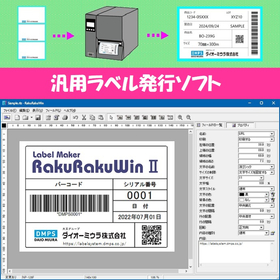
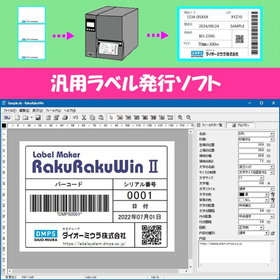
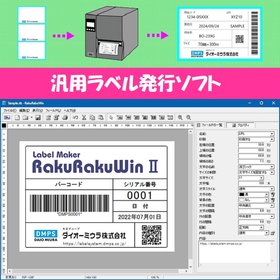
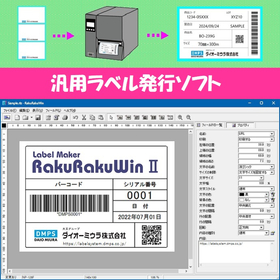
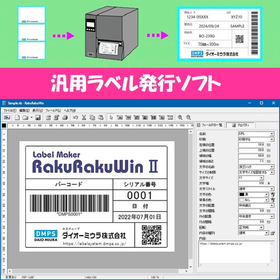
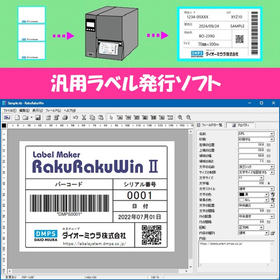
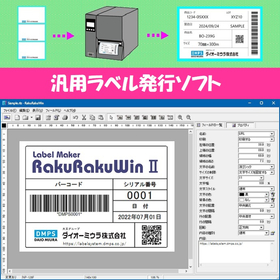
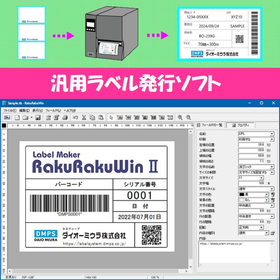
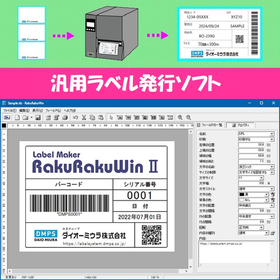
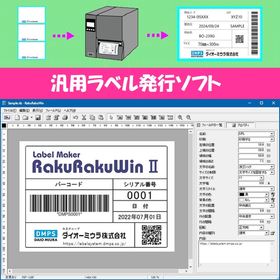
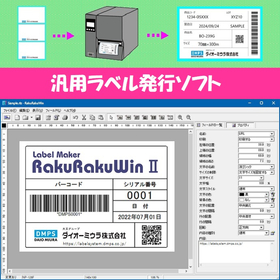
In manufacturing process management, ensuring product traceability and clarifying work instructions are crucial. In particular, accurately recording the progress status and materials used at each stage is essential for improving quality control and production efficiency. Inadequate management can lead to incorrect work instructions or misuse of materials, potentially causing production delays and quality issues. The label issuance software "RakuRakuWin2" addresses these challenges with simple operations and supports process management. 【Usage Scenarios】 - Recording progress status at each manufacturing stage - Managing used materials and lot numbers - Printing work instructions - Issuing identification labels for finished products 【Benefits of Implementation】 - Visualization and efficiency of process management - Improved traceability - Reduction of work errors - Increased productivity
Added to bookmarks
Bookmarks listBookmark has been removed
Bookmarks listYou can't add any more bookmarks
By registering as a member, you can increase the number of bookmarks you can save and organize them with labels.
Free membership registration
In the food and beverage industry, accurate labeling of expiration dates is essential to ensure product safety and reliability. Expiration dates serve as an important criterion for consumers when choosing products, and incorrect labeling can lead to complaints and a decline in brand image. To achieve quick and accurate expiration date labeling, an efficient label issuance system is required. 'RakuRakuWin2' allows users to create desired label designs with simple operations, supporting the efficiency of expiration date labeling. 【Usage Scenarios】 - Printing of expiration dates and consumption dates - Printing of ingredient labels and allergy information - Printing of lot numbers and manufacturing dates - Printing of campaign information and barcodes
Added to bookmarks
Bookmarks listBookmark has been removed
Bookmarks listYou can't add any more bookmarks
By registering as a member, you can increase the number of bookmarks you can save and organize them with labels.
Free membership registration
In retail product management, accurate inventory tracking and prompt label issuance for product display are essential. Particularly in stores that handle a wide variety of products, a system that can flexibly respond to updates in product information and price changes is crucial. Displaying incorrect information can lead to customer confusion and potential loss of sales opportunities. Our label issuance software, "RakuRakuWin2," allows you to create your desired label designs with simple operations, supporting the efficiency of product management tasks. 【Usage Scenarios】 - Issuing labels during product information updates and price changes - Issuing inventory management labels during stocktaking - Creating labels for sales and promotions - Issuing labels with barcodes 【Benefits of Implementation】 - Increased efficiency in product management tasks - Reduction of human errors - Prevention of sales opportunity losses through rapid information updates - Improved accuracy in inventory management
Added to bookmarks
Bookmarks listBookmark has been removed
Bookmarks listYou can't add any more bookmarks
By registering as a member, you can increase the number of bookmarks you can save and organize them with labels.
Free membership registration
In the logistics and warehousing industry, accurate and prompt label issuance is key to improving operational efficiency in shipment management. Particularly when handling a wide variety of products or engaging in frequent shipping and receiving operations, issuing labels with incorrect information can lead to confusion in inventory management and misdeliveries. Our label issuance software, 'RakuRakuWin2', addresses these challenges with its simple operability and flexible data integration. 【Usage Scenarios】 - Issuing product identification labels during shipping and receiving - Issuing inventory management labels during stocktaking - Issuing shipping invoices and destination labels - Creating labels with barcodes 【Benefits of Implementation】 - Speeding up shipping and receiving operations - Reducing mis-shipments and inventory management errors - Alleviating the burden on staff - Preventing manual input errors through data integration
Added to bookmarks
Bookmarks listBookmark has been removed
Bookmarks listYou can't add any more bookmarks
By registering as a member, you can increase the number of bookmarks you can save and organize them with labels.
Free membership registration
In the medical and pharmaceutical industry, the accurate identification of drugs and ensuring traceability are extremely important for patient safety and quality management. In particular, accurately and quickly printing variable information such as lot numbers, expiration dates, and ingredient information on labels is essential for preventing medication errors and improving inventory management efficiency. Inaccurate information or printing mistakes can lead to serious incidents. The label issuance software "RakuRakuWin2" addresses these challenges and supports reliable label issuance. 【Usage Scenarios】 - Printing of drug lot numbers, expiration dates, and ingredient labels - Creation of identification labels for clinical trial drugs - Issuance of barcode labels for inventory management - Identification of research samples 【Benefits of Implementation】 - Reduction of medication error risks through improved drug identification accuracy - Strengthening of quality management through ensured traceability - Increased efficiency in inventory management tasks - Support for compliance adherence
Added to bookmarks
Bookmarks listBookmark has been removed
Bookmarks listYou can't add any more bookmarks
By registering as a member, you can increase the number of bookmarks you can save and organize them with labels.
Free membership registration
In the chemical industry, accurately displaying the hazards and storage methods of the substances handled is extremely important for safety management. In particular, hazardous material labels require accurate information transmission based on legal regulations, as incorrect labeling can lead to accidents. Our label issuance software, 'RakuRakuWin2', addresses these challenges and supports safe operations. 【Usage Scenarios】 - Creation of labels indicating hazardous materials - Display of storage locations and handling methods - Issuance of labels compliant with legal regulations 【Benefits of Implementation】 - Improved safety management through accurate hazardous material labeling - Support for compliance adherence - Increased efficiency in label creation tasks
Added to bookmarks
Bookmarks listBookmark has been removed
Bookmarks listYou can't add any more bookmarks
By registering as a member, you can increase the number of bookmarks you can save and organize them with labels.
Free membership registration
In the automotive industry, accurate identification and tracking are essential for maintaining product quality and streamlining the supply chain. In particular, the identification of a wide variety of parts, inventory management, and ensuring traceability are fundamental to production efficiency and quality control. Improper label issuance and management errors can lead to the use of incorrect parts and inventory discrepancies, potentially resulting in production delays and quality issues. The label issuance software "RakuRakuWin2" allows you to create the desired label designs with simple operations. By supporting data insertion printing from CSV files, it helps address these challenges. 【Usage Scenarios】 - Issuing identification labels during the receipt and shipment of parts - Issuing inventory management labels during stocktaking - Issuing parts management labels to ensure traceability - Issuing process management labels on the manufacturing line 【Benefits of Implementation】 - Increased efficiency in parts management operations - Improved accuracy in label issuance tasks - Enhanced precision in inventory management - Strengthened traceability
Added to bookmarks
Bookmarks listBookmark has been removed
Bookmarks listYou can't add any more bookmarks
By registering as a member, you can increase the number of bookmarks you can save and organize them with labels.
Free membership registration
In serial management within the IT and electronics industry, it is essential to accurately and efficiently assign unique information to each product. Particularly in tracking, warranty, and maintenance services throughout the product lifecycle, the accurate printing of serial numbers is indispensable. Defective labels can lead to management confusion and the transmission of incorrect information. The label issuance software "RakuRakuWin2" is equipped with standard features for data insertion printing from CSV files, supporting efficient management and printing of serial numbers. 【Usage Scenarios】 - Printing serial numbers on products - Creating barcode labels for inventory management - Issuing labels for warranty certificates and repair history management - Creating labels for process management on the manufacturing line 【Benefits of Implementation】 - Accurate and rapid printing of serial numbers - Increased efficiency in management tasks and reduction of human errors - Improved product traceability - Establishment of a cost-effective label issuance system
Added to bookmarks
Bookmarks listBookmark has been removed
Bookmarks listYou can't add any more bookmarks
By registering as a member, you can increase the number of bookmarks you can save and organize them with labels.
Free membership registration
In the construction industry, accurate identification of materials is essential for site safety management and inventory control. Especially in sites where a wide variety of materials are mixed, quick and precise identification is crucial for improving work efficiency and preventing incorrect shipments. Improper identification can lead to material loss or accidents caused by the use of incorrect materials. The label issuing software "RakuRakuWin2" allows for easy creation and printing of necessary material identification labels on-site with simple operations. 【Usage Scenarios】 - Displaying material names, lot numbers, storage locations, etc. - Creating temporary identification labels on-site - Issuing labels with barcodes for inventory management 【Benefits of Implementation】 - Reduces material identification errors and enhances safety in on-site operations - Shortens work time through more efficient material management - Reduces waste by allowing labels to be issued as needed, when needed.
Added to bookmarks
Bookmarks listBookmark has been removed
Bookmarks listYou can't add any more bookmarks
By registering as a member, you can increase the number of bookmarks you can save and organize them with labels.
Free membership registration
In equipment management within the service industry, the identification of items, understanding their location, and the accuracy of inventory are essential. Particularly when managing a large number of items, creating and affixing labels manually for each one not only requires significant time and effort but also carries the risk of human error. Accurate information management is crucial for improving operational efficiency and preventing loss or misuse. The label issuing software "RakuRakuWin2" provides a simple and efficient label creation and printing solution to address these challenges in equipment management. 【Usage Scenarios】 - Management of office supplies (PCs, furniture, stationery, etc.) - Management of store supplies (equipment, consumables, etc.) - Management of facility supplies (cleaning tools, inspection equipment, etc.) 【Benefits of Implementation】 - Streamlining of equipment management tasks - Reduction of time and costs associated with label creation - Prevention of loss and misuse through accurate information management - Acceleration of inventory tasks
Added to bookmarks
Bookmarks listBookmark has been removed
Bookmarks listYou can't add any more bookmarks
By registering as a member, you can increase the number of bookmarks you can save and organize them with labels.
Free membership registration
In educational institutions, effective management of teaching materials requires accurate and efficient labeling, including the identification of materials, management of lending, and clear indication of storage locations. Especially when dealing with a large number of materials, manual labeling can be time-consuming and labor-intensive, with the risk of errors. To clarify the whereabouts of teaching materials and facilitate management tasks, a reliable labeling system is essential. The label issuing software "RakuRakuWin2" allows for the efficient creation and printing of labels necessary for managing teaching materials with simple operations. 【Usage Scenarios】 - Creation of individual identification labels for teaching materials - Creation of barcode labels for lending and return management - Creation of labels indicating storage locations for teaching materials - Creation of labels for classification and organization of teaching materials 【Benefits of Implementation】 - Increased efficiency in teaching material management tasks - Reduced risk of loss of teaching materials - Improved searchability of teaching materials - Reduced burden on management personnel
Added to bookmarks
Bookmarks listBookmark has been removed
Bookmarks listYou can't add any more bookmarks
By registering as a member, you can increase the number of bookmarks you can save and organize them with labels.
Free membership registration
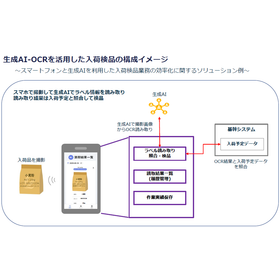
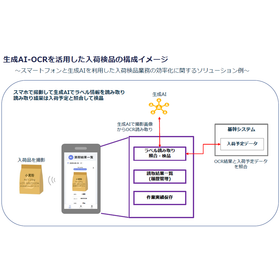
In the manufacturing industry, handling a wide variety of parts and raw materials requires a significant amount of time and effort for visual inspections upon arrival. Particularly in cases where there are no barcodes, the verification of item names and lot numbers becomes complicated, increasing the risk of human error leading to incorrect inventory entries. Our AI-OCR-based solution for streamlining incoming inspection processes addresses these challenges. 【Use Cases】 - Reading labels of parts without barcodes - Inspection tasks by cross-referencing with incoming data - Integration with inventory management, stocktaking, and shipping inspections 【Benefits of Implementation】 - Reduction in incoming inspection task time - Decrease in human errors such as incorrect inventory entries - Improvement and standardization of inspection accuracy - Enhanced inventory management through the issuance of internal management labels
Added to bookmarks
Bookmarks listBookmark has been removed
Bookmarks listYou can't add any more bookmarks
By registering as a member, you can increase the number of bookmarks you can save and organize them with labels.
Free membership registration
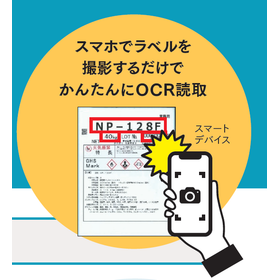
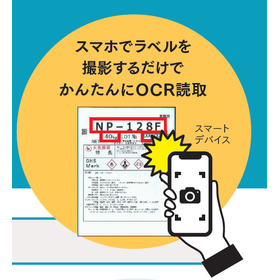
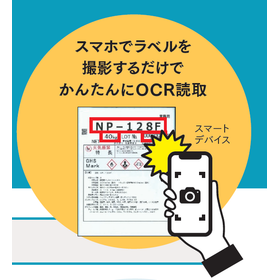
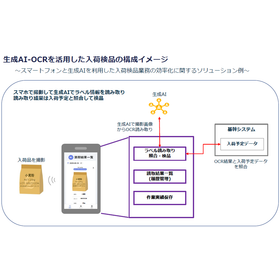
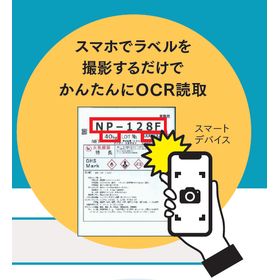
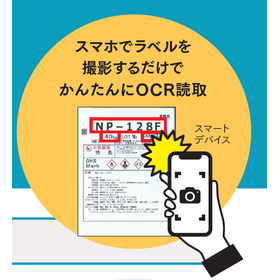
In the retail industry, product verification can be time-consuming and labor-intensive due to the diverse range of products arriving in various forms. This process involves visually confirming information such as product names, lot numbers, capacities, and expiration dates, and matching them with incoming data. This task becomes even more complicated for products without barcodes. Additionally, manual verification carries risks such as incorrect stock entries and variations in inspection accuracy. Our efficiency solution for incoming inspections utilizing generative AI-OCR addresses these challenges. 【Use Cases】 - Inspection during product arrivals at stores - Confirmation of product acceptance in the backroom - Verification of products requiring expiration date management 【Benefits of Implementation】 - Automatically reads necessary information by simply taking a photo with a smartphone, streamlining the verification process - No format learning required, compatible with various manufacturer labels - Reduces the risk of inspection errors and incorrect stock entries - Contributes to standardizing operations from incoming inspections to inventory management.
Added to bookmarks
Bookmarks listBookmark has been removed
Bookmarks listYou can't add any more bookmarks
By registering as a member, you can increase the number of bookmarks you can save and organize them with labels.
Free membership registration
In the logistics industry, handling a wide variety of cargo involves a lot of effort and time spent on visually confirming information such as product names, lot numbers, and capacities, and cross-referencing this with incoming data. This task becomes even more complicated, especially for cargo without barcodes. Manual visual checks carry risks such as human errors like incorrect inventory entries and variations in inspection accuracy depending on the skill level of the personnel involved. Our generative AI-OCR-based solution for streamlining incoming inspection addresses these challenges and enhances the accuracy and efficiency of operations. 【Use Cases】 - Incoming inspection of cargo without barcodes - Tasks that take time for visual confirmation - Situations where there is a desire to reduce the risk of incorrect inventory entries - Standardization and labor-saving of inspection tasks 【Benefits of Implementation】 - Reduction of work time through automatic reading via smartphone photography - No need for format learning, accommodating various labels - Prevention of inspection errors through cross-referencing with incoming data - Integration with inventory management, stocktaking, and outgoing inspection through the issuance of internal management labels
Added to bookmarks
Bookmarks listBookmark has been removed
Bookmarks listYou can't add any more bookmarks
By registering as a member, you can increase the number of bookmarks you can save and organize them with labels.
Free membership registration