46~90 item / All 91 items
Displayed results
Filter by category

Added to bookmarks
Bookmarks listBookmark has been removed
Bookmarks listYou can't add any more bookmarks
By registering as a member, you can increase the number of bookmarks you can save and organize them with labels.
Free membership registration
Contact this company
Inquiry FormBefore making an inquiry
Download Profile46~90 item / All 91 items
Filter by category

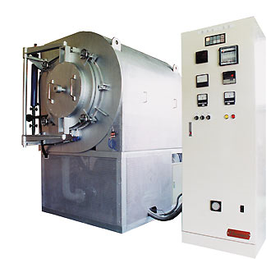
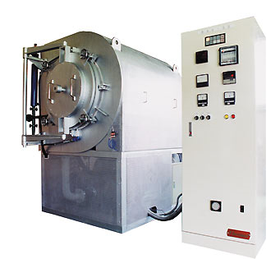
In the watch industry, it is essential to maximize the properties of materials and maintain high dimensional accuracy and surface quality in the processing of fine and complex precision parts. This is particularly important as it directly relates to the durability and functionality of the components, making uniform temperature management during heat treatment and processing in a clean atmosphere indispensable. Improper heat treatment can cause distortion and material changes in the parts, potentially affecting the performance and lifespan of the watch. Our RAV model is a horizontal vacuum purge bright annealing furnace developed to meet the needs of the watch industry. 【Application Scenarios】 - Bright annealing of precision metal parts such as watch gears and springs - Ensuring dimensional stability in the heat treatment of fine parts - Maintaining surface quality through heat treatment in a clean atmosphere 【Effects of Implementation】 - Reducing distortion in parts and improving dimensional accuracy - Enhancing durability by maximizing the inherent properties of the materials - Achieving stable quality through uniform heat treatment
Added to bookmarks
Bookmarks listBookmark has been removed
Bookmarks listYou can't add any more bookmarks
By registering as a member, you can increase the number of bookmarks you can save and organize them with labels.
Free membership registration
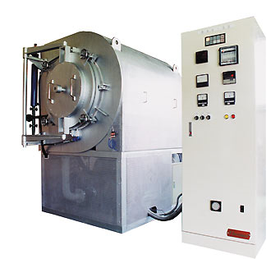
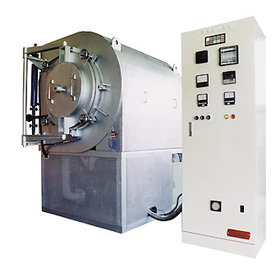
In the jewelry industry, maintaining luster and preventing discoloration are essential to preserve the beauty of products. Especially for items made with precious metals and gemstones, keeping their shine over a long period without compromising the material's properties directly impacts product value. Improper heat treatment can lead to discoloration and a decrease in luster. Our horizontal vacuum purge bright annealing furnace, model RAV, achieves the maintenance of luster and prevention of discoloration through precise heating treatment with a clean atmosphere gas. 【Application Scenarios】 - Bright annealing of precious metals (gold, silver, platinum, etc.) - Heat treatment of materials prone to discoloration - Finishing of jewelry with meticulous attention to detail 【Benefits of Implementation】 - Long-term maintenance of product luster - Prevention of discoloration, preserving the inherent beauty of the material - Increased customer satisfaction through high-quality product finishing
Added to bookmarks
Bookmarks listBookmark has been removed
Bookmarks listYou can't add any more bookmarks
By registering as a member, you can increase the number of bookmarks you can save and organize them with labels.
Free membership registration
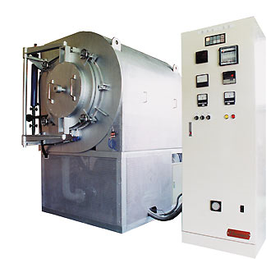
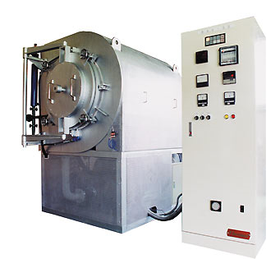
In the medical device industry, ensuring sterility is extremely important for guaranteeing the safety and reliability of products. Particularly for components with complex shapes or devices with fine structures, uniform and reliable sterilization processes are required. Inadequate sterilization can increase the risk of infection and threaten patient safety. Our horizontal vacuum purge radiant annealing furnace, model RAV, contributes to ensuring the sterility of medical devices through precise temperature control and processing in a clean atmospheric gas. 【Application Scenarios】 - Clean heating of precision parts before sterilization - Quality maintenance after sterilization processing 【Effects of Implementation】 - Improved sterility and ensured reliability - Stabilization of quality through uniform processing - Improved work efficiency
Added to bookmarks
Bookmarks listBookmark has been removed
Bookmarks listYou can't add any more bookmarks
By registering as a member, you can increase the number of bookmarks you can save and organize them with labels.
Free membership registration
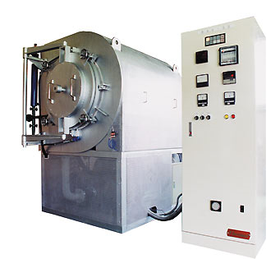
In the aerospace field, there is a demand for lightweight components while simultaneously ensuring high durability. Particularly in the heat treatment of metal parts, it is crucial to maximize the material's properties and ensure reliability. Improper heat treatment can lead to a decrease in material strength and unexpected failures. The horizontally oriented vacuum purge bright annealing furnace RAV type, which excels in precision and operability, addresses these challenges and achieves high-quality heat treatment that meets the demands of the aerospace sector. 【Application Scenes】 - Maintaining the strength of materials associated with the lightweighting of aircraft components - Enhancing the durability of spacecraft components - Precision heat treatment of special alloy parts 【Benefits of Implementation】 - Improvement of the inherent strength and durability of materials - Ensuring safety through increased reliability of components - Uniform heat treatment results through precise temperature management
Added to bookmarks
Bookmarks listBookmark has been removed
Bookmarks listYou can't add any more bookmarks
By registering as a member, you can increase the number of bookmarks you can save and organize them with labels.
Free membership registration
In the automotive industry, there is a demand for improved material strength to enhance the durability and reliability of parts. In particular, components that must withstand harsh operating environments require uniform and precise heat treatment. Improper heat treatment can lead to premature deterioration and performance degradation of parts. Our horizontal vacuum purge bright annealing furnace model RAV efficiently performs bright heating and heat treatment of parts using clean atmosphere gas after vacuum purging, contributing to strength enhancement. 【Application Scenarios】 - Bright heating of precision mechanical parts for automobiles - Strength enhancement through heat treatment of reel materials and pipe materials - Heat treatment of machined parts 【Benefits of Implementation】 - Strength enhancement through uniform heat treatment of parts - Heat treatment possible while maintaining a bright surface - Improved workability and efficient heat treatment operation
Added to bookmarks
Bookmarks listBookmark has been removed
Bookmarks listYou can't add any more bookmarks
By registering as a member, you can increase the number of bookmarks you can save and organize them with labels.
Free membership registration
In the semiconductor industry, as miniaturization and high integration progress, the cleanliness of components and uniform heat treatment are directly linked to product performance and reliability. Particularly in the manufacturing process of fine electronic components, contamination by impurities can lead to critical defects. Therefore, precise heating under a high-purity atmosphere is essential. Our RAV type efficiently performs air replacement in the furnace through heating with clean atmosphere gas after vacuum purging, achieving high purity. This contributes to the improvement of semiconductor component quality. 【Application Scenarios】 - Clean heating of electronic components - Heat treatment of reel materials, pipe materials, wire materials, and machined parts - Manufacturing processes of precision components requiring high purity 【Benefits of Implementation】 - Reduction of defect rates due to improved component cleanliness - Stabilization of product performance through uniform heating - Reduction of gas usage through efficient vacuum purging
Added to bookmarks
Bookmarks listBookmark has been removed
Bookmarks listYou can't add any more bookmarks
By registering as a member, you can increase the number of bookmarks you can save and organize them with labels.
Free membership registration
In the chemical catalyst industry, it is essential to maintain the performance of catalysts and keep their activity for an extended period. The degradation of catalysts can directly lead to a decrease in reaction efficiency and an increase in production costs. In particular, precise heat treatment during the catalyst manufacturing and regeneration processes is crucial for stabilizing the structure and properties of the catalyst and maintaining its activity. Our RAV type achieves stable heat treatment by preventing oxidation and the adhesion of impurities through heating with clean atmosphere gas after vacuum purging. This contributes to the maintenance of catalyst activity. 【Application Scenarios】 - Sintering and activation treatment during catalyst manufacturing - Regeneration treatment of used catalysts - Heat treatment of catalyst supports 【Benefits of Implementation】 - Improved reaction efficiency due to maintained catalyst activity - Extended catalyst lifespan - Assurance of stable product quality
Added to bookmarks
Bookmarks listBookmark has been removed
Bookmarks listYou can't add any more bookmarks
By registering as a member, you can increase the number of bookmarks you can save and organize them with labels.
Free membership registration
The RAV type opens and closes the front side doors to facilitate the loading and unloading of workpieces, making it easy to operate. It is a compact system that integrates a heating furnace, cooling device, and vacuum equipment. After reducing pressure with a vacuum pump, clean atmosphere gas is introduced for heating, allowing for more complete air replacement in the furnace in a shorter time, while significantly saving on purge gas usage! It uses gas atmospheres such as hydrogen, nitrogen, and argon, and ensures a uniform temperature distribution through hot air circulation. It features programmed heating and a forced cooling mechanism after heating, enabling efficient unmanned automatic operation. *For more details, please download the catalog or contact us.*
Added to bookmarks
Bookmarks listBookmark has been removed
Bookmarks listYou can't add any more bookmarks
By registering as a member, you can increase the number of bookmarks you can save and organize them with labels.
Free membership registration
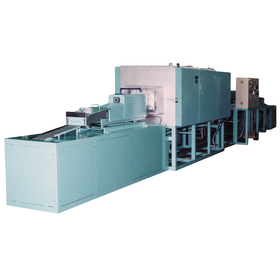
In the chemical plant industry, the durability of equipment components exposed to corrosive substances and high-temperature environments is a critical factor that affects the safety and operational efficiency of the plant. In particular, while stainless steel is known for its excellent corrosion resistance, surface oxidation and degradation can occur depending on the usage environment, potentially necessitating early replacement. Our continuous stainless steel bright annealing furnace removes fine oxides from the stainless steel surface and applies bright treatment, enhancing corrosion resistance and contributing to the longevity of plant equipment. 【Application Scenarios】 - Piping components in chemical plants - Reaction vessels - Heat exchangers - Other stainless steel components requiring corrosion resistance 【Benefits of Implementation】 - Improved corrosion resistance of stainless steel components - Extended equipment lifespan - Reduced maintenance costs - Stable operation of the plant - Enhanced product quality
Added to bookmarks
Bookmarks listBookmark has been removed
Bookmarks listYou can't add any more bookmarks
By registering as a member, you can increase the number of bookmarks you can save and organize them with labels.
Free membership registration
In the energy industry, the durability and efficiency of equipment are crucial. Particularly for components used in high-temperature environments, enhancing corrosion resistance through surface treatment is essential. The bright annealing of stainless steel components prevents surface oxidation and contributes to the longevity of the parts. Our continuous stainless steel bright annealing furnace utilizes hydrogen gas to perform bright annealing on stainless steel, contributing to improved energy efficiency. 【Application Scenarios】 - Treatment of components for power generation plants - Treatment of components for energy-related equipment - Cost reduction through efficient heat treatment 【Effects of Implementation】 - Improved corrosion resistance of stainless steel components - Increased longevity of equipment - Enhanced energy efficiency - Reduced maintenance costs
Added to bookmarks
Bookmarks listBookmark has been removed
Bookmarks listYou can't add any more bookmarks
By registering as a member, you can increase the number of bookmarks you can save and organize them with labels.
Free membership registration
In the construction industry, highly aesthetic stainless steel materials are important for expanding design possibilities and enhancing added value. However, stainless steel can oxidize during processing, leading to a loss of luster. This decrease in shine can diminish the appeal of the design and reduce the product's value. Thermal's continuous stainless steel bright annealing furnace allows for the reduction of surface oxides by processing stainless steel in a reducing atmosphere, enabling a shiny, silver-white finish. This maximizes the design potential of buildings and maintains long-lasting aesthetics. 【Application Scenarios】 - Building exterior materials (panels, handrails, etc.) - Interior materials (decorative items, elevators, etc.) - Landmarks 【Benefits of Implementation】 - Improved aesthetic quality of stainless steel materials - Realization of highly designed buildings - Increased added value of products
Added to bookmarks
Bookmarks listBookmark has been removed
Bookmarks listYou can't add any more bookmarks
By registering as a member, you can increase the number of bookmarks you can save and organize them with labels.
Free membership registration
In the infrastructure industry, long-term stable operation of structures is required. Particularly for infrastructure facilities exposed to harsh environments, it is important to prevent corrosion and deterioration of components and to extend their lifespan. Stainless steel has excellent corrosion resistance, but its performance can be further enhanced through surface treatment. Our continuous stainless steel bright annealing furnace model BCE(A) improves the corrosion resistance of stainless steel by performing bright treatment on its surface, contributing to the long lifespan of infrastructure facilities. 【Application Scenarios】 - Infrastructure structures such as bridges, tunnels, and plants - Equipment such as piping and tanks - Components used in harsh environments 【Benefits of Implementation】 - Improved corrosion resistance of stainless steel - Reduced maintenance costs for equipment - Achieving long-term stable operation of infrastructure facilities
Added to bookmarks
Bookmarks listBookmark has been removed
Bookmarks listYou can't add any more bookmarks
By registering as a member, you can increase the number of bookmarks you can save and organize them with labels.
Free membership registration
In the machine tool industry, maintaining the dimensional accuracy and surface hardness of parts is a crucial factor that influences product performance and lifespan. Particularly for high-load components such as cutting tools and molds, the uniformity of the microstructure achieved through heat treatment and the bright annealing of the surface are essential for improving wear resistance. Improper heat treatment can lead to deformation or cracking of parts, potentially resulting in a decrease in the overall precision of the machine tool. Our continuous stainless steel bright annealing furnace utilizes hydrogen gas for bright treatment, preventing surface oxidation of stainless steel parts and achieving high-quality heat treatment. 【Application Scenarios】 - Annealing of cutting tools - Heat treatment of mold components - Bright treatment of precision parts 【Benefits of Implementation】 - Improvement in dimensional accuracy and surface hardness of parts - Extension of product lifespan due to enhanced wear resistance - Improvement in appearance quality through bright treatment
Added to bookmarks
Bookmarks listBookmark has been removed
Bookmarks listYou can't add any more bookmarks
By registering as a member, you can increase the number of bookmarks you can save and organize them with labels.
Free membership registration
In the semiconductor industry, the cleanliness of the manufacturing process greatly affects product quality. In particular, fine oxides adhering to the surface of stainless steel components can lead to a decline in product performance and the occurrence of defects. Our continuous stainless steel bright annealing furnace reduces oxides on the stainless surface through heat treatment in a hydrogen gas atmosphere, achieving bright processing. This helps maintain high cleanliness and contributes to the improvement of semiconductor product quality. 【Application Scenarios】 - Semiconductor manufacturing equipment components - Parts used in clean rooms - Components requiring high precision 【Benefits of Implementation】 - Improved surface cleanliness of stainless steel components - Enhanced product quality - Improved yield
Added to bookmarks
Bookmarks listBookmark has been removed
Bookmarks listYou can't add any more bookmarks
By registering as a member, you can increase the number of bookmarks you can save and organize them with labels.
Free membership registration
In the precision processing of the electronic components industry, the accuracy of surface treatment is crucial to ensure product quality and reliability. Particularly for electronic components exposed to high-temperature environments or corrosive substances, it is essential to prevent surface oxidation and foreign matter adhesion while maintaining high corrosion resistance and mechanical properties. Our continuous stainless steel bright annealing furnace processes stainless steel in a hydrogen gas atmosphere, reducing surface oxides and enabling bright treatment. This contributes to the improvement of quality in precision-processed electronic components. 【Application Scenarios】 - Bright annealing treatment in the manufacturing process of electronic components - Surface treatment of precision-processed stainless steel parts - Improvement of corrosion resistance for electronic components used in high-temperature environments 【Effects of Implementation】 - Quality improvement through the removal of oxides from stainless steel surfaces - Increased productivity due to reduced heating and cooling times compared to vacuum furnaces - Extended product lifespan through enhanced mechanical properties and corrosion resistance
Added to bookmarks
Bookmarks listBookmark has been removed
Bookmarks listYou can't add any more bookmarks
By registering as a member, you can increase the number of bookmarks you can save and organize them with labels.
Free membership registration
In the watch parts industry, the aesthetic of the product is a very important factor. In particular, for stainless steel components, the surface gloss significantly affects the product's value. Variations in gloss and discoloration due to oxidation can compromise product quality and lower customer satisfaction. Thermal's continuous stainless steel bright annealing furnace utilizes hydrogen gas for bright treatment, reducing fine oxides on the stainless surface and achieving a uniform and beautiful silvery-white gloss. This greatly enhances the aesthetic of watch parts and increases the added value of the products. 【Usage Scenarios】 - Bright treatment of watch cases, bracelets, and other stainless steel components - High-end watches and decorative items that require a high-quality appearance - Components that want to balance corrosion resistance and aesthetics 【Benefits of Implementation】 - Improved surface gloss of stainless steel parts - Enhanced product quality and added value - Increased customer satisfaction - Reduction of defective products
Added to bookmarks
Bookmarks listBookmark has been removed
Bookmarks listYou can't add any more bookmarks
By registering as a member, you can increase the number of bookmarks you can save and organize them with labels.
Free membership registration
In the aerospace industry, reducing the weight of components is essential for improving performance and reducing costs. Particularly for parts that require heat resistance and corrosion resistance, heat treatment that maximizes the properties of materials is crucial. Stainless steel is widely used in the aerospace field due to its excellent properties, but the quality of surface treatment significantly affects the lifespan and reliability of the products. Our continuous stainless steel bright annealing furnace enables the removal of surface oxides through bright treatment, allowing for the production of high-quality components. [Application Scenarios] - Aircraft components (e.g., engine parts, structural members) - Space exploration vehicle parts - Rocket components [Benefits of Implementation] - Manufacturing of lightweight components - Improved corrosion resistance and mechanical properties - Extended product lifespan - Reduced manufacturing costs
Added to bookmarks
Bookmarks listBookmark has been removed
Bookmarks listYou can't add any more bookmarks
By registering as a member, you can increase the number of bookmarks you can save and organize them with labels.
Free membership registration
In the medical device industry, high corrosion resistance is required to ensure the safety and durability of products. This is particularly important for medical instruments that come into contact with bodily fluids and disinfectants, as it is crucial to prevent performance degradation and foreign matter contamination due to corrosion. Our continuous stainless steel bright annealing furnace reduces the fine oxides on the stainless steel surface and applies a bright treatment to enhance corrosion resistance. This contributes to the improvement of the quality of medical devices. 【Application Scenarios】 - Surgical instruments - Implants - Medical tubes - Other medical device components requiring corrosion resistance 【Benefits of Implementation】 - Improved corrosion resistance - Extended product lifespan - Reduced risk of foreign matter contamination - Enhanced quality of medical devices
Added to bookmarks
Bookmarks listBookmark has been removed
Bookmarks listYou can't add any more bookmarks
By registering as a member, you can increase the number of bookmarks you can save and organize them with labels.
Free membership registration
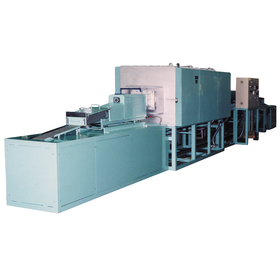
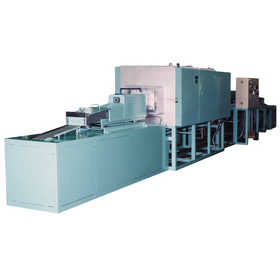
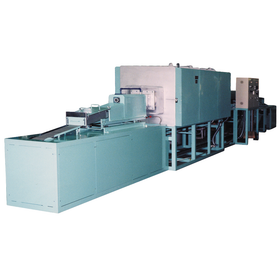
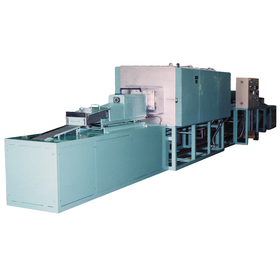
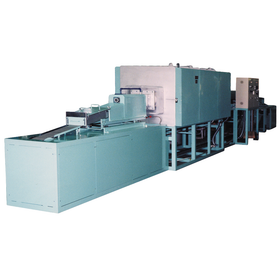
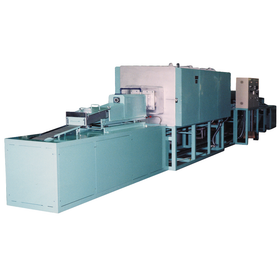
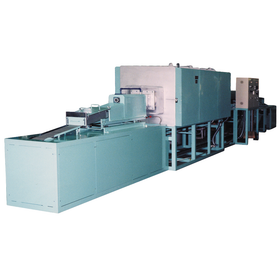
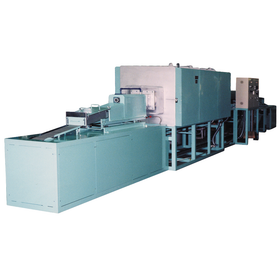
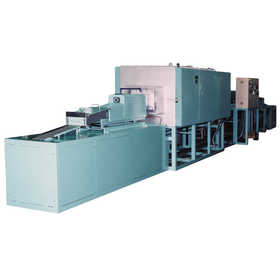
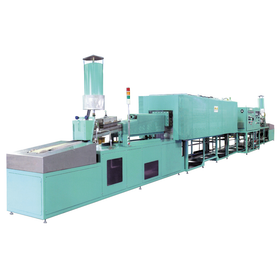
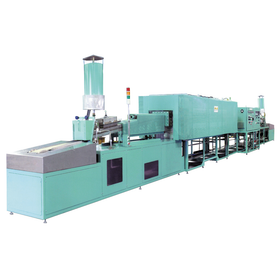
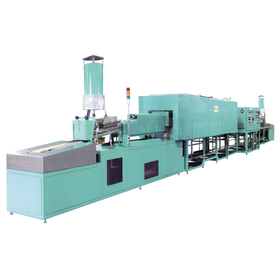
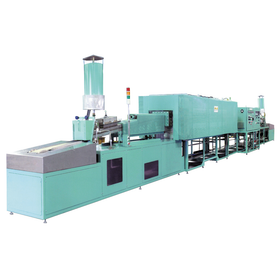
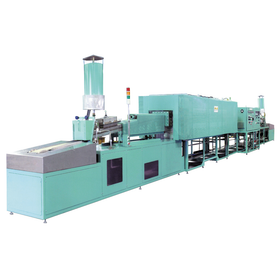
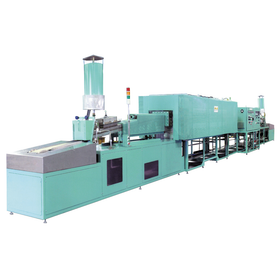
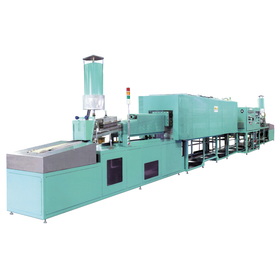
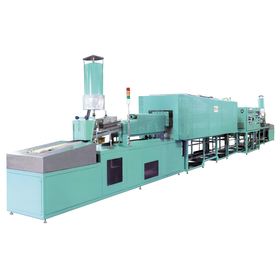
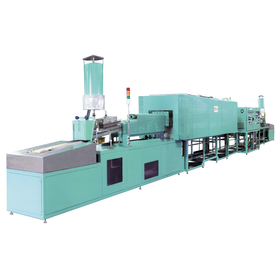
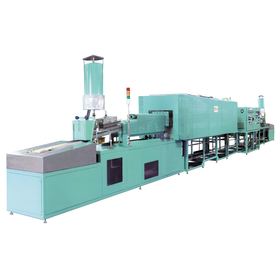
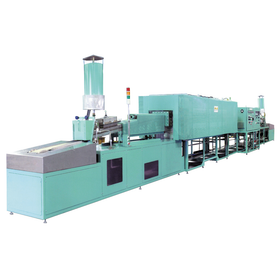
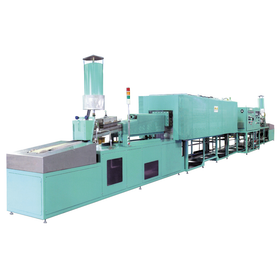
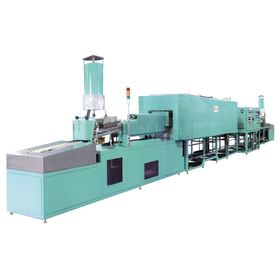
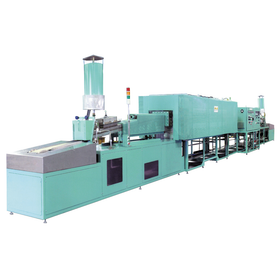
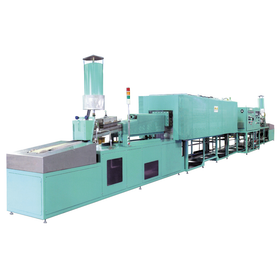
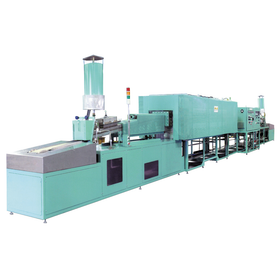
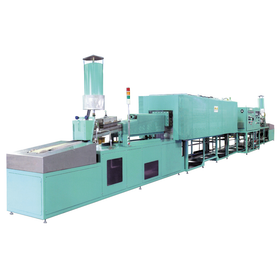
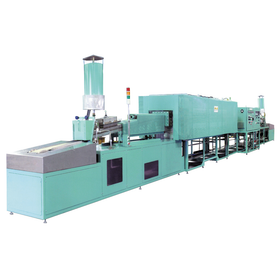
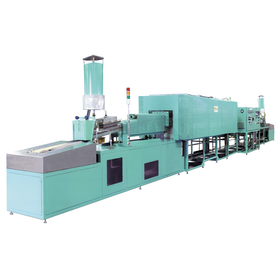
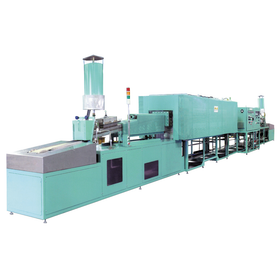
Thermal's continuous furnaces have a proven track record of several hundred units both domestically and internationally, and they are active in various fields. By treating stainless steel in a reducing atmosphere (hydrogen, hydrogen + nitrogen, ammonia decomposition gas), even slight surface oxides can be reduced, allowing for a bright (shiny silver-white) finish. Although hydrogen-based gases are used, safety devices are installed to ensure safe operation. We conduct experiments and prototypes of product samples and propose optimal conditions. ◆ Features of Thermal's Stainless Steel Bright Heat Treatment Furnace ◆ - By treating stainless steel in a reducing atmosphere, even trace amounts of surface oxides can be reduced, enabling bright treatment. Additionally, an optional atmosphere circulation cooling mechanism (rapid cooling mechanism) can be equipped. - Unlike vacuum furnaces, there is no evaporation or deposition of chromium, resulting in shorter heating times and faster cooling times, which leads to excellent mechanical properties and corrosion resistance. 【We also accept contract processing using this equipment installed at our Nasu factory (Tochigi Prefecture).】
Added to bookmarks
Bookmarks listBookmark has been removed
Bookmarks listYou can't add any more bookmarks
By registering as a member, you can increase the number of bookmarks you can save and organize them with labels.
Free membership registration
In the musical instrument industry, high-quality finishes are required for the joining of metal components that influence acoustic characteristics. This is especially important for instrument parts that are susceptible to vibrations and temperature changes, where minimizing the impact on joint strength and acoustic properties is crucial. Improper joining can lead to deterioration of tone and a reduction in the lifespan of the instrument. Our continuous non-oxidizing furnace soldering furnace model BCE(B) does not use flux, which improves the quality of the joints and suppresses negative effects on acoustic properties. 【Application Scenarios】 - Joining parts of brass instruments - Joining metal parts of string instruments - Joining metal frames of percussion instruments 【Benefits of Implementation】 - Improvement of acoustic properties - Stabilization of product quality - Reduction of post-processing steps
Added to bookmarks
Bookmarks listBookmark has been removed
Bookmarks listYou can't add any more bookmarks
By registering as a member, you can increase the number of bookmarks you can save and organize them with labels.
Free membership registration
In the home appliance industry, the bonding strength and corrosion resistance of components are crucial for ensuring the long-term reliability of products. Particularly for parts exposed to high temperatures or vibrations, the quality of the joints significantly affects the product's lifespan. Improper bonding can lead to early product failure or performance degradation. Our continuous non-oxidizing furnace brazing system achieves high-quality joints through flux-free brazing, contributing to the durability of home appliances. [Application Scenarios] - Joining of metal components in home appliances that require durability - Joining of parts used in high-temperature environments - Joining of parts that require vibration-resistant joints [Benefits of Implementation] - Improved joint strength - Enhanced corrosion resistance - Extended product lifespan
Added to bookmarks
Bookmarks listBookmark has been removed
Bookmarks listYou can't add any more bookmarks
By registering as a member, you can increase the number of bookmarks you can save and organize them with labels.
Free membership registration
In the telecommunications industry, high-quality metal joining is required to support high-speed data communication. Particularly in high-frequency components and fiber optic-related parts, the reliability of the joints directly affects communication speed and stability. Soldering with flux poses challenges such as performance degradation due to flux residue and the hassle of post-processing. Thermal's continuous non-oxidizing furnace soldering system addresses these issues by eliminating the need for flux, achieving high-quality joints. 【Application Scenarios】 - Joining of high-frequency components - Joining of fiber optic-related parts - Joining of communication cable terminals 【Benefits of Implementation】 - Improved communication performance through high-quality joints - Cost reduction by minimizing post-processing steps - Increased productivity through simultaneous multi-point soldering
Added to bookmarks
Bookmarks listBookmark has been removed
Bookmarks listYou can't add any more bookmarks
By registering as a member, you can increase the number of bookmarks you can save and organize them with labels.
Free membership registration
In the energy industry, the reliability of metal components such as power generation equipment and transmission networks is crucial. Particularly for parts used in high-temperature and high-pressure environments, the strength of the joints significantly affects the safety and efficiency of the products. Soldering with flux tends to result in variability in joint quality and requires post-processing, which calls for more efficient joining methods. Thermal's continuous flux-free brazing furnace model BCE(B) achieves high-quality brazing without the use of flux, contributing to the reliability of energy-related equipment. 【Application Scenarios】 - Joining of power generation turbine components - Manufacturing of heat exchangers - Manufacturing of transmission line components - Other joining of metal parts used in high-temperature environments 【Benefits of Implementation】 - High-quality joints without flux - Cost reduction through the elimination of post-processing steps - Increased productivity through simultaneous multi-point brazing - Improved product reliability
Added to bookmarks
Bookmarks listBookmark has been removed
Bookmarks listYou can't add any more bookmarks
By registering as a member, you can increase the number of bookmarks you can save and organize them with labels.
Free membership registration
In the machinery industry, high-precision metal parts joining is required. Particularly for components such as cutting tools and precision molds, where high durability and accuracy are demanded, the quality of the joints affects the performance of the products. Traditional welding methods carry the risk of quality degradation due to distortion and oxidation, but our continuous non-oxidizing furnace brazing system achieves high-quality joints without the use of flux. 【Application Scenarios】 - Joining of precision parts - Joining of parts with difficult shapes for welding - Simultaneous multi-point joining 【Benefits of Implementation】 - Improved product performance through high-quality joints - Reduction of post-processing steps - High productivity
Added to bookmarks
Bookmarks listBookmark has been removed
Bookmarks listYou can't add any more bookmarks
By registering as a member, you can increase the number of bookmarks you can save and organize them with labels.
Free membership registration
In the medical device industry, the miniaturization and precision of products are advancing, and the quality of joining technology is being emphasized. Particularly in medical devices that require high reliability, the strength and durability of the joints significantly affect the performance of the products. Brazing using flux can lead to variability in the quality of the joints, making it unsuitable for precise joining. Our continuous non-oxidizing furnace brazing system, model BCE(B), achieves non-oxidizing brazing without the use of flux, contributing to the precision of medical devices by providing high-quality joints. 【Application Scenarios】 - Joining of precision medical device components - Joining of implant components - Joining of surgical instruments 【Benefits of Implementation】 - Improved product reliability through high-quality joints - Cost reduction by minimizing post-processing steps - Increased productivity through simultaneous multi-point joining
Added to bookmarks
Bookmarks listBookmark has been removed
Bookmarks listYou can't add any more bookmarks
By registering as a member, you can increase the number of bookmarks you can save and organize them with labels.
Free membership registration
In the semiconductor industry, as devices become smaller and more high-performance, the precision of joining technology has become crucial. Particularly in the joining of miniaturized components, the reliability of the joints affects the performance of the products. Soldering with flux carries the risk of defects due to flux residue, but our continuous non-oxidizing furnace soldering system, model BCE(B), does not use flux, enabling high-quality joints. 【Application Scenarios】 - Joining of miniaturized semiconductor components - Joining of precision parts - Joining of components with difficult shapes for welding - Simultaneous multi-point joining 【Benefits of Implementation】 - High-quality joints without flux - No need for post-processing acid cleaning - Increased productivity through simultaneous multi-point soldering - Ability to perform hardening or bright annealing simultaneously with soldering
Added to bookmarks
Bookmarks listBookmark has been removed
Bookmarks listYou can't add any more bookmarks
By registering as a member, you can increase the number of bookmarks you can save and organize them with labels.
Free membership registration
In the industrial machinery sector, the long-term reliability of products is extremely important. To withstand use in harsh environments, the quality of joints is essential, requiring high strength and durability. Conventional welding methods can face challenges such as strength reduction due to distortion and oxidation. The Thermal continuous non-oxidizing furnace soldering furnace model BCE(B) does not use flux, preventing oxidation of the joints and achieving high-quality connections. This contributes to the improvement of product reliability. 【Application Scenarios】 - Joining of precision parts - Joining of shapes that are difficult to weld - Simultaneous multi-point joining 【Effects of Implementation】 - Improved strength and durability of joints - Enhanced product reliability - Reduction of post-processing steps
Added to bookmarks
Bookmarks listBookmark has been removed
Bookmarks listYou can't add any more bookmarks
By registering as a member, you can increase the number of bookmarks you can save and organize them with labels.
Free membership registration
In the mold industry, the durability of molds is crucial for balancing product quality and production efficiency. Particularly for molds exposed to high temperatures and pressures, the strength and corrosion resistance of the joints significantly affect the lifespan of the molds. Improper joining can lead to early damage or performance degradation of the molds. The Thermal continuous type non-oxidizing furnace soldering furnace BCE(B) type contributes to the longevity of molds by joining metal products without the use of flux. 【Usage Scenarios】 - Joining of molds - Joining of precision parts - Joining of shapes that cannot be welded - Simultaneous multi-point joining 【Benefits of Implementation】 - Soldering without flux is possible - No need for post-processing acid cleaning due to non-oxidizing heat treatment - Simultaneous multi-point soldering is possible - Hardening or bright annealing can be performed simultaneously with soldering
Added to bookmarks
Bookmarks listBookmark has been removed
Bookmarks listYou can't add any more bookmarks
By registering as a member, you can increase the number of bookmarks you can save and organize them with labels.
Free membership registration
In the electronics industry, there is a demand for both miniaturization of products and high reliability. Particularly when joining multiple components in a limited space, the quality of the joints becomes a crucial factor that affects the performance of the product. Soldering with flux carries the risk of defects due to oxidation at the joints and flux residues, but our continuous non-oxidizing furnace soldering system, model BCE(B), addresses these issues. 【Application Scenarios】 - Precision joining of small electronic components - Joining of components with difficult shapes for welding - Simultaneous multi-point joining 【Benefits of Implementation】 - High-quality joints through no-flux soldering - Reduction of post-processing steps due to non-oxidizing heat treatment - Increased productivity through simultaneous multi-point soldering
Added to bookmarks
Bookmarks listBookmark has been removed
Bookmarks listYou can't add any more bookmarks
By registering as a member, you can increase the number of bookmarks you can save and organize them with labels.
Free membership registration
In the aerospace industry, there is a demand for both lightweight construction and high reliability. This is particularly important for components exposed to high-temperature and high-pressure environments, where the strength of the joints is crucial. Traditional welding can present challenges such as distortion and reduced strength due to thermal effects on the base material. Our continuous non-oxidizing furnace brazing system, model BCE(B), does not use flux, which improves the quality of the joints and achieves both lightweight construction and high strength. 【Application Scenarios】 - Joining of aircraft engine components - Joining of space rocket components - Joining of structural materials requiring weight reduction 【Benefits of Implementation】 - Achieves high-strength joints - Improved fuel efficiency due to weight reduction - Longer lifespan of components - High reliability
Added to bookmarks
Bookmarks listBookmark has been removed
Bookmarks listYou can't add any more bookmarks
By registering as a member, you can increase the number of bookmarks you can save and organize them with labels.
Free membership registration
In the automotive industry, the joining of various metal parts is required to achieve both lightweight and durability. Especially for components exposed to high temperatures and vibrations, the reliability of the joints is crucial. In cases where welding is difficult due to shape or where simultaneous multi-point joining is necessary, brazing with flux presents challenges such as post-processing effort and quality variability. The Thermal continuous non-oxidizing furnace brazing furnace model BCE(B) addresses these issues and achieves high-quality joints. 【Application Scenarios】 - Joining of automotive parts (precision parts, shapes that cannot be welded, simultaneous multi-point joining) - Brazing of base materials such as stainless steel, alloy steel, iron, steel, heat-resistant steel, nickel alloys, brass, and aluminum 【Benefits of Implementation】 - Enables brazing without flux, eliminating the need for post-processing - Achieves high-quality joints through non-oxidizing heat treatment - Increases productivity through simultaneous multi-point brazing - Allows for hardening or bright annealing simultaneously with brazing
Added to bookmarks
Bookmarks listBookmark has been removed
Bookmarks listYou can't add any more bookmarks
By registering as a member, you can increase the number of bookmarks you can save and organize them with labels.
Free membership registration
In the musical instrument industry, high-quality finishes are required for the joining of metal parts that influence acoustic characteristics. Particularly in areas that play a crucial role in the vibration and sound transmission of instruments, the strength of the joints and their impact on acoustic properties are important. Conventional welding methods can pose challenges such as distortion and degradation of acoustic characteristics due to oxidation. The Thermal continuous non-oxidizing furnace soldering furnace model BCE(B) prevents oxidation at the joints by not using flux, thereby suppressing the deterioration of acoustic properties. It contributes to high-quality joints and maximizes the inherent tone of the instrument. 【Application Scenarios】 - Joining parts of brass instruments (trumpets, saxophones, etc.) - Joining metal parts of string instruments (violins, guitars, etc.) - Joining metal parts of percussion instruments (cymbals, drums, etc.) 【Benefits of Implementation】 - Improved acoustic characteristics: Prevents oxidation at joints, reproducing the instrument's inherent tone. - High-quality finish: Eliminates adverse effects from flux residues. - High reliability: Enhances the strength of the joints.
Added to bookmarks
Bookmarks listBookmark has been removed
Bookmarks listYou can't add any more bookmarks
By registering as a member, you can increase the number of bookmarks you can save and organize them with labels.
Free membership registration
In the energy industry, the reliability of metal components such as power generation equipment and transmission networks is extremely important. Particularly for parts used in high-temperature and high-pressure environments, the quality of the joints significantly affects the safety and efficiency of the equipment. Brazing using flux can increase the risk of strength reduction and corrosion due to oxidation and contamination at the joints. Thermal's continuous non-oxidizing furnace brazing system achieves high-quality brazing without the use of flux, contributing to the reliability of energy-related equipment. 【Application Scenes】 - Joining of power generation turbine components - Manufacturing of heat exchangers - Brazing of piping components - Joining of components in solar power generation systems 【Effects of Implementation】 - High-quality joints without flux - Cost reduction through the elimination of post-processing steps - Increased productivity through simultaneous multi-point brazing - Extended product lifespan and reduced maintenance costs
Added to bookmarks
Bookmarks listBookmark has been removed
Bookmarks listYou can't add any more bookmarks
By registering as a member, you can increase the number of bookmarks you can save and organize them with labels.
Free membership registration
In the industrial machinery sector, high-quality joining of metal components is essential to enhance product durability and reliability. Particularly for parts that require high precision, the strength and sealing of the joints significantly affect product performance. Improper joining can lead to machine failures or performance degradation. Our continuous non-oxidizing furnace brazing system achieves high-quality brazing without the use of flux, contributing to the reliability of industrial machinery. 【Application Scenarios】 - Joining of precision components - Joining of parts with difficult shapes for welding - Simultaneous multi-point joining 【Benefits of Implementation】 - High-quality joining without flux - No need for post-processing acid cleaning - Increased productivity through simultaneous multi-point brazing - Ability to perform hardening or bright annealing simultaneously with brazing
Added to bookmarks
Bookmarks listBookmark has been removed
Bookmarks listYou can't add any more bookmarks
By registering as a member, you can increase the number of bookmarks you can save and organize them with labels.
Free membership registration
In the mold industry, improving the durability of molds is essential to achieve both product quality and production efficiency. Particularly for molds exposed to high temperatures and high pressures, the strength and wear resistance of the joints are critical factors that influence the lifespan of the mold. Improper joining can lead to early damage to the mold or product defects. Our continuous non-oxidizing furnace soldering furnace model BCE(B) contributes to the longevity of molds by joining metal products without the use of flux. 【Application Scenarios】 - Joining of molds - Joining of precision parts - Joining of shapes that cannot be welded - Simultaneous multi-point joining 【Benefits of Implementation】 - Soldering without flux is possible - No need for acid cleaning after processing due to non-oxidizing heat treatment - Simultaneous multi-point soldering is possible - Hardening or bright annealing can be performed simultaneously with soldering
Added to bookmarks
Bookmarks listBookmark has been removed
Bookmarks listYou can't add any more bookmarks
By registering as a member, you can increase the number of bookmarks you can save and organize them with labels.
Free membership registration
In the semiconductor industry, precise bonding technology is essential to maximize product reliability and performance. Particularly for components used in high-temperature environments or under high-frequency conditions, the quality of the joints significantly affects product lifespan. Flux-free brazing in a non-oxidizing furnace prevents oxidation of the joints and achieves high reliability. Our continuous flux-free brazing furnace enables high-quality bonding and contributes to the performance enhancement of semiconductor products. 【Application Scenarios】 - Bonding of precision parts - Bonding of components with difficult shapes to weld - Simultaneous multi-point bonding 【Benefits of Implementation】 - High-quality bonding without flux - Reduction of post-processing steps through non-oxidizing heat treatment - Increased productivity through simultaneous multi-point brazing
Added to bookmarks
Bookmarks listBookmark has been removed
Bookmarks listYou can't add any more bookmarks
By registering as a member, you can increase the number of bookmarks you can save and organize them with labels.
Free membership registration
In the home appliance industry, the long-term reliability of products is extremely important. In particular, high quality is required for the joining of parts exposed to temperature changes and vibrations. Defects in joints can lead to product failures or performance degradation, potentially undermining customer trust. The Thermal continuous non-oxidizing furnace soldering furnace model BCE(B) achieves high-quality joints through non-oxidizing soldering without the use of flux, contributing to the reliability of home appliances. 【Application Scenarios】 - Joining of metal parts in home appliances (e.g., heaters, sensors, metal frames, etc.) - Joining of precision parts - Joining of parts with difficult shapes for welding - Simultaneous multi-point joining 【Benefits of Implementation】 - Reduced risk of corrosion and defects due to flux residues - High-quality joints through non-oxidizing heat treatment - Increased product longevity and reliability - Cost reduction through the elimination of post-processing steps
Added to bookmarks
Bookmarks listBookmark has been removed
Bookmarks listYou can't add any more bookmarks
By registering as a member, you can increase the number of bookmarks you can save and organize them with labels.
Free membership registration
In the aerospace industry, lightweight design and high reliability are essential. Particularly for aircraft components, achieving weight reduction while maintaining strength is crucial for improving fuel efficiency. Brazing is effective for joining shapes that are difficult to weld or require simultaneous multi-point connections. Our continuous non-oxidizing furnace brazing system, model BCE(B), does not use flux, allowing for high-quality joints without compromising the strength of the joint. 【Application Scenarios】 - Joining aircraft components - Joining space-related equipment - Joining structures that require weight reduction 【Benefits of Implementation】 - Improved fuel efficiency through weight reduction - Increased reliability through high-strength joints - Enhanced productivity through simultaneous multi-point joining
Added to bookmarks
Bookmarks listBookmark has been removed
Bookmarks listYou can't add any more bookmarks
By registering as a member, you can increase the number of bookmarks you can save and organize them with labels.
Free membership registration
In the electronics industry, there is a demand for both miniaturization of products and high reliability. Particularly when joining multiple components in a limited space, the quality of the joints becomes a crucial factor that affects the overall performance of the product. Soldering with flux carries the risk of defects due to oxidation at the joint and flux residue, but our continuous non-oxidizing furnace soldering system, model BCE(B), addresses these issues. 【Application Scenarios】 - Precision joining of small electronic components - Joining of components with difficult shapes for welding - Increased productivity through simultaneous multi-point joining 【Benefits of Implementation】 - High-quality joints through no-flux soldering - Reduction of post-processing steps due to a non-oxidizing atmosphere - Improved production efficiency through simultaneous multi-point soldering
Added to bookmarks
Bookmarks listBookmark has been removed
Bookmarks listYou can't add any more bookmarks
By registering as a member, you can increase the number of bookmarks you can save and organize them with labels.
Free membership registration
In the machine tool industry, high durability is required, and the quality of joint connections significantly affects product lifespan. Particularly in areas exposed to wear and high loads, such as cutting tools and sliding components, the strength of the joints is crucial. Traditional welding methods carry risks of strength reduction due to distortion and oxidation, but our continuous non-oxidizing furnace brazing furnace model BCE(B) can maximize the strength of the joints since it does not use flux. 【Application Scenarios】 - Jointing of cutting tool edges - Jointing of sliding components - Jointing of parts subjected to high loads 【Benefits of Implementation】 - Improved joint strength - Extended product lifespan - Reduced defect rate
Added to bookmarks
Bookmarks listBookmark has been removed
Bookmarks listYou can't add any more bookmarks
By registering as a member, you can increase the number of bookmarks you can save and organize them with labels.
Free membership registration
In the automotive industry, reliable joining of metal parts is essential to achieve both safety and durability. Particularly for components exposed to high temperatures and high loads, such as engine parts and brake parts, the reliability of the joints significantly affects the product's performance. In cases where welding is difficult due to complex shapes or when simultaneous multi-point joining is required, brazing with flux can present challenges such as post-processing effort and quality variability. The Thermal continuous flux-free brazing furnace model BCE(B) addresses these issues and enables high-quality joining. 【Application Scenarios】 - Joining of engine parts - Joining of brake parts - Joining of exhaust system components - Joining of other components with difficult welding shapes 【Benefits of Implementation】 - Reduction of post-processing steps through flux-free brazing - High-quality joining in a non-oxidizing atmosphere - Increased productivity through simultaneous multi-point brazing - Capability for hardening or bright annealing simultaneously with brazing
Added to bookmarks
Bookmarks listBookmark has been removed
Bookmarks listYou can't add any more bookmarks
By registering as a member, you can increase the number of bookmarks you can save and organize them with labels.
Free membership registration
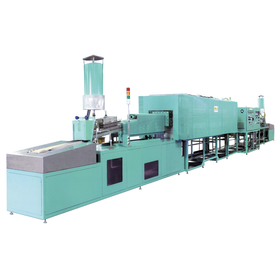
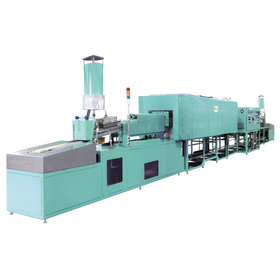
Thermal's continuous furnaces have a proven track record of hundreds of units both domestically and internationally, and are active in various fields. For the joining of metal products (precision parts, shapes that cannot be welded, simultaneous multi-point joining), a flux-free, non-oxidizing brazing in a furnace is optimal. Various heating furnaces and atmosphere gases suitable for the base materials and brazing materials can be selected, and we conduct experiments and prototypes of product samples to propose the best conditions! ◆ Advantages of Thermal Brazing Treatment Furnaces ◆ - Brazing without flux is possible - Non-oxidizing heat treatment can be performed, eliminating the need for post-treatment pickling - Simultaneous multi-point brazing is possible - Hardening or bright annealing can be performed simultaneously with brazing - By installing a circulating cooling mechanism, it is possible to prevent the scattering of brazing materials (optional) [We also accept contract processing using this equipment installed at our Nasu factory (Tochigi Prefecture).]
Added to bookmarks
Bookmarks listBookmark has been removed
Bookmarks listYou can't add any more bookmarks
By registering as a member, you can increase the number of bookmarks you can save and organize them with labels.
Free membership registration
For the tempering of die steel (SKD) and high-speed steel (SKH), performing two or more repeated tempering can restore toughness and reduce residual stress. However, in conventional furnaces, this operation was done manually, which was labor-intensive and time-consuming. The "TAF type" automatically repeats heating → cooling → heating when the workpiece is set, allowing for nighttime operation without the need for manual labor, thus contributing to a reduction in lead time. 【Features】 ■ Automatic repeated tempering function 1st time: Improvement of toughness, secondary hardening, reduction of residual stress, decomposition of residual austenite, generation of new martensite 2nd time: Tempering of new martensite, reduction of residual stress ■ Operation is via a touch panel, allowing for easy programming ■ Automatically repeats heating → cooling → heating when the workpiece is set ■ Requires no manual labor and can operate automatically at night *For more details, please contact us or view from "Download Catalog."
Added to bookmarks
Bookmarks listBookmark has been removed
Bookmarks listYou can't add any more bookmarks
By registering as a member, you can increase the number of bookmarks you can save and organize them with labels.
Free membership registration
Molds and tools need to undergo tempering after hardening, and the quality of the tempering can significantly affect the lifespan of the molds, potentially increasing it several times. The RBM type has a wide usage temperature range of 100 to 550°C, allowing for various low and medium temperature heat treatments! Additionally, it is used not only for tempering but also for stress relief after welding, annealing, and heating shrink fitting processes. *There is also a high-temperature specification RH type that can handle tempering of hot work die steel and high-speed steel. 《Purpose of Tempering》 ▶ To remove internal stresses caused by hardening and prevent cracking ▶ To stabilize unstable hardened martensite and prevent time-dependent deformation ▶ To temper to an appropriate hardness for the application, providing toughness ▶ Effective for high-temperature tempering of SKD molds and preventing cracking during wire-cut electrical discharge machining ▶ High-temperature tempering helps prevent dimensional changes at elevated temperatures and improves resistance to heat checks.
Added to bookmarks
Bookmarks listBookmark has been removed
Bookmarks listYou can't add any more bookmarks
By registering as a member, you can increase the number of bookmarks you can save and organize them with labels.
Free membership registration
We are currently offering a technical document summarizing the heat treatment of press copper alloys for engineers and skilled workers involved in the processing of press copper alloys. 【Contents】 ■ Types of press copper alloys ■ Pure copper, brass, and phosphor bronze ■ Nickel silver and beryllium copper ■ Horizontal bright heat treatment furnace for small parts *For more details, please contact us or view from "Download Catalog."
Added to bookmarks
Bookmarks listBookmark has been removed
Bookmarks listYou can't add any more bookmarks
By registering as a member, you can increase the number of bookmarks you can save and organize them with labels.
Free membership registration