We have updated our company website.
The catalog download (AM) page has been updated.

Inquiry about this news
Contact Us Online
Added to bookmarks
Bookmarks listBookmark has been removed
Bookmarks listYou can't add any more bookmarks
By registering as a member, you can increase the number of bookmarks you can save and organize them with labels.
Free membership registration
Inquiry about this news
Contact Us OnlineAdded to bookmarks
Bookmarks listBookmark has been removed
Bookmarks listYou can't add any more bookmarks
By registering as a member, you can increase the number of bookmarks you can save and organize them with labels.
Free membership registration
Metal cracks are one of the concerns in equipment maintenance operations. Conventional welding repair methods can alter the base material around the crack due to heat, leading to residual stress and deformation, which always carries the risk of "crack recurrence" or "secondary damage." Hinode Water Supply Equipment Co., Ltd.'s "Mechanical Stitching Method" is a new technique that allows for metal crack repair without applying heat. By using special bolts and reinforcement plates, the crack is physically removed without affecting the base material with heat. Repairs can be made even in environments where open flames cannot be used. Since no heat is applied, the disassembly of equipment is minimized. For more details, please contact us or download the catalog.
Added to bookmarks
Bookmarks listBookmark has been removed
Bookmarks listYou can't add any more bookmarks
By registering as a member, you can increase the number of bookmarks you can save and organize them with labels.
Free membership registration
As the cold season approaches, we are accepting inquiries regarding power sources for equipment used outdoors or in cold regions. 【We accept the following inquiries】 - I want to review the batteries for equipment placed outdoors in preparation for winter. - I am unsure whether to use rechargeable batteries or replaceable batteries. - I want to consider the power source for equipment used in unoccupied areas during cold nights. 【Types of batteries we handle】 - Primary batteries: Lithium thionyl chloride batteries / Lithium manganese dioxide batteries - Secondary batteries: Industrial lithium secondary batteries / Lithium polymer batteries / Lithium iron phosphate batteries Whether a battery can be used in cold conditions is determined not by the type of battery, but by the specifications of each product. If you let us know the temperature in the coldest scenario, whether charging is available, and the required current output, we will assist you starting from inquiries about potential part numbers. The items to check before making a selection are summarized in the technical column "How to Choose Batteries for Cold Regions and Outdoor Use." Please take a look.
Added to bookmarks
Bookmarks listBookmark has been removed
Bookmarks listYou can't add any more bookmarks
By registering as a member, you can increase the number of bookmarks you can save and organize them with labels.
Free membership registration
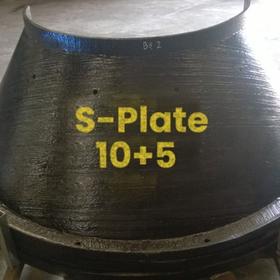
SORA (Sora Manufacturing and Import Export) supplies chromium carbide overlay wear plates and wear parts made from them, such as liners, chutes and cones. [Wear plate features] - Two-layer plate: chromium carbide alloy overlay on ordinary steel (SS400 / ASTM A36) - Overlay hardness 58–65 HRC (reference values) - Can be cut, bent and welded like ordinary steel plate - Three grades, including a heat-resistant type and a smooth-surface anti-sticking type [Wear parts made to order] Liners, chutes, hoppers, cones and pipes are fabricated from your drawing or sample and delivered ready to install, for cement vertical roller mills and steel-plant sinter and material handling equipment. [For a quotation] Please send grade, thickness, size and quantity, or drawings/photos with main dimensions, plus the abrasive material, temperature and impact conditions. See our product pages and catalogue for details. We respond in English from Vietnam and in Japanese from our contact in Japan.
Added to bookmarks
Bookmarks listBookmark has been removed
Bookmarks listYou can't add any more bookmarks
By registering as a member, you can increase the number of bookmarks you can save and organize them with labels.
Free membership registration
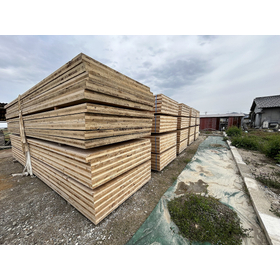
The sheets used in civil engineering work are often thought to be decided after the construction begins. However, temporary roads, access routes, heavy machinery work yards, and material yards are important areas that relate to workability and the surrounding environment. If design consultants and clients propose hyper CLT sheets from the planning stage, it is possible to consider the laying range, number of sheets used, delivery methods, and installation and removal methods in advance. Hyper CLT sheets are wooden lightweight sheets made from CLT (Cross Laminated Timber) that is laminated in a perpendicular direction. The 5x10 sheets weigh about 230 kg, and the 5x20 sheets weigh about 460 kg, making them relatively lightweight, and depending on site conditions, installation or relocation using small machinery can also be considered. They can be utilized alongside steel plates in temporary roads, vehicle access routes, and material yards. The unique characteristics of wood allow for considerations regarding glare and metallic sounds, as well as easy proposals for harmony with the surrounding landscape. Hyper CLT sheets are registered technologies under the Ministry of Land, Infrastructure, Transport and Tourism's NETIS program. The registration number is "TH-250021-A." Wooden sheets, NETIS, civil engineering, CLT, wooden lightweight sheets. Instead of choosing after the construction begins, plan the site from the design stage. Hyper CLT sheets add a new proposal to civil engineering work.
Added to bookmarks
Bookmarks listBookmark has been removed
Bookmarks listYou can't add any more bookmarks
By registering as a member, you can increase the number of bookmarks you can save and organize them with labels.
Free membership registration
Metal cracks are one of the concerns in equipment maintenance operations. Conventional welding repair methods can alter the base material around the crack due to heat, leading to residual stress and deformation, which always carries the risk of "crack recurrence" and "secondary damage." Hinode Water Supply Equipment Co., Ltd.'s "Mechanical Stitching Method" is a new technique that allows for the repair of metal cracks without applying heat. By using special bolts and reinforcement plates, the crack is physically removed without affecting the base material at all. Repairs can be made even in environments where open flames cannot be used. Since no heat is applied, the disassembly of equipment is minimized. For more details, please contact us or download the catalog.
Added to bookmarks
Bookmarks listBookmark has been removed
Bookmarks listYou can't add any more bookmarks
By registering as a member, you can increase the number of bookmarks you can save and organize them with labels.
Free membership registration