
I have added 'Understanding Cutoff and Cut-On in 5 Minutes!' to the technical trend keywords.
 安達新産業 本社
Optical filters are important devices used to extract only the necessary wavelengths from light or to block unnecessary wavelengths. They are utilized in a wide range of fields, from cameras and displays that we commonly see, to spectroscopic analysis devices used in medical and bio fields, as well as in industrial applications such as laser processing and optical communication. Light encompasses a broad wavelength range, including ultraviolet, visible, and infrared light; if the desired light cannot be precisely controlled, it can lead to issues such as false detection, increased noise, and decreased image quality. This is where the concepts of "cut-on" and "cut-off" come into play. These concepts indicate the boundary where light begins to transmit and the boundary where transmission ends, forming the foundation of optical filter design.
1. Definition and Basic Principles of Cut-On and Cut-Off
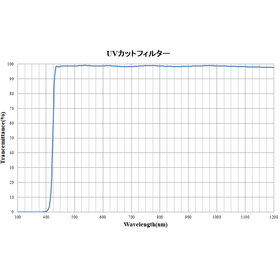
The most important parameters for correctly designing and evaluating optical filters are the "cut-on wavelength" and "cut-off wavelength." These are not just names; they are reference values that numerically define the effective performance of the filter, specifically which wavelength ranges are transmitted and which ranges are blocked.
2. Technical Points of Design and Control
For more details, please visit our company website.
Inquiry about this news
Contact Us OnlineMore Details & Registration
Details & Registration
Related Links
Related product


Related catalog(3)


Distributors


