Osaka-Kansai Expo: Results of energy-saving effects verified using radiative cooling materials in the "Gas Pavilion" - Joint demonstration by Ritsumeikan University and SPACECOOL confirms the potential for approximately 40% reduction in air conditioning energy.
 SPACECOOL
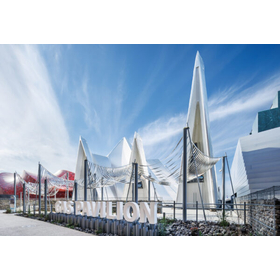
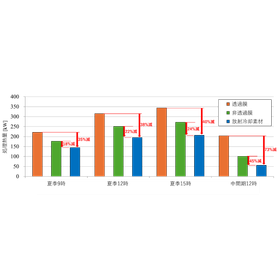
SPACECOOL Co., Ltd. collaborated with Professor Tomoyuki Chikamoto from Ritsumeikan University's Department of Architecture and Urban Design and the Japan Gas Association to jointly demonstrate and verify how much the outer membrane made of radiative cooling materials contributes to improving thermal conditions and reducing air conditioning energy during the summer at the "Gas Pavilion: Ghost Wonderland," which was exhibited at the Osaka-Kansai Expo. As a result, it was shown that applying radiative cooling materials could potentially reduce air conditioning energy by up to about 40% compared to conventional membrane materials.
This pavilion is a membrane structure designed by Nikken Sekkei Ltd., and the Japan Gas Association adopted the radiative cooling material "SPACECOOL," developed and marketed by SPACECOOL Co., Ltd., for the entire outer membrane, in line with the concept of the Osaka-Kansai Expo as a "testing ground for future society," aiming to verify the effectiveness of new materials that achieve energy conservation. This demonstration involved temperature measurements throughout the duration of the Osaka-Kansai Expo at the Gas Pavilion, as well as verifying the impact of indoor temperature distribution and air conditioning load through computational fluid dynamics (CFD analysis).
Inquiry about this news
Contact Us OnlineMore Details & Registration
Details & Registration
Related Links
Related product


Related catalog(1)

Distributors