iPROS Manufacturing
  • Search for products by classification category

    • Electronic Components and Modules
      Electronic Components and Modules
      62241items
    • Machinery Parts
      Machinery Parts
      76029items
    • Manufacturing and processing machinery
      Manufacturing and processing machinery
      102177items
    • Scientific and Physics Equipment
      Scientific and Physics Equipment
      36561items
    • Materials
      Materials
      37928items
    • Measurement and Analysis
      Measurement and Analysis
      55219items
    • Image Processing
      Image Processing
      15430items
    • Control and Electrical Equipment
      Control and Electrical Equipment
      54800items
    • Tools, consumables, and supplies
      Tools, consumables, and supplies
      65765items
    • Design and production support
      Design and production support
      12696items
    • IT/Network
      IT/Network
      45888items
    • Office
      Office
      14195items
    • Business support services
      Business support services
      26605items
    • Seminars and Skill Development
      Seminars and Skill Development
      6620items
    • Pharmaceutical and food related
      Pharmaceutical and food related
      34301items
    • others
      75443items
  • Search for companies by industry

    • Manufacturing and processing contract
      7342
    • others
      4997
    • Industrial Machinery
      4455
    • Machine elements and parts
      3352
    • Other manufacturing
      2884
    • Trading company/Wholesale
      2670
    • IT/Telecommunications
      2572
    • Industrial Electrical Equipment
      2321
    • Building materials, supplies and fixtures
      1817
    • software
      1671
    • Electronic Components and Semiconductors
      1591
    • Resin/Plastic
      1502
    • Service Industry
      1486
    • Testing, Analysis and Measurement
      1134
    • Ferrous/Non-ferrous metals
      990
    • environment
      698
    • Chemical
      643
    • Automobiles and Transportation Equipment
      593
    • Printing Industry
      514
    • Information and Communications
      470
    • Consumer Electronics
      413
    • Energy
      337
    • Rubber products
      318
    • Food Machinery
      308
    • Optical Instruments
      282
    • robot
      276
    • fiber
      255
    • Paper and pulp
      231
    • Pharmaceuticals and Biotechnology
      174
    • Electricity, Gas and Water Industry
      168
    • Warehousing and transport related industries
      149
    • Glass and clay products
      138
    • Food and Beverage
      132
    • CAD/CAM
      125
    • Medical Devices
      111
    • Educational and Research Institutions
      111
    • retail
      108
    • Ceramics
      98
    • wood
      86
    • Transportation
      84
    • Petroleum and coal products
      66
    • Medical and Welfare
      62
    • Shipbuilding and heavy machinery
      51
    • Aviation & Aerospace
      49
    • equipment
      43
    • Fisheries, Agriculture and Forestry
      42
    • Materials
      34
    • Research and development equipment and devices
      33
    • Public interest/special/independent administrative agency
      32
    • self-employed
      24
    • Government
      23
    • Mining
      17
    • cosmetics
      16
    • Finance, securities and insurance
      15
    • Restaurants and accommodations
      10
    • Individual
      10
    • Police, Fire Department, Self-Defense Forces
      7
    • Laboratory Equipment and Consumables
      5
    • Raw materials for reagents and chemicals
      4
    • Contracted research
      3
  • Special Features
  • Ranking

    • Overall Products Ranking
    • Overall Company Ranking
Search for Products
  • Search for products by classification category

  • Electronic Components and Modules
  • Machinery Parts
  • Manufacturing and processing machinery
  • Scientific and Physics Equipment
  • Materials
  • Measurement and Analysis
  • Image Processing
  • Control and Electrical Equipment
  • Tools, consumables, and supplies
  • Design and production support
  • IT/Network
  • Office
  • Business support services
  • Seminars and Skill Development
  • Pharmaceutical and food related
  • others
Search for Companies
  • Search for companies by industry

  • Manufacturing and processing contract
  • others
  • Industrial Machinery
  • Machine elements and parts
  • Other manufacturing
  • Trading company/Wholesale
  • IT/Telecommunications
  • Industrial Electrical Equipment
  • Building materials, supplies and fixtures
  • software
  • Electronic Components and Semiconductors
  • Resin/Plastic
  • Service Industry
  • Testing, Analysis and Measurement
  • Ferrous/Non-ferrous metals
  • environment
  • Chemical
  • Automobiles and Transportation Equipment
  • Printing Industry
  • Information and Communications
  • Consumer Electronics
  • Energy
  • Rubber products
  • Food Machinery
  • Optical Instruments
  • robot
  • fiber
  • Paper and pulp
  • Pharmaceuticals and Biotechnology
  • Electricity, Gas and Water Industry
  • Warehousing and transport related industries
  • Glass and clay products
  • Food and Beverage
  • CAD/CAM
  • Medical Devices
  • Educational and Research Institutions
  • retail
  • Ceramics
  • wood
  • Transportation
  • Petroleum and coal products
  • Medical and Welfare
  • Shipbuilding and heavy machinery
  • Aviation & Aerospace
  • equipment
  • Fisheries, Agriculture and Forestry
  • Materials
  • Research and development equipment and devices
  • Public interest/special/independent administrative agency
  • self-employed
  • Government
  • Mining
  • cosmetics
  • Finance, securities and insurance
  • Restaurants and accommodations
  • Individual
  • Police, Fire Department, Self-Defense Forces
  • Laboratory Equipment and Consumables
  • Raw materials for reagents and chemicals
  • Contracted research
Special Features
Ranking
  • Overall Products Ranking
  • Overall Company Ranking
  • privacy policy
  • terms of service
  • About Us
  • Careers
  • Advertising
  1. Home
  2. Electronic Components and Semiconductors
  3. ニッポー
  4. We will be exhibiting at the Super Electric Expo 2026!
SEMINAR_EVENT
  • Oct 01, 2026
  • Added to bookmarks

    Bookmarks list

    Bookmark has been removed

    Bookmarks list

    You can't add any more bookmarks

    By registering as a member, you can increase the number of bookmarks you can save and organize them with labels.

    Free membership registration
Oct 01, 2026

We will be exhibiting at the Super Electric Expo 2026!

ニッポー ニッポー
Nippo Corporation will exhibit at the technology event "Super Electric Expo 2026" to be held in Akihabara in the fall of 2026. This event, jointly organized by the three magazines "Transistor Technology," "Interface," and "CQ ham radio," will feature a wide range of exhibitions, lectures, and workshops covering various technological fields such as AI, wireless communication, GNSS positioning, power electronics, measurement, and sensing. At Nippo's booth, we will introduce sensing technologies for temperature, humidity, and CO₂, as well as environmental control devices, focusing on sensor and control technologies for IoT agriculture. If you are interested in sensing and control technologies in the agricultural sector, please stop by Nippo's booth. We look forward to your visit.
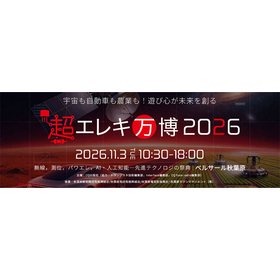
Date and time Thursday, Oct 01, 2026
10:30 AM ~ 06:00 PM
Capital Bellesalle Akihabara 〒101-0021 3-12-8 Sotokanda, Chiyoda-ku, Tokyo, Sumitomo Realty & Development Akihabara Building B1, 1F, 2F ●Exhibition Area: Advanced Technology Hall
Entry fee Free
  • Inquiry about this news

    Contact Us Online
  • More Details & Registration

    Details & Registration

Related product
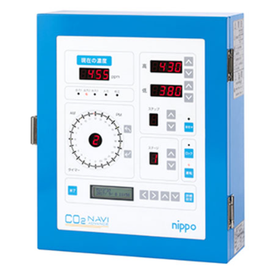
7.png

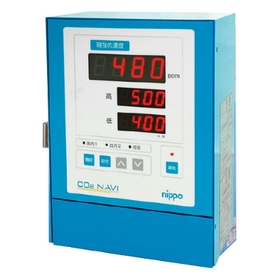
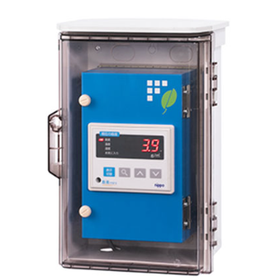
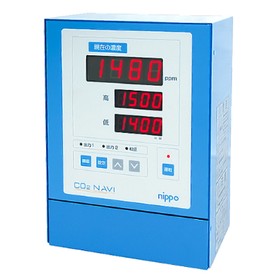
Carbon Dioxide Controller "CO2 NAVI ADVANCE"

The response is quick due to forced suction by the pump, reducing unnecessary operation of the carbon dioxide generation device caused by delays!

"CO2 NAVI ADVANCE" is a carbon dioxide controller that regulates the CO2 concentration in greenhouse facilities to a set value. With a pump suction method that allows for easy relocation of the intake port, it accurately measures the appropriate location according to crop growth, preventing deficiencies or excesses of carbon dioxide. It is equipped with an automatic calibration function based on outside air, correcting for sensor aging. It provides accurate and stable measurements over a long period. 【Features】 ■ High precision in measuring the correct location and capturing crop conditions ■ Cuts unnecessary carbon dioxide application ■ High reliability and stability through automatic calibration ■ Programmable according to growth stages ■ Connects to a computer for data monitoring and collection ■ Packed with convenient features *For more details, please download the PDF or feel free to contact us.

  • controller

Added to bookmarks

Bookmarks list

Bookmark has been removed

Bookmarks list

You can't add any more bookmarks

By registering as a member, you can increase the number of bookmarks you can save and organize them with labels.

Free membership registration
4.png

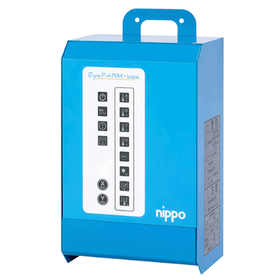
Household Environmental Measurement Sensor Unit "Eye FARM-box"

A sensor unit designed to step up from data collection to environmental control!

The "Eye FARM-box" is a greenhouse environmental measurement sensor unit that accurately measures essential environmental factors for crop growth and photosynthesis using proprietary sensing technology. By combining a wooden sensor box with a ventilated wet and dry bulb sensor, it minimizes the influence of sunlight and radiant heat, allowing for precise environmental measurements. This enables reliable data collection. The forced suction CO2 sensor provides a quick response, and the air intake can be easily installed and moved. 【Features】 ■ Accurately measures temperature and humidity (dew point) ■ Easy to relocate the measurement location ■ Simple attachment and detachment of sensors and wiring ■ Step up to environmental control *For more details, please download the PDF or feel free to contact us.

  • Sensors

Added to bookmarks

Bookmarks list

Bookmark has been removed

Bookmarks list

You can't add any more bookmarks

By registering as a member, you can increase the number of bookmarks you can save and organize them with labels.

Free membership registration
8.png

Carbon Dioxide Controller "CO2 NAVI"

Equipped with an automatic calibration function based on outside air, compensating for sensor aging!

"CO2 NAVI" is a carbon dioxide controller that regulates the CO2 concentration to a set level. With a pump suction method that allows for easy relocation of the intake port, it accurately measures the appropriate location according to crop growth, preventing both deficiency and excess of carbon dioxide. The forced suction by the pump ensures a quick response, reducing unnecessary operation of the carbon dioxide generation device due to delays. 【Features】 ■ High precision in measuring the correct concentration and capturing crop conditions ■ Cuts unnecessary carbon dioxide application ■ High reliability and stability through automatic calibration ■ Packed with convenient features *For more details, please download the PDF or feel free to contact us.

  • controller

Added to bookmarks

Bookmarks list

Bookmark has been removed

Bookmarks list

You can't add any more bookmarks

By registering as a member, you can increase the number of bookmarks you can save and organize them with labels.

Free membership registration
5.png

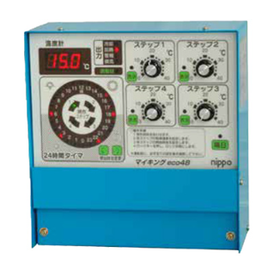
Next-day variable temperature thermo 'Myking eco48'

Reduced fuel consumption of heating equipment by approximately 16%! For early heating with a usage of 10,000 liters, a cost reduction of 152,000 yen.

The "Myking eco48" is a bi-daily variable temperature thermostat that can reduce heating fuel consumption. It operates at the same temperature setting as a typical four-stage variable temperature for one day (24 hours), and on the next day (24 hours), it operates at a lower adjusted four-stage variable temperature setting. This alternating operation is referred to as bi-daily variable temperature. It can be connected to your current heating device for use. The bi-daily key allows for one-touch operation to switch modes, eliminating the need for complicated setting changes. 【Features】 ■ Connection to heating device ■ Easy setting ■ Alarm function *For more details, please download the PDF or feel free to contact us.

  • Thermography

Added to bookmarks

Bookmarks list

Bookmark has been removed

Bookmarks list

You can't add any more bookmarks

By registering as a member, you can increase the number of bookmarks you can save and organize them with labels.

Free membership registration
6.png

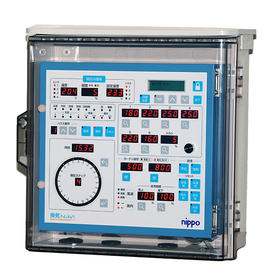
Hybrid Heating Control Panel "Heat NAVI"

Control the heater and heat pump with a single sensor! Eliminate the disjointed operation of hybrid heating.

"Heat NAVI" is a hybrid heating control panel that contributes to reducing heating costs by minimizing fuel usage through prioritized operation of heat pumps. As the outside temperature drops, the stop temperature of the heat pump is automatically shifted. The heat pump operates preferentially to heat the house, reducing the operation of the heating unit. Additionally, during the day when electricity rates are high, the heat pump can be set not to operate, allowing for operation methods tailored to the situation. 【Features】 ■ Automatic shifting of heat pump settings based on outside temperature conditions ■ Suppression of heating unit operation through heat pump delay control ■ Reduction of heating operation when skylights or ventilation fans are detected ■ Switching of operation methods according to energy price conditions ■ Automatic heating function to prevent fruit condensation ■ Recording of measurement data *For more details, please download the PDF or feel free to contact us.

  • Control Panel

Added to bookmarks

Bookmarks list

Bookmark has been removed

Bookmarks list

You can't add any more bookmarks

By registering as a member, you can increase the number of bookmarks you can save and organize them with labels.

Free membership registration
9.png

Hysteresis Controller "Hysteresis Mini"

Simple design, no complicated settings required! A suitable model for those who want to start humidity management in existing houses.

The "Housa Mini" is a device that controls the humidity difference inside a greenhouse. As a sister product to Housa Plus, it specializes in humidity control functions. It is a model that is easy to introduce for those who want to start managing humidity in existing greenhouses, both in terms of size and cost. The wooden sensor box minimizes the effects of direct sunlight and measures accurately. It is treated to be mold and rot resistant, allowing for long-term use. 【Features】 ■ Easy to use ■ Simple ■ High precision *For more details, please download the PDF or feel free to contact us.

  • controller

Added to bookmarks

Bookmarks list

Bookmark has been removed

Bookmarks list

You can't add any more bookmarks

By registering as a member, you can increase the number of bookmarks you can save and organize them with labels.

Free membership registration
10.png

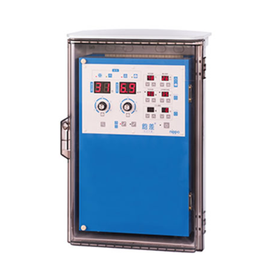
Hysteresis Controller "Hysteresis Plus"

Efficiently promote photosynthesis through integrated control of saturation difference and carbon dioxide concentration!

"Humidity Plus" is a device that controls humidity, CO2 concentration, and temperature within facility horticulture greenhouses. When the humidity is suitable for plant transpiration, the stomata open, and transpiration becomes active, allowing water and nutrients to be transported. By applying carbon dioxide, CO2 is efficiently absorbed through the open stomata, promoting photosynthesis. To control the environment, which is crucial for crops, it is important to accurately measure temperature and humidity. The wooden sensor box minimizes the effects of direct sunlight and measures accurately. [Features] ■ Controls stomata with humidity, promoting carbon dioxide absorption ■ Cuts direct sunlight, accurately measuring temperature and humidity ■ Connects to a computer for data monitoring and collection ■ Integrated control that promotes photosynthesis with both humidity and carbon dioxide *For more details, please download the PDF or feel free to contact us.

  • controller

Added to bookmarks

Bookmarks list

Bookmark has been removed

Bookmarks list

You can't add any more bookmarks

By registering as a member, you can increase the number of bookmarks you can save and organize them with labels.

Free membership registration
【イプロス用・13:9】産業用機器におけるタッチパネルの採用メリットと選び方-アイキャッチ.jpg

Technical Information: Technology Methods and Selection of Touch Panels!

Explaining the key points for choosing touch panel technologies and applications! [With comparison table] Comprehensive support from enclosures and circuit boards to software, hardware, and mechanics!

In recent years, the transition from physical switches to touch panels has been progressing, with an increasing number of adoption examples not only in consumer devices like smartphones but also in industrial equipment. Touch panels allow for operation through graphical icons and menus, making them easier to use compared to traditional physical buttons, and they excel in "intuitive operability." Additionally, there are benefits such as: - The ability to customize the display screen according to usage methods and processes - The overall compactness of the device … and more. Touch panels have various characteristics depending on their technological methods, so selecting the right one based on application is key. This document provides detailed information on: ■ Benefits of adopting touch panels ■ Main technological methods of touch panels ■ How to choose a touch panel ■ Examples of touch panel implementation Please take a look! *In some cases, other options may be more appropriate depending on the application. In addition to touch panels, there are options for screen displays using PCs/tablets or 7-segment displays, so if you are considering planning or development, feel free to consult with us.

  • Touch Panel
  • FPD/Touch Panel

Added to bookmarks

Bookmarks list

Bookmark has been removed

Bookmarks list

You can't add any more bookmarks

By registering as a member, you can increase the number of bookmarks you can save and organize them with labels.

Free membership registration
3.png

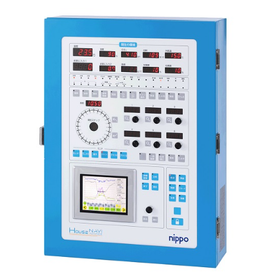
Integrated Environmental Control Panel "House Navi Advance"

Interlinking ventilation, heating, curtains, and carbon dioxide application! Creating a balanced environment without waste.

"House Navi Advance" is an integrated environmental control panel that can automate the cultivation management of greenhouses. All settings of the main unit can be adjusted using the control panel's touch keys and knobs. It is easy to remember and can be operated by anyone without difficulty. You can check the status of the greenhouse using the operation panel without opening a computer. For those who want to make more detailed and original settings, rest assured. You can also make fine "custom settings" with the touch panel operation. 【Features】 ■ Easy-to-use touch keys and knobs ■ One-touch graph display of past data ■ Effective environmental control utilizing the external environment of the greenhouse ■ Monitoring and data collection of the greenhouse environment ■ Monitoring and remote control of the greenhouse environment from a distance *For more details, please download the PDF or feel free to contact us.

  • Control Panel

Added to bookmarks

Bookmarks list

Bookmark has been removed

Bookmarks list

You can't add any more bookmarks

By registering as a member, you can increase the number of bookmarks you can save and organize them with labels.

Free membership registration
1.png

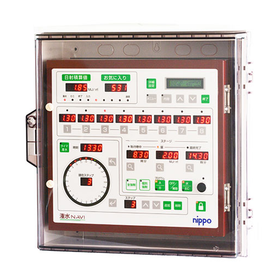
Solar Radiation Proportional Irrigation Controller "Irrigation NAVI"

Make irrigation work easier! Introducing a controller that allows for precise irrigation without excess or deficiency based on sunlight ratio.

"Watering NAVI" is a controller that allows for precise watering based on solar radiation. It automatically waters according to the amount of sunlight measured by the solar sensor. Additionally, it can mix liquid fertilizer (supports up to 8 systems). It can also switch to timer-based watering depending on the cultivation period. Furthermore, it can be connected to a computer for monitoring the cultivation environment. It can connect with devices such as CO2 controllers for control and measurement. 【Features】 ■ Easy operation designed for on-site usability ■ Clear visibility of operating status and history ■ Sunrise/sunset linked function ■ Grouping function ■ Data collection function via computer *For more details, please download the PDF or feel free to contact us.

  • controller

Added to bookmarks

Bookmarks list

Bookmark has been removed

Bookmarks list

You can't add any more bookmarks

By registering as a member, you can increase the number of bookmarks you can save and organize them with labels.

Free membership registration
2.png

Skylight, curtains, heating control panel "Ventilation NAVI"

One unit can manage up to 4 skylights! It can also be used to manage 4 systems in one house.

"Ventilation NAVI" is a control panel for skylights, curtains, and heating that can manage multiple systems with a single unit. All settings of the main unit can be adjusted using the control panel's touch keys (push-button type) and knobs, making it user-friendly for those who are new to environmental control equipment or are not comfortable with machinery. With 6-step gradient temperature control and a passive ventilation function, it helps to mitigate sudden changes in the cultivation environment, allowing for gentle temperature management. [Features] - Excellent operability with easy operation designed for on-site usability - Capable of managing multiple skylight systems - Allows for gentle temperature management - Functions can be added according to specific needs *For more details, please download the PDF or feel free to contact us.

  • Control Panel

Added to bookmarks

Bookmarks list

Bookmark has been removed

Bookmarks list

You can't add any more bookmarks

By registering as a member, you can increase the number of bookmarks you can save and organize them with labels.

Free membership registration
スクリーンショット 2025-05-21 162224.png

[Development Case] Temperature Controller for Refrigerated Vehicles

A case where advanced technology and know-how were utilized to achieve high reliability and durability!

We would like to introduce a case study of the development of a "temperature controller for refrigerated vehicles" at Nippo Corporation. Products mounted in vehicles require high reliability and must operate normally even under harsh environmental conditions such as temperature, humidity, noise, vibration, and dust. To achieve high reliability and durability, advanced technology and know-how are utilized. [Development Details] ■ Circuit Design ■ PCB Design ■ Software Design ■ Resin Case Design *For more details, please download the PDF or feel free to contact us.

  • Circuit board design and manufacturing
  • Temperature and Humidity Control
  • controller

Added to bookmarks

Bookmarks list

Bookmark has been removed

Bookmarks list

You can't add any more bookmarks

By registering as a member, you can increase the number of bookmarks you can save and organize them with labels.

Free membership registration
スクリーンショット 2025-05-21 163821.png

[Development Case] Autoclave (Sterilizer) Controller

Designed to comply with the standard (EMC: Electromagnetic Compatibility)! Development examples using technologies such as electrode-type water level control.

We would like to introduce a case study of the development of an "Autoclave (Sterilizer) Controller" at our company. Steam and gas sterilizers, widely used in the medical and food sectors, require high reliability. In particular, noise countermeasures require extensive experience and know-how, and are designed to comply with standards (EMC: Electromagnetic Compatibility). [Development Details] ■ Circuit Design ■ PCB Design ■ Software Design ■ Surface Sheet Design *For more details, please download the PDF or feel free to contact us.

  • Circuit board design and manufacturing
  • Temperature and Humidity Control
  • High pressure steam sterilizer (autoclave)

Added to bookmarks

Bookmarks list

Bookmark has been removed

Bookmarks list

You can't add any more bookmarks

By registering as a member, you can increase the number of bookmarks you can save and organize them with labels.

Free membership registration
スクリーンショット 2025-05-21 164838.png

[Development Case] Water Temperature Controller for Fish Farming Tanks

Introducing development examples such as sheet metal and surface sheet design, circuit board design, and software design.

We would like to introduce a case where we developed a "Water Temperature Controller for Aquaculture." It controls heaters, coolers, circulation pumps, etc., maintaining a stable environment in the tank. Since devices such as pumps and high-capacity heaters are connected, design tailored to the load characteristics is required. Additionally, it is designed to comply with the Electrical Appliance and Material Safety Law (PSE). 【Main technologies and know-how used】 ■ Temperature control (heater) ■ Motor control (internal fan) ■ Water level control (steam generation device) ■ Environmental resistance (heat, oil smoke) *For more details, please download the PDF or feel free to contact us.

  • Circuit board design and manufacturing
  • Temperature and Humidity Control
  • controller

Added to bookmarks

Bookmarks list

Bookmark has been removed

Bookmarks list

You can't add any more bookmarks

By registering as a member, you can increase the number of bookmarks you can save and organize them with labels.

Free membership registration
スクリーンショット 2025-05-21 163338.png

[Development Case] Convection Oven Controller

Designed to withstand high-temperature environments! Examples of circuit design, PCB design, and software design development.

We would like to introduce a case where we developed a convection oven controller. The convection oven, which can perform various cooking methods, is equipped with programming functions to achieve many cooking patterns. It measures and controls multiple temperature points, such as internal temperature and core temperature. The controller is often placed near the heat source and is designed to withstand high-temperature environments. 【Main technologies and know-how used】 ■ Temperature control (heaters) ■ Motor control (internal fan) ■ Water level control (steam generation device) ■ Environmental resistance (heat and oil smoke) *For more details, please download the PDF or feel free to contact us.

  • Circuit board design and manufacturing
  • controller
  • Steam convection oven

Added to bookmarks

Bookmarks list

Bookmark has been removed

Bookmarks list

You can't add any more bookmarks

By registering as a member, you can increase the number of bookmarks you can save and organize them with labels.

Free membership registration
通信基板.png

Communication board (RS485/422 to LAN conversion)

We support the IoT and DX transformation on-site!

You can connect devices that only have a serial communication port to Ethernet. By connecting to Ethernet, long-distance communication becomes possible, allowing for remote monitoring and cloud connectivity, which can be utilized for IoT and DX transformation at the site. Since it is board-type, it is also recommended for embedding into devices. *For more details, please download the PDF or feel free to contact us.

  • Circuit board design and manufacturing
  • EMS
  • Embedded Board Computers

Added to bookmarks

Bookmarks list

Bookmark has been removed

Bookmarks list

You can't add any more bookmarks

By registering as a member, you can increase the number of bookmarks you can save and organize them with labels.

Free membership registration
霧風1.png

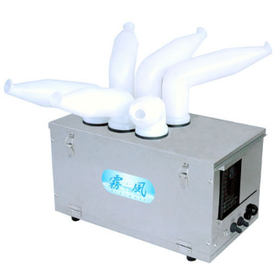
Ultrasonic Humidifier Mist Wind FOG6 (Type 6)

Can be humidified with more mist! Easily replaceable without tools, and excellent maintainability.

The "Ultrasonic Humidifier Mist Wind FOG6 (Type 6)" is a type 6 ultrasonic humidifier capable of spraying fine mist over a wide area. It is available in both stationary and hanging types. Additionally, it can be used for spraying deodorizing and disinfecting liquids (such as hypochlorous acid water). Moreover, compared to nozzle types, it produces a very fine mist that reaches into narrow spaces between shelves and other installation areas. 【Features】 ■ Fine mist ■ Automatic water supply function ■ Automatic cleaning function ■ Wide area spraying ■ Ultrasonic mist generation *For more details, please download the PDF or feel free to contact us.

  • Humidification device

Added to bookmarks

Bookmarks list

Bookmark has been removed

Bookmarks list

You can't add any more bookmarks

By registering as a member, you can increase the number of bookmarks you can save and organize them with labels.

Free membership registration
キングエース1.png

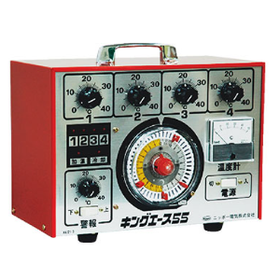
4-stage variable temperature thermo "King Ace 55"

Fully automatic temperature control system that precisely and completely regulates the temperature inside the greenhouse according to a programmed schedule!

The "King Ace 55" is a four-stage variable temperature thermostat that divides 24 hours into four steps and controls heating or cooling devices to maintain the desired temperature. It uses a thermistor with a temperature-sensitive element smaller than a grain of rice, which minimizes heat conduction leakage and responds sensitively to temperature changes within 0.5°C. Additionally, it is equipped with a built-in low and high-temperature alarm system (with upper and lower limit switching) that accurately detects unexpected abnormal temperatures, preventing issues before they occur. 【Features】 ■ Four-stage temperature setting method ■ Sensitive response to temperature changes within 0.5°C ■ Temperature alarm function ■ Easy analog temperature setting ■ Easy time setting *For more details, please download the PDF or feel free to contact us.

  • controller
  • Other Thermometers

Added to bookmarks

Bookmarks list

Bookmark has been removed

Bookmarks list

You can't add any more bookmarks

By registering as a member, you can increase the number of bookmarks you can save and organize them with labels.

Free membership registration
マイキング1.png

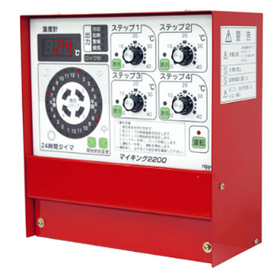
4-stage variable temperature thermo "Myking 2200"

To prevent accidental operation, the lock key section is covered by an operation cover.

The "Myking 2200" is a digital 4-step temperature control thermostat that divides 24 hours into 4 segments and controls heating or cooling devices to maintain the desired temperature. In addition to being able to control three positions, it can record minimum and maximum temperatures. Even during a power outage, the time remains accurate, ensuring that automatic control is not affected. It also has a function to monitor abnormal temperatures due to malfunctions in heating and cooling devices and will issue an alarm. 【Features】 ■ Lock function to prevent incorrect setting changes ■ Timing operation with power outage compensation (for 1 month) ■ Abnormal temperature alarm function with independent upper and lower limit settings ■ Maximum/minimum temperature recording function (for the current day + past 7 days) ■ Various additional functions can be added as options *For more details, please download the PDF or feel free to contact us.

  • controller
  • Other Thermometers

Added to bookmarks

Bookmarks list

Bookmark has been removed

Bookmarks list

You can't add any more bookmarks

By registering as a member, you can increase the number of bookmarks you can save and organize them with labels.

Free membership registration
温度・湿度調節計『DTシリーズ』1.jpg

Temperature and Humidity Controller "DT Series"

Suitable for a wide range of applications such as agriculture, aquaculture, boilers, and floor heating!

The "DT Series" is an analog temperature controller that allows for temperature settings using an easy-to-operate knob. You can choose from four different temperature ranges, making it suitable for a wide range of applications including agriculture, aquaculture, boilers, and floor heating. Please feel free to contact us when you need assistance. 【Features】 ■ Easy operation ■ Selectable temperature ranges *For more details, please refer to the related links or feel free to contact us.

  • Temperature and Humidity Control

Added to bookmarks

Bookmarks list

Bookmark has been removed

Bookmarks list

You can't add any more bookmarks

By registering as a member, you can increase the number of bookmarks you can save and organize them with labels.

Free membership registration
ニューセンサー.png

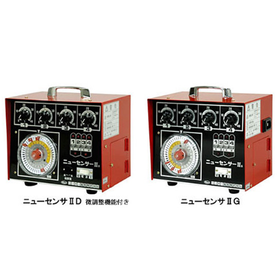
4-stage variable temperature thermo "New Sensor II"

Using a thermistor that is smaller than a grain of rice, it has good thermal conductivity and responds sensitively to temperature changes within 0.5℃!

The "New Sensor II" is a four-stage temperature control thermostat that can finely and automatically adjust the temperature in a greenhouse according to a four-step program. It divides the 24 hours into four steps and controls heating or cooling devices to maintain the target temperature for each time period at the set temperature. Additionally, it allows for program time settings by inserting a timer pin. 【Features】 ■ Four-stage temperature setting method ■ High-sensitivity temperature sensor ■ Easy analog setting ■ Simple time setting *For more details, please download the PDF or feel free to contact us.

  • controller
  • Other Thermometers

Added to bookmarks

Bookmarks list

Bookmark has been removed

Bookmarks list

You can't add any more bookmarks

By registering as a member, you can increase the number of bookmarks you can save and organize them with labels.

Free membership registration
バイオドリーマー1.png

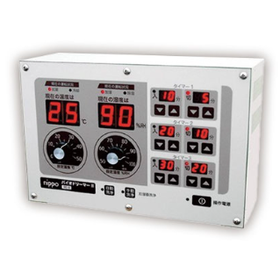
Mushroom cultivation device "Biodreamer II"

In addition to temperature and humidity control, it has three built-in timer outputs! It can control ventilation fans, circulation fans, lighting, and more.

"BioDreamer II" is a controller specialized for plant factories, capable of integrated control of temperature, humidity, lighting, alarms, and more, all from a single unit. The temperature and humidity settings utilize intuitive analog knobs for operation, and the display features a large screen with a character height of 25mm, enhancing visibility and making it easy to understand from a distance. Additionally, compared to control panels using conventional sequencers, it allows for reductions in development and material costs. 【Features】 ■ Composite control ■ Easy operation ■ Easy to read ■ Cost reduction *For more details, please download the PDF or feel free to contact us.

  • controller
  • Other Thermometers
  • Other Hygrometers

Added to bookmarks

Bookmarks list

Bookmark has been removed

Bookmarks list

You can't add any more bookmarks

By registering as a member, you can increase the number of bookmarks you can save and organize them with labels.

Free membership registration
HCシリーズ1.png

Analog Humidity Controller "HC Series"

Easy to see with a large analog display! You can set it just by turning the knob.

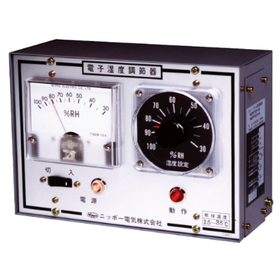
The "HC Series" is an analog humidity controller that uses two temperature sensors to display relative humidity. It features an output that controls to maintain the desired humidity and utilizes a thermistor wet-bulb type humidity controller. It offers a distinctive analog display and can be linked with the ultrasonic humidifier Mist Wind series. Additionally, it employs sensors that are highly accurate and resistant to damage even in high-temperature environments. 【Features】 ■ Easy-to-read analog display ■ Simple settings ■ Utilizes wet-bulb sensors *For more details, please download the PDF or feel free to contact us.

  • controller
  • Other Hygrometers

Added to bookmarks

Bookmarks list

Bookmark has been removed

Bookmarks list

You can't add any more bookmarks

By registering as a member, you can increase the number of bookmarks you can save and organize them with labels.

Free membership registration
MD-II.png

Defrost Temperature Controller MD-II Thermostat System Unit

The defrost cycle can be set in 10-minute increments, and the defrost time can be set in 1-minute increments! You can also set the drainage time.

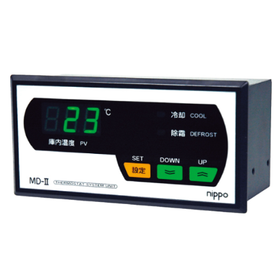
The "MD-II Thermostat System Unit" is a dedicated two-position temperature controller for refrigeration and freezing, equipped with a built-in microcontroller. In addition to the ability to select delay conditions for dF display, it features a freezer protection timer function and allows for internal temperature correction, which helps to reduce the causes of failures in refrigeration and freezing units. Communication functionality can be added as an option. There is also a model available with a "defrost end temperature sensor." 【Features】 ■ Fine time settings are possible ■ More flexible refrigeration and freezing control ■ Expanded options and models *For more details, please download the PDF or feel free to contact us.

  • controller
  • Other Thermometers

Added to bookmarks

Bookmarks list

Bookmark has been removed

Bookmarks list

You can't add any more bookmarks

By registering as a member, you can increase the number of bookmarks you can save and organize them with labels.

Free membership registration
FCシリーズ.png

Analog Temperature Controller "FC Series"

Depending on the application, you can choose from four types: 0℃ to 100℃ / 0℃ to 50℃ / -30℃ to 30℃ / 0℃ to 150℃!

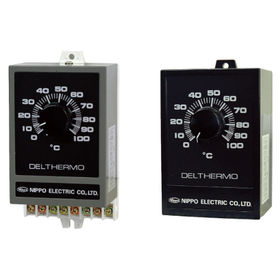
The "FC Series" is an analog temperature controller recommended for temperature management in agriculture, aquaculture, boiler rooms, and underfloor heating. You can switch the power and control output ON/OFF with the power switch. Additionally, it can be easily operated with a knob, allowing anyone to set the temperature effortlessly. Furthermore, since it uses an analog meter, the settings and displays are clear at a glance. 【Features】 ■ Easy to operate ■ Settings and displays are clear at a glance ■ Selectable temperature range *For more details, please download the PDF or feel free to contact us.

  • controller
  • Other Thermometers

Added to bookmarks

Bookmarks list

Bookmark has been removed

Bookmarks list

You can't add any more bookmarks

By registering as a member, you can increase the number of bookmarks you can save and organize them with labels.

Free membership registration
DTシリーズ.png

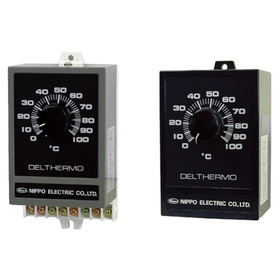
Analog Temperature Controller "DT Series"

You can easily set the temperature with the knob, making it simple for anyone to operate!

The "DT Series" is an analog temperature controller that allows temperature settings using an easy-to-operate knob. You can choose from four different temperature ranges, making it suitable for a wide range of applications including agriculture, aquaculture, boilers, and underfloor heating. Since temperature settings can be adjusted with a knob, anyone can operate it easily. 【Features】 ■ Easy operation ■ Selectable temperature ranges *For more details, please download the PDF or feel free to contact us.

  • controller
  • Other Thermometers

Added to bookmarks

Bookmarks list

Bookmark has been removed

Bookmarks list

You can't add any more bookmarks

By registering as a member, you can increase the number of bookmarks you can save and organize them with labels.

Free membership registration
CO2NAVI.png

Ventilation-type Carbon Dioxide Controller 'CO2NAVI'

Divide the day into up to four stages, allowing for the switching of target concentrations based on the time of day!

"CO2NAVI" is a ventilation-type carbon dioxide controller that regulates the CO2 concentration in mushroom cultivation rooms to a set level. With two output points, it can be used for various applications. Thanks to its accurate measurements and quick response, it helps prevent oxygen deficiency and contributes to increased yield and quality. Additionally, by managing CO2 concentration (numerically), it reduces unnecessary ventilation and cuts down on heating and cooling costs. 【Features】 ■ High-precision sensors measure the correct concentration and reduce unnecessary ventilation ■ Four-stage concentration setting method for managing appropriate levels ■ High reliability and stability through automatic calibration ■ Packed with convenient features *For more details, please download the PDF or feel free to contact us.

  • controller
  • Other gas concentration meters

Added to bookmarks

Bookmarks list

Bookmark has been removed

Bookmarks list

You can't add any more bookmarks

By registering as a member, you can increase the number of bookmarks you can save and organize them with labels.

Free membership registration
PWM制御とは?原理や使用例をわかりやすく解説.jpg

[Column] What is PWM Control? Explanation of Principles and Use Cases

What is PWM control? Explanation of principles and usage examples! Proven results in various fields! Leave application development to Nippo!

Currently, motors are widely used in precision equipment fields such as computers and HDDs. We will introduce the principles and examples of use of the technology called "PWM control," which is used for motor control. PWM is one method of controlling power using semiconductors. It is a type of pulse density modulation (PDM), and a PDM with a constant frequency is called PWM. PWM can be controlled by repeating the ON and OFF of a switch, and this high-speed switching generates a pulse waveform. By changing the duration of the pulses, it controls the power supplied to the load. PWM control has excellent controllability. For example, by controlling the rotation speed of a cooling fan motor, the speed can be adjusted in response to the temperature of the object being cooled, thereby controlling the cooling performance. (Without control, the rotation speed remains constant, which can lead to excessive cooling even at low loads.) Additionally, there is the advantage of increased quietness, as the minimum rotation speed is achieved at low loads, reducing the noise generated by the rotation. Our company applies various technologies and offers application development in a variety of fields. Please feel free to contact us.

  • Embedded applications for mobile phones and PDAs

Added to bookmarks

Bookmarks list

Bookmark has been removed

Bookmarks list

You can't add any more bookmarks

By registering as a member, you can increase the number of bookmarks you can save and organize them with labels.

Free membership registration
1.png

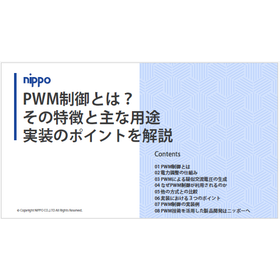
[Information] What is PWM Control? Explanation of its Features, Main Applications, and Implementation Points

Achieve high-precision control while minimizing energy loss! A comparison table with other methods is also included.

This document is a technical material that explains the mechanism of PWM (Pulse Width Modulation) control, its main applications, and key points for implementation. It includes an explanation of the power adjustment mechanism, the generation of pseudo AC voltage, and a comparison table with other methods, along with easy-to-understand illustrations of implementation examples in heaters and drones. Please make use of this information when considering PCB development or industrial equipment development utilizing PWM control. 【Contents (partial)】 ■ What is PWM control ■ Mechanism of power adjustment ■ Generation of pseudo AC voltage by PWM ■ Why PWM control is used ■ Comparison with other methods *For more details, please download the PDF or feel free to contact us.

  • Circuit board design and manufacturing

Added to bookmarks

Bookmarks list

Bookmark has been removed

Bookmarks list

You can't add any more bookmarks

By registering as a member, you can increase the number of bookmarks you can save and organize them with labels.

Free membership registration
1.png

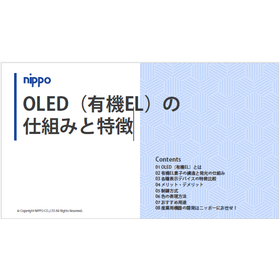
[Information] The Mechanism and Features of OLED (Organic EL)

From the structure and mechanism of light emission to recommended applications! A clear explanation of the basics of organic EL.

This document is a technical material that explains the mechanism, advantages, and disadvantages of OLED (Organic EL). It includes the basic structure of organic EL elements and the mechanism of light emission, as well as comparisons with various display devices such as LCDs and LED displays. It comprehensively covers control methods, color representation, and recommended applications. Please make use of it. [Contents (partial)] ■ What is OLED (Organic EL) ■ Structure and light emission mechanism of organic EL elements ■ Comparison of various display devices ■ Advantages and disadvantages ■ Control methods ■ Color representation methods *For more details, please download the PDF or feel free to contact us.

  • Organic EL
  • LCD display

Added to bookmarks

Bookmarks list

Bookmark has been removed

Bookmarks list

You can't add any more bookmarks

By registering as a member, you can increase the number of bookmarks you can save and organize them with labels.

Free membership registration
wp-odm_07.jpg

[Technical Data] Utilization Methods and Case Studies of Light Sensors

Utilization methods and case studies of light sensors

A light sensor is a device that detects light and converts it into an electrical signal. The basic mechanism of a light sensor involves detecting incoming light and, depending on its intensity and wavelength, demonstrating various responses at a part called the light-receiving element, which converts it into an electrical signal. Additionally, when combined with a light-emitting element, it can detect various states based on the transmission or reflection of light. Next, the operating principle of a light sensor is to detect various information based on the magnitude of the current generated when light is incident on the light-receiving element. In the case of a photodiode being used as the light-receiving element, when light is incident, photons generate and separate electrons and holes within the semiconductor, producing a current in the external circuit. Since the current changes in proportion to the intensity of the light, the strength of the light can be measured electrically. This document introduces the applications and examples of light sensors. Nippo is developing light sensor substrates. Please feel free to contact us. *For more details, please download the PDF.

  • Sensors
  • Circuit board design and manufacturing
  • EMS

Added to bookmarks

Bookmarks list

Bookmark has been removed

Bookmarks list

You can't add any more bookmarks

By registering as a member, you can increase the number of bookmarks you can save and organize them with labels.

Free membership registration
PID制御~パラメータの働きをわかりやすく解説_odm_05_アイキャッチ.jpg

【Technical Data】PID Control - The Function of Gain (Parameters)

Ease of use is the biggest feature! What is PID control, which allows you to find the perfect control method just by adjusting parameters?\For precise control, choose Nippo!/

PID control refers to a control method used for applications such as temperature control. After setting a target value, it reads the current value with a sensor and automatically adjusts to get closer to the target value. For example, consider the issues with traditional on-off operation. A familiar example is the bimetallic electric kotatsu. In the on-off operation of the electric kotatsu, the temperature rises to 100% output until it reaches the target temperature, and then it drops to 0% when it exceeds the set temperature, causing the temperature to decrease. However, this often leads to overshooting or undershooting from the target temperature, resulting in a control outcome that oscillates and does not achieve ideal temperature regulation. While the simplicity of the structure allows for a cost-effective setup, these issues also exist. PID control can solve these problems. ▶ For those who want to learn more about "the mechanism and role of PID control," please refer to the [column article]. ▶ For those who want to learn more about "the function of gain (parameters)," please refer to [this document].

  • Temperature and Humidity Control

Added to bookmarks

Bookmarks list

Bookmark has been removed

Bookmarks list

You can't add any more bookmarks

By registering as a member, you can increase the number of bookmarks you can save and organize them with labels.

Free membership registration
wp-odm_06.jpg

[Technical Documentation] Basic Knowledge of Web API and Application Examples

Fundamental Knowledge of Web APIs and Examples of Applications

API stands for "Application Programming Interface," which is provided over the internet. In simple terms, it is an interface that connects software, programs, and web services. APIs are a means for different software components and services to communicate with each other and share functionalities. In other words, by implementing an API, a company's services or programs can be utilized by other companies as well. For example, the ability to register on membership sites, input delivery information on e-commerce sites, and use payment services on e-commerce sites without having to enter personal information each time is thanks to API integration. This document introduces the basics of Web APIs and examples of applications. If you are considering developing cloud services, please feel free to contact us. *For more details, please download the PDF.

  • Embedded Board Computers
  • Communications
  • Embedded system design service

Added to bookmarks

Bookmarks list

Bookmark has been removed

Bookmarks list

You can't add any more bookmarks

By registering as a member, you can increase the number of bookmarks you can save and organize them with labels.

Free membership registration
IPROS13448548333944516621.jpg

[Information] Development Process and Examples of IoT × Cloud Systems

Leave your IoT and cloud system needs to us! We handle everything from circuit board development, communication circuits, and wireless circuits to cloud development seamlessly.

This document provides a detailed explanation of the development process and case studies of IoT × cloud systems. IoT × cloud systems can be utilized for various purposes, and by outsourcing development, it is possible to leverage unique skills and know-how. Our company not only has extensive experience in circuit board development but also possesses expertise in providing solutions that combine IoT devices and cloud systems. If you are considering the development of IoT × cloud systems, please leave it to us. [Contents (partial)] ■ Current status of IoT adoption ■ What IoT × cloud systems can achieve ■ Flow of IoT × cloud system development ■ Advantages of outsourcing development ■ "Three perspectives" for successful outsourcing *Currently offering helpful materials* For more details, please view the PDF data from "Catalog Download." We also welcome any questions or consultations regarding circuit board development, so feel free to contact us.

  • Circuit board design and manufacturing
  • Other contract services

Added to bookmarks

Bookmarks list

Bookmark has been removed

Bookmarks list

You can't add any more bookmarks

By registering as a member, you can increase the number of bookmarks you can save and organize them with labels.

Free membership registration

Presentation of materials: Explanation of the development process and key points of wireless communication systems.

Leave the development of wireless communication systems to us! We handle everything from circuit board development and communication circuits to wireless circuits and backend cloud/software development seamlessly!

This document provides a detailed explanation of the development process and key points of wireless communication systems. The development of wireless communication systems benefits from a comprehensive understanding of the entire development process, facilitating smoother collaboration with development partners and leading to the realization of higher quality systems. 【Contents】 ■ Increasing demand for wireless communication systems ■ Overview of wireless communication systems ■ Main wireless modules ■ Development process of wireless communication systems \Free helpful materials available/ For more details, please view the PDF data from "Catalog Download." We also welcome any questions or consultations regarding board development, so feel free to contact us.

  • Communications

Added to bookmarks

Bookmarks list

Bookmark has been removed

Bookmarks list

You can't add any more bookmarks

By registering as a member, you can increase the number of bookmarks you can save and organize them with labels.

Free membership registration
IPROS12947931924858339310.png

Development case of greenhouse environmental control panels for facility horticulture *Gift of development case collection

Combining a variety of sensors with an intuitive control panel. We have developed an environmental control panel that balances ease of use with precise control. We can provide consistent support across software, hardware, and mechanics!

Examples utilizing technologies such as communication control (RS232C, RS485), CO2 concentration, and solar radiation sensing. We will introduce examples of mechanism design for environmental control panels for facility horticulture, as well as product planning, design, and circuit design. The integrated environmental control panel that manages the environment inside the facility horticulture house creates a conducive environment for crop growth by measuring and controlling temperature, humidity, CO2, and solar radiation using various sensors. The surface panel features an intuitive touch panel for easy operation, knobs that provide a tactile feel, and an LED display with good visibility, all designed for ease of use in the field. [Surface Panel Features] ■ Intuitive touch panel for easy operation ■ Tactile knobs ■ LED display with good visibility For more details, please view the PDF data from "Catalog Download." We also welcome any questions or inquiries regarding various circuit board developments, so please feel free to contact us.

  • Circuit board design and manufacturing
  • Temperature and Humidity Control
  • Other air environment control

Added to bookmarks

Bookmarks list

Bookmark has been removed

Bookmarks list

You can't add any more bookmarks

By registering as a member, you can increase the number of bookmarks you can save and organize them with labels.

Free membership registration
事例集オレンジ.png

Integrated production of design, manufacturing, inspection, and shipping! Development of printed circuit boards <Case study collection available>

Water temperature controllers for aquaculture and environmental control panels for facility horticulture. We are broadly developing areas such as printed circuit board manufacturing and IoT cloud system construction!

Our company provides a comprehensive range of services, from the manufacturing of printed circuit boards to the construction of IoT cloud systems. Additionally, we have established a system capable of supporting development in a wide range of fields, including embedded software development, hardware development, and mechanical design (mechanical, sheet metal, and enclosures). In this document, we will introduce selected examples of our developed products that can assist our customers in their considerations, showcasing the technical capabilities and development achievements we have cultivated over more than 60 years across various fields. The categories are diverse, including logistics, food and kitchen, physical and chemical, and agriculture, forestry, and fisheries, so please take a look! 【Highlighted Case Studies】 ■ Temperature controller for refrigerated vehicles ■ Water temperature controller for fish farming ■ Environmental control panel for facility horticulture, etc. \ We are currently offering a collection of development case studies / For more details, please view the PDF data from "Catalog Download." We also welcome any questions or consultations regarding circuit board development, so feel free to contact us.

  • Circuit board design and manufacturing
  • Temperature and Humidity Control
  • controller

Added to bookmarks

Bookmarks list

Bookmark has been removed

Bookmarks list

You can't add any more bookmarks

By registering as a member, you can increase the number of bookmarks you can save and organize them with labels.

Free membership registration
キャプチャ.PNG

Digital temperature controller "DigiMac 3000" that can measure and control accurately.

Easy to set up! This is a compact temperature controller with a clear digital display! The sensor can be switched between thermistor, platinum resistance, and K-type thermocouple!

The "DigiMac 3000 Series" is a digital temperature controller that features easy setup, a compact design, and a variety of control patterns. It has an easy-to-read digital display that can switch between two colors (red/green). It can be installed in available spaces such as under eaves, making it suitable for facilities that do not have space indoors. Additionally, the temperature range can be selected and changed. 【Features】 ■ Easy-to-read digital display ■ Switchable between two colors (red/green) ■ Sensors can be switched between thermistor, platinum resistance, and K-type thermocouple ■ Temperature range can be selected and changed *For more details, please download the PDF or feel free to contact us.

  • Circuit board design and manufacturing
  • EMS
  • Temperature and Humidity Control

Added to bookmarks

Bookmarks list

Bookmark has been removed

Bookmarks list

You can't add any more bookmarks

By registering as a member, you can increase the number of bookmarks you can save and organize them with labels.

Free membership registration
DG3000hu.jpg

High-precision measurement & control! Digital humidity controller "Digimac 3000hu"

Measure and control humidity with high precision! Digital humidity controller with easy-to-read display and compact design. You can choose between a wet and dry bulb sensor or a polymer sensor!

The "DigiMac 3000hu Series" allows for 3-position control (humidification/dehumidification) or independent control of 2 outputs (2 positions + 2 positions), and can output alarms. Models with transmission output (optional) can send data to recorders and other devices. Equipped with a relay that can switch 10A, it can be linked with the ultrasonic humidifier "Kiri Kaze Series." It is recommended for environmental control in mushroom cultivation rooms. 【Features】 ■ Easy-to-read digital display ■ Choice of dry and wet bulb sensor or polymer sensor ■ Can be installed even in facilities where indoor space is limited *For more details, please download the PDF or feel free to contact us.

  • Circuit board design and manufacturing
  • EMS
  • Temperature and Humidity Control

Added to bookmarks

Bookmarks list

Bookmark has been removed

Bookmarks list

You can't add any more bookmarks

By registering as a member, you can increase the number of bookmarks you can save and organize them with labels.

Free membership registration
回路設計と機構設計の違いとは?使われるCADソフトやその特徴を解説.jpg

[Column] What are the differences between circuit design and mechanical design? An explanation of CAD software and features.

What is the difference between circuit design and mechanical design? Introducing CAD software and features! Proven results in multiple fields. Leave electrical and electronic circuit and PCB design to Nippo!

"Circuit design" and "mechanical design" are essential and important processes in product development. Circuit design involves the design of printed circuit boards using analog circuits and microcontrollers, while mechanical design requires casing design and structural design, each influencing the performance of the product. ■ Circuit Design This refers to the design of printed circuit boards and circuits used within electronic devices, primarily aiming to realize necessary functions by utilizing analog and digital circuits. This includes the design of signal processing and control functions using operational amplifiers and microcontrollers. ■ Mechanical Design This process involves designing the appearance and structure of the product, including casing design and structural design, shaping the final form of the product from various perspectives such as durability, aesthetics, and manufacturability. It is often conducted as part of mechanical design, characterized by consideration of not only functionality but also the overall user experience and safety of the product. The two main differences are that circuit design focuses on the design of electronic internal functions, while mechanical design emphasizes physical shapes and responses to external environments. A commonality is that the creativity and ideas of engineers are indispensable. At Nippo, we offer a wide range of services from electrical and electronic circuit design to printed circuit board design. Please feel free to consult with us.

  • Circuit board design and manufacturing

Added to bookmarks

Bookmarks list

Bookmark has been removed

Bookmarks list

You can't add any more bookmarks

By registering as a member, you can increase the number of bookmarks you can save and organize them with labels.

Free membership registration
ハードウェアとソフトウェアの違いとは?仕組みや特徴をわかりやすく解説.jpg

[Column] What is the difference between hardware and software? Characteristics and specific examples.

What is the difference between hardware and software? We will introduce their characteristics and specific examples! We have a proven track record in product development across various fields! For product development inquiries, please contact Nippo!

This time, we will introduce what hardware and software are. Hardware refers to the physical components that have a tangible presence, such as the computer itself and the display, which can be seen as 'physical enclosures.' In analogy to the human body, it can be compared to 'the parts that perform actions,' like arms and legs. Software refers to the instructions and content that enable hardware to operate, written in a language that computers can understand (programming languages), which instructs the computer to function. Operating systems (OS) and applications that run on computers and smartphones are classified as software. Software is not physically visible, and in analogy to the human body, it can be compared to 'commands from the brain.' Below are specific examples of hardware: ◆ Input devices ◆ Storage devices ◆ Control/processing devices ◆ Output devices Below are specific examples of software: ◆ OS (Operating System) ◆ Application software Our company utilizes over 60 years of expertise in circuit board development to undertake product development in various fields. Please feel free to contact us!

  • Software (middle, driver, security, etc.)

Added to bookmarks

Bookmarks list

Bookmark has been removed

Bookmarks list

You can't add any more bookmarks

By registering as a member, you can increase the number of bookmarks you can save and organize them with labels.

Free membership registration
カーボンニュートラルとは。脱炭素との違いや取り組み事例をご紹介.jpg

[Column] What is Carbon Neutrality? Differences from Decarbonization and Current Challenges

What is carbon neutrality? Differences from decarbonization, current challenges, specific initiatives, and practical examples.

Carbon neutrality refers to reducing greenhouse gas emissions and offsetting the remaining amount through forest absorption or carbon capture technologies to achieve "net zero." In Japan, the expansion of renewable energy and the introduction of energy-saving technologies are being promoted, but challenges such as low energy self-sufficiency and dependence on fossil fuels remain. Meanwhile, around the world, countries, including the EU, are actively announcing roadmaps and promoting the adoption of renewable energy and electric vehicles (EVs). As specific initiatives, companies are advancing the manufacturing of products utilizing renewable energy and the establishment of delivery systems using low-carbon fuels. For example, a logistics company has reported reducing fuel consumption through optimized delivery routes. Additionally, automobile manufacturers are accelerating the development of EVs and fuel cell vehicles, working towards the decarbonization of vehicles. The products produced by our company demonstrate energy efficiency in the market. For instance, in facility horticulture, temperature management for heating using heavy oil boilers is achieved with less fuel. In products for facility equipment, significant reductions in energy usage are realized through the use of computer control and communication technologies.

  • Energy efficient utilization system

Added to bookmarks

Bookmarks list

Bookmark has been removed

Bookmarks list

You can't add any more bookmarks

By registering as a member, you can increase the number of bookmarks you can save and organize them with labels.

Free membership registration
CO2センサーの仕組みと原理を解説。組込みにおすすめの種類とは.jpg

[Column] What is a CO2 Sensor? Mechanism and Operating Principle

What is a CO2 sensor? Introducing its mechanism and operating principle! / Leave the design of electrical and electronic circuits, and printed circuit boards to Nippo! /

A CO2 sensor is a device used to measure the concentration of carbon dioxide gas. It helps monitor the amount of CO2 gas released into the external environment and contributes to improving energy efficiency and ensuring indoor comfort. The general operating principles of CO2 sensors are mainly of two types: ◆ Chemical Sensor This method obtains gas concentration by utilizing "redox reactions." The electrical characteristics of the sensor (such as resistance and capacitance) change due to CO2 gas, and the concentration of CO2 gas is calculated from this change. ◆ NDIR: Non-Dispersive Infrared Method This method utilizes the characteristic that "molecules absorb infrared light at specific wavelengths." It measures how much light is absorbed and calculates the CO2 gas concentration based on that information. Currently, "NDIR-type CO2 sensors" are mainstream due to their high sensitivity and stability. Within NDIR-type CO2 sensors, there are different principles, including: - Single light source single wavelength method - Dual light source single wavelength method - Single light source dual wavelength method Nippo offers a wide range of services, from the design of electrical and electronic circuits to the design of printed circuit boards. If you have any interest, please feel free to contact us!

  • Other Sensors

Added to bookmarks

Bookmarks list

Bookmark has been removed

Bookmarks list

You can't add any more bookmarks

By registering as a member, you can increase the number of bookmarks you can save and organize them with labels.

Free membership registration
イーサネットとは?LANとの違いや通信規格をわかりやすく解説.jpg

[Column] What is Ethernet? Basic Elements, Advantages, and Challenges

What is Ethernet? Introducing its basic elements, advantages, and challenges! Numerous achievements in various fields! Leave board and cloud system development to Nippo!

Ethernet is a communication standard used in LANs for connecting computers to a network for data communication. LAN refers to a network that connects devices within a specific area, and Ethernet technology is used to build it. The basic components that make up Ethernet are as follows: - Cables: Wiring used to physically connect devices within the network. - Adapters: Devices used to connect computers or devices to the network. - Converters: Devices used to convert different types of network cables or signals. - Frames: The basic unit for sending and receiving data over the network. The advantages of the Ethernet communication standard include the standardization of cables, allowing for efficient communication between multiple devices. It enables high-speed and stable communication, making it possible to quickly transfer large files, and is characterized by its high reliability and security. At Nippo, we offer a wide range of services, including circuit design, printed circuit board design, development, manufacturing, control systems, and cloud construction. If you have any interest, please feel free to contact us.

  • LAN/Optical cable

Added to bookmarks

Bookmarks list

Bookmark has been removed

Bookmarks list

You can't add any more bookmarks

By registering as a member, you can increase the number of bookmarks you can save and organize them with labels.

Free membership registration
制御システムとは?種類と利用例・開発依頼時の注意点を分かりやすく解説.jpg

[Column] What is a Control System? Examples of Use, Types, and Points to Consider When Requesting Development

What is a control system? Introducing types, usage examples, and points to consider when requesting development! Numerous achievements in various fields! Leave the development and construction of control systems to Nippo!

A control system is a system that manages the operation of machines to ensure they function according to design and planning. It is installed in many machines and facilities, ranging from large infrastructure facilities to everyday items like cars. This time, we will introduce control systems, which are gaining attention due to the expansion of markets such as 5G and robotics. There are several types of control systems. <Logical Control> This type of control system is used for operations that require stopping and executing. It receives information from input devices such as switches and sensors and performs control actions based on that information. <Feedback Control> This system detects the results of a machine's actions through sensors and performs control, providing feedback to the operation. It is a type of automatic control that compares the target value with the output, allowing the machine to repeatedly turn on and off to approach the target value. There are three points to consider when ordering a control system: 1. Organize the requirements your company needs. 2. Check the track record and areas of expertise of the development company. 3. Ensure there are no unclear points in the estimate. Nippo develops and builds control systems, offering services from pre-development research to development and after-support. Please feel free to contact us.

  • Instrumentation and Control Systems

Added to bookmarks

Bookmarks list

Bookmark has been removed

Bookmarks list

You can't add any more bookmarks

By registering as a member, you can increase the number of bookmarks you can save and organize them with labels.

Free membership registration
EMS(電子機器受託製造サービス)とは?メリット・デメリットをわかりやすく解説.jpg

[Column] What is EMS? About its advantages and disadvantages.

What is EMS? Introducing the advantages and disadvantages! Proven results in various fields! Leave electronic device production outsourcing to Nippo!

EMS stands for Electronic Manufacturing Services, which refers to a service that undertakes the production of electronic devices for multiple companies without having its own brand. EMS companies, which receive requests from electronic device manufacturers and others, are involved from the early stages of product design and undertake everything from design and prototyping to manufacturing and maintenance services on behalf of client companies. This allows companies to delegate the development and manufacturing of their own products to EMS providers, enabling them to concentrate their management resources on core business activities. EMS is widely used in communication devices, industrial equipment, and other areas, and is suitable for products that require advanced technology and strict quality standards. <Advantages of EMS> - Cost reduction - Ability to avoid risks in advance <Disadvantages of EMS> - Inability to give direct instructions on-site - Difficulty in delineating responsibilities and time-consuming responses in case of trouble Nippo continues to focus on high-quality and reliable product development with high added value. We offer support with our technical capabilities and proposal skills tailored to your needs, so if you are considering outsourcing electronic device production, please feel free to consult with us.

  • EMS

Added to bookmarks

Bookmarks list

Bookmark has been removed

Bookmarks list

You can't add any more bookmarks

By registering as a member, you can increase the number of bookmarks you can save and organize them with labels.

Free membership registration
スマートファクトリーで何が変わる?現在の課題とロードマップをわかりやすく解説.jpg

[Column] What is a Smart Factory? Benefits and Current Challenges

What is a smart factory? Introducing the benefits and current challenges! Leave application development to Nippo!

A smart factory is generally a factory that manages operations based on digital data by utilizing advanced technologies such as IoT, AI, and big data processing. If realized, it can improve business processes and produce high-quality products at low cost and in a short period. Unlike traditional manufacturing, which relies on automation through machines like robots, smart factories focus on the collection and utilization of data. A significant feature is the ability to review the entire business process and automatically analyze accurate workflows to enhance operational efficiency on the production floor. ■ Benefits of Implementation 1. Visualization of on-site conditions 2. Reduction of workforce on-site and appropriate safety measures 3. Skill inheritance ■ Challenges 1. Slow penetration of digitalization 2. Loss of initiatives aimed at pursuing management effectiveness The introduction of a smart factory is a means, not an end. Its main aim is to attract talented personnel, create new production methods, and lead to high profitability and growth. For companies to smoothly advance implementation, it is crucial to understand the current challenges of existing factories, which allows them to narrow down the actions that need to be taken.

  • Other factory equipment and parts

Added to bookmarks

Bookmarks list

Bookmark has been removed

Bookmarks list

You can't add any more bookmarks

By registering as a member, you can increase the number of bookmarks you can save and organize them with labels.

Free membership registration
エッチングとは?半導体製造に必須の加工技術を詳しく説明.jpg

[Column] What is Etching? Explanation of Two Types of Methods and Their Advantages and Disadvantages

What is etching? We will explain two types of methods along with their advantages and disadvantages! / Leave the design of electrical and electronic circuits, as well as printed circuit boards, to Nippo! /

In semiconductor manufacturing, a processing precision at the nanometer (nm) level is required, which involves a process called "etching" to process thin films formed on substrates. Etching is a process that utilizes chemical reactions (corrosive effects) of chemicals or ions to shape the thin films (such as oxide films) formed on the substrate into desired shapes. It can be broadly divided into two types: "wet etching" and "dry etching." ■ Wet Etching This method involves immersing the semiconductor substrate in an acidic or alkaline solution to remove unwanted thin films. Advantages: Low cost and high productivity Disadvantages: Not suitable for fine processing (It is used in some processes such as coarse processing or complete removal of thin films.) ■ Dry Etching This method exposes the semiconductor substrate to reactive ion gas or plasma gas to remove unwanted thin films. Advantages: High processing precision Disadvantages: Higher cost and prone to damage Nippo offers a wide range of services from the design of electrical and electronic circuits to the design of printed circuit boards. We can provide proposals tailored to our customers' needs, so please feel free to consult with us.

  • Other semiconductors

Added to bookmarks

Bookmarks list

Bookmark has been removed

Bookmarks list

You can't add any more bookmarks

By registering as a member, you can increase the number of bookmarks you can save and organize them with labels.

Free membership registration
EMC対策・ノイズ対策に必要な部品と基礎知識.jpg

[Column] What is EMC Countermeasure (Noise Countermeasure)? Necessary Components and Basic Knowledge

What is EMC (Noise Countermeasures)? Introducing necessary components and basic knowledge! Proven results in various fields!\For hardware development that is resistant to noise and static electricity, come to Nippo!/

In recent years, the technology of electronic devices has significantly improved, leading to frequent concerns about noise countermeasures. This time, we will explain the components and basic knowledge necessary for EMC measures (noise countermeasures). EMC stands for "Electromagnetic Compatibility," which is almost synonymous with noise countermeasures. Noise exists not only in sound waves but also in "radio wave noise," and addressing this radio wave noise is what EMC measures are about. In modern life, electrical and electronic devices are indispensable, from communication devices like smartphones and USBs to production equipment in factories. However, these electronic devices can malfunction or fail due to electromagnetic noise, potentially leading to serious accidents that could endanger lives. Therefore, EMC measures and noise countermeasures are essential for electronic devices. EMC measures can also be implemented using components. Method 1: Shielding Method 2: Filtering Method 3: Grounding To effectively implement EMC measures, it is important to approach the issue from various aspects, including design. Our company develops hardware with designs that are resistant to noise and static electricity, ensuring durability. Please feel free to contact us!

  • EMC countermeasure products

Added to bookmarks

Bookmarks list

Bookmark has been removed

Bookmarks list

You can't add any more bookmarks

By registering as a member, you can increase the number of bookmarks you can save and organize them with labels.

Free membership registration
シリアル通信とは?種類や違い、ネットワーク構築の考え方.jpg

[Column] What is Serial Communication? Types of Network Configurations and Physical Layer Standards

What is serial communication? Introducing the types and characteristics of network configurations, as well as the standards of the physical layer! / Leave application development to Nippo! /

In recent years, the adoption of serial communication has been increasing due to advantages such as space-saving, cost reduction, and high performance. Serial communication uses one or two signal lines to send data sequentially, transmitting one bit per clock cycle. Although there were concerns regarding speed, high-speed serial communications like USB and PCIe have since become widespread. Serial communication can be broadly classified into two types: asynchronous and synchronous. Asynchronous types include I2C, JTAG, and UART, while synchronous types include USB and PCIe (high-speed serial communication). High-speed serial communication features clock, data, and recovery functions, excelling in terms of speed. <Serial Communication Physical Layer Standards> 1. RS232-C 2. RS422-A 3. RS485 4. Ethernet In industrial equipment, RS485 is the most commonly used. This standard allows multiple devices to be connected on the same data line, ensuring real-time control, making it suitable for industrial applications. Our company offers application development in various fields. Please feel free to contact us!

  • Communications

Added to bookmarks

Bookmarks list

Bookmark has been removed

Bookmarks list

You can't add any more bookmarks

By registering as a member, you can increase the number of bookmarks you can save and organize them with labels.

Free membership registration
ソフトウェア開発のプロセスとは?システム設計からプログラミングまでの流れ.jpg

[Column] The Flow from Software Development and System Design to Programming

Introducing software development and its processes! Leave software development to Nippo!

Electronic devices that are essential for daily life. Almost all of them are equipped with microcontrollers, and their functions and operations are determined by software. Software development is the process of embodying "customer needs" and "marketing analysis and goals" into software products, referring to the series of tasks involved in developing the contents of software such as systems and applications. Depending on the differences in "what is being developed," it can be broadly classified into three types: ◆ System Software ◆ Application Software ◆ Embedded Systems The flow (process) of software development is as follows: 1. Sales to companies 2. Specification meetings 3. Requirements definition 4. System design and development 5. Debugging 6. Delivery There is a range of development costs depending on the scale of the system, but if you choose a contractor based solely on cost, there is a risk of failure. Therefore, it is recommended to entrust the development to a reliable company that can meet your conditions. At Nippo, we have experienced designers and developers in various fields focusing on temperature, humidity, communication, memory, and control, and we develop software tailored to our customers' needs. Please feel free to contact us!

  • Embedded Board Computers
  • Software (middle, driver, security, etc.)

Added to bookmarks

Bookmarks list

Bookmark has been removed

Bookmarks list

You can't add any more bookmarks

By registering as a member, you can increase the number of bookmarks you can save and organize them with labels.

Free membership registration
odm_02_プリント配線板の種類と特徴_アイキャッチ02.jpg

Technical Data: Types and Characteristics of Printed Circuit Boards

What role does a printed circuit board play? Let's explain its types and characteristics! If you're looking for printed circuit board development, leave it to Nippo!

A printed wiring board (or raw board, substrate) refers to a board or sheet with a surface, or a surface and internal connections made with conductive wiring. When various electronic components are mounted on this, giving it the functionality of an electronic circuit, it is called a printed circuit board (assembled substrate). The collective term for these is "printed circuit board." It serves the functions of connection and insulation, as well as supporting components, playing a crucial role in electronic devices. This document explains the types and characteristics of "printed wiring boards." *For more details, please download the PDF or feel free to contact us. ~~~~~~~~~~~~~~~~~~~~~~~~~~~~ Nippo offers various printed circuit board development options! Please feel free to contact us. ~~~~~~~~~~~~~~~~~~~~~~~~~~~~

  • Circuit board design and manufacturing

Added to bookmarks

Bookmarks list

Bookmark has been removed

Bookmarks list

You can't add any more bookmarks

By registering as a member, you can increase the number of bookmarks you can save and organize them with labels.

Free membership registration
odm_04_いろいろな表示機器 種類と設計の考え方_アイキャッチ.jpg

Technical Documentation: Types of Display Devices and Design Considerations

What are the types of display devices and the design concepts? You can also select components, design circuits, and create artwork for display devices! Development is available at Nippo.

Around us, there are many electronic devices such as televisions, smartphones, computers, audio equipment, and home appliances that are actively used. Many of these devices have features like lights that turn on when powered, operation buttons, and displays that provide information about the device's status in text form. This document will explain the following representative display devices: ■ 7-segment display ■ LCD (Liquid Crystal Display) ■ LED panel *For more details, please download the PDF or feel free to contact us.

  • Circuit board design and manufacturing

Added to bookmarks

Bookmarks list

Bookmark has been removed

Bookmarks list

You can't add any more bookmarks

By registering as a member, you can increase the number of bookmarks you can save and organize them with labels.

Free membership registration
odm_01_温度センサの種類と原理_アイキャッチ.jpg

Technical Data: Types and Mechanisms of Temperature Sensors

We will introduce the basic knowledge necessary for accurate temperature measurement! Leave accurate temperature measurement and control to Nippo!

At Nippo, we have numerous development achievements in the measurement field, including temperature sensors, temperature controllers, and humidity controllers. We can provide proposals tailored to our customers' needs regarding the measurement and control of temperature and humidity. This document introduces the detailed mechanisms of the following sensors: ■ Temperature Resistance Body ■ Thermocouple ■ Thermistor *For more details, please download the PDF or feel free to contact us.

  • Sensors

Added to bookmarks

Bookmarks list

Bookmark has been removed

Bookmarks list

You can't add any more bookmarks

By registering as a member, you can increase the number of bookmarks you can save and organize them with labels.

Free membership registration
フロートスイッチの仕組み~使い方から導入事例まで~.jpg

[Column] What is a Float Switch? Mechanism of Operation and How to Use It

What is a float switch? Introducing its mechanism and usage! Proven results in various fields!\For control board development, go to Nippo!/

A float switch is a type of level switch that operates in response to changes in liquid level, using a float ball that floats on the surface of the liquid. Due to its simple structure, it is used in many places such as apartments, buildings, and factories. ■ Mechanism of Operation Inside the float, there is a magnet, and when the float approaches the reed switch, the contacts of the reed switch close, allowing the electrical circuit to conduct. Conversely, when the float moves away from the reed switch, the contacts of the reed switch open, cutting off the electrical circuit. By detecting the position of the float, which moves up and down according to the displacement of the liquid surface, the water level in the tank can be monitored. ■ Usage A stem (core rod) is fixed to the bottom or top of the tank, and it is connected to the electrical wires drawn from the reed switch. This electrical signal is used to control submersible pumps or valves. Recently, there are services that allow remote monitoring of the water level in tanks located in distant places via a web server, enabling users to understand the tank's condition from an office without having to visit the site. Our company applies the above technology and is engaged in development across various fields. Please feel free to contact us.

  • Liquid level control/level switch

Added to bookmarks

Bookmarks list

Bookmark has been removed

Bookmarks list

You can't add any more bookmarks

By registering as a member, you can increase the number of bookmarks you can save and organize them with labels.

Free membership registration
フラックスの種類と役割、使い方について分かりやすく解説.jpg

[Column] What is Flux? An Introduction to Its Types, Roles, and Usage

What is flux? An introduction to its types, roles, and usage! Numerous achievements in various fields! Leave the design and development of electrical and electronic circuits to Nippo!

Flux is an essential solvent for achieving good soldering. It removes surface contaminants such as metal oxides (oxidation films) and ensures reliable bonding. The main roles of flux are as follows: 1. Cleaning Dissolving or reducing oxides and other contaminants on metal surfaces to clean them. 2. Reducing surface tension Weakening the surface tension of molten solder so that it spreads and adheres to the base material surface (promoting wetting of the base material surface). 3. Preventing oxidation Quickly covering the cleaned metal surface to prevent (re)oxidation. Furthermore, flux comes in three main forms: liquid, powder, or solid/paste, and it is necessary to select the appropriate type based on the solder type and soldering conditions. Nippo leverages its strengths in high quality and high reliability to provide a wide range of services from the design and development of electrical and electronic circuits to the design, development, and manufacturing of printed circuit boards, as well as the construction of control systems. If you are interested, please feel free to contact us.

  • Circuit board design and manufacturing

Added to bookmarks

Bookmarks list

Bookmark has been removed

Bookmarks list

You can't add any more bookmarks

By registering as a member, you can increase the number of bookmarks you can save and organize them with labels.

Free membership registration
基板実装とは?工程から学ぶ基礎知識と外注メーカー選びのポイント.jpg

[Column] Basic Knowledge of Circuit Board Assembly and Key Points for Choosing an Outsourcing Manufacturer

Introducing the basics of circuit board assembly and key points for choosing an outsourcing manufacturer! / Leave circuit board assembly to Nippo! /

Board assembly refers to the process of connecting electronic components to a printed circuit board (PCB) through soldering (component mounting) to form an electronic circuit. The closer the mounting distance between components, the higher the functionality of the control board. There are two types of mounting methods, which vary depending on the electronic components: ■ Through-hole mounting method Insert electronic components into holes (through-holes) and perform soldering. ■ Surface mount method Connect components to the pads on the surface of the printed circuit board with solder. Many companies may handle circuit design and board design in-house while outsourcing component procurement and board assembly for control boards. When choosing an outsourcing manufacturer, the key points are: 1. They have well-equipped manufacturing facilities. 2. They listen to the desired performance and components you want to use. Additionally, we recommend factory tours and site inspections. This will not only help you understand the machines in use but also give you a sense of the workplace atmosphere. A team with good teamwork can be expected to produce high quality and smooth production. Our company offers a comprehensive service from board development to assembly, and we provide proposals after thoroughly understanding your specifications and applications. If you have any interest, please feel free to contact us!

  • Circuit board design and manufacturing

Added to bookmarks

Bookmarks list

Bookmark has been removed

Bookmarks list

You can't add any more bookmarks

By registering as a member, you can increase the number of bookmarks you can save and organize them with labels.

Free membership registration
組込みソフトウェア開発の基礎知識│種類と事例をわかりやすく解説.jpg

[Column] Basics of Embedded Software Development - Introduction to Types and Examples

We will introduce the types of embedded software, specific examples, development languages, and processes! Leave embedded software to Nippo!

Embedded software refers to software that is built into hardware with specific functions and operates within devices such as home appliances, automobiles, and industrial equipment, handling device control and data processing. In recent years, its importance has increased due to the integration with AI and IoT technologies. <Main Features of Embedded Software> ◆ Real-time Performance It is necessary to control the operation of devices with precise timing (e.g., engine control in automobiles). ◆ Low Power Consumption Energy efficiency is crucial for battery-operated devices (e.g., wearable devices). ◆ Stability and Reliability Designs must withstand long-term operation (e.g., medical devices). <Types of Embedded Software> ◆ Control Software ◆ Communication Software ◆ GUI Software At Nippo, we offer a wide range of services from the design of electrical and electronic circuits to the design of printed circuit boards and the construction of control systems. Utilizing our unique know-how cultivated through numerous achievements and extensive experience, we can provide accurate proposals tailored to our customers' needs. *For more details, please download the PDF or feel free to contact us.

  • Software (middle, driver, security, etc.)

Added to bookmarks

Bookmarks list

Bookmark has been removed

Bookmarks list

You can't add any more bookmarks

By registering as a member, you can increase the number of bookmarks you can save and organize them with labels.

Free membership registration
インピーダンスとは?測定方法や抵抗との違いをわかりやすく解説.jpg

[Column] What is Impedance? Differences from Resistance, Measurement Methods, and Precautions

What is impedance? Introducing the differences from resistance, measurement methods, and precautions! Leave circuit design and printed circuit board design and development to Nippo!

Impedance is a quantity that indicates "electrical resistance" in an electrical circuit. Unlike the resistance in direct current (DC) circuits, it serves as an important indicator of the relationship between voltage and current in alternating current (AC) circuits. Resistance has the characteristic of converting electrical energy into heat and indicates the ratio of voltage to current in DC circuits. On the other hand, impedance indicates the ratio of voltage to current in AC circuits and is a complex quantity that includes not only resistance but also reactance and inductance. ■ Measurement Methods and Precautions To measure impedance, specialized equipment such as an impedance analyzer or an LCR meter is used. By using these devices, you can accurately grasp the impedance characteristics and reactance components for each frequency. When measuring, it is important to be aware of the effects of parasitic inductance and capacitance. Especially at high frequencies, errors are likely to occur, so the arrangement of cables and shielding treatment becomes crucial. Additionally, if the calibration of the measuring instrument itself is insufficient, errors can be amplified, making regular adjustments and management essential for improving reliability. Our company provides comprehensive support from circuit design to printed circuit board implementation. Please feel free to contact us.

  • Resistors

Added to bookmarks

Bookmarks list

Bookmark has been removed

Bookmarks list

You can't add any more bookmarks

By registering as a member, you can increase the number of bookmarks you can save and organize them with labels.

Free membership registration
湿度センサの種類と原理.png

[Useful Materials Available] Explanation of Types and Mechanisms of Humidity Sensors

We offer a wide range of solutions from "dry and wet bulb sensors" that are strong in high humidity environments to "polymer sensors." For inquiries about high-precision humidity management, please leave it to Nippo!

A humidity sensor is a device that measures the humidity contained in the air. It is used in various fields, from general household applications such as air conditioners and humidifiers to agriculture, industry, and healthcare. Since the methods of measuring humidity and their accuracy vary, it is necessary to choose one that suits the intended purpose. \Free helpful materials available/ For more details, please view the PDF data from "Catalog Download." We also welcome any questions or inquiries regarding circuit board development, so feel free to contact us.

  • Sensors

Added to bookmarks

Bookmarks list

Bookmark has been removed

Bookmarks list

You can't add any more bookmarks

By registering as a member, you can increase the number of bookmarks you can save and organize them with labels.

Free membership registration
基板製造に必要なガーバーデータとBOMとは?分かりやすく解説.jpg

[Column] What are Gerber Data and BOM? About Their Roles and Relationships

What is the Gerber data necessary for circuit board manufacturing? Introducing its role, format, and creation process! Leave the implementation and assembly of circuit boards to Nippo!

Gerber data refers to the standard format design data used during circuit board manufacturing. Its main role is to convey the layout information of the circuit board, indicating wiring patterns, pad positions, and the arrangement of vias (through holes) to ensure that manufacturing machines can process it accurately. On the other hand, a BOM (Bill of Materials) is a data list that compiles all the component information to be mounted on the circuit board, accurately conveying details such as component types, part numbers, quantities, and placement information. When outsourcing circuit board assembly, it is important to check the Gerber data requirements in advance and prepare an accurate BOM. Since Gerber data communicates the design information of the circuit board and the BOM details the electronic components to be mounted, ensuring consistency between the two leads to smooth production and cost reduction. If you are considering outsourcing circuit board assembly and manufacturing, please feel free to contact us. We will provide proposals tailored to your needs.

  • Circuit board design and manufacturing

Added to bookmarks

Bookmarks list

Bookmark has been removed

Bookmarks list

You can't add any more bookmarks

By registering as a member, you can increase the number of bookmarks you can save and organize them with labels.

Free membership registration
制御盤の基礎知識~設計から組立までわかりやすく解説~.jpg

[Column] Basic Knowledge of Control Panels! Explanation of Typical Device Examples and Component Parts

What role does a control panel play? Here are some representative device examples and components! / Leave application development and ODM board development to Nippo! /

A control panel is a device that houses electrical components and equipment wired together in a box to control machinery in factories or building facilities. It serves the purpose of collectively operating the controlled devices and displaying their status. The components include a metal cabinet, switches, indicator lights, wiring, coolers, breakers, electromagnetic relays (which switch based on received electrical signals), inverters (which control motor speed), and PLCs (Programmable Logic Controllers, which control the movement of equipment and machinery according to predetermined sequences and conditions). Examples of typical devices are as follows: ◆ Building air conditioning systems Controls multiple coolers to appropriately manage temperature and humidity within a building. ◆ Factory production lines Controls motors that change the speed of conveyor belts and alerts with indicator lights in case of machine abnormalities. ◆ Elevators Controls the motors that move the elevator up and down and reads and displays the pressed switch. Our company utilizes the know-how gained from circuit board development across various fields to undertake application development in diverse areas. If you are interested, please feel free to contact us.

  • Control Panel

Added to bookmarks

Bookmarks list

Bookmark has been removed

Bookmarks list

You can't add any more bookmarks

By registering as a member, you can increase the number of bookmarks you can save and organize them with labels.

Free membership registration
hiikari-kiban.jpg

[Development Case] Light Sensor Board Using Photodiodes

Developed an agricultural solar radiation sensor! Outputs light brightness via transmission output (4-20mA) or RS485 communication! Leave the circuit board development to Nippo!

This is a light sensor utilizing a photodiode developed for solar radiation sensing in the agricultural field. It outputs the brightness of light via transmission output (4-20mA) or RS485 communication. To suit measurements in agricultural settings, the sensor case features a light diffusion dome. Leave the development of the circuit board to Nippo! Case design is also possible. *For more details, please download the PDF or feel free to contact us.

  • Sensors
  • Circuit board design and manufacturing
  • EMS

Added to bookmarks

Bookmarks list

Bookmark has been removed

Bookmarks list

You can't add any more bookmarks

By registering as a member, you can increase the number of bookmarks you can save and organize them with labels.

Free membership registration
LCD(液晶ディスプレイ)とは?液晶ディスプレイの仕組みや特徴を解説.jpg

[Column] What is an LCD (Liquid Crystal Display)? Basic Knowledge and Manufacturing Process

What is an LCD (Liquid Crystal Display)? Introducing basic knowledge and the manufacturing process! Leave the design, development, and cloud construction of printed circuit boards to Nippo!

LCD is a display that utilizes the light-transmitting properties of a special substance called liquid crystal. Its operating principle involves adjusting the amount of light as it passes through the liquid crystal layer by applying voltage to the liquid crystal molecules, thereby displaying images in various colors. The manufacturing process of LCDs can be broadly divided into two parts: cell production and module assembly. In cell production, thin-film transistors (TFT) are formed on a glass substrate, color filters are bonded, and liquid crystals are injected to create the cells that form the basis of the panel. In module assembly, polarizing plates, backlight units, driver ICs, and other components are combined with the cells to finalize the LCD. The selection of liquid crystal panels varies significantly based on the product's application and user needs, with the following being important selection criteria: ◆ Response speed: Is it suitable for videos and games? ◆ Contrast ratio: Is the depth and three-dimensionality of the image prioritized? ◆ Brightness: Is outdoor visibility or readability in dark places prioritized? Nippo offers a wide range of services from the design, development, and manufacturing of printed circuit boards to cloud infrastructure construction. Please feel free to contact us.

  • LCD display

Added to bookmarks

Bookmarks list

Bookmark has been removed

Bookmarks list

You can't add any more bookmarks

By registering as a member, you can increase the number of bookmarks you can save and organize them with labels.

Free membership registration
ソルダーレジストの役割とは?種類と使い方を解説.jpg

[Column] What is the Role of Solder Resist? Introducing Its Importance, Types, and Characteristics

What is the role of solder resist? Introducing its importance, types, and characteristics! / Leave the design, development, and manufacturing of printed circuit boards to Nippo! /

Solder resist is an ink or film-like protective material applied to the surface of printed circuit boards (PCBs) that serves to protect the circuits on the substrate. During the soldering process, there is a risk of short circuits due to solder bridges, but the presence of solder resist prevents shorts between circuits, thereby enhancing the reliability of the product. It also effectively protects the substrate from moisture and chemicals, contributing to corrosion prevention. There are two types of solder resist: "liquid type" and "film type." < Liquid Type > This type involves applying ink-like material using screen printing or spraying, making it suitable for complex-shaped substrates. Many products contain components with high heat resistance and chemical resistance tailored to specific applications, characterized by flexibility during the assembly process. < Film Type > The film type involves adhering sheet-like resist to the substrate and curing it with UV light. It allows for uniform and high-precision application, making it suitable for fine patterns and high-density substrates. A benefit is that there are fewer processes using release agents, resulting in a clean finish. Nippo conducts the design, development, and manufacturing of printed circuit boards. Please feel free to contact us.

  • Printed Circuit Board

Added to bookmarks

Bookmarks list

Bookmark has been removed

Bookmarks list

You can't add any more bookmarks

By registering as a member, you can increase the number of bookmarks you can save and organize them with labels.

Free membership registration
光センサーの仕組みと動作原理とは。種類や特徴・使用例をご紹介.jpg

[Column] The Mechanism and Operating Principles of Light Sensors: Introduction to Types and Examples of Use.

What are the mechanisms and operating principles of light sensors? Introducing various types and usage examples! Numerous achievements in multiple fields! Leave the development of circuit boards and sensors to Nippo!

A light sensor is a device that detects light and converts it into an electrical signal. The basic mechanism involves detecting incoming light and converting it into an electrical signal through various responses at a part called the "light-receiving element," depending on the intensity and wavelength of the light. The operating principle of a light sensor is to detect various information based on the magnitude of the current generated when light hits the light-receiving element. In the case of a photodiode being used as the light-receiving element, when light is incident, photons generate and separate electrons and holes within the semiconductor, producing a current in the external circuit. Since the current changes in proportion to the intensity of the light, it is possible to measure the strength of the light electrically. Light sensors are widely applied in various fields. Here are some specific examples: ● Industrial field: Quality control of products and position detection on automated lines ● Medical field: Pulse oximeters that measure oxygen concentration in the blood, imaging diagnostic devices that utilize light ● Daily life: Automatic doors, brightness adjustment of smartphone screens, automatic lighting of car headlights, etc. At Nippo, we also have a track record of developing light sensors for agricultural use that utilize photodiodes. You can leave the circuit board development to Nippo. Case design is also possible.

  • Sensors

Added to bookmarks

Bookmarks list

Bookmark has been removed

Bookmarks list

You can't add any more bookmarks

By registering as a member, you can increase the number of bookmarks you can save and organize them with labels.

Free membership registration
半田付けの種類と方法。基板製造で使用される装置と手順をご紹介.jpg

[Column] What is Soldering? An Introduction to the Steps and Methods

What is soldering? Introducing the steps and methods! Proven results in various fields! Leave the design, development, manufacturing of printed circuit boards, and control system construction to Nippo!

"Soldering" refers to the process of joining metal materials using solder without melting the base material, by allowing a lower melting point alloy (solder) to flow into the joint. The quality of soldering affects the failure and lifespan of electronic devices, so it is not an exaggeration to say that it is supported by soldering technology. For soldering printed circuit boards, two main methods are used: "wave soldering" and "reflow soldering." <Soldering Methods> - Wave Soldering: This method involves passing a circuit board on a conveyor belt over a solder pot filled with pre-melted solder, which is then sprayed onto the board for soldering. - Reflow Soldering: In this method, solder (in paste form) is pre-applied to the soldering points, and then re-melted using heat sources such as infrared, hot air, hot plates, or lasers for soldering. In recent years, automation of soldering has advanced, and "automatic soldering machines" are being utilized. Nippo has its own equipment, such as automatic component insertion machines and chip mounters, and is enhancing its manufacturing capabilities to accommodate the miniaturization and high density of electronic components. Please feel free to contact us.

  • Circuit board design and manufacturing

Added to bookmarks

Bookmarks list

Bookmark has been removed

Bookmarks list

You can't add any more bookmarks

By registering as a member, you can increase the number of bookmarks you can save and organize them with labels.

Free membership registration
WebAPI連携とは?設計・開発における注意点をわかりやすく解説.jpg

[Column] What is Web API Integration? Important Considerations for Design and Choosing Integration Partners

What is WebAPI integration? Introducing points to consider in design and how to choose integration partners! / Leave cloud services and system development to Nippo! /

An API is an interface that connects software, programs, and web services, serving as a means for different software components and services to communicate with each other and share functionalities. It is widely used behind the scenes of social networking services and websites for various purposes. By implementing an API, your company's services or programs can be utilized by other companies as well. For example, with membership sites, you no longer need to enter personal information every time for registration, inputting shipping information on e-commerce sites, or using payment services on e-commerce sites. ◆ Points to consider in design - Version compatibility - Security measures - Access restrictions - Latency and performance In API integration, the functionality provided by external services is used, and the system specifications depend on the API provider. Therefore, if there is a malfunction on the provider's server, your company will not be able to address it. Coordination with the integration partner will be necessary, so choose a partner that can adequately respond to any potential issues. Nippo offers development of cloud services. If you have any interest, please feel free to contact us.

  • EAI/ETL/WEB application server

Added to bookmarks

Bookmarks list

Bookmark has been removed

Bookmarks list

You can't add any more bookmarks

By registering as a member, you can increase the number of bookmarks you can save and organize them with labels.

Free membership registration
LEDの発光原理とは?色が変わる仕組みと構造を解説.jpg

[Column] What is the principle of LED light emission? An explanation of color representation methods.

What is the principle of LED light emission? An explanation of color representation! / Leave electrical and electronic circuit and control board development to Nippo! /

An LED is a semiconductor device that emits light when an electric current passes through it. Due to reasons such as low power consumption, long lifespan, and the absence of ultraviolet and infrared rays, lighting fixtures using LEDs have become widespread. An LED is formed by joining two types of semiconductors: "p-type semiconductor" and "n-type semiconductor." The p-type semiconductor has a high concentration of holes (positive charge carriers), while the n-type semiconductor has a high concentration of electrons (negative charge carriers). ■ Flow of the LED Light Emission Principle 1. Apply a forward voltage to the LED. 2. When voltage is applied, the "holes" in the LED move towards the "n-type semiconductor" side, and the "electrons" move towards the "p-type semiconductor" side. 3. At the junction of the p-type and n-type semiconductors, holes and electrons combine, generating light energy and causing the LED to emit light. Thus, the light emission of an LED is a mechanism where electrical energy is directly converted into light within the semiconductor. The color of the light emitted by an LED varies depending on the semiconductor materials that make up the LED. The wavelength of the light produced differs based on the compounds used in each semiconductor, allowing for the combination of compounds to express different colors. At Nippo, we offer a wide range of services from electrical and electronic circuit design to printed circuit board design. Please feel free to contact us.

  • LED fluorescent lamp

Added to bookmarks

Bookmarks list

Bookmark has been removed

Bookmarks list

You can't add any more bookmarks

By registering as a member, you can increase the number of bookmarks you can save and organize them with labels.

Free membership registration
燃焼制御(ガス燃焼)とは?使用例と安全装置について解説.jpg

[Column] What is Combustion Control (Gas Combustion)? Functions and Examples of Use

What is combustion control? An explanation of its functions, usage examples, and safety measures! Proven track record with kitchen equipment manufacturers! For inquiries regarding gas combustion control, contact Nippo!

Combustion control (gas combustion) refers to the management of gas burning safely, and it is utilized in kitchen equipment and hot water supply systems. Since gas leaks can lead to fires or explosions, gas combustion control boards are equipped with functions that prioritize safety. To conduct combustion control safely, the following functions are necessary: ◆ The ability to ignite reliably and adjust the air-to-fuel ratio ◆ Ensuring that gas does not leak into the room after combustion stops ◆ Ease of checking for gas leaks *The above are just some of the functions. The "combustion control board" that manages gas combustion is used in various combustion devices across different fields that utilize gas. For example, it is installed inside fryers used in restaurants for frying food. When frying, if the temperature is too high, the food will burn, and if it is too low, it will not cook through, so it is necessary to maintain an appropriate temperature consistently. By using a gas combustion board to control the oil temperature, anyone can produce fried food of the same quality. At Nippo, we welcome inquiries and proposals regarding gas combustion control tailored to our customers' applications. Please feel free to contact us.

  • Control Panel

Added to bookmarks

Bookmarks list

Bookmark has been removed

Bookmarks list

You can't add any more bookmarks

By registering as a member, you can increase the number of bookmarks you can save and organize them with labels.

Free membership registration
スクリーンショット 2025-05-21 165344.png

[Development Case] Environmental Control Panel for Facility Horticulture Greenhouses

Examples utilizing technologies such as communication control (RS232C, RS485) and CO2 concentration and solar radiation sensing.

We would like to introduce examples of the mechanical design of environmental control panels for greenhouse horticulture, as well as product planning, design, and circuit design. The integrated environmental control panel that manages the environment inside the greenhouse measures and controls temperature, humidity, CO2, and sunlight using various sensors, creating an environment conducive to crop growth. The surface panel combines an intuitive touch panel for easy operation, knobs that provide a tactile feel, and highly visible LED displays, resulting in a design that is user-friendly in the field. [Surface Panel Features] ■ Intuitive touch panel for easy operation ■ Tactile knobs ■ Highly visible LED display *For more details, please download the PDF or feel free to contact us.

  • Circuit board design and manufacturing
  • Temperature and Humidity Control
  • Other air environment control

Added to bookmarks

Bookmarks list

Bookmark has been removed

Bookmarks list

You can't add any more bookmarks

By registering as a member, you can increase the number of bookmarks you can save and organize them with labels.

Free membership registration
ハサップ(HACCP)に対応!効率よく衛生管理をする方法とは?.jpg

[Column] What is HACCP? A Method for Efficient Hygiene Management

What is HACCP? Introducing a method for efficient hygiene management! Proven results in the kitchen equipment industry! Leave cloud system contract development to Nippo!

In recent years, the demand for food safety has increased more than ever, making hygiene management an important issue. This time, we will explain the initiatives of HACCP and how to operate it efficiently. HACCP (Hazard Analysis and Critical Control Points) is the international standard for food hygiene management, and it has been mandatory in Japan since June 2020. Below are the five meanings of HACCP: 1. Hazard 2. Analysis 3. Critical 4. Control 5. Point HACCP involves monitoring and recording whether hygiene management is being maintained throughout all processes. This allows for the suspension of shipments of products manufactured under conditions that do not meet standards and enables smooth tracking of issues when problems arise. Since operations involve time-consuming tasks such as record-keeping and verification, it is desirable to carry them out efficiently. For example, services that allow for easy recording using smartphones or tablets, and apps that automatically record temperatures, are gaining attention to reduce the burden on employees. Our company offers contract development of cloud systems that assist with HACCP record-keeping and storage. If you are at all interested, please feel free to contact us!

  • Hygiene Management

Added to bookmarks

Bookmarks list

Bookmark has been removed

Bookmarks list

You can't add any more bookmarks

By registering as a member, you can increase the number of bookmarks you can save and organize them with labels.

Free membership registration
温度制御のしくみ~基礎編~.jpg

[Column] What is temperature control? Introducing the mechanisms and types of systems!

Introducing the mechanisms and types of temperature control systems as a "beginner's guide"! What is ON-OFF control? What is proportional control? \\ Leave temperature control to Nippo! \\

Temperature control is a system designed to maintain a set temperature consistently. For example, in air conditioning, the fan speed and airflow are adjusted to reach the set room temperature. This mechanism is used in many household appliances such as refrigerators, microwaves, and water heaters. In industrial products, printed circuit boards, which are the heart of electronic devices, are used, and automatic control of temperature and other factors is designed to operate based on signals emitted from them. There are various types of temperature control, with the most representative being ON-OFF control. This is a simple control method where the switch is turned OFF when the set temperature is reached, and turned ON again when the temperature drops, as seen in electric kotatsu. However, since it can only operate in a binary manner (either 0 or 100), it struggles with delicate temperature adjustments and has the drawback of being prone to "overshoot." To improve the instability of ON-OFF control, proportional control was developed, characterized by its ability to adjust output in stages. By changing the motor's movement according to the temperature difference, smooth temperature control similar to that of air conditioning becomes possible. It is important to differentiate between the simple ON-OFF control and the more stable proportional control based on the application, as understanding this can help improve product quality and stability.

  • Temperature and Humidity Control

Added to bookmarks

Bookmarks list

Bookmark has been removed

Bookmarks list

You can't add any more bookmarks

By registering as a member, you can increase the number of bookmarks you can save and organize them with labels.

Free membership registration
プリント基板の製造・実装メーカーの選び方.jpg

[Column] How to Choose a Manufacturer for Printed Circuit Board Production and Assembly

Introducing how to choose a printed circuit board manufacturing and assembly company! ~What are the differences between EMS, OEM, and ODM?~ \ Leave ODM board development to Nippo! /

In recent years, the electric industry has been demanding harsh conditions from the market, such as "high quality, high functionality, and short delivery times," making it necessary to choose manufacturing and assembly manufacturers that fit the company’s needs. Therefore, it is important to find manufacturing and assembly manufacturers that meet the conditions of "high quality, high functionality, and short delivery times." The differences between the production forms of circuit board development—EMS, OEM, and ODM—are as follows: ◆ EMS The contracted company handles everything from design to logistics on behalf of the commissioning company. ◆ OEM The commissioning company conducts product design, while the contracted company only handles manufacturing. ◆ ODM The contracted company conducts product design and manufacturing in consultation with the commissioning company. Even if the concept and design are not finalized, ODM development and manufacturing is recommended because it allows for production and sales with the cooperation of the contracted manufacturer. Nippo offers ODM development (proposal-type ODM) that covers everything from product design to product development. Our sales and technical staff will listen to your requests and concerns and propose a solution plan. Please feel free to contact us!

  • Printed Circuit Board

Added to bookmarks

Bookmarks list

Bookmark has been removed

Bookmarks list

You can't add any more bookmarks

By registering as a member, you can increase the number of bookmarks you can save and organize them with labels.

Free membership registration
プリント基板の設計・製作の基礎知識.jpg

[Column] Introduction to the Basics of Printed Circuit Board Design and Manufacturing

Introducing the essential knowledge of printed circuit boards, which are indispensable for products that use electronic components! Leave the design and development of circuit boards to Nippo!

A printed circuit board (PCB) is a general term for a "printed circuit board" that has electronic components such as ICs and resistors mounted on an insulating printed wiring board. Its main role is to provide electrical connections between the electronic components that make up the circuit. By efficiently connecting wiring in one place, it contributes to miniaturization, increased productivity, and cost reduction. There are two main types of printed circuit boards: ◆ Rigid boards These are made using hard insulators such as epoxy resin and are also called rigid substrates. They have the advantage of being strong, making it easier to mount electronic components. ◆ Flexible boards These are characterized by being thin and flexible, as they use plastic film as the substrate. They are used as connecting cables for movable parts of electronic components and for connections between boards or units. To manufacture a printed circuit board, it is necessary to implement all the electronic components used in the electronic circuit and design the patterns through which current will flow to connect each electronic component (artwork). Nippo offers a wide range of services, from the design of electrical and electronic circuits to the design of printed circuit boards and the construction of control systems. Please feel free to consult with us.

  • Printed Circuit Board

Added to bookmarks

Bookmarks list

Bookmark has been removed

Bookmarks list

You can't add any more bookmarks

By registering as a member, you can increase the number of bookmarks you can save and organize them with labels.

Free membership registration
制御基板を国内メーカーで製造するメリットとデメリット.jpg

[Column] Advantages and Disadvantages of Outsourcing Control Boards to Domestic Manufacturers

Introducing the benefits of manufacturing control boards with domestic manufacturers! Leave the production of control boards to Nippo!

Control boards are essential during the development of electronic devices and equipment. If your company does not have a development department with expertise, you can outsource the manufacturing of control boards to manufacturers that specialize in this area. Recently, the number of overseas manufacturers offering contract manufacturing for control boards has increased, providing many options for outsourcing, which can sometimes lead to confusion. In this article, we will introduce the advantages and disadvantages of manufacturing with domestic control board manufacturers. ■ Advantages Many domestic manufacturers support the entire process from specification meetings to delivery and after-sales follow-up, allowing you to proceed with development with peace of mind. ■ Disadvantages Due to relatively high costs, when it comes to manufacturing a developed board in large quantities at a low price, overseas manufacturers tend to be more cost-effective. Among domestic manufacturers, there are companies like ours that offer a comprehensive service from circuit design of control boards to embedded software development and manufacturing. If you can find a manufacturer that provides integrated outsourcing, you can delegate everything from the case that houses the control board to the surrounding electrical wiring, thereby reducing labor hours. If you have any interest, please feel free to contact us. We will provide you with the best proposal tailored to your needs!

  • Circuit board design and manufacturing

Added to bookmarks

Bookmarks list

Bookmark has been removed

Bookmarks list

You can't add any more bookmarks

By registering as a member, you can increase the number of bookmarks you can save and organize them with labels.

Free membership registration
タッチパネルの活用方法。業種別の選び方と使い方.jpg

[Column] What is a Touch Panel? Introducing the Benefits of Adoption

What is a touch panel? Introducing the benefits of adoption! Proven results in the fields of physics and chemistry as well as kitchen equipment! Leave touch panel and control board development to Nippo!

A touch panel monitor (touch panel display) is a device that allows users to operate it by directly touching the display screen, and it is utilized in various situations such as ATMs. This time, we will introduce the types of touch panel monitors, how to choose them, and their advantages. There are two types of touch panel monitors based on the method of detecting screen touches: "capacitive" and "resistive." ■ Capacitive Supports flick operations. Example: Smartphones, etc. ■ Resistive Cannot perform flick operations but can be introduced at a lower cost. Example: Car navigation systems, ATMs, etc. The advantages of adopting a touch panel monitor are as follows: - It allows for screen switching, enabling the display of a large amount of information. - It can display graphs and photos or incorporate user manuals. - When making model changes, it is relatively easy to modify colors, font sizes, display names, and more. Our company develops applications that combine touch panel monitors with control boards. If you have any interest, please feel free to contact us!

  • Touch Panel

Added to bookmarks

Bookmarks list

Bookmark has been removed

Bookmarks list

You can't add any more bookmarks

By registering as a member, you can increase the number of bookmarks you can save and organize them with labels.

Free membership registration
ガス燃焼制御基板.jpg

Gas combustion control board capable of double isolation control

【High safety】 【Compact design】 Reduces development costs and time! Control board specialized for gas combustion\ Proven track record in kitchen equipment and tunnel ovens! /

This is a control board that safely manages gas combustion. It is used for gas combustion control in kitchen equipment and tunnel ovens. The detection timing and operation can be customized to fit the customer's application. By using a general-purpose board, development costs and time can be reduced. 【Features】 ■ Safety measures from both hardware and software perspectives ■ High safety through double shut-off control ■ Compact design that can be integrated into small spaces *For more details, please download the PDF or feel free to contact us.

  • Printed Circuit Board
  • Circuit board design and manufacturing
  • EMS

Added to bookmarks

Bookmarks list

Bookmark has been removed

Bookmarks list

You can't add any more bookmarks

By registering as a member, you can increase the number of bookmarks you can save and organize them with labels.

Free membership registration
ボード型温度コントローラ-Type6402.jpg

Customizable! Board-type Temperature Controller "Type6402"

Equipped with 2 relay outputs and transmission output communication functions! Can be developed according to the customer's needs!

This is a standard control board equipped with two relay outputs and transmission output communication functions. It can be widely adapted to meet the needs of customers. 【Features】 ■ Display You can simultaneously check the current temperature and the set temperature. ■ Data Collection Interface Data collection is possible using transmission output (4-20mA) and serial communication (RS-485) with recorders or computers. ■ Two Relay Outputs Equipped with two relay outputs, it can be used for control outputs, alarm outputs, and other applications as needed. ■ Free Power Supply Compatible with AC100V to 240V. *For more details, please download the PDF or feel free to contact us.

  • Printed Circuit Board
  • Circuit board design and manufacturing
  • EMS

Added to bookmarks

Bookmarks list

Bookmark has been removed

Bookmarks list

You can't add any more bookmarks

By registering as a member, you can increase the number of bookmarks you can save and organize them with labels.

Free membership registration
ボード型温度コントローラ-Type-6467.jpg

Safety performance improved! Board-type temperature controller "Type 6467"

Safety performance is improved with two microcontrollers! We can develop according to the customer's needs!

This is a board-type temperature controller equipped with two microcontrollers, designed for use in fields and devices that require high reliability. It has improved safety performance and reduced the number of peripheral components. A wide range of development is possible according to customer requests and applications. 【Features】 ■ Equipped with two microcontrollers In addition to the microcontroller that performs control, a separate microcontroller for monitoring abnormal temperatures is mounted on one board, enhancing safety performance. ■ Data collection interface Equipped with transmission output (4-20mA) and serial communication (RS-485) functions. Data can be collected using recorders or computers. ■ Photocoupler isolation By isolating the input and output with photocouplers, noise resistance performance is strengthened, contributing to high reliability. *For more details, please download the PDF or feel free to contact us.

  • Printed Circuit Board
  • Circuit board design and manufacturing
  • EMS

Added to bookmarks

Bookmarks list

Bookmark has been removed

Bookmarks list

You can't add any more bookmarks

By registering as a member, you can increase the number of bookmarks you can save and organize them with labels.

Free membership registration
アイキャッチ-65.jpg

Building and providing cloud services! Proposal for IoT cloud systems.

Developed by a control equipment manufacturer! Would you like to develop an IoT cloud system? \ Communication circuits, wireless circuits, serial communication, LTE and communication modules available /

We provide support with a wide range of technical skills and proposal capabilities tailored to your needs, focusing on temperature and humidity control, as well as the construction of IoT cloud systems. We are capable of extensive development in areas such as communication circuits, wireless circuits, serial communication, and IoT (LTE and communication modules) cloud systems. We will help bring your product vision to life according to your requirements. *For more details, please download the PDF or feel free to contact us.

  • Circuit board design and manufacturing
  • Embedded Board Computers
  • Embedded system design service

Added to bookmarks

Bookmarks list

Bookmark has been removed

Bookmarks list

You can't add any more bookmarks

By registering as a member, you can increase the number of bookmarks you can save and organize them with labels.

Free membership registration
タッチパネル基板.jpg

Touch panel × display and operation board "Touch panel controller"

Expanding usage! Proposal for a control board that combines a touch panel with a display and operation board. Proven results in kitchen equipment and scientific instruments!

This is a control board that combines a touch panel with a display and operation board. It can be equipped with input and output functions according to customer requirements. It can be utilized in kitchen equipment and scientific instruments. 【Features】 ■ Touch Panel Intuitive GUI and hierarchical screens for excellent visibility ■ Display and Operation Board User-friendly analog operation with tactile switches ■ Control Board Can be equipped with input and output functions according to requirements *For more details, please download the PDF or feel free to contact us.

  • Printed Circuit Board
  • Circuit board design and manufacturing
  • EMS

Added to bookmarks

Bookmarks list

Bookmark has been removed

Bookmarks list

You can't add any more bookmarks

By registering as a member, you can increase the number of bookmarks you can save and organize them with labels.

Free membership registration
基盤開発から実装・製品組立(アイキャッチ).png

Leave everything from substrate development to implementation and product assembly to us!

Leave the contract manufacturing of control boards to Nippo, specializing in software, hardware, and network technology! We accept ODM board development.

We provide a comprehensive service from printed circuit board design, embedded software development, sheet metal and mechanical design, to network device development. You can entrust us with everything from board development to implementation and product assembly. 【Specialized Technologies】 ■ Embedded control boards ■ Gas combustion boards ■ RS485/422 to LAN conversion boards ■ Temperature and humidity sensors ■ Control panels ■ Ultrasonic humidifiers ■ IoT devices ■ Cloud services … and more *For more details, please download the PDF or feel free to contact us.

  • Printed Circuit Board
  • Circuit board design and manufacturing
  • EMS

Added to bookmarks

Bookmarks list

Bookmark has been removed

Bookmarks list

You can't add any more bookmarks

By registering as a member, you can increase the number of bookmarks you can save and organize them with labels.

Free membership registration
img_tour_man_26L.jpg

[Factory Introduction Video] Integrated Domestic Production from Circuit Board Development to Manufacturing!

Attention design and development personnel! Introducing the circuit board assembly line and assembly process at the Nippo Shimane Factory!

At the Nippo Shimane Factory, we conduct integrated production from design to manufacturing, inspection, and shipping. You can rely on us for everything from development and prototyping to mass production. 【Nippo's Strengths】 ■ Production System We possess equipment such as chip mounters, automatic insertion machines, fracturers, and automatic soldering baths. We have strengthened our manufacturing facilities to accommodate the miniaturization and high density of electronic components, allowing us to smoothly handle a variety of productions in lots of 100 to 1000 units. ■ Assembly Work Assembly around the circuit board, electrical wiring, and sensor assembly are carried out by certified skilled workers following established procedures. We perform checks between each process to maintain and manage quality. ■ Parts Procurement We utilize a production management system to handle parts ordering, delivery dates, and inventory management. The inbound and outbound operations of parts stored in the warehouse are managed and stored with barcodes assigned to each part. ■ Inspection and Quality Assurance We use image inspection equipment to check for abnormalities in each soldering area. We conduct a double-check with automatic inspection devices and human eyes, striving for thorough quality control and continuous improvement of defect rates. *For more details, please refer to the related links or feel free to contact us.
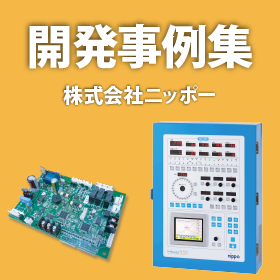
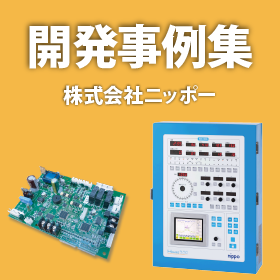
  • Circuit board design and manufacturing

Added to bookmarks

Bookmarks list

Bookmark has been removed

Bookmarks list

You can't add any more bookmarks

By registering as a member, you can increase the number of bookmarks you can save and organize them with labels.

Free membership registration

Distributors

ニッポー
Electronic Components and Semiconductors
  • Added to bookmarks

    Bookmarks list

    Bookmark has been removed

    Bookmarks list

    You can't add any more bookmarks

    By registering as a member, you can increase the number of bookmarks you can save and organize them with labels.

    Free membership registration
ニッポー
  • Special site
  • Official site
Phone number/address

news

[Notice of Exhibition Participation by Fukuda Co., Ltd.] TOKYO PACK 2026 Tokyo International Packaging Exhibition

  • NEW
  • SEMINAR_EVENT

We would like to express our congratulations on the continued prosperity of your esteemed company. Our company will be exhibiting at the following trade show, where we will be showcasing a number of products, including our new product, the Packaging Container Air Leak Test (Pin Hole Inspection) Device | MSQ-2003 series. We sincerely apologize for the inconvenience during your busy schedule, but we would like to cordially invite you to attend this event. 【 Trade Show Name 】 【 Dates 】 【 Venue/Booth Number 】

Oct 08, 2026

Added to bookmarks

Bookmarks list

Bookmark has been removed

Bookmarks list

You can't add any more bookmarks

By registering as a member, you can increase the number of bookmarks you can save and organize them with labels.

Free membership registration

[Seminar] The Battery Storage Business in Japan and Europe and the Initiatives of Nippon Koei Energy Solutions

  • NEW
  • SEMINAR_EVENT

[Lecture Topics] 1. Trends and Business Opportunities in Japan's Expanding Energy Storage Industry Koichiro Danno, Principal and Head of Social and Policy Design Unit, Research and Consulting Division, Japan Research Institute, Inc. 1. Background Necessitating Energy Storage Business 2. Behind the Meter (BTM) Business and In Front of the Meter (IFM) Business 3. Trends in Japan's Energy Policy Related to Energy Storage 4. Current Revenue Models in Japan 5. Verification of Profitability in Energy Storage Business 6. Summary 7. Q&A 2. Expansion of Grid-Scale Energy Storage Business in Europe and Japan and Future Prospects Takayuki Ogawa, Executive Officer, Deputy Head of Business Strategy Division, Japan Kogyo Energy Solutions, Inc. and Executive Director, Nippon Koei Energy Europe B.V. 1. Overview of the Company and Introduction to Energy Business 2. Efforts in Energy Storage Business in Europe 3. Efforts in Energy Storage Business in Japan 4. Role and Importance of Aggregators 5. Challenges and Future Prospects of Grid-Scale Energy Storage Business 6. Summary 7. Q&A

Oct 07, 2026

Added to bookmarks

Bookmarks list

Bookmark has been removed

Bookmarks list

You can't add any more bookmarks

By registering as a member, you can increase the number of bookmarks you can save and organize them with labels.

Free membership registration

[Seminar] The Cutting Edge of European DSF and Consumer-Centric Electricity Markets

  • NEW
  • SEMINAR_EVENT

[Speaker] Hideo Yamamoto, President and CEO of DIVE COMPASS Inc. [Key Message] "Consumers will no longer be at the end of the power system." By reconfiguring the energy landscape starting from the "consumer" rather than viewing renewable energy, electricity retail, PPA, storage batteries, EVs, VPP, and DSF as separate businesses, there is potential to create new energy businesses in Japan. This presentation will not only introduce the latest trends in Europe but will also consider future market changes and business opportunities from the perspective of "what can be commercialized next in the Japanese market." [Presentation Items] 1. Why consider the electricity market from the consumer's perspective now? 2. Five market changes confirmed at FLEXCON 2026 on the front lines of European DSF 3. The current state of the Japanese DSF market seen through comparison with Europe 4. New consumer-centric energy businesses emerging in Japan 5. Who will hold the connection with consumers by 2030? 6. Q&A / Business card exchange

Oct 07, 2026

Added to bookmarks

Bookmarks list

Bookmark has been removed

Bookmarks list

You can't add any more bookmarks

By registering as a member, you can increase the number of bookmarks you can save and organize them with labels.

Free membership registration

[Free Webinar on 10/27 at 15:30] Creating a "Preferred Workplace" Even with Labor Shortages. What is the method that achieved approximately 20% investment reduction? [Learning from Case Studies] - No need for full building air conditioning or complete automation! A practical solution that minimizes capital investment and dramatically increases retention rates and productivity in logistics, warehousing, and manufacturing.

  • NEW
  • SEMINAR_EVENT

Are you struggling with the fact that even after raising recruitment costs and hourly wages, on-site personnel are not sticking around? The true causes of turnover lie in "fatigue from heavy labor" and "discomfort in the work environment." However, improving the entire facility or fully automating operations involves enormous initial investments and is not realistic. In this seminar, we will reveal three practical solutions to create a "preferred workplace" based on a case study that reduced investment costs by approximately 20% compared to traditional proposals, without relying on expensive renovations or endless wage increases. The key lies in the integrated design of "construction and equipment" and "robotics." By thoroughly eliminating unnecessary capital investments, we can dramatically reduce the burden on the workforce and enhance productivity. As a company that also engages in outsourcing, we will thoroughly explain the "three principles" that support integrated design, using actual improvement cases. This content is a must-see for executives and site managers who want to fundamentally solve labor shortages within their budgets. [Recommended for] - Companies that continue to face turnover and recruitment difficulties despite raising wages and recruitment costs. - Site managers and executives who considered full building air conditioning or complete automation but abandoned the idea due to high costs. - Site managers and executives who want to balance investment restraint and productivity improvement through relocation or renovations.

Oct 07, 2026

Added to bookmarks

Bookmarks list

Bookmark has been removed

Bookmarks list

You can't add any more bookmarks

By registering as a member, you can increase the number of bookmarks you can save and organize them with labels.

Free membership registration

【paperlogic】October 15 (Thursday) | Participating in the 26th Business Fair!

  • NEW
  • SEMINAR_EVENT

We will be exhibiting at the "26th Business Fair" hosted by Seibu Shinkin Bank, which will be held on Thursday, October 15, 2026, at the Triangle Plaza in Shinjuku Sumitomo Building! This event is a corporate exhibition and matching event aimed at expanding business opportunities for small and medium-sized enterprises. Over 300 companies and organizations will participate, promoting their excellent technologies and products to one another.

Oct 07, 2026

Added to bookmarks

Bookmarks list

Bookmark has been removed

Bookmarks list

You can't add any more bookmarks

By registering as a member, you can increase the number of bookmarks you can save and organize them with labels.

Free membership registration
Return to news list
  • 全3回・無料ウェビナー 規制情報の収集・管理に課題はありませんか? 毎月100件以上施行される新しい規制に対応するためのソリューションをご紹介
  • 排気熱風なく気温-4.1℃の冷風を 工事不要で暑さ対策 店舗・工場の安全対策に! 気化式スポットクーラー Pure Drive
    • Inquiry about this news

      Contact Us Online
    • More Details & Registration

      Details & Registration

    Products

    • Search for Products

    Company

    • Search for Companies

    Special Features

    • Special Features

    Ranking

    • Overall Products Ranking
    • Overall Company Ranking

    support

    • site map
    IPROS
    • privacy policy Regarding external transmission of information
    • terms of service
    • About Us
    • Careers
    • Advertising
    IPROS Services
    • >IPROS GMS | Search site for the manufacturing industry
    • >IPROS | Search site for the B2B industry
    COPYRIGHT © 2001-2026 IPROS CORPORATION ALL RIGHTS RESERVED.
    Please note that the English text on this page is automatically translated and may contain inaccuracies.