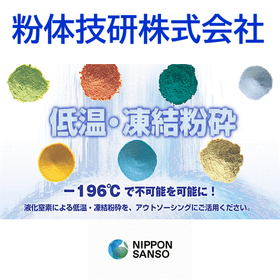
Low-temperature grinding system, freeze grinding system, and contract processing, classification, mixing.
Please make use of outsourced low-temperature and cryogenic grinding with liquid nitrogen!
The low-temperature grinding system and the cryogenic grinding system are technologies that embrittle (make hard and brittle) the material by cooling it with the cold heat of liquid nitrogen, and then crush the material by applying impact in that state.
Inquire About This Product
basic information
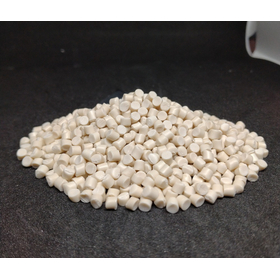
The low-temperature grinding system is broadly divided into three main components: product material cooling device, low-temperature grinder, and powder recovery device. (Please refer to our website) By using liquid nitrogen for grinding, it is possible to achieve high-quality powder grinding with minimal thermal degradation. Additionally, it allows for the powdering of substances that are difficult to grind at room temperature. For the raw materials, a pellet size of approximately less than 4mm is desirable for input into the grinder. Test grinding is available for a fee. The pricing is set in tiers based on quantity. Whether we can accommodate grinding will be determined based on the SDS (Safety Data Sheet). The resulting particle size varies depending on the material. In many cases, the average particle size will be several hundred microns. 【Business Activities】 - Contract processing of powders through freezing, low-temperature, non-oxidative, and room temperature grinding - Classification, mixing, and repackaging - Engineering and sales of grinding equipment - Improvement and development of grinding technology 【Main Grinding-Related Equipment】 - Freeze grinding equipment - Low-temperature grinding equipment - Coarse grinding equipment - Various test grinding equipment - Various analytical instruments 【Raw Materials for Which Contract Processing is Not Accepted】 Toxic substances, radioactive materials, metals, minerals, hazardous materials, perishable goods.
Price range
Delivery Time
Applications/Examples of results
【Applications】 ❒ Crushing of thermoplastic materials Thermoplastic materials are substances that "soften" when heated and are difficult to crush at room temperature, such as nylon, polyethylene, polypropylene, and ABS resin. ❒ Crushing of elastic and adhesive materials Elastic and adhesive materials are substances that have elasticity or adhesive properties at room temperature, making them difficult to crush, such as rubber and Teflon-based resins. ❒ Crushing of substances containing fats and moisture* Substances containing fats and moisture include food, pharmaceuticals, chemicals, nuts, bonito flakes, and more. *Pre-drying is required for moisture. ❒ Crushing with uniform particle size and minimal "fines" With fewer fines, the result is a powder with uniform particle size and good flowability (free-flowing). ❒ Crushing with minimal oxidation and degradation Crushing in a nitrogen gas atmosphere, which is an inert gas, allows for the production of fine powders with minimal oxidation and degradation of the target materials. 【Examples of Achievements】 ❒ Resin products EVA, PPE, HDPE, EEA, SAP, ABS, PE, urethane, silicone, nylon, rubber. ❒ General-purpose engineering plastics PC, PA, PPE, PBT, POM. ❒ Super engineering plastics PPS, PEEK, PES, LCP.
Company information

Taiyo Nippon Sanso Corporation provides necessary gases safely and optimally for each industrial sector with the basic stance of "providing the necessary gas at the necessary time," strongly supporting the industrial foundation of our country.