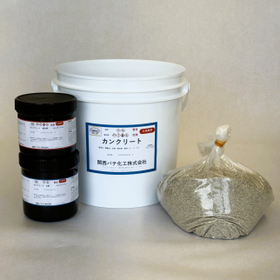
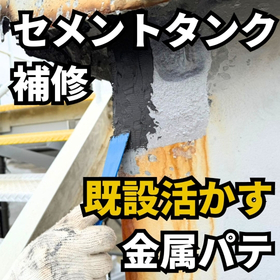
Before deciding on the replacement of materials, we will introduce a construction example using "metal putty" to make use of existing components of a steel tank.
In iron cement storage tanks, corrosion and surface defects may occur on the exterior due to aging and environmental conditions. While component replacement is considered for such damage, there is also a need to explore partial repairs in cases of localized corrosion. In this case study, we introduce a repair method using "metal putty" as one of the options. ■ Situations where metal putty is used: - Filling in areas of loss due to corrosion - Adjusting the unevenness of the repair surface - Preparing the substrate before painting - Etc. This serves as a reference case for situations where one wants to confirm the applicability of repair methods that utilize existing components before deciding on renewal or replacement. ■ Metal putty used in this case study: 'KAN Putty Iron Metal' A repair putty with a high iron powder content suitable for the regeneration and repair of corroded equipment, as well as for building up metal materials and filling holes. - Can be applied without the use of fire - Has strong adhesion to all types of metal - Easy to handle as it is putty-like and does not sag easily *For detailed construction information (including photos), please refer to the "Detailed Information" section at the bottom of the page or feel free to contact us.
Inquire About This Product
basic information
■Metal putty used in this case: 'KAN Putty Iron Metal' This is an industrial repair putty with a high concentration of iron powder. It is suitable for repairing leaks and damage in metal parts. It can be applied without special techniques or open flames, and it adheres strongly to metals and different materials. It can also be applied to concrete, stone, and wood, and when properly applied, it exhibits adhesive strength strong enough to break the base material. It is a product suitable for repairing metal parts such as factory equipment and piping. 【Features】 ■ Easy repair of metals that cause leaks ■ Strong cured material can be processed by hand and machine ■ Strong adhesive power for all types of metals ■ As it is a poor conductor of electricity, there is no risk of electrolysis when repairing or bonding dissimilar metals 【Specifications】 ■ 0.5kg set (main agent: 0.45kg, hardener: 0.05kg) ■ 1.0kg set (main agent: 0.9kg, hardener: 0.1kg) ■ 10kg set (main agent: 9kg, hardener: 1kg) *For more details, please refer to the PDF document or feel free to contact us.
Price range
Delivery Time
Applications/Examples of results
【Applications】 ■ Repair of piping, valves, tanks, etc. ■ Filling holes in castings, repairing voids, buildup repairs, bonding ■ Restoration and repair of corroded equipment, buildup and filling of metal materials and equipment ■ Waterproofing, anti-corrosion, and repair lining *For more details, please refer to the PDF document or feel free to contact us.
Detailed information
-
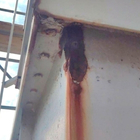
【Construction Target】 The iron cement storage tank that is the subject of construction in this case. Localized corrosion has progressed, resulting in rust formation.
-
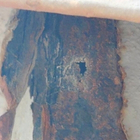
[Construction Area (Enlarged)]
-

【Construction Procedure】 ■Substrate Preparation 1. Remove rust with scraping 2. Cleaning (remove rust powder and dust) ■Rust Prevention, Repair, and Shaping 3. Apply rust preventive coating 4. Metal putty 5. Polishing 6. Reapply rust preventive coating ■Reinforcement and Finishing 7. Attach reinforcing aluminum tape 8. Apply finishing paint
-
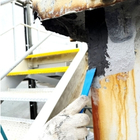
【Rust prevention, repair, molding】 4. After applying the rust inhibitor, "metal putty" is being applied.
-
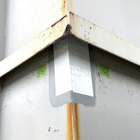
[Reinforcement/Finishing] 7. Application of reinforcement aluminum tape
-
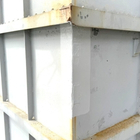
【Reinforcement/Finishing】 8. Apply finishing paint.
catalog(1)
Download All Catalogs
Company information

The roots of Kansai Paste Chemical lie in the production of gofun (shell powder) in 1907. We have challenged ourselves to create products that meet the needs of the times, and now we manufacture and process a wide range of products, not just paste. In particular, we possess many manufacturing facilities for medium to high viscosity products and are also capable of small-batch packaging.