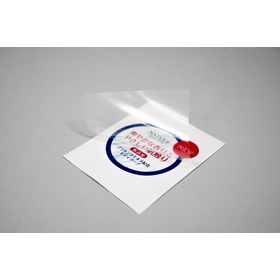
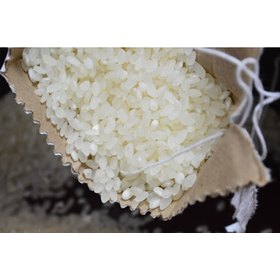
From rice to plastic. Biomass plastic made from discarded rice: "Rice Resin."
Currently, with the promotion of the SDGs, the realization of a sustainable society has become a shared global goal, and environmental considerations have become an unavoidable industrial challenge. In Japan, based on the Plastic Resource Circulation Strategy, a roadmap for the introduction of bioplastics has been developed, with a target to increase the usage of biomass plastics to approximately 2 million tons, which is 40 times the current amount, by 2030. \Do you have any of these concerns?/ 【1】What kind of environmentally friendly plastic materials are available? 【2】Are there raw materials that can be sourced domestically? 【3】Are you struggling with material supply and price fluctuations? These concerns can be addressed with rice biomass plastic "Rice Resin"! Rice Resin is a biomass plastic that utilizes rice (non-food rice), unique to Japan. It contributes to CO2 reduction by reducing the amount of resin used and the transportation energy of biomass raw materials. Furthermore, it can also help solve the issue of abandoned farmland in Japan, contributing to the realization of a sustainable society. You can download materials from our website via the link below or feel free to contact us.
Inquire About This Product
basic information
Rice Resin Adoption Examples ○ Plastic bags ○ Shoppers, garbage bags ○ Amenities, cutlery, straws ○ Cushioning materials, toys, tableware, stationery, etc. • Rice resin contains rice (non-edible rice) and is more hygroscopic compared to petroleum-based plastics, so pre-drying before molding (90°C, 4-5 hours) is recommended. • It is recommended to blend rice resin as a masterbatch with virgin resins (polyethylene, polypropylene, ABS) for molding. • Starting with a low blending ratio of rice resin often leads to more stable molding. • Even if the blending ratio of non-edible rice is a few percent, it is possible to display the rice resin logo and indicate the use of rice-derived materials. • Since rice resin contains rice, it is recommended to mold at low temperatures (approximately 170-190°C). • The color after molding will be a soft ivory color that highlights the natural color of the rice. For more details, please contact us.
Price information
For more details, please contact us.
Delivery Time
※For more details, please contact us.
Applications/Examples of results
If you have any other inquiries, please feel free to ask.
catalog(1)
Download All Catalogs
Company information

Our company not only purchases and sells products but also accurately understands the needs of all stakeholders and provides solutions to their challenges. While enhancing customer satisfaction, we aim to expand both our businesses in a larger and broader manner. We continuously capture the changes in the market, gather high-quality information, and consistently evolve our proposals.
![[Information on Handling Resins] About Functional Resins](https://image.mono.ipros.com/public/product/image/dab/2000257762/IPROS3772655241017033562.png?w=280&h=280)

![[Case Study] Wastewater Treatment Using Chelating Resin](https://image.mono.ipros.com/public/product/image/c69/2000728048/IPROS14906013190808581154.png?w=280&h=280)
![[Research Material] Global Market for Polybutylene Resin](https://image.mono.ipros.com/public/product/image/0b1/2001467058/IPROS70906330022311692605.jpeg?w=280&h=280)
![[New Development] Two-component Room Temperature Curing Epoxy Resin TE-1006-2](https://image.mono.ipros.com/public/product/image/2074363/IPROS16867102222338697569.png?w=280&h=280)
![[Development Product] Transparent Heat Tack](https://image.mono.ipros.com/public/product/image/d85/2000381876/IPROS3528702675593362058.JPG?w=280&h=280)


![Resinization of HMI, HUD, and clusters, reduction of component count [heat dissipation, EMC]](https://image.mono.ipros.com/public/product/image/2100213/IPROS6494574281949856507.png?w=280&h=280)