[Analysis Case] Analysis of Inorganic Components in Cosmetics (XRD, SAXS)

By conducting XRD and SAXS analysis, it is possible to evaluate the qualitative and quantitative aspects as well as the particle size distribution of fine particles.
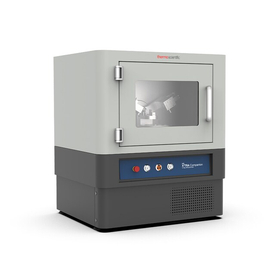
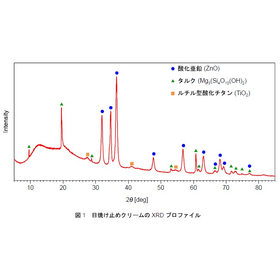
This technology is an analytical method that evaluates inorganic components contained in cosmetics using X-ray diffraction (XRD) and small-angle X-ray scattering (SAXS). XRD is used to identify crystalline components, allowing for the confirmation of inorganic substances such as talc (Mg₃(Si₄O₁₀)(OH)₂), zinc oxide (ZnO), and titanium dioxide (TiO₂). Additionally, SAXS conducts evaluations of nanoscale particle structures, enabling the acquisition of information regarding particles ranging from approximately 20nm to 100nm. By combining the identification of inorganic components through XRD with particle size evaluation via SAXS, it is possible to analyze inorganic materials in cosmetics from both compositional and structural perspectives. This technology can be utilized for confirming the blended inorganic components and understanding particle characteristics.
Inquire About This Product
basic information
For more details, please refer to the PDF document or feel free to contact us.
Price range
Delivery Time
Applications/Examples of results
For more details, please refer to the PDF document or feel free to contact us.
catalog(1)
Download All Catalogs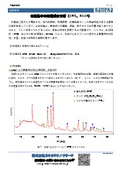
Company information

Kaneka Techno Research Co., Ltd. was established in 1988 with the corporate philosophy of becoming a trusted partner for our customers in the fields of "analytical services" and "technical information services." As a group of professionals with foresight and advanced analytical and research techniques, we aim to propose solutions to the challenges faced by our customers and to provide high-quality technical services quickly, thereby becoming a trusted problem-solving technical service company. We will continue to strive for improvement every day. We sincerely request your continued guidance and support.