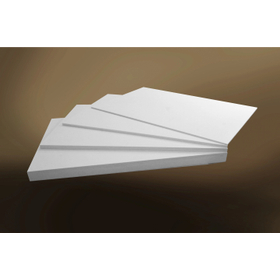
This is a high-temperature insulation material manufactured using the vacuum forming method. It is also possible to modify the raw material composition and shape according to the customer's application.
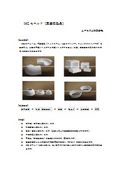
MC boards are products made primarily from inorganic fibers (such as rock wool, AES fiber, and alumina fiber) with a small amount of inorganic and organic binders added, processed into board form through a papermaking and drying process.
Inquire About This Product
basic information
- It has excellent heat resistance and thermal insulation properties. - It has excellent thermal shock resistance. - It has excellent strength and hardness (surface hardness can be adjusted as needed). - It has excellent dimensional accuracy (both surfaces are smooth). - Production of smoke-free products (sintered products) is also possible (for home appliances, etc.). - It is a product that is not subject to the Specific Chemical Substances Hazard Prevention Regulations by the Ministry of Health, Labour and Welfare. - MC boards 1200 and 1300 are exempt from carcinogenic classification under EU Directive 97/69/EC.
Price range
Delivery Time
Applications/Examples of results
● General high-temperature insulation materials ● Board lining materials for various furnaces ● Backup materials for various furnaces ● Fireproof coating materials
catalog(3)
Download All Catalogs
Company information

Mugiseramu Co., Ltd. applies its abundant water resources and traditional Mino washi paper manufacturing techniques to its unique vacuum molding method to produce high-temperature insulation materials (vacuum molded products). High-temperature insulation materials (vacuum molded products) are special industrial materials that exhibit excellent insulation performance even in extremely high-temperature environments exceeding 1000°C. They are used in a wide range of industries, from high-temperature process industries such as steel, non-ferrous metals, ceramics, nuclear power, and petrochemicals, to home appliances and building materials, contributing to reduced energy loss, extended equipment lifespan, and improved working environments.