Is your factory's digital transformation only ending with "visualization"?
Improvement Proposal Type Factory DX

Don't stop at visualization. AI proposes the "next improvement" and supports the on-site improvement PDCA.
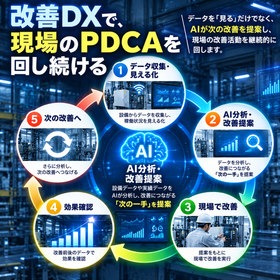
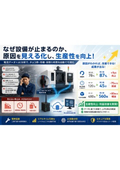
Factory DX: Are you just stopping at "visualization"? The operating rates and downtime of equipment have become visible. Data can now be accumulated. Still, are there not challenges such as: - Data is visible, but it's unclear where improvements should be made - Analysis and improvements depend on the experience and intuition of skilled workers - It is difficult to identify the causes of defects or equipment stoppages - There is a lack of time and personnel to continue improvement activities What is important in factory DX is not just "seeing" the data, but utilizing it for improvements. MI's "Improvement DX" uses AI to analyze data collected from equipment and propose the "next steps" that lead to improvements. Data collection and visualization → AI analysis and improvement proposals → On-site improvements → Effect verification → Next improvements AI analyzes and proposes, while the site executes improvements. By confirming the results with data and linking them to the next improvements, we continuously cycle through the improvement PDCA. The goal of Improvement DX is not just to view data, but to enhance the factory's profits. We connect various improvement activities in the factory, such as productivity enhancement, quality improvement, and energy saving, to profit growth. [Free resource "Improvement DX Practical Guide" now available]
Inquire About This Product
basic information
■ Basic Flow for Improvement DX 1. Acquire necessary data from existing equipment 2. Collect and accumulate data in the cloud 3. AI analyzes equipment data and performance data 4. Propose the "next step" that leads to improvement 5. Implement improvements on-site 6. Confirm effectiveness from data before and after improvements 7. Proceed to the next analysis and improvement ■ Example of Acquired Data Operation/Stop/Standby/Production Count/Electric Current/Temperature/Pressure/Quality Performance, etc. *The data that can be acquired and the methods of acquisition vary depending on the target equipment and existing systems.
Price information
It varies depending on the target equipment, number of units, data to be collected, data acquisition methods, and analysis content. We will propose the optimal configuration after confirming the current equipment setup and the issues you wish to improve. Consultations starting from a PoC (Proof of Concept) are also possible.
Delivery Time
※It varies depending on the target equipment, number of units, data acquisition method, system configuration, etc. For details, please contact us.
Applications/Examples of results
【Examples of Utilization】 ■ Profit Improvement and Productivity Enhancement We analyze losses such as equipment downtime, waiting, setup, and bottlenecks, and support improvements that lead to reduced downtime, increased operating rates, and higher production volumes. ■ Quality Improvement We analyze the relationship between equipment data and quality performance, supporting reductions in defects, stabilization of quality, and improvements in manufacturing and operating conditions. ■ Energy Saving and Decarbonization We analyze waiting, idling, and excessive operation, supporting improvements that lead to reduced electricity consumption, enhanced energy efficiency, and decreased CO₂ emissions. We will propose improvement themes based on the target equipment and available data.
Detailed information
-
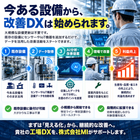
Improving DX involves obtaining necessary data from existing equipment and collecting and storing it in the cloud. AI analyzes equipment data and performance data to propose "the next improvement." By implementing improvements on-site and verifying their effects with data, we can lead to the next improvement.
catalog(4)
Download All Catalogs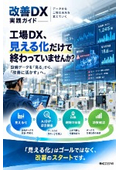

Company information

Our company handles devices and equipment centered around IoT/M2M technology. By enabling devices and equipment connected to a network to exchange information with each other through the network, it is possible to directly collect and control data from the devices and equipment without human intervention. This significantly contributes to improving operational efficiency, environmental protection, and reducing labor costs.