
Weight work transport on assembly lines not determined by movable mass | Thermix

The issue is not how many kilograms you can carry, but rather how safely you can move in what posture.
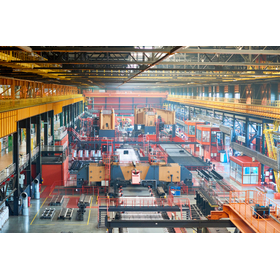
Transporting and inverting heavy workpieces cannot be automated simply by choosing a high-capacity robot. Thermix designs gripping, transporting, inverting, positioning, safety, and abnormal recovery as a single flow, establishing an assembly line that handles heavy objects. It is constructed from the perspectives of equipment manufacturers, FA integrators, and line builders. The transportable mass is not determined solely by the weight of the workpiece. It is confirmed by considering the hand, chuck, bracket, sensors, wiring and piping, as well as the center of gravity and moments during acceleration and deceleration. Gripping does not rely solely on suction or clamping force; it combines mechanical supports and fall prevention mechanisms. Decisions are made during the conceptual phase to ensure that dangerous conditions do not arise during power outages or air pressure drops. "I want to eliminate manual handling of heavy objects" → Redesign the entire process from the gripping points and transport posture. "I want to reduce crane operations" → Assign roles for long distances to shuttles and vertical movements to lifting devices. "I want to reduce manpower for inverting large workpieces" → Stabilize the stopping position with dedicated positioners. "The positioning accuracy varies with the operator" → Design jigs by calculating backwards from the reference surface of the next process. "If it stops while lifted, it cannot be returned" → Pre-design the retreat location and manual operation procedures. Please consult us starting from observing the actual workpieces and current operations.
Inquire About This Product
basic information
【Conditions for Gripping Design】 - Where on the workpiece to base the grip - Variability in workpiece shape and dimensions - Whether to hold solely by friction or to support by shape - Whether it is necessary to maintain grip during power outages or air pressure drops - Method for detecting successful gripping - Position reproducibility during hand changes - Balance between hand rigidity and self-weight, and the expansion of interference areas due to increased piping 【Role Allocation】 For long-distance movement, options include shuttle transport or carts; for vertical movement, lifting devices; for inversion, dedicated positioners; and for precise alignment, jigs, allowing the robot to focus on the transfer between equipment. Balance is achieved through transfer frequency, equipment space, takt time, safety, and maintainability. 【Features】 - For processes with varied posture and placement due to multiple product types, robots are used; for repetitive paths, conveyors or rail carts are chosen, not determined solely by workpiece weight. - A PLC manages the presence of workpieces, gripping status, inversion position, transport position, and acceptance status for the next process, clarifying the conditions for proceeding to the next action. - Manual operations retain interlocks to prevent interference and dropping, and provide screens and procedures for safe recovery in the correct order. - If stopped while lifted, it is determined in advance whether to return to the original position or lower to a safe location.
Price range
Delivery Time
Applications/Examples of results
Target equipment: Robot, hand, chuck, inverter, positioner, lifting device, shuttle transport, rail cart, conveyor, jig, PLC, safety circuit Applicable processes: Supply, transfer, inversion, angle change, jig setup, loading into processing machines, handover to the next process Next processes: Welding, assembly, processing, measurement Implementation purposes: Reduction of manual handling of heavy objects, reduction of crane operations, labor-saving for large workpiece inversion, stabilization of positioning accuracy Scope of provision: Conceptualization, equipment design, control and safety design, manufacturing, startup as an assembly line Target departments: Production technology department, manufacturing department, maintenance department Consideration stage: Inventory of manual and crane operations, conceptualization of new lines Six conditions to organize during consideration: Work conditions, current operations, process conditions, safety conditions, abnormal recovery, maintenance conditions Implementation examples: The following are consultation examples. - "I want to automate the process of inverting with a crane and two people." - "I couldn't increase the speed after making the hand heavier." - "I cannot reproduce the reference surface after inversion, so it doesn't fit on the jig in the next process." - "I want a configuration that can maintain holding even during a power outage."
catalog(1)
Download All Catalogs
Company information
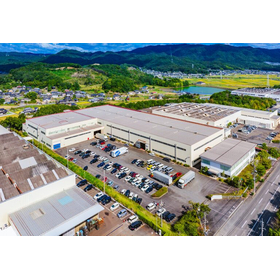
We, Thermix, a top-tier production line builder with proven expertise, handles automation and line construction for production equipment across diverse fields including automobiles and automotive parts, aircraft bodies, and industrial machinery. We provide full turnkey solutions from concept and specification review through design, manufacturing, installation, commissioning, and maintenance, ensuring reliable mass production launch. Leveraging our production technology expertise, we organize and visualize the current state, including process feasibility, integration with existing equipment, and safety. Utilizing industrial robots, image processing, conveyance/inter-process transfer, and material handling, we propose realistic automation roadmaps without unnecessary strain. We address challenges like “We want to reduce staffing on lines that can't be stopped” or “Equipment investment decisions are difficult,” accompanying you from small-scale PoCs to full-scale deployment with our project management expertise. Leveraging our domestic and international launch experience, we collaborate to create the optimal production line.