
Safety design that starts without safety barriers - Automated manufacturing line construction - Thermix

Safety design is not about adding safety barriers, but about organizing the interaction between people and equipment.
I want to introduce robots, but I don't know the range of the safety fence, and the entire line stops every time maintenance is performed. Thermix addresses these challenges by organizing the interaction between people and equipment not only during normal operations but also during setup changes, cleaning, abnormal recovery, maintenance, and startup, designing manufacturing lines that balance safety and operation. We reduce hazards before enclosing them. We take measures during the conceptual design phase, such as arranging for cleaning and material replenishment to be done from outside the hazardous area and implementing mechanisms that can be maintained even during power outages or air pressure drops. Safety and productivity are not mutually exclusive. A manufacturing line that can recover without hesitation will also operate stably. We handle everything consistently from conceptual design to control design, construction, and startup. "Cannot determine the range of the safety fence" → Identify the proximity scenarios for each task and select the protection method. "Can we reduce the fence with a scanner?" → Verify stopping time, reach distance, blind spots, and handling of cart passage. "The entire line stops every time maintenance is performed" → Separate hazardous areas and design stopping ranges by section. "When the door closes, it automatically restarts" → Design safety checks, resets, and automatic recovery separately. "I want to add to an existing line" → Organize the connection range and responsibility boundaries with the existing emergency stop circuit. Please consult us starting from identifying which tasks require people to approach the equipment.
Inquire About This Product
basic information
【Situations Seen in Risk Assessment】 - Setup tasks for replacing jigs and robotic hands - Cleaning of chips, oil, dust, and contaminants - Abnormal recovery from workpiece jams, gripping errors, and undetected sensors - Inspection and replacement of sensors, cylinders, and suction pads - Teaching, trial operation, and adjustments during startup - Recovery operations from power outages, air pressure drops, and communication interruptions 【Design of Safety Protection】 Safety fences, door switches, light curtains, laser scanners, and emergency stops are selected based on stopping time, human reach distance, blind spots, passage of workpieces and carts, and restart conditions. For openings of AGVs and AMRs, we organize the transport control, safety status on the cell side, and handover completion signals. 【Features】 - The entire line will not be stopped uniformly. The stopping range is divided into sections, and decisions are made by balancing safety, operability, maintainability, and impact on production. - Safety-related signals, emergency stops, door openings, protective stops, manual operations, and recovery permissions are organized using PLCs. - In projects involving multiple equipment manufacturers, we clarify the equipment that determines the stop, the scope of stop commands, and the leader for recovery. - Restarting is not permitted solely based on door closure confirmation. Safety checks, resets, and returns to automatic operation are designed separately.
Price range
Delivery Time
Applications/Examples of results
Target equipment: robots, machine tools, conveyor systems, lifting devices, inverters, clamps, pneumatic equipment, inspection devices, AGV/AMR, PLC, safety circuits Scope of support: reduction of hazards in the conceptual stage, design of layout and workflow, selection of safety protection, design of safety circuits and controls, construction, startup Forms of support: new manufacturing lines, modifications to existing lines, additional safety measures Hazards to be reduced in conceptual design: falling, pinching, swaying during transport, proximity during cleaning, entry during replenishment Target departments: production technology department, manufacturing department, maintenance department, safety and health department Things to organize in existing modifications: connection range with existing emergency stop circuits, continued usability of existing safety equipment, impact of stopping on upstream and downstream processes, discrepancies between physical items and drawings, temporary conditions during construction Handling of residual risks: risks that cannot be fully reduced in design will be communicated to users and linked to work procedures and training. Consideration stage: conceptualization of new lines, addition of robots to existing lines Here are some consultation examples: - "Entering the safety fence every time for cleaning" - "Multiple companies working in the same area during modification work" - "Stopping at a distant processing machine for material replenishment"
catalog(1)
Download All Catalogs
Company information
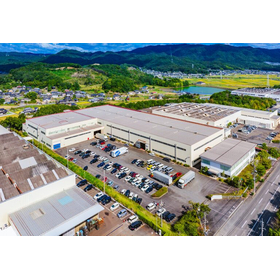
We, Thermix, a top-tier production line builder with proven expertise, handles automation and line construction for production equipment across diverse fields including automobiles and automotive parts, aircraft bodies, and industrial machinery. We provide full turnkey solutions from concept and specification review through design, manufacturing, installation, commissioning, and maintenance, ensuring reliable mass production launch. Leveraging our production technology expertise, we organize and visualize the current state, including process feasibility, integration with existing equipment, and safety. Utilizing industrial robots, image processing, conveyance/inter-process transfer, and material handling, we propose realistic automation roadmaps without unnecessary strain. We address challenges like “We want to reduce staffing on lines that can't be stopped” or “Equipment investment decisions are difficult,” accompanying you from small-scale PoCs to full-scale deployment with our project management expertise. Leveraging our domestic and international launch experience, we collaborate to create the optimal production line.
