
Reducing rework FAT/SAT production line startup Thermix

What we need to confirm is not whether the equipment is completed, but whether we can move on to mass production.
Despite having confirmed the equipment with the manufacturer, it stops once installed, and the acceptance criteria are unclear, making it impossible to decide on moving to mass production. Thermix designs FAT and SAT (Factory Acceptance Test and Site Acceptance Test) not as confirmations of equipment completion, but as criteria for transitioning to mass production, validating everything from actual work, abnormal recovery, inter-equipment coordination, operation, maintenance, to data recording as part of the production line. We do not only observe normal operation; we intentionally induce situations such as missed captures, undetected sensors, unacceptable receiving at the transport destination, inspection failures, material shortages, communication interruptions, and restarts after emergency stops, to confirm where human intervention is needed. If sufficient actual work cannot be prepared, we separate the items that can be confirmed during FAT from those carried over to SAT and leave them in the acceptance plan. “Passed FAT but stops on-site” → Implementing step-by-step from individual tests to inter-equipment integration. “Cannot determine acceptance criteria” → Judging based on capability, quality, abnormal recovery, operation maintenance, and data. “Too many issues to move to mass production” → Managing priorities based on the impact on the start of mass production. “Involvement of multiple equipment manufacturers” → Sharing and adjusting responsibility boundaries and test items at the upstream stage. “On-site modifications are not reflected in the drawings” → Confirming the scope of changes and reflecting them in the official data. Please consult us regarding the scope of FAT and SAT from the estimation and specification stages.
Inquire About This Product
basic information
**What to confirm with FAT** - Basic sequence, takt time, repetitive actions, quality conditions - Abnormal tests: missed picks, unacceptable acceptance, inspection NG, material shortage, finished product full, communication interruption, restart - Whether the abnormal display can identify the cause, and whether interlocks remain even in manual operation - Whether the HMI screen names and operating procedures are understandable to operators and maintenance personnel - Maintenance confirmation: tool accessibility, position reproduction after replacement, cleaning and lubrication posture - Actual work verification: cutting, seating, measuring posture with strict conditions, discharge of NG products **What to confirm with SAT** Operation in a state connected to power, air, dust collection, cooling water, and network. Differences in floor surface, temperature, lighting, vibration, and wiring routes. Hand-off positions with existing equipment and upstream/downstream processes, as well as startup permissions, transport requests, completion signals, abnormal stops, and linkage of product information. In MES linkage, association of work ID and results, and operation methods during communication interruptions. **Features** - On-site confirmation of whether operators can replenish materials, change setups, and recover from abnormalities. - Modifications can create other issues. When making changes, confirm the scope of impact and reflect it in drawings and programs. - Management of issues not only includes content but also the impact on mass production start, feasibility of temporary measures, permanent countermeasures, responsible parties, deadlines, and re-confirmation methods.
Price range
Delivery Time
Applications/Examples of results
Target equipment: robots, conveyors, machine tools, inspection devices, cleaning machines, measuring instruments, PLCs, upper-level systems Testing stages: individual equipment testing, inter-equipment integration testing, continuous line operation, mass production trials Acceptance criteria items: capability, quality, abnormal recovery, operation and maintenance, data recording, deliverables Deliverables: drawings, PLC/HMI backups, parts lists, operation manuals, version control of inspection records Six items to organize in advance: testing scope, testing conditions, acceptance criteria, responsibility boundaries, issue management, transition to mass production Response format: FAT/SAT for in-house supplied equipment, acceptance coordination for production lines involving multiple manufacturers Scope of provision: pre-shipment verification, installation, inter-equipment connection, trial operation, mass production trials Consideration stage: estimate and specification creation, design review, pre-shipment, post-installation, mass production transition assessment Target departments: production technology department, manufacturing department, maintenance department, quality assurance department Implementation examples: the following are consultation examples. - "I want to determine acceptance conditions from the estimation stage." - "Multiple companies' modifications are overlapping on-site and not converging." - "Corrections made on-site are not reflected in the official data." - "Responsibility becomes ambiguous at the connection points with other companies' equipment."
catalog(1)
Download All Catalogs
Company information
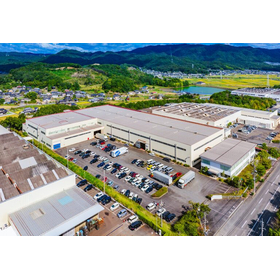
We, Thermix, a top-tier production line builder with proven expertise, handles automation and line construction for production equipment across diverse fields including automobiles and automotive parts, aircraft bodies, and industrial machinery. We provide full turnkey solutions from concept and specification review through design, manufacturing, installation, commissioning, and maintenance, ensuring reliable mass production launch. Leveraging our production technology expertise, we organize and visualize the current state, including process feasibility, integration with existing equipment, and safety. Utilizing industrial robots, image processing, conveyance/inter-process transfer, and material handling, we propose realistic automation roadmaps without unnecessary strain. We address challenges like “We want to reduce staffing on lines that can't be stopped” or “Equipment investment decisions are difficult,” accompanying you from small-scale PoCs to full-scale deployment with our project management expertise. Leveraging our domestic and international launch experience, we collaborate to create the optimal production line.

