
Manufacturing line with uninterrupted history traceability design Thermix

What you decide first is not the recording items, but what single thing to pursue.
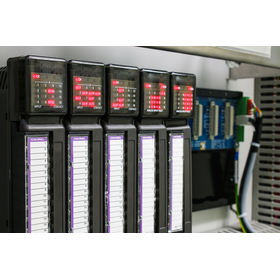
The inspection results remain, but we cannot trace the processing conditions; reintroducing reworked items causes the history to diverge. Thermix begins traceability not with the addition of recording devices, but with the design of identification units. We connect work IDs, transportation, processing, cleaning, measurement, inspection, and PLC control to create a manufacturing line that can track the quality history of individual items. The tracking units can be selected from individuals, pallets, jigs, or lots. We align the necessary units for quality assurance with the actual transportation units, breaking it down to the granularity needed for defect investigation, shipping decisions, and process improvements. The differences in the system do not emerge during normal operations. We design for exceptional operations first, such as reading failures and manual transportation. “Inspection results do not connect with processing conditions” → Combine across processes with a common work ID. “Reintroducing reworked items causes the history to diverge” → Distinguish and record initial, reworked, and re-inspected items. “If the code cannot be read, it cannot be processed” → Design for retries, fallback, and operator input with permissions included. “If the MES crashes, the line stops” → Implement temporary storage and resend after recovery, preventing duplicate registrations. “Data has been collected but cannot be used for investigation” → Standardize the definitions of time, variety codes, and process numbers across equipment. Please consult us starting from the organization of tracking units and exceptional operations. We also welcome participation from the conceptual stage.
Inquire About This Product
basic information
**Identification and Handover** - Identification methods: Barcode, QR code, RFID, pallet number, jig number - Selection criteria: Reading distance, oil and dust, locations for application, transport posture, number of varieties, reusability - Handover: Re-reading at each process, PLC following the ID read at the entrance, combined use - Re-alignment: Empty feeding, reverse feeding, manual operation, operation during sampling **Information to be Recorded** Variety, processing program, completion results, measurement values, OK/NG judgment. If necessary, equipment number, jig number, start and completion times, and whether reprocessing is required. Synchronize times between equipment and align definitions of variety codes and process numbers. **Design of Exception Operations** When alternative operations are permitted, determine authority, input content, and operation history. Reworked items will not overwrite previous results and will be structured to trace the history of one ID as initial, rework, and re-inspection. **Features** - PLC handles equipment operation and interlocks, while the upper system manages production instructions and quality history. Determine which holds valid information first. - If there is a mismatch between variety and actual ID, do not start processing; failures in performance transmission will be temporarily saved and resent. Include behavior during communication anomalies in the specifications. - Control design will extend to HMI displays and recovery procedures.
Price range
Delivery Time
Applications/Examples of results
Tracking Units: Individual items, pallets, fixtures, lots Target Equipment: Robots, conveyors, machine tools, inverting devices, cleaning machines, measuring instruments, inspection devices, PLCs, upper systems Applicable Processes: ID assignment, transportation, processing, cleaning, measurement, inspection, rework, reintroduction, shipping determination Eight Conditions to Organize Before Implementation: Tracking units, ID assignment and reading methods, storage items, system role allocation, actions during communication interruptions and reading failures, history of rework and re-inspection, HMI display and operation permissions, verification tests Target Departments: Production technology department, quality assurance department, manufacturing department, maintenance department, information systems department Scope of Provision: Concept, equipment design, control design, specification adjustments for upper system integration, verification tests during startup Implementation Forms: New manufacturing lines, additions to existing lines Consideration Stage: Concept for new lines, review of quality requirements, response to upper system implementation Implementation Examples: The following are consultation examples. - "I want to track by individual items, but I can only identify by pallet." - "I want to create a history that can explain the basis for shipping determination." - "The operation during reading failures is left to the site." - "The equipment side cannot keep up with the upper system implementation."
catalog(1)
Download All Catalogs
Company information
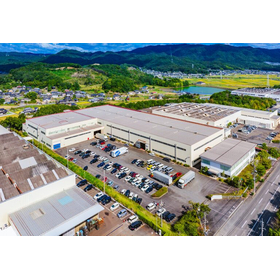
We, Thermix, a top-tier production line builder with proven expertise, handles automation and line construction for production equipment across diverse fields including automobiles and automotive parts, aircraft bodies, and industrial machinery. We provide full turnkey solutions from concept and specification review through design, manufacturing, installation, commissioning, and maintenance, ensuring reliable mass production launch. Leveraging our production technology expertise, we organize and visualize the current state, including process feasibility, integration with existing equipment, and safety. Utilizing industrial robots, image processing, conveyance/inter-process transfer, and material handling, we propose realistic automation roadmaps without unnecessary strain. We address challenges like “We want to reduce staffing on lines that can't be stopped” or “Equipment investment decisions are difficult,” accompanying you from small-scale PoCs to full-scale deployment with our project management expertise. Leveraging our domestic and international launch experience, we collaborate to create the optimal production line.
