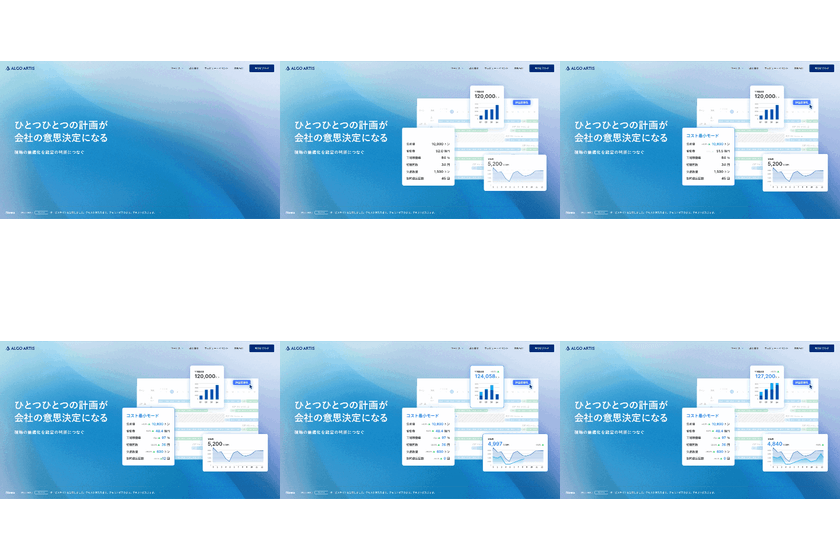
Each individual plan becomes a decision-making factor for the Ocean Sand Digital Agency. If it improves by 1%, the company will change. AI for optimizing plans that support social infrastructure.
OPTIUM is a planning DX solution that optimizes complex planning tasks using AI and algorithms. It automates the creation of plans that have traditionally relied on the experience of skilled professionals, such as production planning in manufacturing, shipping plans in logistics, bus schedule creation, and fuel shipping plans in power generation. It not only shortens daily planning time but also quantitatively demonstrates the effects on fuel costs, procurement costs, and CO2 emissions, linking on-site improvements to management decision-making. What is OPTIUM? It automates on-site planning and converts the results into numbers that can be used for management decisions. It verbalizes and formalizes the experience of skilled professionals and the operational rules of the site, transplanting them into AI to create plans. 1. Organize operations and constraints: Identify implicit rules and criteria through interviews with responsible personnel. 2. AI creates plans: Automatically outputs optimal planning proposals based on conditions such as equipment, vessels, crew, and inventory. 3. Compare, adjust, and decide: Compares multiple proposals based on cost and efficiency, allowing for immediate verification of impacts during changes. It also supports manual adjustments on-screen. 4. Establish on-site: Continuously improves while operating in conjunction with existing systems. ALGO ARTIS provides consistent support from consulting and design to system development.
Inquire About This Product
Related Videos
basic information
Features 1. Direct reflection of each company's unique rules We handle the complex constraints that differ by industry and company with our unique algorithm. Instead of adapting the business to the package, we create plans that align with the on-site methods. 2. Significant reduction in planning time There are cases where plans that took experienced professionals a full day to create can be completed in just a few minutes. The time saved can be used for coordination and improvements with stakeholders. 3. Ability to quantify the quality of plans Multiple planning proposals can be compared using metrics such as fuel costs, procurement costs, and CO2 emissions. This makes it easier for on-site personnel to explain "why this plan" to their superiors and management, and to communicate the results of improvements. 4. Elimination of dependency on individuals and ease of handover By preserving the know-how of veterans in the system, we can standardize planning quality and reduce the burden of training younger staff.
Price range
Delivery Time
Applications/Examples of results
Utilization and Achievements by Industry Manufacturing • Automatic formulation of production plans and Master Production Schedule (MPS) • Japan Catalytic: Reduced planning man-hours for batch production by over 50% annually • Meiji: Reduced operating hours in the manufacturing process of dairy products by approximately 17% • Honshu Chemical Industry: AI-optimized production planning for multi-use plants, eliminating dependency on specific personnel Logistics • Automatic creation of shipping plans for coastal vessels, reducing fuel consumption • Cosmo Oil: Improved shipping operations efficiency by about 20% and reduced fuel by about 5% • Sumitomo Osaka Cement: Full-scale operation of shipping plans, reducing fuel and CO2 emissions Transportation (Buses and Railways) • Automatic creation of duty rosters and driving route schedules in accordance with laws and labor agreements • Meitetsu Bus: Reduced creation time by half and man-hours by one-third Energy • Optimization of shipping, procurement, and fuel operation plans for power generation fuels • Kansai Electric Power: Reduced the formulation time for fuel operation plans from 4 hours to about 30 minutes • Hokuriku Electric Power: Automatically formulated coal shipping plans, reducing procurement costs • Shikoku Electric Power: Reduced fuel procurement costs by several hundred million yen For more details and other achievements, please check the "News" page of ALGO ARTIS. https://service.algo-artis.com/news/
Detailed information
-
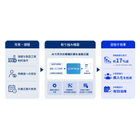
Issues • The planning of pre-filling processes such as blending, sterilization, and fermentation relies on the know-how of skilled personnel. • There are many conditions to consider, such as manufacturing conditions for each product, constraints on equipment and tank usage, and cleaning processes, resulting in a heavy burden for plan creation. Solutions • Taking into account constraints related to equipment, tanks, and inventory, AI automatically formulates a one-month operational plan. • Efficient plans are created by considering equipment operating hours and cleaning frequency. • The plan is used in practice after being reviewed and adjusted by the responsible personnel. • The operating status of each piece of equipment and the usage status of tanks are visualized on the screen. Effects • It has been confirmed that in some processes, plans can be made with up to approximately 17% fewer operating hours compared to traditional plans (comparison simulation). • The planning tasks that relied on the experience of skilled workers have been systematized, reducing dependency on individuals. • The resulting non-operating hours are allocated to equipment maintenance and improvement activities, contributing to a more comfortable workplace. Future • In addition to monthly plans, we are expanding to daily operational plans that respond to daily plan changes. Future consideration is also being given to expansion to other factories. *Operating hours: Dividing a day into three shifts of 8 hours each, the number of shifts required for operator allocation necessary for equipment operation.
-

Challenges • Heavy burden in formulating production plans considering diverse products and complex processes with constraints • Some planning tasks have become specialized to specific personnel • Difficulties in coordinating filling plans and utility management, such as power, with production planning • Need to efficiently manage inventory within the limitations of tank capacity Solutions • Implemented the production planning solution "Planium" for the chemical industry simultaneously at three factories: Fukui, Handa, and Neyagawa • AI automatically creates draft production plans considering process order and upper and lower limits of storage • Detects order violations and inventory shortages/excesses, visualizing them through alerts • Centralized management of filling plans, raw material inventory, and utility usage linked to production planning • Real-time visualization of inventory for all items through graphs and PSI tables, with notifications when optimal inventory levels are exceeded Expected Effects • Reduction in the man-hours required for formulating production plans • Promotion of information sharing among related departments • Acceleration of standardization and improvement activities from factory-level to company-wide Future • Aiming for integration with sales, purchasing, and inventory systems to advance company-wide digitalization and efficiency.
-
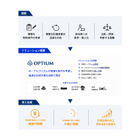
Issues • There are many constraints to consider, such as the inventory of power plants, the operational status of vessels, contract conditions for ships and coal, and port and facility conditions. • With the expansion of renewable energy, coal-fired power is becoming a "middle source" that adjusts power generation, leading to frequent revisions of shipping plans. Creating and modifying these plans has taken a lot of time. • There is a heavy reliance on the experience of personnel, making it a challenge to standardize planning quality and inherit know-how. Solutions • An AI automatically creates optimal shipping plans based on inventory and consumption, operational status, contract conditions, and port and facility conditions. • The same system is used to compare and evaluate multiple plan proposals and to confirm the impact of plan changes. Effects • By optimizing shipping and the timing and quantity of coal procurement, a reduction in fuel procurement costs on the scale of hundreds of millions of yen compared to conventional plans is expected (confirmed in pre-introduction verification). • The time required for creating and modifying plans is significantly reduced, leading to a decrease in workload and an improvement in planning quality. Future • The system will be continuously improved by reflecting insights gained from full-scale operations, aiming for further advancement and efficiency in coal shipping plan operations.
-
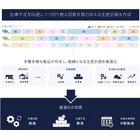
Issues • Production conditions vary by product, requiring line changes. These changes involve manual labor and time until reactivation. • Maintaining a certain level of inventory for each product to prepare for large orders and demand fluctuations has been a long-standing challenge. • Creating plans requires significant effort, knowledge, and experience, making personnel development a challenge as well. Solutions • Verbalize and formalize the experience, know-how, and operational rules of skilled workers, and transfer them to algorithms. • Automatically optimize production plans based on the characteristics of each production facility. • Design to accommodate rule changes and the addition of new products without major renovations. Effects • Create production plans in one-tenth the time of traditional methods. • Reduce the number of line changes while avoiding inventory shortages. • Allow personnel to spend time coordinating with related departments and maintaining equipment. • Enable the creation of longer-term production plans, facilitating stable operations based on annual plans. • Anticipate energy savings and reductions in CO2 emissions. Future • Expand optimization solutions that contribute to business efficiency and productivity improvement, beyond just SAP production planning.
-
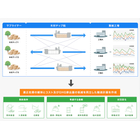
Challenges • It was necessary to reduce transportation costs and GHG emissions while maintaining the inventory required for stable factory operations. • Creating a shipping plan that meets the constraints of suppliers, ships, and factories is complex and time-consuming. • It is difficult to verify whether the plan is optimal in terms of cost and GHG emissions. • Adjusting the plan in response to changes in ship movements and factory operations has become reliant on experienced personnel. Solutions • The experience, know-how, and operational rules of Nippon Paper were transferred to an algorithm to optimize the shipping plan. • A plan was developed that balances maintaining high inventory levels with reducing costs and GHG emissions. • Improvements in operational efficiency, including slow steaming, were reflected in the plan. • Quick adjustments to the plan can be made in response to changes in circumstances. Effects (all based on verification estimates) • Operating costs (freight, demurrage, port fees, fuel costs): reduction of several hundred million yen annually. • GHG emissions (Scope 3): approximately 2.8% reduction (estimated by Nippon Paper). • Time taken by personnel to create plans: reduced to about one-third. Future • Consider optimization solutions that contribute to improving efficiency and productivity in manufacturing and logistics processes, not just limited to shipping plans.
-
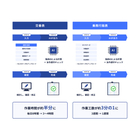
Issues • The duty roster (daily work schedule for drivers) and the driving route schedule are advanced planning tasks that take into account the timetable, number of crew members, number of vehicles, rules for each depot, and the skills of the drivers. • The increase in conditions to consider due to driver shortages and regulatory compliance has become a significant challenge, leading to a heavy workload and reliance on specific individuals. • Even experienced personnel took about 8 hours to create a duty roster for one day. Solutions • Duty roster: Automatically generates a planning proposal in about 10 minutes, considering required driver skills, ease of work, and demand, as well as regulations. • Driving route schedule: Automatically created by considering the timetable, labor conditions, vehicles, and geographical constraints. Allows for comparison of multiple scenarios. • Modifications can be made via drag-and-drop on the screen, with automatic checks for compliance with regulations, labor agreements, and depot rules. • Integrates with the work management system to automate the import of work performance data and reflect results. • Based on the format of existing paper forms, ensuring a smooth transition during implementation. Effects • Duty roster: Reduces work time from about 8 hours to 3-4 hours (halving the time). • Driving route schedule: Reduces the workload for timetable revisions from about 3 weeks to about 1 week (one-third of the effort). Future • Full-scale operation will begin in March 2025 at two depots, with plans to expand to other depots while continuing improvements.
catalog(1)
Download All Catalogs
Company information

Our company continues to provide algorithms equipped with reliability and continuity as a foundation for societal judgment. In response to the challenges of increasingly complex and uncertain social infrastructure, we approach the situation not by presenting a single solution, but by optimizing the decision-making process itself. From conception and design to implementation, operation, and improvement, we consistently support decision-making in social infrastructure, achieving sustainable optimization of infrastructure that can withstand change.