List of Mixing and Stirring Equipment products
- classification:Mixing and Stirring Equipment
1~45 item / All 401 items
Achieves high collection efficiency through electrostatic methods. Offers a wide range of products from large to small sizes. Also compatible with water-soluble oil mist.
- air conditioning
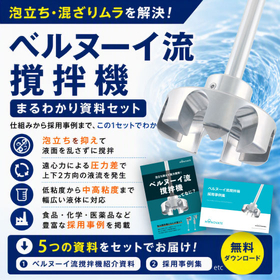
This is a collection of case studies that I hope will be read by those who are still mixing by hand, providing hints for the 'first step'.
- Mixer/Stirrer
- mixer
- Other mixing and mixing equipment
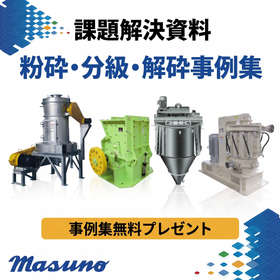
We would like to present a collection of case studies, including an example of shortening the manufacturing process from two weeks to five days, which we hope will be read by those who are still mixin...
- Mixer/Stirrer
- mixer
- Other mixing and mixing equipment
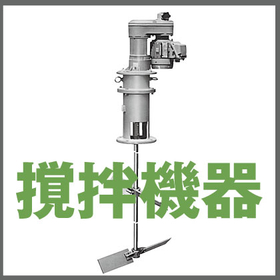
Handles a variety of tasks such as mixing, emulsifying, homogenizing dispersion, dispersing agglomerates, and dissolving thickeners.
- Mixer/agitator
- mixer
- Mixer
A single unit that is easy to operate and high-performance for research, development, and small-scale production!
- Mixer/agitator
- mixer
- Mixer
Ideal for research, development, and small-scale production! Achieves high performance with easy operation.
- Mixer/agitator
- mixer
- Mixer
A single unit that is easy to operate and high-performance for research, development, and small-scale production!
- Mixer/agitator
- mixer
- Mixer
Ideal for research, development, and small-scale production! Achieves high performance with easy operation.
- Mixer/agitator
- mixer
- Mixer
Ideal for research, development, and small-scale production! Achieves high performance with easy operation.
- Mixer/agitator
- mixer
- Mixer
Ideal for research, development, and small-scale production! Achieves high performance with easy operation.
- Mixer/agitator
- mixer
- Mixer
Ideal for research, development, and small-scale production! Achieves high performance with easy operation.
- Mixer/agitator
- mixer
- Mixer
Ideal for research, development, and small-scale production! Achieves high performance with easy operation.
- Mixer/agitator
- mixer
- Mixer
Ideal for research, development, and small-scale production! Achieves high performance with easy operation.
- Mixer/agitator
- mixer
- Mixer
Ideal for research, development, and small-scale production! Achieves high performance with easy operation.
- Mixer/agitator
- mixer
- Mixer
Ideal for research, development, and small-scale production! Easy to operate, high-performance mixer.
- Mixer/agitator
- mixer
- Mixer
A single unit that is easy to operate and high-performance for research, development, and small-scale production!
- Mixer/agitator
- mixer
- Mixer
Achieving uniform film thickness! A high-speed dispersion mixer that meets a wide range of needs.
- Mixer/agitator
- mixer
- Mixer
Optimize slurry mixing! Batch mixers that meet a wide range of needs.
- Mixer/agitator
- mixer
- Mixer
A mixer that optimizes suspension and dispersion to achieve uniform quality.
- Mixer/agitator
- mixer
- Mixer
Optimize adhesive formulations! A mixer that meets diverse needs.
- Mixer/agitator
- mixer
- Mixer
High-speed dispersion mixer contributing to the efficiency of the crushing process.
- Mixer/agitator
- mixer
- Mixer
Optimize nano-dispersion! A mixer that meets a wide range of needs.
- Mixer/agitator
- mixer
- Mixer
High-speed dispersion mixer to improve reaction efficiency.
- Mixer/agitator
- mixer
- Mixer
High-speed dispersion mixer for optimizing the dissolution process in pharmaceutical manufacturing.
- Mixer/agitator
- mixer
- Mixer
Choose according to the processing volume! A mixer ideal for food blending.
- Mixer/agitator
- mixer
- Mixer
For emulsification, mixing, and homogenization. Improving the quality and efficiency of cosmetic manufacturing.
- Mixer/agitator
- mixer
- Mixer
Optimize ink dispersion and mixing to improve quality and productivity.
- Mixer/agitator
- mixer
- Mixer
High-speed dispersion mixer that contributes to the uniformity of paint.
- Mixer/agitator
- mixer
- Mixer
A variety of models available according to processing volume! A mixer that can broadly meet extensive needs!
- Mixer/agitator
- mixer
- Mixer
Inline continuous process that stabilizes CNT dispersion without disrupting its state.
- Emulsifier/Disperser
- Vacuum degassing machine
- Dispersion/emulsification equipment/homogenizer
What are the causes of dispersion troubles? An explanation of the reasons for aggregation, sedimentation, and variation, as well as design points to reconsider in the dispersion process.
In dispersion engineering, issues such as unresolved agglomeration, sedimentation, and unstable particle size distribution occur frequently at many sites. These problems are caused not only by the performance of the equipment but also by inconsistencies in particle characteristics, dispersion conditions, and process design. For example, when there is insufficient dispersion energy, particles do not break down to primary particles, and agglomeration remains. Additionally, if the shear conditions or flow state are not appropriate, uniform dispersion cannot be achieved, leading to sedimentation and variations in quality. Particularly in high-viscosity systems or high solid content slurries, even slight differences in conditions can significantly impact the results. Furthermore, in batch processing, variations in mixing uniformity and residence time make it difficult to ensure reproducibility. To resolve these dispersion issues, it is important to optimize the entire process, including particle characteristics, dispersion energy, and flow design, rather than simply changing the equipment. By maintaining consistent conditions, as in inline continuous processing, stable dispersion quality and reproducibility can be achieved.
The negative electrode slurry's key is balancing viscosity and dispersion. Process design that can be reproduced up to mass production.
- Emulsifier/Disperser
- Vacuum degassing machine
- Dispersion/emulsification equipment/homogenizer
The quality of the positive electrode slurry is determined by the process, not the equipment. A dispersed design that takes mass production into account.
- Emulsifier/Disperser
- Vacuum degassing machine
- Dispersion/emulsification equipment/homogenizer
The quality of the battery slurry is determined by the process. A dispersion design that can be reproduced from research to mass production.
- Emulsifier/Disperser
- Vacuum degassing machine
- Dispersion/emulsification equipment/homogenizer
CNT dispersion is determined by the process. Control of aggregation stabilizes conductivity.
- Emulsifier/Disperser
- Vacuum degassing machine
- Dispersion/emulsification equipment/homogenizer
What are the reasons for the inability to disperse high-viscosity slurries? The mechanisms behind poor dispersion and design points for solutions.
In the dispersion process of high-viscosity slurries, issues such as "not being dispersed despite being mixed" and "remaining clumps" occur. The main cause of these problems is that the increase in viscosity reduces fluidity, preventing dispersion energy from being evenly transmitted throughout the system. Generally, dispersion breaks apart agglomerated particles through shear force, but in a high-viscosity state, the flow becomes localized, leading to differences between areas experiencing shear and those that do not. As a result, undispersed areas and agglomerates remain, causing variations in particle size distribution and quality issues. Furthermore, the higher the viscosity, the weaker the circulation within the equipment, making it difficult for particles to pass uniformly through the processing area, which also decreases reproducibility. In batch processing, variations in residence time and mixing state become particularly pronounced, making it easier for lot differences to occur. To achieve stable dispersion in high-viscosity systems, not only shear enhancement but also flow design and ensuring circulation are important. By simultaneously controlling flow and shear, as in inline continuous processing, uniform and highly reproducible dispersion can be achieved. Additionally, the wettability of the powder and the method of introduction during the initial dispersion are also crucial; if the initial dispersion is insufficient, the subsequent breaking efficiency decreases.
Resolve issues of not dissolving and clumping in advance. Test the dispersibility of the protein.
- Emulsifier/Disperser
- Vacuum degassing machine
- Dispersion/emulsification equipment/homogenizer
What causes clumping when adding powder? Design points for preventing and addressing poor dispersion.
In dispersion processes, the occurrence of agglomerates (clumps) during powder addition, which cannot be resolved in subsequent dispersion stages, is a common issue in many settings. The cause of this is that the powder does not wet uniformly in the liquid, leading to the formation of localized high-concentration areas. These agglomerates are also referred to as "fisheyes," and due to their internal unwetted structure, they are difficult to break apart. Once an agglomerate forms during powder addition, liquid has difficulty penetrating its interior, resulting in only the outer layer being wetted, which makes it hard for the internal particles to be disintegrated. Additionally, depending on the addition position and speed, the powder may float on the liquid surface or remain stagnant without following the flow within the equipment, promoting the formation of agglomerates. Particularly under conditions of high viscosity or high solid content, the low fluidity makes it challenging to achieve uniformity in the initial dispersion stage, leading to a higher likelihood of agglomerates remaining. Such agglomerates may not be completely resolved even with strong shear in subsequent processes, causing variations in the quality of the final product and introducing foreign substances. To prevent the formation of agglomerates, it is crucial to improve wettability during powder addition, ensure appropriate addition positions and flow design, and optimize the initial dispersion. By performing shear and mixing simultaneously right after addition, as in inline powder addition and simultaneous dispersion, it is possible to suppress the formation of agglomerates and achieve stable dispersion quality.
The strength is determined by the variance. Visualize quality variations through testing before mass production.
- Emulsifier/Disperser
- Vacuum degassing machine
- Dispersion/emulsification equipment/homogenizer
Quality changes with dispersion. Pre-validation of the reproducibility of resin materials through testing.
- Emulsifier/Disperser
- Vacuum degassing machine
- Dispersion/emulsification equipment/homogenizer
Verify before failing in mass production. Confirm the reproducibility of slurry dispersion in advance.
- Emulsifier/Disperser
- Vacuum degassing machine
- Dispersion/emulsification equipment/homogenizer
What are the reasons for the inability to disperse high-viscosity slurries? The mechanisms behind poor dispersion and design points for solutions.
In the dispersion process of high-viscosity slurries, issues such as "not being dispersed despite being mixed" and "remaining clumps" occur. The main cause of these problems is that the increase in viscosity reduces fluidity, preventing dispersion energy from being evenly transmitted throughout the system. Generally, dispersion breaks apart agglomerated particles through shear force, but in a high-viscosity state, the flow becomes localized, leading to differences between areas experiencing shear and those that do not. As a result, undispersed areas and agglomerates remain, causing variations in particle size distribution and quality issues. Furthermore, the higher the viscosity, the weaker the circulation within the equipment, making it difficult for particles to pass uniformly through the processing area, which also decreases reproducibility. In batch processing, variations in residence time and mixing state become particularly pronounced, making it easier for lot differences to occur. To achieve stable dispersion in high-viscosity systems, not only shear enhancement but also flow design and ensuring circulation are important. By simultaneously controlling flow and shear, as in inline continuous processing, uniform and highly reproducible dispersion can be achieved. Additionally, the wettability of the powder and the method of introduction during the initial dispersion are also crucial; if the initial dispersion is insufficient, the subsequent breaking efficiency decreases.
Achieving uniform mixing of fuel additives at a pilot scale.
- Mixer/agitator
- mixer
- Mixer
The power and reproducibility of inline mixing for ceramic raw material blending.
- Mixer/agitator
- mixer
- Mixer
Optimize the aggregation process! Achieve reproducibility at the pilot scale.
- Mixer/agitator
- mixer
- Mixer
Inline mixer for improving the quality and efficiency of pesticide formulation.
- Mixer/agitator
- mixer
- Mixer
Nano dispersion, from research and development to small-scale production. Reproducibility and reliability with VERSO-UHS.
- Mixer/agitator
- mixer
- Mixer
Achieve uniformity and reproducibility of battery slurry with VERSO-UHS!
- Mixer/agitator
- mixer
- Mixer
Reproducibility and reliability of inline mixing for pigment dispersion at pilot scale.
- Mixer/agitator
- mixer
- Mixer
VERSO-UHS supports ink uniformity and quality improvement!
- Mixer/agitator
- mixer
- Mixer