
List of Physics and chemistry equipment products
- classification:Physics and chemistry equipment
721~765 item / All 15772 items


It won't break even after 1 million repetitions! A mat switch with reliable operation, high durability, and low price. Suitable for options in machine tools as well. Please consult us about delivery t...
- Sensors


We can accommodate high resistance over 10,000 ohms, with diameters ranging from approximately 30 mm to 8 inches, and we also offer thinning and chip processing arrangements!
- Other semiconductors
- Processing Contract
- Wafer
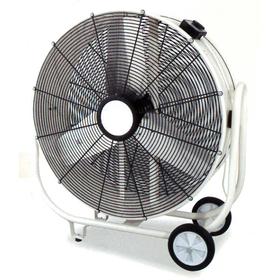

Large fan and circulator, convenient with casters for easy movement.
- Stainless steel container
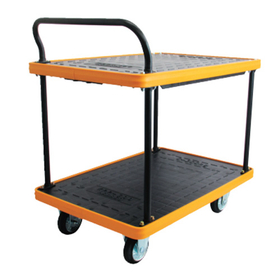
Two-section short sleeve handle type
- Stainless steel container
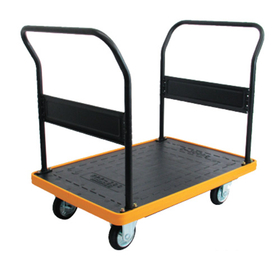
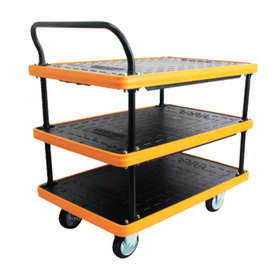
3-section short sleeve handle type
- Stainless steel container
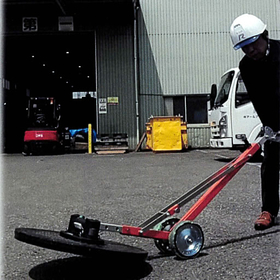
Maximum vertical holding force: approximately 170kg
- Stainless steel container
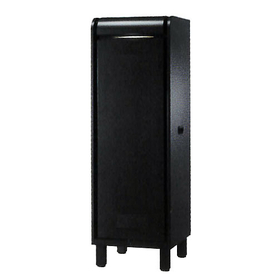
An air purifier for restaurants developed seriously by a manufacturer specializing in ventilation.
- Stainless steel container
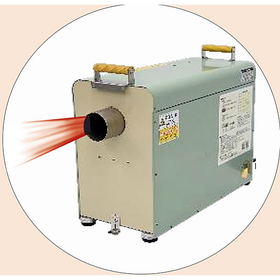
Just connect the power cable, and it can operate continuously for 365 days.
- Stainless steel container
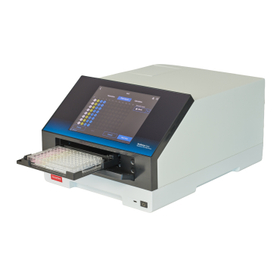

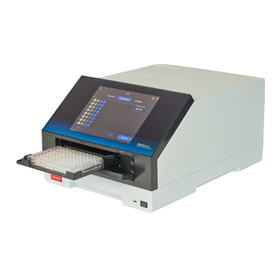
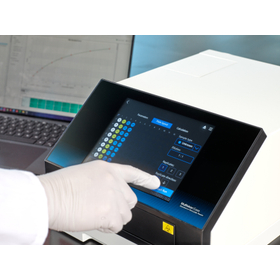
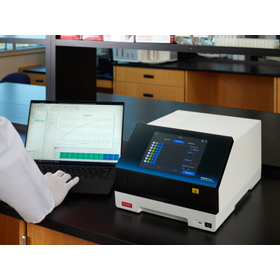
Intuitively operable! Introducing the filter-type microplate reader.
- Other physicochemical equipment


Advanced USP Apparatus 4 Dissolution Testing for Complex Drug Products


- Other physicochemical equipment
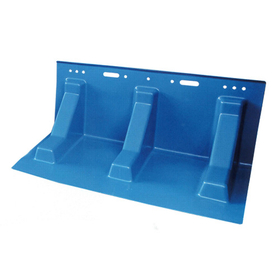
- MC11RS-1300B 1 sheet = equivalent to about 15 soil bags for easy installation and removal. - No rubber parts, so it's safe to use even after long-term storage.
- Stainless steel container
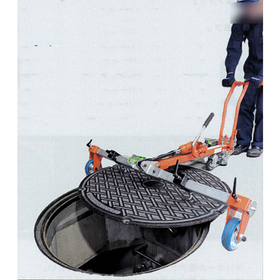
Prevention of occupational accidents
- Stainless steel container
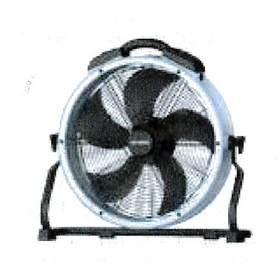
This is a next-generation portable floor fan equipped with a cutting-edge 20W DC brushless motor.
- Stainless steel container
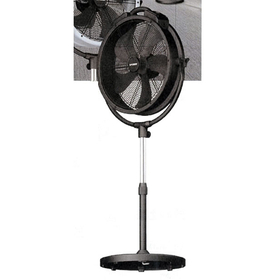
To offices, fitness gyms, workspaces, and vast commercial spaces.
- Stainless steel container
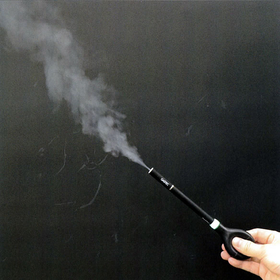
Easily confirm the flow of gas with non-irritating and non-corrosive white smoke.
- Pure water production equipment
![[Case Study] Super Dryer](https://image.mono.ipros.com/public/product/image/e2b/2000573315/IPROS22503625339963309526.png?w=280&h=280)

Rapid drying with strong wind pressure at low temperatures! It has also been confirmed that it reduces drying stains as a secondary effect.


- Drying Equipment
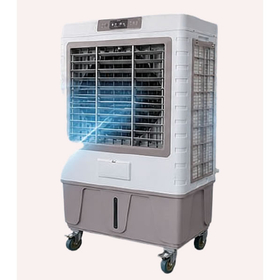
Comfortably cool a large space where the air conditioning isn't effective with powerful airflow. No heat discharge, energy-saving, and easy installation.
- Stainless steel container


A blade-less type mixer called "Maze Maze Man" that tilts and rotates a sealed container. We will deliver a mixer tailored to your specified container (up to approximately 20L) in about 3 weeks!
- Mixer/agitator
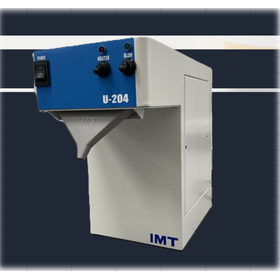

Astonishing Wind Pressure Monster
- Drying Equipment
- Other drying equipment

High-performance embedding machine that achieves time reduction and error-free resin embedding.
- Other physicochemical equipment

The first filter catches large debris! Choose from three types of coolant circulation filtration systems.
- Other physicochemical equipment

Integrated upper cover and ram! A low-cost model of a handy hydraulic jack with fewer breakdowns.

- Other physicochemical equipment

Remove moisture from the sample! A dryer that prevents oxidation and maintains the finished observation surface.
- Other physicochemical equipment

Sensor switch installation possible! High power, large airflow nozzle-type dryer.
- Other physicochemical equipment

Water-soluble lubricant to be used in conjunction with diamond slurry.
![IPROS7331144108804926533_220x220[1].jpg](https://image.mono.ipros.com/public/product/image_sub/6cf/1096492/IPROS51800572432302396916.jpeg?w=280&h=280)
- Other physicochemical equipment

High torque! Low price! Cute logo! A dual machine with triple grinding capabilities!
- Other physicochemical equipment

Adopts an individual loading method! It is a sample polishing machine that allows grinding without losing parallelism.
- Other physicochemical equipment

Equipped with a safe W start button function! A powerful tabletop grinder with an overall load system.
- Other physicochemical equipment

A dual-wielding machine in the sample grinding world! An automatic grinder that can create auto-change recipes.

- Other physicochemical equipment

The 5-book type is equipped with an auto-change function! A device that can automatically drop and collect abrasives.
- Other physicochemical equipment

Adopting PLC control with high design flexibility! A polishing machine that achieves high throughput.
- Other physicochemical equipment

The grinding machine features an automatic dressing function for the grinding wheel, with a rotation speed of 800 to 1700 rpm!
- Other physicochemical equipment

Please use this to stand the sample up.


- Other physicochemical equipment
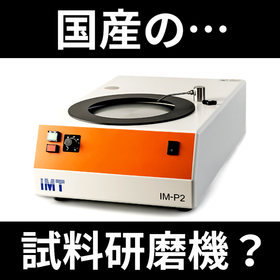
Powerful torque and reliable Japanese-made hand grinder. Automation is also possible with three types of attachable attachments!


- Other physicochemical equipment

Adopts individual loading method! This is a sample rotating machine for installing the grinding machine IM-P2.
- Other physicochemical equipment

Equipped with arm swing function! Roller-type sample rotation device for mounting the polishing machine IM-P2.
- Other physicochemical equipment

A sample polishing machine that allows setting grinding values for each of the three samples! Automatic polishing is also possible in time mode.
- Other physicochemical equipment

Embedding of transparent acrylic resin is also possible! This is an embedding machine equipped with a standard water-cooled cooling mechanism.
- Other physicochemical equipment

Two-stage variable grinding conditions are possible! The grinding head can be adjusted left and right by ±50mm!


- Other physicochemical equipment

Behold the fusion of 'Cyber' and 'T-Rex' - achieving high throughput through simultaneous polishing at each stage.
- Other physicochemical equipment


Experience the forefront of decarbonization technology, including hydrogen combustion gas burners. Test information is updated daily!


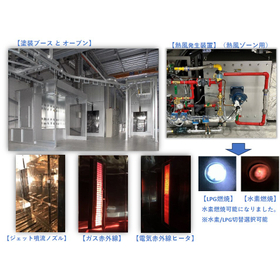


- Heating device
- Industrial Furnace
- Drying Equipment
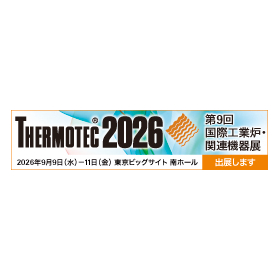
Exhibition Information: Thermotech 2026 9th International Industrial Furnace and Related Equipment Exhibition
We are pleased to announce that Shoei Manufacturing, a manufacturer of gas burners and industrial furnaces, will be exhibiting at "ThermoTech 2026" held at Tokyo Big Sight. This exhibition is themed "Environment, Heat, Future - Let's Think Together About High-Efficiency Heat Technology and a Sustainable Future," and it aims to broadly showcase next-generation heat technologies in response to carbon neutrality, efficiency improvements, labor-saving measures, and advancements in generative AI and digital transformation. At our booth, we will introduce a wide range of product technologies, including "gas burners compatible with decarbonized fuels," "decarbonized industrial furnaces," "energy-saving systems," and "automation and labor-saving solutions." We invite you to visit our booth. Booth: South Hall 1 G016

Introducing the forefront of development! Hydrogen combustion without carbon dioxide emissions! SHOEI is advancing the hydrogen compatibility of its proven in-house burners.


- Heating device
- Drying Equipment
- Industrial Furnace
Exhibition Information: Thermotech 2026 9th International Industrial Furnace and Related Equipment Exhibition
We are pleased to announce that Shoei Manufacturing, a manufacturer of gas burners and industrial furnaces, will be exhibiting at "ThermoTech 2026" held at Tokyo Big Sight. This exhibition is themed "Environment, Heat, Future - Let's Think Together About High-Efficiency Heat Technology and a Sustainable Future," and it aims to broadly showcase next-generation heat technologies in response to carbon neutrality, efficiency improvements, labor-saving measures, and advancements in generative AI and digital transformation. At our booth, we will introduce a wide range of product technologies, including "gas burners compatible with decarbonized fuels," "decarbonized industrial furnaces," "energy-saving systems," and "automation and labor-saving solutions." We invite you to visit our booth. Booth: South Hall 1 G016

A gun-type burner that can achieve complete combustion with either natural gas or propane gas! The integrated blower and combustion piping equipment make inspection and cleaning easy.


- Heating device
- Industrial Furnace
- Drying Equipment

In the face of uncertainty regarding future energy supply, we are advancing efforts towards high-efficiency "electrification" and "hybridization" based on gas combustion furnaces.


- Heating device
- Drying Equipment
- Industrial Furnace
Exhibition Information: Thermotech 2026 9th International Industrial Furnace and Related Equipment Exhibition
We are pleased to announce that Shoei Manufacturing, a manufacturer of gas burners and industrial furnaces, will be exhibiting at "ThermoTech 2026" held at Tokyo Big Sight. This exhibition is themed "Environment, Heat, Future - Let's Think Together About High-Efficiency Heat Technology and a Sustainable Future," and it aims to broadly showcase next-generation heat technologies in response to carbon neutrality, efficiency improvements, labor-saving measures, and advancements in generative AI and digital transformation. At our booth, we will introduce a wide range of product technologies, including "gas burners compatible with decarbonized fuels," "decarbonized industrial furnaces," "energy-saving systems," and "automation and labor-saving solutions." We invite you to visit our booth. Booth: South Hall 1 G016

At Seiei Manufacturing, we are proposing low-carbon painting drying ovens to respond to a decarbonized society.


- Painting Machine
- Drying Equipment
- Heating device
Exhibition Information: Thermotech 2026 9th International Industrial Furnace and Related Equipment Exhibition
We are pleased to announce that Shoei Manufacturing, a manufacturer of gas burners and industrial furnaces, will be exhibiting at "ThermoTech 2026" held at Tokyo Big Sight. This exhibition is themed "Environment, Heat, Future - Let's Think Together About High-Efficiency Heat Technology and a Sustainable Future," and it aims to broadly showcase next-generation heat technologies in response to carbon neutrality, efficiency improvements, labor-saving measures, and advancements in generative AI and digital transformation. At our booth, we will introduce a wide range of product technologies, including "gas burners compatible with decarbonized fuels," "decarbonized industrial furnaces," "energy-saving systems," and "automation and labor-saving solutions." We invite you to visit our booth. Booth: South Hall 1 G016

The hydrogen-only specification of the SDC duct burner, which is a heat air generation device for paint drying ovens, has made its debut.

- Drying Equipment
- Industrial Furnace
- Heating device
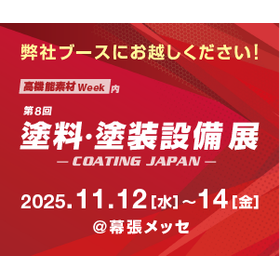
【Exhibition Information】Coating Japan - High-Performance Materials Week - Paint and Coating Equipment Exhibition
We are pleased to announce that Shoei Seisakusho, a manufacturer of gas burners and industrial furnaces, will be exhibiting at the "Coating and Painting Equipment Exhibition" held at Makuhari Messe. We will showcase a lineup of heat-generating devices for painting drying equipment, as well as deodorization devices (VOC removal devices) in a panel display. We will also introduce examples of energy-saving equipment and decarbonization items using hydrogen gas burners. ---------------------- The Coating and Painting Equipment Exhibition - COATING JAPAN - is a specialized exhibition where functional coatings, painting equipment, and surface treatment technologies are all presented together. ----------------------