
List of Physics and chemistry equipment products
- classification:Physics and chemistry equipment
3511~3555 item / All 15847 items


Reduce the workload from handling heavy objects! Here are five case studies that solved customer challenges! We are also accepting free consultations and tests tailored to your work!

- Other conveying machines


Amino acid-derived natural cationic polymer that can be used in food preservatives, hygiene materials, and daily necessities. It is a safe material as it is a fermentation product produced by natural ...


- Shelf life enhancer

Introduction of the preservative polylysine / fermented polyamino acids that contribute to food poisoning prevention.
We provide easy-to-understand materials explaining the natural preservative polylysine, which prevents food poisoning. ε-Polylysine (hereafter referred to as polylysine) is an amino acid-derived preservative widely used as a food preservative. By adding polylysine, the growth of microorganisms that cause food poisoning can be prevented. Every year, food poisoning caused by microorganisms is a significant issue and is frequently reported in the news. Even foods that do not appear to be spoiled can rapidly proliferate microorganisms if the growth environment is suitable, so caution is necessary. Even if something looks clean, contamination by bacteria can progress, posing a risk of food poisoning. By ensuring hygiene management during the manufacturing process, proper storage at appropriate temperatures, and the appropriate use of the preservative polylysine, food safety can be more effectively protected. 【Features】 ■ A safe material produced through fermentation by natural microorganisms (not genetically modified organisms) ■ Provides a good image as a natural fermented product ■ Listed in the existing additive registry as a food preservative ■ A safe domestic product *Please feel free to contact us.


By igniting a mixture of methane gas and compressed air, pressure waves are generated, effectively removing deposits and ash within the boiler.


- Other physicochemical equipment

Tabletop Mini Endless Sealer (Seal Width 20mm)
- Stainless steel container

Streamlining packaging operations in diverse settings. Achieving reliable and speedy automatic wrapping.
- Stainless steel container

The M3283PTC-LP30-8506H series detects particles ranging from 0.5 micrometers to over 30.0 micrometers.
- Stainless steel container

- Easy to introduce at a low price - Temperature and humidity can be checked using a smartphone app via Bluetooth
- Stainless steel container


Demonstrates excellent analytical skills. LC improves lab productivity, efficiency, and throughput simultaneously.
- Analytical Equipment and Devices
- Separation device
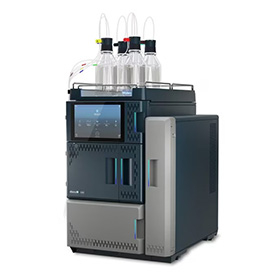
"One Rank Higher LC Application Seminar" to Help Improve Analysis Accuracy - A Total of 6 Sessions Held [Live Webinar]
[Viewer Benefits Available] Explaining Tips for LC in a Short Seminar Do you have concerns such as "I'm unsure about column selection," "I'm struggling to optimize analysis conditions," or "I have challenges analyzing compounds with weak retention" in LC analysis? Waters will hold a seminar titled "Must-Listen! Advanced LC Application Seminar" where you can learn practical LC analysis know-how in just 30 minutes. In this seminar, we will cover useful topics in a total of six sessions, including tips for choosing detectors, how to utilize reverse phase columns, scaling up to preparative LC, approaches for analyzing hydrophilic and highly polar compounds, case studies of low-adsorption HPLC, and improving purity through solid-phase extraction. Each session is scheduled to start at 15:00. Event Themes: • October 6 (Tuesday) - Session 1: Tips for Choosing Detectors • October 13 (Tuesday) - Session 2: Tips for Choosing Columns • October 21 (Wednesday) - Session 3: Tips for Preparative LC • October 27 (Tuesday) - Session 4: Approaches for Analyzing Hydrophilic and Highly Polar Compounds • November 5 (Tuesday) - Session 5: Case Studies of Low-Adsorption HPLC • November 10 (Tuesday) - Session 6: Tips for Solid-Phase Extraction