
List of Cleaning agents products
- classification:Cleaning agents
346~360 item / All 2302 items


It won't break even after 1 million repetitions! A mat switch with reliable operation, high durability, and low price. Suitable for options in machine tools as well. Please consult us about delivery t...
- Sensors


We can accommodate high resistance over 10,000 ohms, with diameters ranging from approximately 30 mm to 8 inches, and we also offer thinning and chip processing arrangements!
- Other semiconductors
- Processing Contract
- Wafer
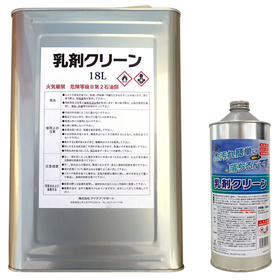

Powerful detergent that easily removes stubborn emulsion stains.
- detergent
- Cleaning agents
- Hand cleaner


Powerful decomposition of oil stains! Reducing environmental impact and achieving safe cleaning.
- Cleaning agents

Powerfully breaks down oil stains on agricultural machinery! Reduces cleaning time and improves work efficiency!
- Cleaning agents

Powerful decomposition of oil stains on fishing gear! Shortens cleaning time and improves work efficiency!
- Cleaning agents

Powerful decomposition of grease stains! Improving the efficiency and safety of cleaning operations!
- Cleaning agents

Powerful decomposition of grease stains on medical devices! Achieving safe and environmentally friendly cleaning.
- Cleaning agents

Powerful decomposition of oil stains! Reducing environmental impact and streamlining cleaning operations!
- Cleaning agents

Powerful decomposition of cutting oil stains! Improving the efficiency and safety of cleaning operations!
- Cleaning agents

Powerful decomposition of oil stains! Improving the efficiency and safety of cleaning operations!
- Cleaning agents
![[For the Construction Industry] Osm...](https://image.mono.ipros.com/public/product/image/2d5/2001520863/IPROS82187629507916182228.png?w=280&h=280)
Powerful decomposition of oil stains! Improving the efficiency and safety of cleaning operations!
- Cleaning agents

Powerful decomposition of oil stains! Improving efficiency and safety in aircraft maintenance!
- Cleaning agents

Powerful decomposition of oil stains! Improving the efficiency and safety of cleaning operations!
- Cleaning agents

For cleaning equipment in beauty salons and esthetic salons! Easily and safely cleans sebum and dirt. It is also effective for restoring shine, helping to maintain a clean treatment environment.
- Cleaning agents

Introducing biodegradable cleaning agents for kitchen cooking equipment, floor cleaning, deodorization, and more!
- Cleaning agents

Compatible with ultrasonic cleaners! Can be used for rebuilt cleaning of fine mechanical parts and more.


- Cleaning agents