
List of Other processing machines products
- classification:Other processing machines
811~825 item / All 10098 items


Reduce the workload from handling heavy objects! Here are five case studies that solved customer challenges! We are also accepting free consultations and tests tailored to your work!

- Other conveying machines


Strong cold wind from room temperature to -13°C! Depending on the usage environment, you can choose between the combo type or the separate type!
- Cooling system

April 10, 2024 (Wednesday) to April 12, 2024 (Friday) Notice of Participation in Nagoya Manufacturing World 2024
Sanwa Shiki Ventilator Co., Ltd. will be exhibiting at the 2024 Monozukuri World (Nagoya) held at Port Messe Nagoya. We will also be showcasing our large cooling fans and cool/warm ambient products. Date: April 10, 2024 - April 12, 2024 Opening: 10:00 AM Location: Nagoya Port Messe (Exhibition Hall 1) *Our booth: 19-1 We would be grateful if you could visit us if you have the time.
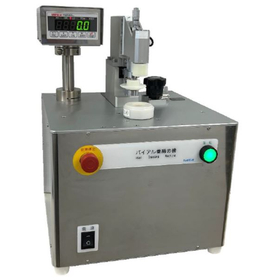

Streamline reagent preparation with a one-push operation!
- Other processing machines


The definitive solution for heatstroke prevention in factories! Q&A about the non-wet mist "Cool Mist Line."


- Other processing machines


The LNS method eliminates thermal distortion and secondary cutting, making machining unnecessary, which allows for reduced construction time and cost savings.
- Other machine elements
- Other processing machines
- Gearbox

The new non-fire crack repair technology "LOCK-N-STITCH" method is LNS JAPAN.
Repairs in locations where fire cannot be used and repairs that cannot afford downtime have been impossible to solve with conventional techniques, but our special screws can address these issues. Additionally, welding has a high risk of thermal distortion and secondary fractures, whereas the LNS method provides a permanent repair. What is the LNS method? Metal Stitching technology is a technique that repairs broken or cracked castings and metal products without welding, using specially designed screws and locks to "stitch" them together. The specially designed screws generate a pulling force that counteracts the tendency of the base material to spread, as opposed to the dispersive force exhibited by standard screws. This method includes the installation of locks with high tensile strength, making it more resistant to tensile forces than the original base material. It also allows for perfect maintenance of airtightness (screw overlap work). Furthermore, LNS JAPAN uses specially designed Full-Torque inserts for permanent repairs in cases of stripped screw holes, cracks, or bolt hole issues.

■□■Complete Repair of Screw Holes■□■ Are you having trouble with a stripped female screw hole? If so, the Full Torque insert will solve your problem.
- Other processing machines
- Calibration and repair

This is a technology that uses specially designed screws and reinforcement materials (LOCK) at the metal crack site to physically remove the crack with a metal touch and bond the metal together.
- Other machine elements
- Other processing machines
- Calibration and repair
![Metal Crack Repair [LNS Method] Che...](https://image.mono.ipros.com/public/product/image/277/2000127688/IPROS124494955656932097.jpg?w=280&h=280)
■□■A completely new metal crack repair that is not welding■□■ Please contact LNSJAPAN.
- Calibration and repair
- Other processing machines


High-precision torsion control using a servo motor! Excellent stability, no hairpin damage.
- Other processing machines
- Winding Machine
- Other motors


It is a device that stably supplies polymer flocculants and performs continuous dissolution through autonomous operation.
- Other processing machines