
List of crane products
- classification:crane
106~120 item / All 537 items


It won't break even after 1 million repetitions! A mat switch with reliable operation, high durability, and low price. Suitable for options in machine tools as well. Please consult us about delivery t...
- Sensors


We can accommodate high resistance over 10,000 ohms, with diameters ranging from approximately 30 mm to 8 inches, and we also offer thinning and chip processing arrangements!
- Other semiconductors
- Processing Contract
- Wafer


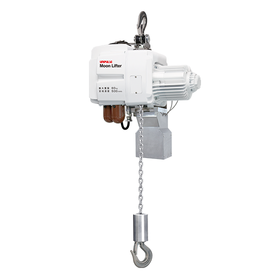
The explosion-proof type of the electric balancer, which has surpassed cumulative sales of 6,000 units, is now newly available!
- Balancer
- crane
- Transport and handling robots

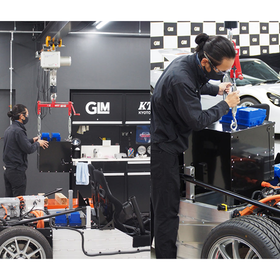
A device that allows you to handle heavy objects as you wish.




- Balancer
- crane
- Transport and handling robots


Specialized in the suction transport of paper bags! Compatible with most paper bags.


- crane

Specialized for transporting steel frames and plates! Two powerful magnets ensure stable transportation operations!


- crane

Air suction and plate hook! This one unit can transport various types of cans.


- crane

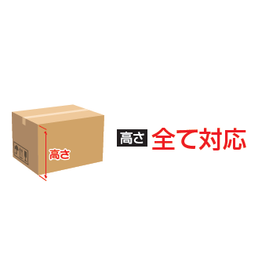
Adjustable in 20mm increments to fit the width of the box! No power is required for the attachment.

- crane

One-handed operation possible! Can be applied when handling relatively heavy workpieces!

- crane

Specialized for transporting cardboard boxes with clamps! Easily move heavy and difficult-to-carry cardboard boxes!


- crane

Specialized for transporting cardboard boxes with suction! It can carry boxes with open lids, making it less labor-intensive!




- crane

Specialized for transporting roll work! With grip from the inner diameter, there is no worry about workpiece deformation.


- crane

Various panel shapes can be handled for adsorption and transportation! We also accommodate changes to your desired pad arrangement and pad size.


- crane


Stronger ports around the world. ITALGRU's multipurpose cranes.
- crane
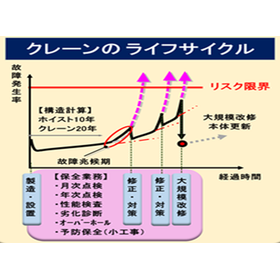

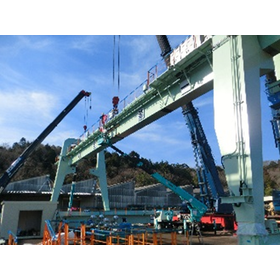
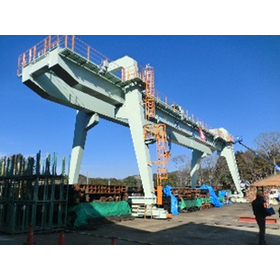
Comprehensive support for crane systems throughout their lifecycle.
- crane
- Processing Contract


Strong and durable + self-supporting one-touch discharge! Compact storage allows for constant loading onto vehicles!

- container
- Rubber
- crane

As a support role during disaster recovery! Transportation with cranes, forklifts, etc. is easily possible.

- container
- Rubber
- crane