
List of Sensors products
- classification:Sensors
496~510 item / All 1321 items


It won't break even after 1 million repetitions! A mat switch with reliable operation, high durability, and low price. Suitable for options in machine tools as well. Please consult us about delivery t...
- Sensors


We can accommodate high resistance over 10,000 ohms, with diameters ranging from approximately 30 mm to 8 inches, and we also offer thinning and chip processing arrangements!
- Other semiconductors
- Processing Contract
- Wafer


2-point setting shape also in the lineup! Preventing the occurrence of defective products in CNC machine processing in advance.
- Sensors
- Safety Sensors
- Sensors
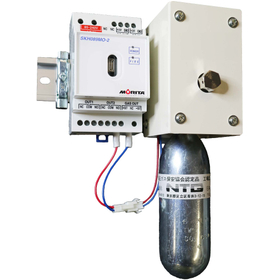

This single unit addresses electrical fires in distribution boards and control panels with "early detection" and even "automatic extinguishing"!
- Sensors
- Safety Sensors
- Board materials

Extremely high detection performance! Our proprietary solar separation technology enables outdoor use.
- Safety Sensors
- Sensors

By instantly detecting the barely visible "spark," we can prevent fires before they occur.
- Safety Sensors
- Sensors
- Board materials

Prevent engine fires caused by dust at waste disposal sites! Introducing our heavy machinery flame sensor.
- Safety Sensors
- Sensors

Directly installed in the conveyor! Can be used for fire prevention measures in waste disposal facilities.
- Sensors
- Safety Sensors
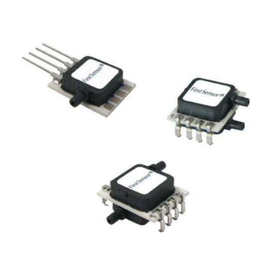

Achieves very high offset stability and zero point correction! Complies with both RoHS and REACH regulations.
- Sensors
- Sensors
![[Instruction Manual] Float Type Lev...](https://image.mono.ipros.com/public/product/image/e82/2000491095/IPROS99820014124933929658.png?w=280&h=280)

Introduction of safety precautions, hazards, and standard specifications for the "KS/KF/KV/KP series."
- Sensors
- Sensors


For managing laminar flow and air intake/exhaust, and detecting the direction of air flow. Suitable for explosion-proof areas and high-temperature environments.
- Sensors


It's palm-sized and ready to use immediately! It's also suitable for monitoring daily health conditions in caregiving and nursing applications. *Awarded the Excellence Award in the "Outstanding New Te...


- Sensors

We will be exhibiting at the IoT & 5G Solutions Exhibition from October 26 (Wednesday) to October 28 (Friday).
We will be exhibiting at the IoT & 5G Solutions Exhibition held at Makuhari Messe from October 26 (Wednesday) to 28 (Friday). *We will be showcasing at the booth of Daitron Co., Ltd. 【Exhibited Products】 ■ Non-contact Heartbeat and Breathing Sensor 'miRadar 8 Handy' Compact and ready to use! Suitable for nursing and caregiving applications that require daily health monitoring. ■ 24GHz MIMO 'Radar IoT Sensor' Detects distance, direction, heart rate, and breathing rate, displaying the information on a smartphone. Easy to install with radar and PC integrated. [Mass production has started.] ■ Bio-measurement Millimeter Wave Sensor 'miRadar(tm)8《VSM》' Evaluation Kit Monitors the heart rate and breathing of multiple subjects over an extended period without contact. *The evaluation kit will display videos of visitors on a large screen along with corresponding heart and breathing rates! We look forward to your visit.


Active in various fields such as machinery, pharmaceuticals, food, semiconductors, air conditioning, industry, and processing plants! It has no moving parts and monitors with constant stable operation...
- Flow Meter
- Flow Sensor
- Sensors

The "Product Selection Guide 2017" for flow meters and flow switches has been completed.
Hi-Tech introduces excellent "flow meters" and "flow switches" that are active around the world. We carefully select high-performance and high-quality products, and our after-sales support is thorough. We have numerous delivery records in various fields in Japan, and our products are widely used across a broad range of applications. Main content featured: ■ Ultrasonic flow meters ■ Hydraulic and oil flow meters ■ Vibrating density meters ■ Impeller flow meters ■ Thermal mass flow sensors / flow switches ■ Electromagnetic flow meters


Automatic detection of sediment. By installing automatic valves above and below the drain cup, it becomes possible to automate the process from filtration to sediment discharge.

- switch
- Sensors
- Liquid level control/level switch

Free from visual management! The first step towards IoT-enabled cyclone filters.

- switch
- Sensors
- Liquid level control/level switch