
List of Sensors products
- classification:Sensors
631~645 item / All 1283 items


Reduce the workload from handling heavy objects! Here are five case studies that solved customer challenges! We are also accepting free consultations and tests tailored to your work!

- Other conveying machines


Strong cold wind from room temperature to -13°C! Depending on the usage environment, you can choose between the combo type or the separate type!
- Cooling system

April 10, 2024 (Wednesday) to April 12, 2024 (Friday) Notice of Participation in Nagoya Manufacturing World 2024
Sanwa Shiki Ventilator Co., Ltd. will be exhibiting at the 2024 Monozukuri World (Nagoya) held at Port Messe Nagoya. We will also be showcasing our large cooling fans and cool/warm ambient products. Date: April 10, 2024 - April 12, 2024 Opening: 10:00 AM Location: Nagoya Port Messe (Exhibition Hall 1) *Our booth: 19-1 We would be grateful if you could visit us if you have the time.


We offer mirrors that combine reflective performance and cost-effectiveness. By depositing dielectric multilayers on the surface, we achieve excellent durability.
- mirror
- Plastic processing machines (cutting and rolling)
- Sensors
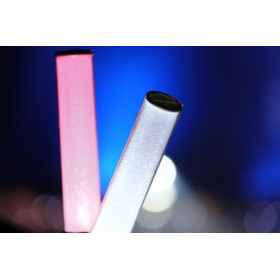
Co-creation proposal! Added 'Fan activities × Optical Thin Films' as a technical trend keyword.
Merchandise for fans has evolved primarily through the combination of "design" and "materials." The beauty of illustrations, printing techniques, and the choice of materials such as acrylic, metal, and fabric have significantly enhanced the appeal of these products. However, the impression we get when we see merchandise is not solely influenced by design and materials. The feelings we experience, such as "beautiful," "eye-catching," or "photogenic," are greatly affected by how light reflects, transmits, and disperses. For example, have you ever had the experience of seeing the room's lighting reflected when displaying an acrylic stand? Or when taking a photo with your smartphone, noticing a flare (a whitish blur) on your favorite character's face, or seeing colors that look different from their true hues? This is not necessarily due to poor design or printing, but rather because the behavior of light has not been adequately controlled. ◆ Merchandise for fans is moving to the next phase of evolution ◆ Merchandise for fans can be transformed significantly with "light" ◆ Proposal: Merchandise for fans that "selects only the favorite" using bandpass filters ◆ Co-creation proposal: Shall we shape the next standard with Adachi New Industry?

A bandpass filter that achieves sharp rise and high transmittance in the visible light range (660nm). It is ideal for red laser diodes and LED applications.
- Sensors
- Distance measuring device
- Image Processing Equipment

Co-creation proposal! Added 'Quantum Computer × Optical Thin Films' as a technology trend keyword.
The competition for the practical application of quantum computers is accelerating on a global scale. However, one of the barriers faced by researchers and engineers working on development at the forefront is the reality that "components cannot be procured." High-precision optical elements and optical thin films are essential to the foundation of quantum systems, yet suppliers capable of meeting the specific requirements of quantum optics are limited worldwide. Of course, at this point, Adachi New Industries cannot produce all products through film deposition and manufacturing, but we present this co-creation proposal to developers to overcome that barrier together. 01: Quantum Computers and Optical Thin Films 02: Optical Thin Film Products Required for Quantum Systems—Specific Product Groups and Required Specifications 03: Reasons Why Quantum Optical Coatings Are Difficult—Structure of Technical Challenges 04: Co-creation with Master Coatings—Development Process Starting from Small-Scale Prototyping Summary Adachi New Industries' "Master Coatings" will accompany you as a partner to overcome these barriers together, from the initial concept stage of development to the mass production phase. Starting with small-scale prototyping, we will cycle through prototyping and evaluation together, "co-creating" the optical thin films required for quantum devices—this is our co-creation proposal.

We propose a half mirror with abundant achievements. It is a functional half mirror that can arbitrarily split light into reflected and transmitted rays.
- Other optical parts
- Distance measuring device
- Sensors
Co-creation proposal! Added 'Quantum Computer × Optical Thin Films' as a technology trend keyword.
The competition for the practical application of quantum computers is accelerating on a global scale. However, one of the barriers faced by researchers and engineers working on development at the forefront is the reality that "components cannot be procured." High-precision optical elements and optical thin films are essential to the foundation of quantum systems, yet suppliers capable of meeting the specific requirements of quantum optics are limited worldwide. Of course, at this point, Adachi New Industries cannot produce all products through film deposition and manufacturing, but we present this co-creation proposal to developers to overcome that barrier together. 01: Quantum Computers and Optical Thin Films 02: Optical Thin Film Products Required for Quantum Systems—Specific Product Groups and Required Specifications 03: Reasons Why Quantum Optical Coatings Are Difficult—Structure of Technical Challenges 04: Co-creation with Master Coatings—Development Process Starting from Small-Scale Prototyping Summary Adachi New Industries' "Master Coatings" will accompany you as a partner to overcome these barriers together, from the initial concept stage of development to the mass production phase. Starting with small-scale prototyping, we will cycle through prototyping and evaluation together, "co-creating" the optical thin films required for quantum devices—this is our co-creation proposal.

It is a special anti-reflective coating (AR coat) that can have peaks at multiple wavelengths. It is a filter that can be optimally designed for various optical devices.
- Sensors
- Other optical parts
- lens
Co-creation proposal! Added 'Quantum Computer × Optical Thin Films' as a technology trend keyword.
The competition for the practical application of quantum computers is accelerating on a global scale. However, one of the barriers faced by researchers and engineers working on development at the forefront is the reality that "components cannot be procured." High-precision optical elements and optical thin films are essential to the foundation of quantum systems, yet suppliers capable of meeting the specific requirements of quantum optics are limited worldwide. Of course, at this point, Adachi New Industries cannot produce all products through film deposition and manufacturing, but we present this co-creation proposal to developers to overcome that barrier together. 01: Quantum Computers and Optical Thin Films 02: Optical Thin Film Products Required for Quantum Systems—Specific Product Groups and Required Specifications 03: Reasons Why Quantum Optical Coatings Are Difficult—Structure of Technical Challenges 04: Co-creation with Master Coatings—Development Process Starting from Small-Scale Prototyping Summary Adachi New Industries' "Master Coatings" will accompany you as a partner to overcome these barriers together, from the initial concept stage of development to the mass production phase. Starting with small-scale prototyping, we will cycle through prototyping and evaluation together, "co-creating" the optical thin films required for quantum devices—this is our co-creation proposal.


There are several reasons why strain gauge load cells are considered suitable for weighing system sensors.
- Other measurement, recording and measuring instruments
- Sensors
- Sensors


Compatible with a variety of liquids such as water, hot water, oil, and chemical solutions!
- Sensors


To meet the diverse needs of our customers, we can accommodate short delivery times!
- Sensors

To broadly meet our customers' needs, we can accommodate short delivery times!
- Sensors

To meet the diverse needs of our customers, we can accommodate short delivery times!
- Sensors

To broadly meet customer needs, we can accommodate short delivery times!
- Sensors


For use in high-temperature environments such as boilers and fryers.
- Sensors