
List of Polymer Materials products
- classification:Polymer Materials
3421~3465 item / All 16051 items


Reduce the workload from handling heavy objects! Here are five case studies that solved customer challenges! We are also accepting free consultations and tests tailored to your work!

- Other conveying machines


Strong cold wind from room temperature to -13°C! Depending on the usage environment, you can choose between the combo type or the separate type!
- Cooling system

April 10, 2024 (Wednesday) to April 12, 2024 (Friday) Notice of Participation in Nagoya Manufacturing World 2024
Sanwa Shiki Ventilator Co., Ltd. will be exhibiting at the 2024 Monozukuri World (Nagoya) held at Port Messe Nagoya. We will also be showcasing our large cooling fans and cool/warm ambient products. Date: April 10, 2024 - April 12, 2024 Opening: 10:00 AM Location: Nagoya Port Messe (Exhibition Hall 1) *Our booth: 19-1 We would be grateful if you could visit us if you have the time.


An important process related to quality! Selecting the right mixing machine that corresponds to the type and amount of rubber materials being blended is crucial!
- Rubber Processing Machine
- Rubber

It is used for hoses, gaskets, and seals around oil due to its excellent oil resistance!
- Rubber

It is a low-hardness rubber with high strength! ~For noise prevention, vibration damping, and shock absorption applications~
- Rubber

Are you troubled by mold growing on rubber gaskets and caulking? It is also possible to obtain the SIAA mark.
- Rubber

A rubber that is useful when the time comes! It seals gaps and vents to suppress the spread of fire.
- Rubber

Various colors such as BLUE and RED can be considered! Color change settings can be adjusted approximately every 5°C from -20°C to 60°C.
- Rubber

Introducing rubber molding methods, mold structures, finishing of rubber products, and defects observed in rubber products!
- Rubber
- Rubber mold
- Mold Design

Prepare test specimens for rubber measurement! Introducing the main measurement methods such as hardness measurement, specific gravity test, and tensile test.
- Rubber
- Other measurement, recording and measuring instruments

Introducing know-how for rubber product design! Examples of product design for gaskets/O-rings and vibration-damping rubber are also included.
- Rubber
- Mold Design

Packings for hot water and water supply machines, hoses for water supply, etc.! Rubber that mice dislike.
- Rubber

It is possible to reduce carbon dioxide emissions by about 50%! Rubber that is considerate of the Earth.
- Rubber

Introducing our super cold-resistant rubber, suitable for alternatives to silicone rubber and gas pipes!
- Rubber


Biomass content up to 100%! We offer vacuum-formed trays suitable for biodegradable films and sheets derived from biomass, which can also accommodate thin sheets, as well as dividers for confectionery...
- Other polymer materials
- Biodegradable films and sheets
- Food film/sheet


Resin material with a continuous bubble structure developed based on HIPE foams technology.
- Other polymer materials


[Attention semiconductor industry professionals!] Two additional long-type options added! Made of fluororesin (ETFE), suitable for heat resistance and chemical resistance! *Samples are currently being...


- Other polymer materials


[Attention Design Engineers!] High-performance sliding PPS resin composite materials active in fields requiring sliding properties and wear resistance!
- Engineering Plastics
- Composite Materials
- plastic

【A must-see for designers!】No secondary processing required, leading to cost reduction. Our proprietary PEI resin composite material excels in heat resistance, dimensional accuracy, and mechanical pro...
- Engineering Plastics
- Composite Materials
- plastic

PasCom is a functional resin based on biomass polyamide, with all fillers made from biomass or recycled fillers.
- Engineering Plastics

Announcement of new grade of biomass plastic composite material PasCom
We have newly added high sliding grade BFS310 and high rigidity grade TR345 to the biomass plastic composite material PasCom. PasCom now has three grades, making it suitable for various applications. It is particularly well-suited for parts that require wear resistance, sliding properties, and lightweight characteristics, making it ideal for those struggling to find biomass materials suitable for mechanical components. Additionally, despite having a high biomass content, it offers high rigidity, low warpage, and low shrinkage, allowing for the addition of even greater value to products where the use of biomass materials has previously been difficult. Features of each grade: PasCom S40 A standard grade of PasCom suitable for lightweight applications, featuring excellent wear resistance, dimensional stability during moisture absorption, and anti-static properties. PasCom BFS310 A high sliding grade that significantly improves wear resistance by reducing the coefficient of friction. It has a low friction coefficient and extremely high wear resistance. Like S40, it is low in specific gravity, providing a high lightweight effect. PasCom TR345 A high rigidity grade that uses recycled carbon fibers. Its moisture absorption is minimized, resulting in small decreases in physical properties and dimensional changes during moisture absorption. Its specific gravity is less than 1.3, making it lightweight as a reinforced resin.

This is a material developed to address challenges such as "high thermal conductivity, metal adhesion, low-temperature curing, and low-pressure molding." We can provide proposals that include customiz...
- Engineering Plastics
- plastic
- Composite Materials


High-precision resin similar to gypsum: L series for IPA cleaning type and W series that can be washed with water, available in two types.
- plastic

First domestically produced "Washable" W series 3D printer resin
- plastic

New Biocompatible Flexible Resin DA Series for Light-Curing 3D Printers
- plastic
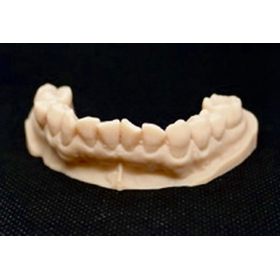
Balancing strength and ease of use. High-strength, ultra-low viscosity (<30 mPa·s) resin compatible with water washing.
- plastic
- Other polymer materials
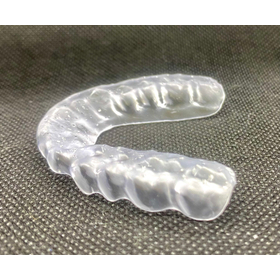
Biocompatible Clear Hard Resin CL Series for Light-Curing 3D Printers
- 3D Printer
- plastic
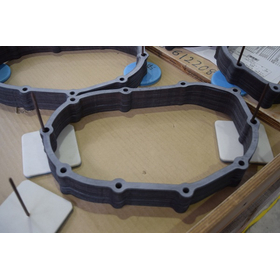

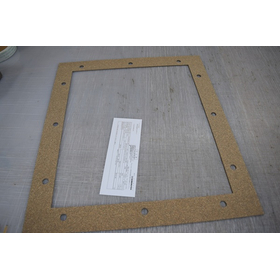
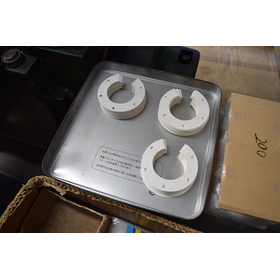
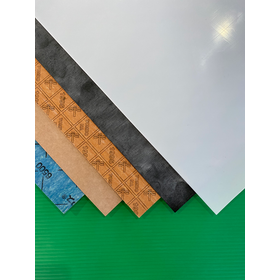
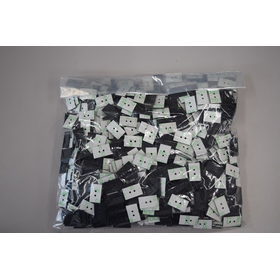
We carry out contract processing of a wide variety of gaskets and packing, including Korteck rubber packing and felt packing!
- Engine parts
- Rubber

Although it is a light release film, it does not use silicone or fluorinated compounds, contributing to the reduction of the transfer risk of silicones! It can be adjusted to your desired release forc...
- plastic
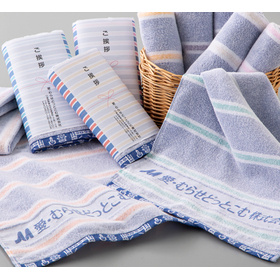

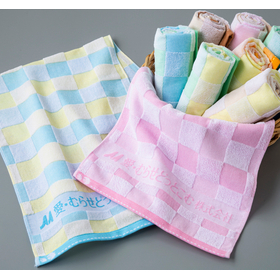
The unwavering number one favorite: Miyuki Check
- fiber
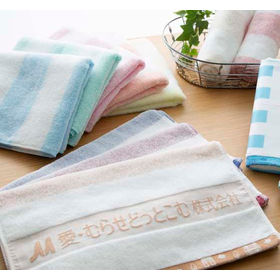
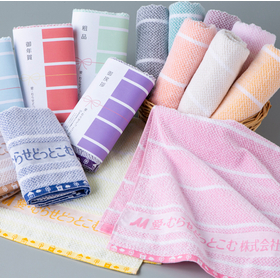
A color that literally evokes the hues of American homes.
- fiber
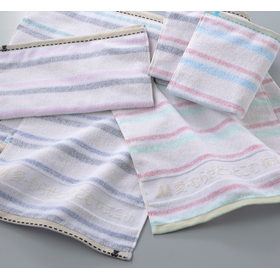


I will explain the characteristics and properties of non-woven fabric, its advantages and disadvantages, and its history! [Presentation materials introducing Hirose Paper's wet non-woven fabric techno...
- Other polymer materials

I will briefly introduce and explain the main uses of non-woven fabric. [Presentation materials on Hirose Paper's wet non-woven fabric are currently available.]
- Other polymer materials
A technical column introducing materials that can serve as alternatives to PFAS, reasons for regulation, and trends in various countries and regions! [Currently offering materials on wet non-woven fab...
- Other polymer materials

Explanation about polyester non-woven fabric! [Currently offering materials on Hirose Paper's 100% PET wet non-woven fabric]
- Other polymer materials

We will provide a compact introduction and explanation of the types and characteristics of non-woven fabric manufacturing processes [Presentation materials on Hirose Paper's wet non-woven fabric are c...
- Other polymer materials

This document introduces and explains the types and characteristics of materials used in non-woven fabrics [Presentation materials on Hirose Paper's wet non-woven fabrics are currently available].
- Other polymer materials


Are you struggling with equipment troubles caused by powder adhesion at the manufacturing site and the repeated cleaning? Reduce maintenance costs with coatings specialized in suppressing powder adhes...
- Composite Materials

The weight is one-third of that of metal. The mold has excellent release properties, allowing for easy and clean demolding of concrete products. It is highly durable, with over 150 reuse cycles (recor...
- Composite Materials

【New Site OPEN】Introduction of Polyurea Resin Coating Solution BARIAS | Exhibition Participation Confirmed!
Starlight Industries has launched a dedicated website for the polyurea resin coating solution BARIAS. ▼ New site URL: https://barias-coating-solutions.com/ BARIAS is a polyurea resin coating solution that provides various properties such as impact resistance, rust prevention, chemical resistance, waterproofing, flame retardancy, and abrasion resistance, enabling it to withstand harsh usage environments for various materials and structures. It can flexibly adapt to any substrate and contributes to solving many challenges such as weight reduction, extended lifespan, labor saving, and improved safety. Additionally, BARIAS will be exhibited at the following trade show held in July. This will be a valuable opportunity to see the actual product, so please stop by the venue. ■ Trade Show Information Maintenance & Resilience TOKYO 2025 Date: July 23 (Wed) - 25 (Fri), 2025, 10:00 - 17:00 Venue: Tokyo Big Sight (East Exhibition Hall) Booth Number: 5-V01 Coating that not only “paints” but also “creates” — BARIAS Leave everything from design to testing and manufacturing to Starlight Industries.

Are you spending time on part replacements due to wear and damage at the manufacturing site, or on dangerous cleaning tasks? Here’s a new coating that reduces maintenance costs!
- Composite Materials
【New Site OPEN】Introduction of Polyurea Resin Coating Solution BARIAS | Exhibition Participation Confirmed!
Starlight Industries has launched a dedicated website for the polyurea resin coating solution BARIAS. ▼ New site URL: https://barias-coating-solutions.com/ BARIAS is a polyurea resin coating solution that provides various properties such as impact resistance, rust prevention, chemical resistance, waterproofing, flame retardancy, and abrasion resistance, enabling it to withstand harsh usage environments for various materials and structures. It can flexibly adapt to any substrate and contributes to solving many challenges such as weight reduction, extended lifespan, labor saving, and improved safety. Additionally, BARIAS will be exhibited at the following trade show held in July. This will be a valuable opportunity to see the actual product, so please stop by the venue. ■ Trade Show Information Maintenance & Resilience TOKYO 2025 Date: July 23 (Wed) - 25 (Fri), 2025, 10:00 - 17:00 Venue: Tokyo Big Sight (East Exhibition Hall) Booth Number: 5-V01 Coating that not only “paints” but also “creates” — BARIAS Leave everything from design to testing and manufacturing to Starlight Industries.

Contributes to reducing equipment maintenance and cleaning frequency! Just by applying a coating, it reduces adhesion suppression!
- Powder Molding Machine
- Composite Materials
- Conveyor
【New Site OPEN】Introduction of Polyurea Resin Coating Solution BARIAS | Exhibition Participation Confirmed!
Starlight Industries has launched a dedicated website for the polyurea resin coating solution BARIAS. ▼ New site URL: https://barias-coating-solutions.com/ BARIAS is a polyurea resin coating solution that provides various properties such as impact resistance, rust prevention, chemical resistance, waterproofing, flame retardancy, and abrasion resistance, enabling it to withstand harsh usage environments for various materials and structures. It can flexibly adapt to any substrate and contributes to solving many challenges such as weight reduction, extended lifespan, labor saving, and improved safety. Additionally, BARIAS will be exhibited at the following trade show held in July. This will be a valuable opportunity to see the actual product, so please stop by the venue. ■ Trade Show Information Maintenance & Resilience TOKYO 2025 Date: July 23 (Wed) - 25 (Fri), 2025, 10:00 - 17:00 Venue: Tokyo Big Sight (East Exhibition Hall) Booth Number: 5-V01 Coating that not only “paints” but also “creates” — BARIAS Leave everything from design to testing and manufacturing to Starlight Industries.

Non-slip sheets that maintain their effectiveness even when wet! Strong against oils and chemicals (acids and alkalis), with a long lifespan! Prevents slips and falls in high-traffic areas!
- Composite Materials
【New Site OPEN】Introduction of Polyurea Resin Coating Solution BARIAS | Exhibition Participation Confirmed!
Starlight Industries has launched a dedicated website for the polyurea resin coating solution BARIAS. ▼ New site URL: https://barias-coating-solutions.com/ BARIAS is a polyurea resin coating solution that provides various properties such as impact resistance, rust prevention, chemical resistance, waterproofing, flame retardancy, and abrasion resistance, enabling it to withstand harsh usage environments for various materials and structures. It can flexibly adapt to any substrate and contributes to solving many challenges such as weight reduction, extended lifespan, labor saving, and improved safety. Additionally, BARIAS will be exhibited at the following trade show held in July. This will be a valuable opportunity to see the actual product, so please stop by the venue. ■ Trade Show Information Maintenance & Resilience TOKYO 2025 Date: July 23 (Wed) - 25 (Fri), 2025, 10:00 - 17:00 Venue: Tokyo Big Sight (East Exhibition Hall) Booth Number: 5-V01 Coating that not only “paints” but also “creates” — BARIAS Leave everything from design to testing and manufacturing to Starlight Industries.