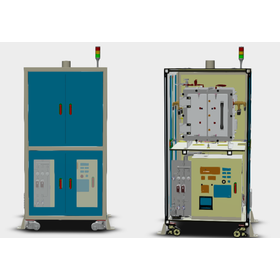
We have compiled a list of manufacturers, distributors, product information, reference prices, and rankings for Furnace.
ipros is IPROS GMS IPROS One of the largest technical database sites in Japan that collects information on.

Furnace Product List and Ranking from 406 Manufacturers, Suppliers and Companies

Last Updated: Aggregation Period:Dec 17, 2025~Jan 13, 2026
This ranking is based on the number of page views on our site.

Furnace Manufacturer, Suppliers and Company Rankings

Last Updated: Aggregation Period:Dec 17, 2025~Jan 13, 2026
This ranking is based on the number of page views on our site.

  1. 関口鐵工所 本社 Nagano//Industrial Machinery
  2. アドバンテック東洋 Tokyo//Testing, Analysis and Measurement
  3. 正英製作所 本社、東京支店、名古屋営業所、大阪支店、広島支店、九州支店 Nara//Industrial Machinery
  4. 4 フルテック Osaka//Electronic Components and Semiconductors
  5. 5 DOWAサーモテック Aichi//Ferrous/Non-ferrous metals

Furnace Product ranking

Last Updated: Aggregation Period:Dec 17, 2025~Jan 13, 2026
This ranking is based on the number of page views on our site.

  1. Small incinerator "Toku B type" *Contributes to reducing waste disposal costs! Complies with structural standards! 関口鐵工所 本社
  2. Information on Used Incinerators 関口鐵工所 本社
  3. Vacuum Thermal Decomposition Resin Cleaning Furnace 'VACUCLEAN' 双日マシナリー 環境・生活産業システム本部
  4. 4 Electric Muffle Furnace FUL200 Series アドバンテック東洋
  5. 4 Electric Muffle Furnace FUW Series アドバンテック東洋

Furnace Product List

1456~1470 item / All 1472 items

Displayed results

[Market Report] Global Market for Warm Air Furnaces

The global market for warm air stoves will reach 10.5 billion dollars by 2031.

The global warm air furnace market, which achieved sales of 7.81 billion USD in 2022, is on a steady growth trajectory and is projected to reach 10.5 billion USD by 2031. This growth is progressing at a compound annual growth rate (CAGR) of 3.4% from 2023 to 2031, highlighting the increasing demand for efficient and reliable heating solutions in both commercial and residential sectors. Warm air furnaces, known as forced air furnaces, are a key solution in modern heating systems. They operate by heating air and circulating it throughout the building via a network of vents and ducts. The heating process begins in the combustion chamber of the furnace, where fuel sources such as oil or natural gas are ignited to generate heat, which is then transferred to the air. For application methods, please check the [PDF download] button or apply directly through the related links.

Added to bookmarks

Bookmarks list

Bookmark has been removed

Bookmarks list

You can't add any more bookmarks

By registering as a member, you can increase the number of bookmarks you can save and organize them with labels.

Free membership registration

[Research Case] Overall Market Survey of Industrial Furnaces in China

A case study of sales amounts and units by customer industry, as well as customer analysis and other research!

We would like to introduce a case where we conducted a "Comprehensive Market Research on Industrial Furnaces in China." The development of the industrial furnace market in China is changing, primarily due to the impact of environmental protection policies. Many steel companies have halted production, leading to a decrease in business revenue for companies in the steel industry, and some related customers are also showing a trend of reducing orders for industrial furnaces. To understand the current state of the industrial furnace market, we commissioned a survey. The survey was conducted over approximately three months, targeting the overall industrial furnace market in mainland China, excluding Taiwan, Macau, and Hong Kong, as well as about three major companies. [Survey Contents (Partial)] ■ Sales value and volume trends of industrial furnaces from 2014 to 2024 ■ Sales value trends by furnace capacity from 2014 to 2024 ■ Sales volume trends by furnace capacity from 2014 to 2024 ■ Sales value by company for 2020 (overall and by furnace capacity) ■ Sales volume by company for 2020 (overall and by furnace capacity) *For more details, please refer to the related links or feel free to contact us.

  • Company:MIR
  • Price:Other
  • Other contract services

Added to bookmarks

Bookmarks list

Bookmark has been removed

Bookmarks list

You can't add any more bookmarks

By registering as a member, you can increase the number of bookmarks you can save and organize them with labels.

Free membership registration

Compact chlorine furnace <Cleaning with dry chlorination using a susceptor and quartz jig>

Selective removal of accumulated films and reaction products by chloride volatilization! Maintains the dimensions and surface roughness of the base material.

The "Compact Chlorine Furnace" is a dry cleaning device for fixtures that uses "selective chlorination → volatilization" with Cl2/HCl. It targets GaN/AlN/Si-based products adhered to MOCVD/epitaxial furnace susceptors, quartz boats, and tubes, converting them into chlorides at temperature stages and gas compositions suited to the materials, and removing them through volatilization at low temperatures. Additionally, it minimizes waste liquid burden without the need for acid washing, and reduces dimensional changes, distortion, and grain boundary damage. 【Features】 ■Selective chlorination × staged temperature: Converts adhered materials to chlorides → volatilizes at low temperatures, suppressing substrate damage. ■Dry process minimizes waste liquid: No acid washing, shortening cleaning and drying processes. ■Maintains dimensions and surfaces: Operates under negative pressure and controls oxygen partial pressure to minimize distortion and roughness changes. ■Compatible with multiple materials: Applicable to fixtures made of quartz, SiC, C/C, and metals (Mo/W/Al-based), among others. *For more details, please download the PDF or feel free to contact us.

  • Industrial Furnace

Added to bookmarks

Bookmarks list

Bookmark has been removed

Bookmarks list

You can't add any more bookmarks

By registering as a member, you can increase the number of bookmarks you can save and organize them with labels.

Free membership registration

Small chlorine furnace <Impurity separation by selective volatilization of metal chlorides>

Impurities are chlorinated with chlorine/hydrochloric acid! They preferentially volatilize with vapor pressure differences and step temperatures.

The "Compact chlorine furnace" is a product that simplifies post-processing with dry separation and low contamination while leaving the base material intact and eliminating the need for cleaning. It converts metallic impurities in the material into volatile chlorides through selective chlorination using Cl2/HCl, and preferentially removes them through controlled temperature stages and residence times in a dry process. Additionally, by utilizing the vapor pressure difference and Gibbs free energy difference of metal chlorides, it can achieve high selectivity in separation without compromising the composition or crystalline phase of the base material, resulting in minimal wastewater discharge and reduced environmental impact and costs. 【Features】 ■ Selectivity: Utilizes the vapor pressure difference of chlorides to preferentially volatilize only target impurities. ■ Staged temperature profile: Sequential separation from low to medium temperature, minimizing damage to the base material. ■ Dry and low waste: Almost zero wastewater with no cleaning required, simplifying post-processing. *For more details, please download the PDF or feel free to contact us.

  • Industrial Furnace

Added to bookmarks

Bookmarks list

Bookmark has been removed

Bookmarks list

You can't add any more bookmarks

By registering as a member, you can increase the number of bookmarks you can save and organize them with labels.

Free membership registration

Series Start: The Power of Small Carbon Furnaces

Explaining the capabilities of small carbon furnaces from a practical perspective! We will also introduce challenges and benefits.

"While the temperature can be achieved, the targeted reaction site cannot be created." We will overcome that barrier with a small carbon furnace. In this series, we will explain the capabilities of a small carbon furnace that can handle ultra-low oxygen atmospheres (O2 ppm level) and ultra-high temperatures (2,000-3,000°C range) with high reproducibility from a practical perspective. Do you have these challenges? ■ Heating is possible, but characteristics fluctuate with slight oxygen contamination. ■ Large furnaces have slow ramp-up times, making it difficult to establish conditions. ■ Temperature unevenness and undercooking lead to instability in crystallinity and pore structure. Benefits of miniaturization × ultra-low O2 × ultra-high temperature: ■ Reach target conditions in a short time → Increase the number of trials per day. ■ Ensure uniform heating even with small samples → Improved reproducibility. ■ Balance oxygen management and thermal history → Achieve desired crystallinity, conductivity, and microstructure. In this series, we will sequentially introduce the development background, heating principles, application-specific know-how, safety design, specifications & expansions, mini case studies, and FAQs. *For more details, please download the PDF or feel free to contact us.

  • Industrial Furnace

Added to bookmarks

Bookmarks list

Bookmark has been removed

Bookmarks list

You can't add any more bookmarks

By registering as a member, you can increase the number of bookmarks you can save and organize them with labels.

Free membership registration

Serialized Part 2: Background of the Development of Small Carbon Furnaces

Introducing the challenges in the research field, directions for solutions, and concepts!

While the demand for dry reduction heat treatment is increasing, the following challenges are prominent in the field. ■ Challenges in Research Settings - Limitations on maximum achievable temperature (recipe design is constrained by material and structural upper limits in tubular furnaces) - Limitations on sample preparation quantity (effective heating area is narrow, making it unsuitable for scale-up considerations) - Difficulty in maintaining extremely low oxygen levels (ppm to ppb level) (due to leaks, residual O2, and fine cracks from heat shock, etc.) ■ Directions for Solutions (Required Specifications) - Uniform heating in a short time: rapid temperature rise, high temperature uniformity, and good response - Flexible scaling: continuous support from small sample sizes to small-scale mass production - Atmosphere control: stabilization of extremely low oxygen levels with Ar/N2 (and a small amount of H2 as needed) plus low residual O2 design ■ Concept Graphite heating element × high insulation structure × low leak design. A compact carbon furnace optimized for prototyping and condition setting, enabling faster and more reproducible dry reduction processes. *For more details, please download the PDF or feel free to contact us.

  • Industrial Furnace

Added to bookmarks

Bookmarks list

Bookmark has been removed

Bookmarks list

You can't add any more bookmarks

By registering as a member, you can increase the number of bookmarks you can save and organize them with labels.

Free membership registration

Series Part 3: The Principle of compact Carbon Furnaces

Why extreme low oxygen and 3000°C levels are possible! Explaining the principles of a small carbon furnace.

The small carbon furnace is characterized by its ability to maintain an extremely low oxygen environment and ultra-high temperatures (around 3000°C). In this explanation, we will simply clarify "why this is possible" from a fundamental perspective. 1) Why does it become "extremely low oxygen"? ■ The furnace material itself acts as an "oxygen getter." The hot zone of the furnace is composed of carbon (graphite). Residual O2/CO2/H2O reacts with carbon and is reduced and fixed as CO/CO2, effectively lowering the oxygen activity. As a result, even materials that are sensitive to oxidation can be processed in a mild atmosphere. ■ Built-in vacuum system + replacement Before heating, the system is evacuated, and by repeatedly purging with inert gas (such as Ar/N2), air inside the sample can be expelled in advance. This is effective for gas replacement in pores and powder gaps that cannot be reached by simple "ventilation." 2) Why is "3000°C" possible? ■ Heating element = high-temperature stability of graphite Graphite exhibits extremely high heat resistance under inert atmospheres and vacuum, allowing for efficient heating of the hot zone through resistance heating. *For more details, please download the PDF or feel free to contact us.

  • Industrial Furnace

Added to bookmarks

Bookmarks list

Bookmark has been removed

Bookmarks list

You can't add any more bookmarks

By registering as a member, you can increase the number of bookmarks you can save and organize them with labels.

Free membership registration

Serialized Part 4: Main Uses of compact Carbon Furnaces

Synthesis and sintering of high-temperature materials, as well as high crystallization of carbon-based materials! Here are some main application examples.

In the previous session, we introduced the "principle" of the small carbon furnace. This time, we will discuss the actual applications and how it can be applied in research and development. ■ Main Examples of Applications 1. Synthesis and Sintering of High-Temperature Materials (up to 3000°C) Thanks to the extremely low oxygen environment unique to carbon furnaces, high melting point materials such as carbides and nitrides can be sintered without oxidation. 2. High Crystallization of Carbon-Based Materials Suitable for the high crystallization of materials such as graphite and carbon nanotubes. 3. High-Temperature Treatment and Reduction Reactions of Metal Materials Metal oxides can be reduced under low oxygen conditions, allowing for control over microstructure and phases. 4. Evaluation of High-Temperature Gas Reactions Interactions with reactive gases and material stability can be verified in various atmospheres such as N2, H2, and Ar. 5. Material Process Evaluation at Research and Development and Prototype Scale Used for R&D purposes to optimize conditions in a short time. In the future, we are considering applications for the development of new materials utilizing more precise control of oxygen partial pressure. Next time, we will provide detailed information about the "specifications." *For more details, please download the PDF or feel free to contact us.

  • Industrial Furnace

Added to bookmarks

Bookmarks list

Bookmark has been removed

Bookmarks list

You can't add any more bookmarks

By registering as a member, you can increase the number of bookmarks you can save and organize them with labels.

Free membership registration

Serialized Part 5: Main Uses of compact Carbon Furnaces

Introduction to the device specifications and configuration! The device size can also accommodate larger machines.

In the previous session, we introduced the applications of a small carbon furnace. This time, we will present the actual specifications and configuration of the device. This device is designed as a compact type for research and development, making it possible to install in limited spaces. It supports heating in a vacuum and inert gas (Ar, N2) atmosphere, achieving a stable heating environment that suppresses oxidation. This specification serves as an example of the specs for a small research device. The device size can also accommodate larger models. 【Main Specifications】 ■ External dimensions: 1000W × 1000D × 2100H mm ■ Effective internal dimensions: 200W × 200D × 200H mm ■ Supported atmosphere: Inert gas (Ar, N2) and vacuum ■ Internal material: Graphite ■ Door structure: Front-opening type ■ Vacuum pump: Rotary pump ■ Monitoring and recording: Temperature, flow rate, pressure, etc. 【Safety Devices】 ■ Over-temperature prevention ■ Cooling water level detection, etc. *For more details, please download the PDF or feel free to contact us.

  • Industrial Furnace

Added to bookmarks

Bookmarks list

Bookmark has been removed

Bookmarks list

You can't add any more bookmarks

By registering as a member, you can increase the number of bookmarks you can save and organize them with labels.

Free membership registration

About small metal furnaces

All-metal construction! In high-temperature ranges, the metal surface easily reacts with trace amounts of O2, reducing the effects of residual oxygen.

We would like to introduce our "Small Metal Furnace." It operates stably at temperatures up to 1800°C, accommodating high-temperature treatments (sintering/diffusion bonding/aging, etc.), and its all-metal construction minimizes contamination from furnace materials, enhancing the reproducibility of color and properties. Additionally, it features a compact design that allows for easy installation even in environments with limited space, such as universities and research laboratories. 【Features】 ■ Stable operation up to 1800°C: Suitable for high-temperature treatments (sintering/diffusion bonding/aging, etc.) ■ Cleanliness: All-metal construction minimizes contamination from furnace materials ■ Reproducibility of low-oxygen atmosphere: Standard procedures for purging and replacement with N2/Ar ■ Compact design: Easy installation in environments with limited space, such as universities and research laboratories *For more details, please download the PDF or feel free to contact us.

  • Industrial Furnace

Added to bookmarks

Bookmarks list

Bookmark has been removed

Bookmarks list

You can't add any more bookmarks

By registering as a member, you can increase the number of bookmarks you can save and organize them with labels.

Free membership registration

About tubular furnaces

From just firing to measuring and optimizing! You can select the necessary instrumentation as options.

The "tubular furnace" we handle allows for the selection of necessary instrumentation equipment as options according to the customer's application. It operates stably at temperatures up to 1200°C, with a heating zone of Φ120mm×500mmL. The tube size is Φ70mm×1000mmL. Additionally, it is compatible with various gases such as inert gases like N2 and Ar, as well as H2. Please feel free to contact us when you need assistance. 【Features】 ■ Stable operation: Up to 1200°C (higher temperatures can be discussed) ■ Heating zone: Φ120mm×500mmL ■ Tube size: Φ70mm×1000mmL (size/zone length can be customized) ■ Atmosphere: Compatible with various gases such as inert gases like N2 and Ar, as well as H2 *For more details, please download the PDF or feel free to contact us.

  • Industrial Furnace

Added to bookmarks

Bookmarks list

Bookmark has been removed

Bookmarks list

You can't add any more bookmarks

By registering as a member, you can increase the number of bookmarks you can save and organize them with labels.

Free membership registration

Seeking partners to assist with equipment sales.

The target is technical trading companies and equipment trading companies! We handle various electric furnaces from small to pilot scale.

We are seeking sales partners in response to the expanding demand for equipment in the advanced materials field (semiconductors, batteries, powder metallurgy, university research). Examples of equipment we handle include various electric furnaces ranging from small to pilot scale, as well as small chlorine furnaces (compatible with Cl2/HCl) for selective chlorination and high-purity process development. Interested companies are requested to provide their "company name/contact person/expertise/major transaction areas/location." 【Target】 ■ Technical trading companies ■ Equipment trading companies (those with networks in research institutions and material manufacturers) *For more details, please download the PDF or feel free to contact us.

  • Industrial Furnace

Added to bookmarks

Bookmarks list

Bookmark has been removed

Bookmarks list

You can't add any more bookmarks

By registering as a member, you can increase the number of bookmarks you can save and organize them with labels.

Free membership registration

Carbon furnace <suitable for basic reaction tests of carbonization>

SiC/TiC/ZrC at high temperatures and extremely low oxygen 'quickly and reproducibly.' Optimization of solid-phase carbides, composite carbides (with B4C), and carbon supply conditions in a short cycle.

We handle a compact "carbon furnace" that can be gradually replaced from vacuum to inert gas. It can be used for experiments and processes related to solid-phase carbonization (powder mixing method, coating method, carburizing) and composite carbonization (such as using B4C) for increasing hardness and optimizing carbon supply conditions (types, ratios, and contact states of carbon materials). Please feel free to contact us if you have any inquiries. 【Reasons to Choose Our Carbon Furnace (Partial)】 ■ Rapidly reaches high temperatures - Stable attainment and maintenance of 1600-2800°C** - Temperature guidelines effective for carbonization: SiC 1600–2000°C, TiC 1500–2100°C, ZrC 1800–2300°C ■ Suppresses side reactions at extremely low oxygen partial pressure - Vacuum → Replacement with Ar/N2 - Reduces residual oxygen through getter action of furnace carbon, suppressing CO generation *For more details, please feel free to contact us.

  • Industrial Furnace

Added to bookmarks

Bookmarks list

Bookmark has been removed

Bookmarks list

You can't add any more bookmarks

By registering as a member, you can increase the number of bookmarks you can save and organize them with labels.

Free membership registration

Carbon furnace <suitable for basic reaction tests of nitriding>

Reproduced well with 'extremely low oxygen × high temperature × vacuum replacement.' Short cycle tests for N2-based solid-phase nitriding, surface nitriding, and layer growth.

The "carbon furnace" we handle is suitable for basic reaction tests of nitriding. Since the reaction initiation temperature is high with N2 alone, balancing grain growth and coarsening is difficult, and during cooling, surface reoxidation occurs, leading to variations in color, resistance, and hardness. Our product addresses these challenges. Additionally, we have a track record of manufacturing furnaces at mass production scales, not just small units. Please feel free to contact us when you need assistance. 【Reasons Why Our Carbon Furnace is Effective】 ■ Creates an extremely low oxygen partial pressure - Gradually lowers the oxygen potential through vacuum pumping and N2 replacement - The carbon in the furnace material absorbs residual O2, suppressing oxidation side reactions ■ Quickly reaches sufficient high-temperature ranges - Achieves and maintains temperatures from 1400 to 2400°C in a short time ■ Short cycle for condition setting - Allows simultaneous evaluation of multiple samples with tray flexibility/shelf configuration, making it easier to verify the effects of thickness and contact *For more details, please feel free to contact us.

  • Industrial Furnace

Added to bookmarks

Bookmarks list

Bookmark has been removed

Bookmarks list

You can't add any more bookmarks

By registering as a member, you can increase the number of bookmarks you can save and organize them with labels.

Free membership registration

Compact chlorine Furnace: Unlocking New Possibilities for Urban Mine Recycling through Dry Chlorination

We are theoretically examining a new approach to selectively volatilize and recover specific metals from systems containing multiple metals through precise control of "temperature × pressure × chlorination reaction."

The "chlorine furnace" we handle has a structure that allows for independent control of temperature and chlorine partial pressure under reduced pressure. Urban mines have a complex coexistence of metals such as Au, Cu, Sn, Fe, and Ni. If these can be separated using a dry chlorination volatilization method, it would be possible to implement a new recycling method that efficiently recovers valuable metals while reducing the burden of wastewater treatment. Additionally, due to the characteristics of this device, which allows for precise control of temperature, pressure, and chlorine partial pressure, we believe it could potentially develop into "selective recovery of valuable metals from urban mines" in the future. 【Features】 ■ Volatilization of base metals at low temperatures: Selective volatilization of FeCl3, SnCl4, etc., around 200-300°C ■ Control of noble metal salt generation at medium temperatures: Separation of noble metals using stable regions such as AuCl3 ■ Reaction sequence switching through pressure control: Control of the generation and decomposition equilibrium of chlorides under reduced pressure conditions *For more details, please feel free to contact us.

  • Industrial Furnace

Added to bookmarks

Bookmarks list

Bookmark has been removed

Bookmarks list

You can't add any more bookmarks

By registering as a member, you can increase the number of bookmarks you can save and organize them with labels.

Free membership registration