We have compiled a list of manufacturers, distributors, product information, reference prices, and rankings for Measuring equipment.
ipros is IPROS GMS IPROS One of the largest technical database sites in Japan that collects information on.

Measuring equipment Product List and Ranking from 86 Manufacturers, Suppliers and Companies | IPROS GMS

Last Updated: Aggregation Period:Jun 24, 2026~Jul 21, 2026
This ranking is based on the number of page views on our site.

Measuring equipment Manufacturer, Suppliers and Company Rankings

Last Updated: Aggregation Period:Jun 24, 2026~Jul 21, 2026
This ranking is based on the number of page views on our site.

  1. null/null
  2. 伸榮産業 本社、関東営業所 Osaka//Industrial Machinery
  3. AIP Ishikawa//environment
  4. 4 DJK Kanagawa//Resin/Plastic
  5. 5 null/null

Measuring equipment Product ranking

Last Updated: Aggregation Period:Jun 24, 2026~Jul 21, 2026
This ranking is based on the number of page views on our site.

  1. Conduct measurement using individual sampling method.
  2. What is a clean environment? 伸榮産業 本社、関東営業所
  3. Indentation hardness Rockwell DJK
  4. Summary of Measures for Businesses in the Third Management Category under the Labor Safety and Health Act Enforcement Order
  5. 4 Shinko Precision Machinery Co., Ltd. 駒ヶ根市役所 産業部 商工観光課

Measuring equipment Product List

121~128 item / All 128 items

Displayed results

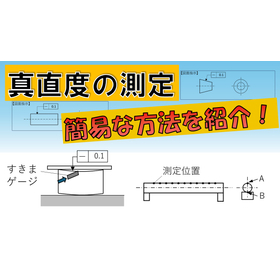
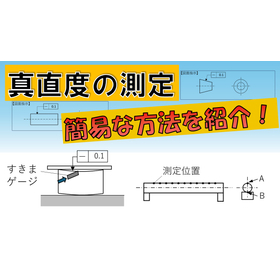
How to Measure Straightness for Aerospace Applications

Explaining straightness measurement in the aerospace field!

In the aerospace industry, the shape accuracy of components, such as aircraft wings, greatly affects flight performance and safety. Measuring straightness is important to ensure that the performance meets design specifications. This video explains the measurement method for "straightness," which is a type of geometric tolerance. 【Application Scenarios】 - Manufacturing and inspection of aircraft components - Quality control of aircraft components 【Benefits of Implementation】 - Improved shape accuracy of aircraft components - Optimization of flight performance - Increased efficiency in quality control

  • others
  • Measuring equipment

Added to bookmarks

Bookmarks list

Bookmark has been removed

Bookmarks list

You can't add any more bookmarks

By registering as a member, you can increase the number of bookmarks you can save and organize them with labels.

Free membership registration

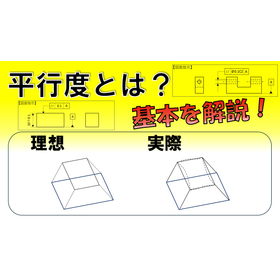
Explaining the Basics of Parallelism for Semiconductor Manufacturing!

Deepen your understanding of parallelism in semiconductor manufacturing!

In the semiconductor manufacturing industry, precise dimensional control at each stage of the manufacturing process is required to improve product quality and yield. In particular, the accuracy of parallelism in the processing of wafers and substrates significantly affects product performance. If parallelism is not properly managed, it can lead to the occurrence of defects in the manufacturing process and deterioration of product performance. This video explains the basics of "parallelism," a type of geometric tolerance, and contributes to quality control in semiconductor manufacturing. [Application Scenarios] - Quality control in semiconductor manufacturing - Processing processes for wafers and substrates - Acquisition of basic knowledge regarding parallelism [Effects of Implementation] - Deepens understanding of parallelism and helps improve manufacturing processes. - Reduces the occurrence of defects and improves yield. - Contributes to the enhancement of product quality.

  • others
  • Measuring equipment

Added to bookmarks

Bookmarks list

Bookmark has been removed

Bookmarks list

You can't add any more bookmarks

By registering as a member, you can increase the number of bookmarks you can save and organize them with labels.

Free membership registration

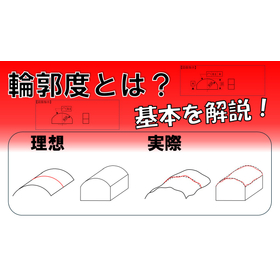
What is contouring for automotive quality management? An explanation of the basics!

Video materials useful for quality control of automotive parts.

In the automotive industry's quality management, the accurate shape and dimensions of parts influence the safety and performance of products. In particular, contour accuracy is an important factor in evaluating the shape precision of parts and is essential for verifying whether they are manufactured according to design drawings. A lack of understanding of contour accuracy can lead to defects in parts or assembly issues, ultimately resulting in a decline in product quality. This video explains the basics of "contour accuracy," a type of geometric tolerance. It covers the definition of contour accuracy, examples of its use, how it is represented on drawings, and points to consider when using it. Please use this video as a reference to assist in the quality management of automotive parts. 【Application Scenarios】 - Automotive parts design and manufacturing departments - Quality management departments - Technical education 【Benefits of Implementation】 - Deepening understanding of contour accuracy and improving drawing interpretation skills - Early detection of issues related to the shape precision of parts - Streamlining the quality management process - Enhancing product quality

  • others
  • Measuring equipment

Added to bookmarks

Bookmarks list

Bookmark has been removed

Bookmarks list

You can't add any more bookmarks

By registering as a member, you can increase the number of bookmarks you can save and organize them with labels.

Free membership registration

What is contour accuracy for measuring instruments? An explanation of the basics!

A clear explanation of the basics of contouring in a video!

In the measurement equipment industry, a precise understanding of geometric tolerances on drawings is essential to guarantee the accuracy of products. In particular, contour accuracy is a crucial factor in evaluating the shape precision of products, and understanding its definition and application methods is indispensable for quality management in design and manufacturing. A lack of understanding of contour accuracy can lead to incorrect measurements and the occurrence of defective products. This video explains the definition of contour accuracy, examples of its use, how it is applied on drawings, and points to be cautious about when using it. By learning the fundamentals of contour accuracy, you will contribute to improving quality in the design and manufacturing of measurement equipment. 【Usage Scenarios】 - Reading drawings in the design and manufacturing of measurement equipment - Promoting understanding of geometric tolerances among quality management personnel - Educational tool for engineers 【Benefits of Implementation】 - Improved quality in design and manufacturing through accurate understanding of contour accuracy - Enhanced drawing interpretation skills - Reduction of quality issues

  • others
  • Measuring equipment

Added to bookmarks

Bookmarks list

Bookmark has been removed

Bookmarks list

You can't add any more bookmarks

By registering as a member, you can increase the number of bookmarks you can save and organize them with labels.

Free membership registration

[Advice on Solutions] Power Quality Measurement: "The circuit breaker is tripping!"

Are you having trouble with the leakage circuit breaker stopping during the operation of the solar power generation PCS (power conditioner)? [We can provide advice on solutions!]

"Power Quality Measurement" involves conducting on-site measurements and field surveys at distributed power sources, such as solar power generation, analyzing measurement values and waveform data, and providing advice for resolving issues. [Advice for Cases Where the Residual Current Device Stops] If you are experiencing issues with the residual current device stopping, various causes may be considered, including problems with the commercial power supply, poor construction quality, or failures in the PCS (Power Conditioning System). However, identifying the exact cause is not easy. With years of experience in measurement technology and testing know-how related to solar power generation, we have tackled such issues. We analyze quality through power measurement and provide advice on solutions. <Features> - Targets cases where causes cannot be identified through tester measurements or insulation resistance measurements. - Advice on issues such as PCS error stops or malfunctions of the residual current device. - Guidance on how to address PCS error codes. - Measurement using power quality measurement equipment × knowledge and experience × know-how → advice on solutions. For more details, please download the PDF and view the brochure. Feel free to contact us through our company website. (No registration required)

  • Electrical Instruments/Electrometers
  • Measuring equipment

Added to bookmarks

Bookmarks list

Bookmark has been removed

Bookmarks list

You can't add any more bookmarks

By registering as a member, you can increase the number of bookmarks you can save and organize them with labels.

Free membership registration

[Air Conditioning Energy Saving Office Note 12] Difference Between Rated Current and Rated Power Consumption

Organizing commonly used reference values for air conditioning energy-saving measurements in an easy-to-understand manner.

When evaluating the energy-saving performance of air conditioning units, the "rated values" published by manufacturers are an essential standard. However, rated values are merely guidelines under standard conditions and can vary significantly from actual operating conditions. This time, we will clarify the differences in the roles of "rated current value (A)" and "rated power consumption (kW)," which are frequently used in energy-saving measurements, and explain how to utilize them in the field. 1. Role of "rated current value (A)": Visualizing the load on the air conditioning unit The rated current value is an estimate of the current that flows when the air conditioning unit operates under standard conditions. Main use: It is used as a reference value to calculate the "operating load" on the equipment. How to use: By dividing the measured average current value by the rated current value, you can calculate the "current load ratio." Calculation formula: Current load ratio = (Measured average current value ÷ Rated current value) × 100 Note: In the case of inverter units, the current value fluctuates during actual operation, so comparing it with measured data is important.

  • Company:AIP
  • Price:Other
  • ?定格電流値と定格消費電力の違い 260629.png
  • air conditioning
  • Other air conditioning equipment
  • Air Conditioning System
  • Measuring equipment

Added to bookmarks

Bookmarks list

Bookmark has been removed

Bookmarks list

You can't add any more bookmarks

By registering as a member, you can increase the number of bookmarks you can save and organize them with labels.

Free membership registration

[Air Conditioning Energy Saving Office Note] Why is it difficult to evaluate the effectiveness of air conditioning energy saving?

The power consumption of the air conditioning varies greatly depending on daily conditions.

I have summarized it clearly in the image. For more details, please refer to the posted image.

  • Company:AIP
  • Price:Other
  • air conditioning
  • Other air conditioning equipment
  • Air Conditioning System
  • Measuring equipment

Added to bookmarks

Bookmarks list

Bookmark has been removed

Bookmarks list

You can't add any more bookmarks

By registering as a member, you can increase the number of bookmarks you can save and organize them with labels.

Free membership registration

Local deployment of Japanese manufacturer products for the Vietnamese market.

We will advance the deployment of Japanese manufacturer products in the Vietnamese market through collaboration with local companies.

At ISHII Company LLC, we serve as the Japan Office for the Vietnamese trading company MAI DEN COMPANY, providing practical support for Japanese manufacturers considering sales and distribution in the Vietnamese market. Our focus is on production materials and industrial equipment for the manufacturing industry, including machine parts, tools, jigs, measuring instruments, FA equipment, and related equipment. On the Japanese side, we verify product information, applications, specifications, sales conditions, and supply conditions, and check the feasibility of local deployment with Vietnamese companies. On the Vietnamese side, we assess local demand, handling capabilities, sales conditions, and target customer segments, exploring ways to facilitate ongoing transactions of Japanese manufacturer products. We emphasize creating a state where actual transactions can be advanced between Japanese manufacturers and local Vietnamese companies, rather than merely introducing contacts or acting as a sales agent.

  • Other services
  • Other contract services
  • Measuring equipment

Added to bookmarks

Bookmarks list

Bookmark has been removed

Bookmarks list

You can't add any more bookmarks

By registering as a member, you can increase the number of bookmarks you can save and organize them with labels.

Free membership registration