We have compiled a list of manufacturers, distributors, product information, reference prices, and rankings for Spring.
ipros is IPROS GMS IPROS One of the largest technical database sites in Japan that collects information on.

Spring Product List and Ranking from 94 Manufacturers, Suppliers and Companies | IPROS GMS

Last Updated: Aggregation Period:Feb 04, 2026~Mar 03, 2026
This ranking is based on the number of page views on our site.

Spring Manufacturer, Suppliers and Company Rankings

Last Updated: Aggregation Period:Feb 04, 2026~Mar 03, 2026
This ranking is based on the number of page views on our site.

  1. タフトレーディング Tokyo//others
  2. エコールド・ジャパン Chiba//Trading company/Wholesale
  3. KALLER Kanagawa//Machine elements and parts
  4. 4 鶴岡発條 Yamagata//Machine elements and parts
  5. 5 ダドコジャパン DADCO Japan, Inc. Kanagawa//Machine elements and parts

Spring Product ranking

Last Updated: Aggregation Period:Feb 04, 2026~Mar 03, 2026
This ranking is based on the number of page views on our site.

  1. Stainless Steel Spring "High-Performance Fluororesin Coated O-Ring for Extremely Low Temperatures" タフトレーディング
  2. Gas spring (gas damper) with locking function エコールド・ジャパン
  3. Composition and Function of Gas Springs エコールド・ジャパン
  4. 4 Cam Unit for Press Molds "Flex Cam" KALLER
  5. 5 BESTEC gas spring ハヤシ

Spring Product List

331~360 item / All 386 items

Displayed results

Gas spring "G03-10"

The gas change rate is approximately 20%! Introducing the gas springs handled by our company.

The G03-10 is a gas spring with a gas reaction force setting range of 10-110N. The mounting brackets are made of zinc-plated steel, and the cylinder diameter is Φ10mm with black painted steel. Please feel free to contact us if you have any inquiries. 【Specifications (partial)】 ■ Gas reaction force setting range: 10-110N ■ Gas variation rate: approximately 20% ■ Piston rod diameter: Φ3mm stainless V2a ■ Cylinder diameter: Φ10mm black painted steel ■ Mounting brackets: zinc-plated steel *For more details, please refer to the PDF document or feel free to contact us.

  • Pneumatic Equipment
  • Spring
  • Other machine elements
  • Spring

Added to bookmarks

Bookmarks list

Bookmark has been removed

Bookmarks list

You can't add any more bookmarks

By registering as a member, you can increase the number of bookmarks you can save and organize them with labels.

Free membership registration

Gas spring "G04-12"

The piston rod diameter is Φ4mm and made of stainless V2a! Introducing the gas springs we handle.

The G04-12 is a gas spring with a gas change rate of approximately 15%. The gas reaction force setting range is 10-200N, and the mounting brackets are made of zinc-plated steel. Please feel free to contact us when you need assistance. 【Specifications (partial)】 ■ Gas reaction force setting range: 10-200N ■ Gas change rate: Approximately 15% ■ Piston rod diameter: Φ4mm stainless V2a ■ Cylinder diameter: Φ12mm black painted steel ■ Mounting brackets: Zinc-plated steel *For more details, please refer to the PDF document or feel free to contact us.

  • Pneumatic Equipment
  • Spring
  • Other machine elements
  • Spring

Added to bookmarks

Bookmarks list

Bookmark has been removed

Bookmarks list

You can't add any more bookmarks

By registering as a member, you can increase the number of bookmarks you can save and organize them with labels.

Free membership registration

Gas spring "G08-19"

The mounting brackets are made of zinc-plated steel! Introducing the gas springs we handle.

The G08-19 is a gas spring with a cylinder diameter of Φ19mm made of black painted steel. The gas reaction force setting range is 50-800N, and the gas variation rate is approximately 30%. Please feel free to contact us when you need assistance. 【Specifications (partial)】 ■ Gas reaction force setting range: 50-800N ■ Gas variation rate: Approximately 30% ■ Piston rod diameter: Φ8mm hard chrome plated steel (can be changed to stainless steel) ■ Cylinder diameter: Φ19mm black painted steel ■ Mounting brackets: Zinc plated steel *For more details, please refer to the PDF document or feel free to contact us.

  • Pneumatic Equipment
  • Spring
  • Other machine elements
  • Spring

Added to bookmarks

Bookmarks list

Bookmark has been removed

Bookmarks list

You can't add any more bookmarks

By registering as a member, you can increase the number of bookmarks you can save and organize them with labels.

Free membership registration

Gas spring "G08-23"

The piston rod diameter is Φ8mm! Introducing the gas springs we handle.

The "G08-23" is a gas spring with a gas change rate of approximately 18%. The piston rod made of hard chrome-plated steel can be changed to stainless steel. The cylinder diameter is Φ23mm and is made of black painted steel. Please feel free to contact us when you need it. 【Specifications (partial)】 ■ Gas reaction force setting range: 35-800N ■ Gas change rate: approximately 18% ■ Piston rod diameter: Φ8mm hard chrome-plated steel (can be changed to stainless steel) ■ Cylinder diameter: Φ23mm black painted steel ■ Mounting brackets: zinc-plated steel *For more details, please refer to the PDF document or feel free to contact us.

  • Pneumatic Equipment
  • Spring
  • Other machine elements
  • Spring

Added to bookmarks

Bookmarks list

Bookmark has been removed

Bookmarks list

You can't add any more bookmarks

By registering as a member, you can increase the number of bookmarks you can save and organize them with labels.

Free membership registration

Gas spring "G10-23"

The cylinder diameter is Φ23mm! Introducing the gas springs we handle.

The "G10-23" is a gas spring with a gas reaction force setting range of 80-1250N. The cylinder diameter is Φ23mm, made of black painted steel, and the gas change rate is approximately 30%. Please feel free to contact us when you need assistance. 【Specifications (partial)】 ■ Gas reaction force setting range: 80-1250N ■ Gas change rate: Approximately 30% ■ Piston rod diameter: Φ10mm hard chrome-plated steel (can be changed to stainless steel) ■ Cylinder diameter: Φ23mm black painted steel ■ Mounting bracket: Zinc-plated steel *For more details, please refer to the PDF document or feel free to contact us.

  • Pneumatic Equipment
  • Spring
  • Other machine elements
  • Spring

Added to bookmarks

Bookmarks list

Bookmark has been removed

Bookmarks list

You can't add any more bookmarks

By registering as a member, you can increase the number of bookmarks you can save and organize them with labels.

Free membership registration

Gas spring "G10-28"

The gas reaction setting range is 80-1250N! Introducing the gas springs we handle.

The "G10-28" is a gas spring with mounting brackets made of zinc-plated steel. The piston rod diameter is Φ10mm and is made of hard chrome-plated steel, with the option to change to stainless steel. Please feel free to contact us when you need assistance. 【Specifications (partial)】 ■ Gas reaction force setting range: 80-1250N ■ Gas variation rate: approximately 20% ■ Piston rod diameter: Φ10mm hard chrome-plated steel (can be changed to stainless steel) ■ Cylinder diameter: Φ28mm black painted steel ■ Mounting brackets: zinc-plated steel *For more details, please refer to the PDF document or feel free to contact us.

  • Pneumatic Equipment
  • Spring
  • Other machine elements
  • Spring

Added to bookmarks

Bookmarks list

Bookmark has been removed

Bookmarks list

You can't add any more bookmarks

By registering as a member, you can increase the number of bookmarks you can save and organize them with labels.

Free membership registration

Gas spring "G10-40"

The gas change rate is approximately 8%! Introducing the gas springs we handle.

The "G10-40" is a gas spring with a gas force adjustment range of 100-1200N. The mounting brackets are made of zinc-plated steel, and the cylinder diameter is Φ40mm with black painted steel. Please feel free to contact us when you need assistance. 【Specifications (partial)】 ■ Gas force adjustment range: 100-1200N ■ Gas variation rate: approximately 8% ■ Piston rod diameter: Φ10mm hard chrome-plated steel (can be changed to stainless steel) ■ Cylinder diameter: Φ40mm black painted steel ■ Mounting brackets: zinc-plated steel *For more details, please refer to the PDF document or feel free to contact us.

  • Pneumatic Equipment
  • Spring
  • Other machine elements
  • Spring

Added to bookmarks

Bookmarks list

Bookmark has been removed

Bookmarks list

You can't add any more bookmarks

By registering as a member, you can increase the number of bookmarks you can save and organize them with labels.

Free membership registration

Gas spring "G14-28"

The piston rod diameter is Φ14mm! Introducing the gas springs we handle.

The "G14-28" is a gas spring with a cylinder diameter of Φ28mm. The gas reaction force setting range is 150-2600N, and the gas change rate is approximately 40%. Please feel free to contact us when you need assistance. 【Specifications (partial)】 ■ Gas reaction force setting range: 150-2600N ■ Gas change rate: Approximately 40% ■ Piston rod diameter: Φ14mm hard chrome-plated steel (can be changed to stainless steel) ■ Cylinder diameter: Φ28mm black painted steel ■ Mounting bracket: Zinc-plated steel *For more details, please refer to the PDF document or feel free to contact us.

  • Pneumatic Equipment
  • Spring
  • Other machine elements
  • Spring

Added to bookmarks

Bookmarks list

Bookmark has been removed

Bookmarks list

You can't add any more bookmarks

By registering as a member, you can increase the number of bookmarks you can save and organize them with labels.

Free membership registration

Gas spring "G14-40"

The cylinder diameter is Φ40mm! Introducing the gas springs we handle.

The "G14-40" is a gas spring with mounting brackets made of zinc-plated steel. The gas change rate is approximately 16%, and the piston rod diameter is Φ14mm, made of hard chrome-plated steel, which can be changed to stainless steel. Please feel free to contact us when you need assistance. 【Specifications (partial)】 ■ Gas reaction force setting range: 150-2500N ■ Gas change rate: approximately 16% ■ Piston rod diameter: Φ14mm hard chrome-plated steel (can be changed to stainless steel) ■ Cylinder diameter: Φ40mm black painted steel ■ Mounting brackets: zinc-plated steel *For more details, please refer to the PDF document or feel free to contact us.

  • Pneumatic Equipment
  • Spring
  • Other machine elements
  • Spring

Added to bookmarks

Bookmarks list

Bookmark has been removed

Bookmarks list

You can't add any more bookmarks

By registering as a member, you can increase the number of bookmarks you can save and organize them with labels.

Free membership registration

Gas spring "G20-40"

The gas reaction setting range is 300-5000N! Introducing the gas springs we handle.

The "G20-40" is a gas spring with a gas change rate of approximately 40%. The cylinder diameter is Φ40mm made of black painted steel, and the piston rod diameter is Φ20mm made of hard chrome-plated steel. Please feel free to contact us when you need assistance. 【Specifications (partial)】 ■ Gas reaction force setting range: 300-5000N ■ Gas change rate: approximately 40% ■ Piston rod diameter: Φ20mm hard chrome-plated steel (can be changed to stainless steel) ■ Cylinder diameter: Φ40mm black painted steel ■ Mounting brackets: zinc-plated steel *For more details, please refer to the PDF document or feel free to contact us.

  • Pneumatic Equipment
  • Spring
  • Other machine elements
  • Spring

Added to bookmarks

Bookmarks list

Bookmark has been removed

Bookmarks list

You can't add any more bookmarks

By registering as a member, you can increase the number of bookmarks you can save and organize them with labels.

Free membership registration

Gas spring "G25-55"

The mounting brackets are made of galvanized steel! Introducing the gas springs we handle.

The "G25-55" is a gas spring with a cylinder made of black painted steel. The piston rod is made of hard chrome-plated steel and can be changed to stainless steel. Please feel free to contact us when you need assistance. 【Specifications (partial)】 ■ Gas reaction force setting range: 500-7500N ■ Gas variation rate: approximately 40% ■ Piston rod diameter: Φ25mm hard chrome-plated steel (can be changed to stainless steel) ■ Cylinder diameter: Φ55mm black painted steel ■ Mounting bracket: zinc-plated steel *For more details, please refer to the PDF document or feel free to contact us.

  • Pneumatic Equipment
  • Spring
  • Other machine elements
  • Spring

Added to bookmarks

Bookmarks list

Bookmark has been removed

Bookmarks list

You can't add any more bookmarks

By registering as a member, you can increase the number of bookmarks you can save and organize them with labels.

Free membership registration

Gas spring "G30-65"

The piston rod is made of hard chrome-plated steel! Introducing the gas springs we handle.

The "G30-65" is a gas spring with a gas change rate of approximately 35%. The gas reaction force setting range is 750-1000N, and the cylinder diameter is Φ65mm made of black painted steel. Please feel free to contact us when you need assistance. 【Specifications (partial)】 ■ Gas reaction force setting range: 750-1000N ■ Gas change rate: Approximately 35% ■ Piston rod diameter: Φ30mm hard chrome plated steel (can be changed to stainless steel) ■ Cylinder diameter: Φ65mm black painted steel ■ Mounting brackets: Zinc plated steel *For more details, please refer to the PDF document or feel free to contact us.

  • Pneumatic Equipment
  • Spring
  • Other machine elements
  • Spring

Added to bookmarks

Bookmarks list

Bookmark has been removed

Bookmarks list

You can't add any more bookmarks

By registering as a member, you can increase the number of bookmarks you can save and organize them with labels.

Free membership registration

Push-out type custom order stainless steel gas spring

Made in Germany, rust-resistant stainless steel, orders accepted from one piece!

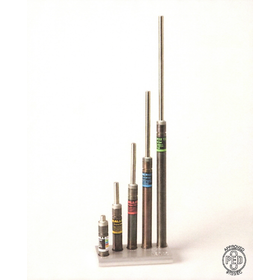
◇Excellent corrosion resistance stainless steel (AISI 303/304 and AISI 316L/316Ti available) ◇A rich lineup of 13 types ◇Customizable options such as stroke, total length, gas reaction force, and presence of end hydraulic resistance ◇Additional options available based on application and environment Wiper rings / grease chambers / protective tubes / float pistons / mechanical lock mechanisms / retrofittable clean caps, etc. ◇Can be changed to PURITY FG oil for food machinery ◇A wide range of mounting brackets and accessories available ◇Selection service Hahn's gas springs are maintenance-free and consist of a piston rod, piston, cylinder, guide parts, seals, and base plate. Inside the gas spring cylinder, compressed nitrogen gas and oil are sealed. The pressure inside the cylinder pushes the piston out, generating an extension force. In a no-load state, the piston rod is always in the fully extended position.

  • Pneumatic Equipment
  • Spring

Added to bookmarks

Bookmarks list

Bookmark has been removed

Bookmarks list

You can't add any more bookmarks

By registering as a member, you can increase the number of bookmarks you can save and organize them with labels.

Free membership registration

Industrial mechanism component "Gas Spring" model GS 082

A nearly constant spring force can be obtained over a wide range of strokes.

The gas springs of Takachiho Trading Co., Ltd. are products developed based on the know-how cultivated in oil and pneumatic products, including automotive shock absorbers and hydraulic equipment for railway vehicles, using unique manufacturing technology. Due to their small size and lightweight, they are widely used in various industries. 【Features】 ○ Because the spring constant is small, a nearly constant spring force can be obtained over a wide range of strokes. ○ The spring constant and gas reaction can be set over a wide range. ● For more details, please contact us or download the catalog.

  • Other machine elements
  • Spring

Added to bookmarks

Bookmarks list

Bookmark has been removed

Bookmarks list

You can't add any more bookmarks

By registering as a member, you can increase the number of bookmarks you can save and organize them with labels.

Free membership registration

Spring design - Prototyping, short delivery time

If you provide us with the general design requirements, we will design and prototype within a short timeframe.

The twisted spring in the photo was designed and prototyped by our company. We proceeded with the design based on the following specifications you provided: 1) Coil inner diameter, 2) Load at installation to maximum angle, 3) Durability (1 million cycles) The designed spring can be prototyped in a short lead time. The spring in the photo was delivered about one week after the order was placed. We can manufacture from a quantity of one. Our company accepts the manufacturing, design, and prototyping of various springs. If you provide us with rough design conditions, we will propose the optimal specifications and produce a prototype. We understand that some may be unsure about how to specify the design conditions for the spring. Our technical staff will respond carefully, so please feel free to consult with us. Tsuruga Spring Co., Ltd. Technical Contact: Ujiie Phone: 0235-22-0407 FAX: 0235-22-0546 Email: web@tohj.com We also support web conferencing.

  • Spring
  • Spring

Added to bookmarks

Bookmarks list

Bookmark has been removed

Bookmarks list

You can't add any more bookmarks

By registering as a member, you can increase the number of bookmarks you can save and organize them with labels.

Free membership registration

Spring News April Issue" includes trivia about springs: "About Spring Index.

April issue of the Spring News delivered every month! We introduce the spring index (D/d).

The spring index (D/d) is the value of the coil's average diameter divided by the wire diameter. While there are other factors that affect ease of manufacturing, it is generally considered that this value should be between 4 and 20, with 7 to 13 being particularly suitable for spring production. Although a spring index of 4 to 20 is desirable, it is not an absolute requirement to stay within this range. However, producing springs outside of this range can be very difficult or even impossible, so it is advisable to keep it within this range as much as possible. Please leave the design, estimation, and production of various springs to us. *For more details, please refer to the PDF document or feel free to contact us.*

Added to bookmarks

Bookmarks list

Bookmark has been removed

Bookmarks list

You can't add any more bookmarks

By registering as a member, you can increase the number of bookmarks you can save and organize them with labels.

Free membership registration

Spring News June Issue" includes a trivia about springs: "What is the effective number of coils?

The June issue of the Spring News delivered every month! It is considered good to have a valid number of volumes of 3 or more.

The effective number of coils refers to the portion of the coil that acts as a spring, calculated by subtracting the number of end coils from the total number of coils in a compression spring. Generally, end coils are often one coil each at both ends, so in that case, the effective number of coils is total coils minus 2. If the first coil and the last coil do not contact the next (previous) coil, and the ground portion is 3/4 of a coil, the effective number of coils becomes total coils minus 1.5. It is considered good practice to have an effective number of coils of 3 or more. For tension springs, the total number of coils equals the effective number of coils (excluding the hook sections). Please leave the design, estimation, and production of various springs to us. *For more details, please refer to the PDF materials or feel free to contact us.*

Added to bookmarks

Bookmarks list

Bookmark has been removed

Bookmarks list

You can't add any more bookmarks

By registering as a member, you can increase the number of bookmarks you can save and organize them with labels.

Free membership registration

Presenting the basic knowledge of springs that you can’t ask about now! *New equipment introduced to increase productivity.

Updating the compression coil springs and the equipment of the heat treatment device! Additionally, we are also offering trivia about springs taught by "Nishikawa Spring," which has been involved in springs for over 50 years!

To provide better products, we have updated our coiling machine and heat treatment equipment! <Details> Coiling Machine: Shinko Machine Industry Co., Ltd. Automatic Heat Treatment Equipment: Sankyo Co., Ltd. Additionally, we are offering "Spring Trivia" taught by Nishikawa Spring, which has been involved in spring manufacturing for about 50 years. Our company accepts product processing tailored to customer requests. If you have any issues with springs, please feel free to consult us. 【Published Content (Excerpt)】 ■ Trivia 1: Changes in coil diameter due to heat treatment (by material) ■ Trivia 2: Commonly used materials for springs ■ Trivia 3: Types of stainless steel wire for springs ■ Trivia 4: Types of oil-tempered wire *For more details, please refer to the PDF document or feel free to contact us.

  • Spring
  • Processing Contract
  • Spring

Added to bookmarks

Bookmarks list

Bookmark has been removed

Bookmarks list

You can't add any more bookmarks

By registering as a member, you can increase the number of bookmarks you can save and organize them with labels.

Free membership registration

The development of the spring industry in the early Taisho period and technological innovation through the introduction of testing machines.

[Reproduction of Private Spring Preparatory School Lecture 6] Standards and specifications for steel materials and springs have been established! The spring industry made great strides in the early Taisho period.

In the previous discussion, we talked about how the spring manufacturing industry modernized in the late Meiji period, and how other related industries made remarkable progress. Now, let's study the development process of the early Taisho period. In the late Meiji period, there were printing machine companies that were winding springs, and there is a story that when spring manufacturers went to take orders, they boasted that they could also wind springs. This was because the manufacturing of springs at that time was a closely guarded secret, and even if something was considered good, there were no methods to investigate it. *For detailed content of the article, please refer to the PDF. For more information, feel free to contact us.*

Added to bookmarks

Bookmarks list

Bookmark has been removed

Bookmarks list

You can't add any more bookmarks

By registering as a member, you can increase the number of bookmarks you can save and organize them with labels.

Free membership registration

The development of the automobile and aircraft industries during the Showa period and the role of the spring industry.

[Reproduction of Private Spring Preparatory School Lecture 9] Explaining the transition of the automotive and aerospace industries! Also discusses war and the spring industry.

Last time, we got sidetracked with the discussion about the new type of Katasa testing machine, but we are finally entering the history of springs in the Showa period. Since the Showa period is quite recent, I believe many of you are already familiar with various aspects, so let's study quickly. The spring industry, having inherited the developments of the late Taisho period, continued to thrive, and undoubtedly, the contributions of automobiles and airplanes were significant, so this time we will focus our study on this topic. As mentioned before, the entry of American automobile manufacturing into Japan from the late Taisho to the early Showa period stimulated the existing three companies in Japan to start full-scale production. *For detailed content of the article, please refer to the PDF. For more information, feel free to contact us.*

Added to bookmarks

Bookmarks list

Bookmark has been removed

Bookmarks list

You can't add any more bookmarks

By registering as a member, you can increase the number of bookmarks you can save and organize them with labels.

Free membership registration

Establishment of Standards and Changes in Steel Materials in the Spring Industry during the Showa Period

[Reissue Private Spring Preparatory School Lecture 10] About the spring industry during the Showa period! Establishment of various standards and specifications, from JES to JIS.

Last time, we studied the automotive and aircraft industries that form the background of the spring industry during the Showa period. Continuing from that, this time we will have a lesson on the spring industry during the Showa period. One characteristic of the Showa period that must be addressed is the establishment of various standards and specifications. The establishment of such standards can be seen as evidence of the advancement of research into industrial products. For example, regarding the Japanese National Railways, specifications for carbon steel materials for vehicle springs, wire springs for cushions, and wire and plates of phosphor bronze for springs were established in 1928. In 1930, specifications for hard-drawn steel wire for springs were established, followed by specifications for leaf springs and steel wire springs in the following year. *For detailed content of the article, you can view it in the PDF. For more information, please feel free to contact us.

Added to bookmarks

Bookmarks list

Bookmark has been removed

Bookmarks list

You can't add any more bookmarks

By registering as a member, you can increase the number of bookmarks you can save and organize them with labels.

Free membership registration

The evolution of spring technology and heat treatment methods during the Showa period and their historical background.

[Reissue Private Spring Preparatory School Lecture 11] Explanation of single and double quenching methods! Discussion of new materials and technologies as well.

Last time, we talked about JES and JIS, but this time let's trace the technical history of the Showa era. I gave it a confusing title like "one-stage or two-stage," but in fact, since the late Taisho period, the method of hardening spring plates has been a significant issue for the National Railways, so let me introduce the background. The term "one-stage hardening," which was used at that time (the Taisho period), refers to what we now call "austenitizing hardening," while "two-stage hardening" refers to the process of hardening and tempering. In this regard, the terminology used in heat treatment was incorrect, so although I wrote "one-stage" and "two-stage" in the title for this preparatory school, I will use the correct terms: "austenitizing hardening" for the former and "hardening and tempering" for the latter. *You can view the detailed content of the article in the PDF. For more information, please feel free to contact us.

Added to bookmarks

Bookmarks list

Bookmark has been removed

Bookmarks list

You can't add any more bookmarks

By registering as a member, you can increase the number of bookmarks you can save and organize them with labels.

Free membership registration

The influence of dynamic stress and fatigue failure in automobile springs and its relationship with road conditions.

[Reproduction of Private Spring Preparatory School Lecture 14] Characteristics of stress on springs! Used under significantly larger static and dynamic stresses.

In the last session, we started with a method for cutting wire by hand and studied fatigue testing methods, but we will continue with the lessons. As you know, springs are used in a very different way compared to general mechanical components. This is evident at a glance, as springs are often significantly bent or undergo intense stretching and contracting movements. The fact that springs are used in this manner means that they are subjected to much larger static and dynamic stresses compared to the design stresses of general mechanical components. *For detailed content of the article, you can view it in the PDF. Please feel free to contact us for more information.*

Added to bookmarks

Bookmarks list

Bookmark has been removed

Bookmarks list

You can't add any more bookmarks

By registering as a member, you can increase the number of bookmarks you can save and organize them with labels.

Free membership registration

Observation of fracture surfaces and understanding of the safety zone in fatigue testing of metallic materials.

[Reproduction of Private Spring Preparatory School Lecture 17] Metals also change when they are fatigued! An explanation of how the results of fatigue tests are organized and utilized in design.

The fracture surface of the fatigue test specimen, like that of an actual fatigue fracture, exhibits both smooth and rough surfaces. The difference is that, in many cases, the smooth surface does not show the shell-like patterns resembling tree rings. This is because the testing machine applies a constant repeated stress, preventing the progression of cracks from exhibiting a step-like pattern. The shell-like patterns that form on the fatigue fracture surface of automotive springs occur due to variations in the weight of the load or changes in road conditions, which cause fluctuations in the repeated stress. Additionally, there are instances where the smooth fracture surface of the test specimen appears discolored purple; this is due to temper colors resulting from frictional heat generated by the rubbing of the crack surfaces. *For more detailed information, please refer to the PDF. Feel free to contact us for further inquiries.*

Added to bookmarks

Bookmarks list

Bookmark has been removed

Bookmarks list

You can't add any more bookmarks

By registering as a member, you can increase the number of bookmarks you can save and organize them with labels.

Free membership registration

The Story of Butsushutarou and the Estimation Method of Fatigue Limits Learned from Static Strength and Its Practice

[Reproduction of Private Spring Preparatory School Lecture 18] Study of Fatigue Limit Estimation Method! Estimating fatigue limits from tensile strength and hardness test results.

Once upon a time, there was a story called "Monkusho Taro." It is said that he was so lazy that he would lie around all day and even relied on others to pick up the rice cakes he dropped. However, in the end, he achieved great success and was enshrined as a deity. Now, even if one does not achieve success or become a god, it can be tedious to go through exhausting tests that require both effort and time. Therefore, for those like Monkusho Taro, let’s study methods for estimating fatigue limits. This is based on the idea that there may be some relationship between fatigue limits and static strength, which many scholars are seeking to understand. The results indicate that there is a certain degree of correlation, but the variability is also quite large. The variability is not limited to just fatigue strength. *For more detailed information, please refer to the PDF. Feel free to contact us for more details.*

Added to bookmarks

Bookmarks list

Bookmark has been removed

Bookmarks list

You can't add any more bookmarks

By registering as a member, you can increase the number of bookmarks you can save and organize them with labels.

Free membership registration

The importance of factors affecting fatigue strength, such as notches and surface roughness, and their countermeasures.

[Reproduction of Private Spring Preparatory School Lecture 19] Notches reduce both static strength and fatigue strength! The scary part is the notches that are like bacteria, which are hard to see.

Last time, we studied that if we know the tensile strength of a material, we can estimate the approximate fatigue limit, and that this fatigue limit cannot be used as is. From this time onward, we will explain the factors that influence fatigue strength for a while. Have you encountered any mechanical parts in your daily handling that have broken due to fatigue failure, as we have studied so far? Please pay attention to where the starting point of fatigue cracks is. Usually, don't they start from places like keyways, oil holes, threads, abrupt changes in cross-section, or welds? *You can view the detailed content of the article in the PDF. For more information, please feel free to contact us.

Added to bookmarks

Bookmarks list

Bookmark has been removed

Bookmarks list

You can't add any more bookmarks

By registering as a member, you can increase the number of bookmarks you can save and organize them with labels.

Free membership registration

The importance of corrosion treatment and surface strengthening to enhance the durability of springs.

[Reproduction of Private Spring Preparatory School Lecture 23] Explanation of methods to prevent the decline of fatigue strength and surface treatments aimed at corrosion protection!

In recent discussions, we have explained the factors that lead to a decrease in fatigue strength. However, as the saying goes, "If you think you will lose, you will lose." Therefore, while we won't call it a surefire method, let's study ways to prevent the decline in fatigue strength. To improve fatigue strength, the first consideration is surface enhancement. As previously mentioned, this includes cleaning the surface and preventing decarburization, but there are also other effective measures such as corrosion protection and shot peening for springs. *For detailed content of the article, please refer to the PDF. For more information, feel free to contact us.*

Added to bookmarks

Bookmarks list

Bookmark has been removed

Bookmarks list

You can't add any more bookmarks

By registering as a member, you can increase the number of bookmarks you can save and organize them with labels.

Free membership registration

The effects and precautions of shot peening in improving the fatigue strength of spring materials.

[Reproduction of Private Spring Preparatory School Lecture 24] An explanation of the miracle cure for improving fatigue resistance, shot peening, and other important considerations!

Today, let's study shot peening, a remedy for improving fatigue strength, as a way to wrap things up, along with other important points. Shot peening involves bombarding the surface of a spring with small steel balls at high speed using compressed air or centrifugal force to strengthen that surface. The effects of this strengthening can primarily be considered as follows: A. Blowing away surface scale and decarburization layers, thereby reducing a type of notch. B. Generating effective residual stress on the surface. C. Work hardening the surface. D. Creating a uniform roughness on the surface. *For detailed content of the article, please refer to the PDF. For more information, feel free to contact us.

Added to bookmarks

Bookmarks list

Bookmark has been removed

Bookmarks list

You can't add any more bookmarks

By registering as a member, you can increase the number of bookmarks you can save and organize them with labels.

Free membership registration

The importance of changes in steel transformation and organizational structure, and hardness adjustment through heat treatment.

[Reproduction Private Spring Preparatory School Lecture 28] We are explaining using a diagram that shows the carbon content and the proportion of organizational components in steel!

As a policy of our preparatory school, we aim to make our lectures as easy as possible while ensuring the content is rich and profound. However, for a while, I believe we will continue with some difficult explanations. Please study with the same enthusiasm as a wife reading a cookbook. Now, phase transformation occurs at temperatures above 700 degrees, but first, let's examine the structure of steel at room temperature. *For detailed content, you can view the PDF. For more information, please feel free to contact us.*

Added to bookmarks

Bookmarks list

Bookmark has been removed

Bookmarks list

You can't add any more bookmarks

By registering as a member, you can increase the number of bookmarks you can save and organize them with labels.

Free membership registration