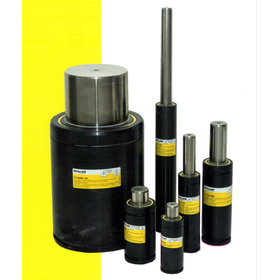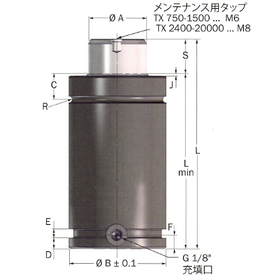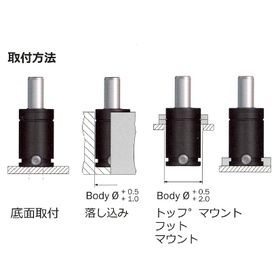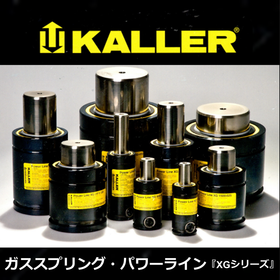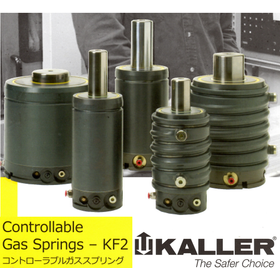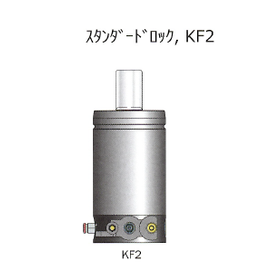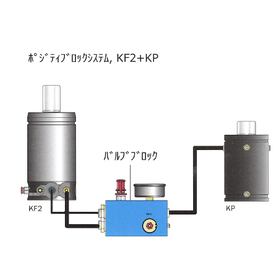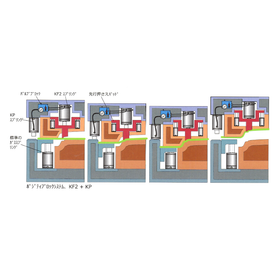
We have compiled a list of manufacturers, distributors, product information, reference prices, and rankings for Spring.
ipros is IPROS GMS IPROS One of the largest technical database sites in Japan that collects information on.

Spring Product List and Ranking from 94 Manufacturers, Suppliers and Companies | IPROS GMS

Last Updated: Aggregation Period:Feb 04, 2026~Mar 03, 2026
This ranking is based on the number of page views on our site.

Spring Manufacturer, Suppliers and Company Rankings

Last Updated: Aggregation Period:Feb 04, 2026~Mar 03, 2026
This ranking is based on the number of page views on our site.

  1. タフトレーディング Tokyo//others
  2. エコールド・ジャパン Chiba//Trading company/Wholesale
  3. KALLER Kanagawa//Machine elements and parts
  4. 4 鶴岡発條 Yamagata//Machine elements and parts
  5. 5 ダドコジャパン DADCO Japan, Inc. Kanagawa//Machine elements and parts

Spring Product ranking

Last Updated: Aggregation Period:Feb 04, 2026~Mar 03, 2026
This ranking is based on the number of page views on our site.

  1. Stainless Steel Spring "High-Performance Fluororesin Coated O-Ring for Extremely Low Temperatures" タフトレーディング
  2. Gas spring (gas damper) with locking function エコールド・ジャパン
  3. Composition and Function of Gas Springs エコールド・ジャパン
  4. 4 Cam Unit for Press Molds "Flex Cam" KALLER
  5. 5 BESTEC gas spring ハヤシ

Spring Product List

361~386 item / All 386 items

Displayed results

Explanation of the temperature changes due to the steel transformation process and the influence of carbon.

[Reproduction of Private Spring Preparatory School Lecture 29] Pure iron at room temperature undergoes a sudden transformation into gamma iron when the temperature rises to 910 degrees!

Last time, I briefly explained "Steel H," but today I will finally get serious and talk about perversion. As we learned previously, steel is an alloy of iron and carbon, and the strength and structure of steel change depending on the carbon content. However, it also varies with temperature, and the stable state is represented by a "phase diagram." *For detailed content of the article, you can view it in the PDF. Please feel free to contact us for more information.*

Added to bookmarks

Bookmarks list

Bookmark has been removed

Bookmarks list

You can't add any more bookmarks

By registering as a member, you can increase the number of bookmarks you can save and organize them with labels.

Free membership registration

Detailed explanation of dimensional changes due to quenching and tempering, and heat treatment techniques.

[Reproduction of Private Spring Preparatory School Lecture 32] Explanation of the relationship between temperature and elongation when heated slowly and cooled slowly!

I have been studying quenching and tempering lately, so please bear with me a little longer. ■ Expands to the point of rapid cooling I have lectured on the changes in structure caused by quenching and tempering, but today I would like to talk a bit about changes in dimensions. * For detailed content of the article, you can view it in the PDF. Please feel free to contact us for more information.

Added to bookmarks

Bookmarks list

Bookmark has been removed

Bookmarks list

You can't add any more bookmarks

By registering as a member, you can increase the number of bookmarks you can save and organize them with labels.

Free membership registration

Causes of defects due to heat treatment and preventive measures: countermeasures for overheating, quenching, and cracking.

[Reprint Private Spring Preparatory School Lecture 33] What you need to be careful about is overheating! An introduction to defects that are likely to occur during heat treatment.

Today, in the sense of a final review, let's study the defects that are likely to occur during heat treatment. The first thing to be cautious about is overheating. This occurs when steel is unnecessarily heated to a temperature above the specified level, which not only damages the fuel but also accelerates the wear of the furnace. Overheated materials are prone to decarburization, oxidation, and grain coarsening, leading to cracking and making the mechanical properties more brittle. In the heat treatment of springs, there is also a chance of overheating during shaping and quenching heating. How can we prevent this? *For detailed content of the article, please refer to the PDF. For more information, feel free to contact us.*

Added to bookmarks

Bookmarks list

Bookmark has been removed

Bookmarks list

You can't add any more bookmarks

By registering as a member, you can increase the number of bookmarks you can save and organize them with labels.

Free membership registration

The relationship between the quality and surface defects of spring steel wire and its price.

[Reproduction Private Spring Preparatory School Lecture 38] Make sure to check that there are differences in price depending on the type of line and the line diameter!

Last time, I lectured on the manufacturing process of spring steel wire. We studied how more effort is put into removing surface defects for higher quality wires. Today, I will discuss how this affects the surface defects of the wire and how it reflects on the price. First, looking at the raw material wire, the higher the carbon content, the more expensive it is. For example, if the price of high carbon steel wire type 6 is set at 100, then that of high carbon steel wire type 4 is 87. *For detailed content of the article, please refer to the PDF. For more information, feel free to contact us.*

Added to bookmarks

Bookmarks list

Bookmark has been removed

Bookmarks list

You can't add any more bookmarks

By registering as a member, you can increase the number of bookmarks you can save and organize them with labels.

Free membership registration

Quality and tensile strength of spring steel wire and changes in coil diameter.

[Reproduction of Private Spring Preparatory School Lecture 39] An explanation of how the tensile strength of spring steel wire significantly affects coiling!

I also assigned this as homework, but did you understand the differences in quality and performance among various types of spring steel wire? Today, let's try making springs with steel wire. Oh, excuse me, you all are better at spring manufacturing than I am. I would like to learn from you, so let's skip that. By the way, why do the springs made from spring steel wire fit precisely into certain dimensions and specific spring characteristics? *For detailed content, you can view it in the PDF. Please feel free to contact us for more information.*

Added to bookmarks

Bookmarks list

Bookmark has been removed

Bookmarks list

You can't add any more bookmarks

By registering as a member, you can increase the number of bookmarks you can save and organize them with labels.

Free membership registration

Improvement of fatigue resistance of springs by shot peening and precautions during processing.

[Reproduction of Private Spring Preparatory School Lecture 43] Fine matte texture on airplane parts! Explanation of shot peening.

Shot peening is a processing method in which countless small steel balls are struck against the surface of springs that have completed shaping and heat treatment. As a result of this processing, the surface of the spring develops numerous indentations and becomes similar to a pearlescent pattern. The formation of these surface irregularities occurs because the steel balls collide with great force against the surface of the steel, causing that area to undergo plastic deformation. *For more detailed information, please refer to the PDF. Feel free to contact us for further inquiries.

Added to bookmarks

Bookmarks list

Bookmark has been removed

Bookmarks list

You can't add any more bookmarks

By registering as a member, you can increase the number of bookmarks you can save and organize them with labels.

Free membership registration

A comprehensive summary of the causes of wire spring damage and preventive measures.

[Reproduction of Private Spring Preparatory School Lecture 45] The usable temperatures of various steel wires and JIS related to wire springs are also included in the table!

I would like to conclude the long study of spring mechanics with this session. Looking at examples of spring failures, they can be broadly categorized into breakage and deformation. Among these, the causes of breakage are mostly due to manufacturing defects and usage defects, while material defects are relatively minor. A common manufacturing defect is surface defects caused by overheating during heat treatment. In terms of usage defects, deterioration due to corrosion is likely. In the former case, shot peening is effective, while in the latter case, using stainless steel materials is effective. *For detailed content of the article, please refer to the PDF. For more information, feel free to contact us.*

Added to bookmarks

Bookmarks list

Bookmark has been removed

Bookmarks list

You can't add any more bookmarks

By registering as a member, you can increase the number of bookmarks you can save and organize them with labels.

Free membership registration

The Flower Preparatory School Festival: Lessons Hidden in the Songs Unraveled by the Folk Song Club

[Reproduction of Private Spring Preparatory School Lecture 46] Introducing songs about mainsprings, songs that encourage quality control, and songs related to painting and spring surfaces!

We decided to hold a school festival here to foster a connection between teachers and students. Titled, "Flower's Spring Prep School - School Festival." I wonder what kind of repertoire will emerge from the seriously diligent students. It's a mix of worry and excitement. First of all, the first classroom is very lively, so we've decided to come here today. Neither the president nor the students are studying today. Let's join together with the teachers and take a look at the results of our club activities. *For detailed information, please refer to the PDF. Feel free to contact us for more details.

Added to bookmarks

Bookmarks list

Bookmark has been removed

Bookmarks list

You can't add any more bookmarks

By registering as a member, you can increase the number of bookmarks you can save and organize them with labels.

Free membership registration

A Satirical and Humorous Senryu of Prep School Students Seen Through Springs and Peening

[Reprint Private Spring Preparatory School Lecture 48] Introducing a short poem consisting of three lines of 5-7-5 syllables, primarily focusing on humor and satire!

This is the third time for the Hanano Preparatory School's cultural festival. It’s both beneficial and not beneficial, which is what makes it great. If we only talk about things that are beneficial, it becomes like a wedding table speech, and it gets boring. In that regard, our school's haiku club, which I will visit today, may not have much to offer and is quite poor, but it somehow gives off an interesting vibe. *For detailed content, you can view it in the PDF. Please feel free to contact us for more information.*

Added to bookmarks

Bookmarks list

Bookmark has been removed

Bookmarks list

You can't add any more bookmarks

By registering as a member, you can increase the number of bookmarks you can save and organize them with labels.

Free membership registration

The relationship between spring stiffness and strength, an important point in design.

[Reproduction of Private Spring Preparatory School Lecture 52] Exploring specific examples of spring stiffness! We will also explain the limitations of using a spring scale.

In general, the hardness of a spring falls within a certain range. If it is too soft, it will deform under a small load, and if it is too hard, it will have low toughness and may break. Therefore, there arises a suitable hardness that is neither too hard nor too soft, which is referred to as "spring hardness." To impart this spring hardness to metals, methods such as cold working and quenching and tempering are used. Now, let’s explore specific examples of spring hardness. *For detailed content of the article, please refer to the PDF. For more information, feel free to contact us.*

Added to bookmarks

Bookmarks list

Bookmark has been removed

Bookmarks list

You can't add any more bookmarks

By registering as a member, you can increase the number of bookmarks you can save and organize them with labels.

Free membership registration

Changes in the structure of steel due to quenching and the hardening mechanism, the influence of carbon content, and its applications.

[Reproduction of Private Spring Preparatory School Lecture 54] Changes When Hardening is Done! Explanation of Carbon Content and Hardness from Hardening.

Today, let's investigate the changes that occur when quenching. First of all, it is absolutely necessary to heat the steel to a red heat for quenching. The temperature for this is the standard quenching temperature found in the familiar JIS spring steel material table. However, this is an example for heat treatment of tensile test specimens. In reality, whether it is a leaf spring or a coil spring, there is a forming process involved, so the temperature at the end of the forming process corresponds to this temperature. Now, let's consider what significance this quenching temperature has. *For detailed content of the article, please refer to the PDF. For more information, feel free to contact us.*

Added to bookmarks

Bookmarks list

Bookmark has been removed

Bookmarks list

You can't add any more bookmarks

By registering as a member, you can increase the number of bookmarks you can save and organize them with labels.

Free membership registration

Effective methods and precautions for removing quenching distortion using the press reversion method.

[Reproduction of Private Spring Preparatory School Lecture 62] By using the press hardening method, it is possible to suppress the amount of distortion!

This time, let's study how to remove quenching distortion during the re-baking process. When unraveling yarn that has been knitted once and re-knitting it into something else, the yarn becomes zigzagged due to long-term setting. To remove this yarn's kink, we can use steam generated from a kettle and pass the yarn through it while pulling, which surprisingly straightens the yarn. In other words, in this case, we are straightening it by applying heat and force simultaneously. The application of this method to springs that have developed quenching distortion is known as the press re-baking method. *For more detailed information, please refer to the PDF. Feel free to contact us for more details.*

Added to bookmarks

Bookmarks list

Bookmark has been removed

Bookmarks list

You can't add any more bookmarks

By registering as a member, you can increase the number of bookmarks you can save and organize them with labels.

Free membership registration

Gas spring "G06-15"

The gas reaction setting range is 30-450N! Introducing the gas springs we handle.

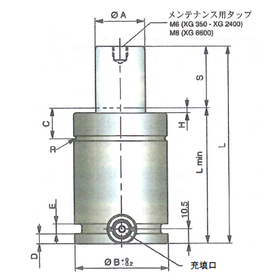
The G06-15 is a gas spring with a cylinder diameter of Φ15.6mm made of black painted steel. The piston rod diameter is Φ6mm and is made of hard chrome-plated steel, with the option to change to stainless steel. Please feel free to contact us when you need assistance. 【Specifications (partial)】 ■ Gas reaction force setting range: 30-450N ■ Gas change rate: approximately 22% ■ Piston rod diameter: Φ6mm hard chrome-plated steel (changeable to stainless steel) ■ Cylinder diameter: Φ15.6mm black painted steel ■ Mounting brackets: zinc-plated steel *For more details, please refer to the PDF document or feel free to contact us.

  • Pneumatic Equipment
  • Spring
  • Other machine elements
  • Spring

Added to bookmarks

Bookmarks list

Bookmark has been removed

Bookmarks list

You can't add any more bookmarks

By registering as a member, you can increase the number of bookmarks you can save and organize them with labels.

Free membership registration

Gas spring "G06-19"

The gas change rate is approximately 17%! Introducing the gas springs we handle.

The G06-19 is a gas spring with a gas force adjustment range of 20-450N. The cylinder diameter is Φ19mm, made of black painted steel, and the mounting brackets are made of zinc-plated steel. Please feel free to contact us if you need assistance. 【Specifications (partial)】 ■ Gas force adjustment range: 20-450N ■ Gas change rate: approximately 17% ■ Piston rod diameter: Φ6mm hard chrome-plated steel (can be changed to stainless steel) ■ Cylinder diameter: Φ19mm black painted steel ■ Mounting brackets: zinc-plated steel *For more details, please refer to the PDF document or feel free to contact us.

  • Pneumatic Equipment
  • Spring
  • Other machine elements
  • Spring

Added to bookmarks

Bookmarks list

Bookmark has been removed

Bookmarks list

You can't add any more bookmarks

By registering as a member, you can increase the number of bookmarks you can save and organize them with labels.

Free membership registration

Gas spring "G22-40"

The gas change rate is approximately 43%! Introducing the gas springs we handle.

The "G22-40" is a gas spring with a gas reaction force setting range of 300-6000N. The piston rod diameter is Φ22mm, and the mounting brackets are made of zinc-plated steel. Please feel free to contact us if you have any inquiries. 【Specifications (partial)】 ■ Gas reaction force setting range: 300-6000N ■ Gas variation rate: approximately 43% ■ Piston rod diameter: Φ22mm hard chrome-plated steel (can be changed to stainless steel) ■ Cylinder diameter: Φ40mm black painted steel ■ Mounting brackets: zinc-plated steel *For more details, please refer to the PDF document or feel free to contact us.

  • Pneumatic Equipment
  • Spring
  • Other machine elements
  • Spring

Added to bookmarks

Bookmarks list

Bookmark has been removed

Bookmarks list

You can't add any more bookmarks

By registering as a member, you can increase the number of bookmarks you can save and organize them with labels.
Free membership registration

We also accept selection of gas springs! Please feel free to consult with us.

Gas Spring Inquiry Form

We have a dedicated inquiry form for gas springs. Please feel free to contact us! * For selection, information such as the center of gravity and weight of the door or lid is required. Please check the specifications of the door or lid in advance. * It may take 2 to 3 days to respond after your inquiry.
Added to bookmarks

Bookmarks list

Bookmark has been removed

Bookmarks list

You can't add any more bookmarks

By registering as a member, you can increase the number of bookmarks you can save and organize them with labels.

Free membership registration

Customizable manufacturing and sales of springs, etc.

Each item is unique, shaping our customers' requests - from single pieces to mass production, we manufacture and sell high-quality pressed springs, compression springs, and other types of springs.

Satte Spring Co., Ltd. has been providing products in a wide range of fields since its establishment, starting with precision springs for automobiles, as well as medical devices, electronic equipment, and outdoor products. We take pride in the important role that the flexibility and rigidity of our springs play as mechanical elements in various products. We continuously challenge ourselves with special steel, high-strength materials, and complex processing to create products that delight our customers. We manufacture everything in-house, from ultra-small springs with a wire diameter of 15μ to springs for construction equipment with a diameter of φ12, and we support you with Japan's top-class processing range and services, whether for single units or mass production of high-quality products. 【Business Overview】 ○ Manufacturing and sales of high-quality springs and related products → Compression springs, compression coil springs → Cylindrical coil springs, ultra-fine and ultra-small springs → Tension coil springs, flat springs, leaf springs → Torsion springs, wire forming, and more For more details, please contact us or download our catalog.

  • Spring
  • Other machine elements
  • Spring

Added to bookmarks

Bookmarks list

Bookmark has been removed

Bookmarks list

You can't add any more bookmarks

By registering as a member, you can increase the number of bookmarks you can save and organize them with labels.

Free membership registration

THFM2 Transistor Clip 2 Connection

You can arrange and secure two transistors to the heat sink.

Our company, Aquas, is the official domestic distributor for the German global manufacturer Fischer Elektronik. This product is fixed with screws, but the transistors can be secured to the heat sink without using screws. The THFM2 spring for transistor fixation is compatible with the following semiconductor packages: - TO 218 - TO 220 - TO 247 - TO 264 - SOT 32 - SIP Multiwatt You can choose from 1 to 10 pieces. *Please feel free to contact us for more details.

  • thfm.eps.jpg
  • IPROS2175634052087143217.jpeg
  • Other semiconductors
  • Spring

Added to bookmarks

Bookmarks list

Bookmark has been removed

Bookmarks list

You can't add any more bookmarks

By registering as a member, you can increase the number of bookmarks you can save and organize them with labels.

Free membership registration

Deformation and sagging of springs: Causes and countermeasures.

Introducing the causes and countermeasures for deformation and wear of springs in spring troubles!

"Settle" refers to the phenomenon where the material of a spring undergoes plastic deformation during use, resulting in a change in the dimensions of the spring, primarily caused by insufficient material strength. The adequacy of the material's strength can be calculated based on the spring's usage conditions. Countermeasures for "settle" involve changing the material to one with higher durability, increasing the wire diameter, and other specification modifications. In doing so, care is taken to select specifications that do not alter the spring's force characteristics (spring constant or load), but if there are space constraints for the spring, discussions with the customer will be necessary. If there are no issues with the strength calculations, potential causes of "settle" may include: 1) improper heat treatment after spring formation, or 2) use in an environment exceeding the heat resistance temperature. Our company addresses spring-related troubles. If you send us the deformed item, we will verify its strength and durability and propose improvement measures. Our technical staff will respond carefully, so please feel free to consult us. Tsurugaoka Spring Co., Ltd. Technical Contact: Ujiie Phone: 0235-22-0407 Email: web@tohj.com We also support web meetings.

  • Spring
  • Spring

Added to bookmarks

Bookmarks list

Bookmark has been removed

Bookmarks list

You can't add any more bookmarks

By registering as a member, you can increase the number of bookmarks you can save and organize them with labels.

Free membership registration

Causes and countermeasures for spring breakage and damage.

The clues to identifying the cause of the damage are the lifespan calculations and strength calculations.

The clues for identifying the cause of breakage are lifespan calculations and strength calculations. If a spring breaks below the calculated results, the cause of the breakage is suspected to be "stress concentration" originating from scratches or machining marks. When we examine the springs upon consultation, we often find scratches or machining marks caused during processing. In this case, reworking with attention to these scratches can lead to improvement. If the timing of the breakage aligns with the calculations, the cause of the breakage is thought to be insufficient material strength. The countermeasure for breakage in this case is to change the specifications of the spring. Specifically, this may involve changing the material to one that is more durable or increasing the wire diameter, while considering the balance to avoid altering the spring's force characteristics (spring constant, load). Our company addresses spring-related issues such as breakage and sagging. If you send us broken samples, we will propose countermeasures and, if desired, we can also produce improved prototypes. First-time customers are also welcome to consult with us without hesitation. In fact, most of the customers who consult with us have never done business with us before. We look forward to your inquiries.

  • Contract manufacturing
  • Spring

Added to bookmarks

Bookmarks list

Bookmark has been removed

Bookmarks list

You can't add any more bookmarks

By registering as a member, you can increase the number of bookmarks you can save and organize them with labels.

Free membership registration

Tension Spring SWP-AΦ0.3 U Hook

In the case of small lot production, costs can be reduced by processing by hand.

The shape of this spring's hook is a "U hook." It is a commonly used shape alongside "reverse round hooks" and "round hooks." Although it is a shape that can be formed using a multi-forming machine, the hook part is processed by hand due to small lot production. In the case of small lot production, incorporating handmade elements can help reduce costs, not just for this spring. If you have any issues with springs, please feel free to consult us. Our technical staff will respond carefully. Tsuruoka Spring Co., Ltd. Technical Contact: Ujiie Phone: 0235-22-0407 FAX: 0235-22-0546 Email: web@tohj.com We also support web meetings.

  • Spring
  • Spring

Added to bookmarks

Bookmarks list

Bookmark has been removed

Bookmarks list

You can't add any more bookmarks

By registering as a member, you can increase the number of bookmarks you can save and organize them with labels.

Free membership registration

"Spring News May Issue" features trivia about springs: "About the number of coils"!

Spring News May issue delivered every month! Introducing the flat parts at both ends of the compression spring.

The seat coil count refers to the flat-looking parts at both ends of the compression spring, which do not act as coils. This seat coil often consists of one coil at each end, so in the case of a typical compression spring, it totals 1 coil + 1 coil, resulting in 2 coils. For springs where the tip of the coil is in contact with the next coil, the seat coil count is 2 coils, with one coil at each end. If the first and last coil sections are not in contact with the next (previous) coil section, and the polished section is 3/4 of a coil, then each end will be 0.75 coils, resulting in a seat coil count of 0.75 coils + 0.75 coils, totaling 1.5 coils. Please leave the design, estimation, and production of various springs to us. *For more details, please refer to the PDF materials or feel free to contact us.*

Added to bookmarks

Bookmarks list

Bookmark has been removed

Bookmarks list

You can't add any more bookmarks

By registering as a member, you can increase the number of bookmarks you can save and organize them with labels.

Free membership registration

[Spring News July Issue] Spring Trivia "What is Free Height?" Featured!

Spring News July issue delivered every month! Introduction to free height (free length, free length).

The free height (free length) is the height (length) of the spring when no load is applied in the case of a compression spring. In the case of a tension spring, the free length is the inner dimension between one hook and the other hook. When measuring the free length of a tension spring, measure the inner dimension directly between the hooks. If it is difficult to measure the inner dimension, measure the outer dimension between the hooks and subtract (wire diameter × 2) from that value. Please leave the design, estimation, and production of various springs to us. *For more details, please refer to the PDF document or feel free to contact us.

Added to bookmarks

Bookmarks list

Bookmark has been removed

Bookmarks list

You can't add any more bookmarks

By registering as a member, you can increase the number of bookmarks you can save and organize them with labels.

Free membership registration

[Spring News October Issue] Spring Trivia: "What is the Spring Constant?"

The October issue of our monthly Spring News is here! We are introducing the spring constant.

The load of the spring increases in proportion to the amount of deflection. The spring constant refers to the load per 1mm of deflection. It is appropriate to set the spring constant between 30% and 70% of the total deflection amount. Tension springs have an initial tension, and deflection occurs when the load exceeds this initial tension. Please leave the design, estimation, and production of various springs to us. *For more details, please refer to the PDF document or feel free to contact us.

Added to bookmarks

Bookmarks list

Bookmark has been removed

Bookmarks list

You can't add any more bookmarks

By registering as a member, you can increase the number of bookmarks you can save and organize them with labels.

Free membership registration

"Spring News September Issue" includes trivia about springs: "Heat Treatment"!

September issue of the Spring News delivered every month! Tempering will be done in an electric furnace.

Heat treatment is performed to eliminate distortion after spring forming and to stabilize it. The temperature and time are set according to the material and wire diameter. Previously, we used quenching treatment (heating followed by rapid cooling to harden), but now we perform tempering treatment (technically referred to as low-temperature annealing) in an electric furnace. When piano wire or steel wire undergoes tempering treatment, a thin oxide film forms on the surface, changing it to a blue color. This blue color is referred to as temper color. Please leave the design, estimation, and production of various springs to us. *For more details, please refer to the PDF document or feel free to contact us.

Added to bookmarks

Bookmarks list

Bookmark has been removed

Bookmarks list

You can't add any more bookmarks

By registering as a member, you can increase the number of bookmarks you can save and organize them with labels.

Free membership registration

[Research Material] The Global Market for Dampers

World Market for Dampers: Hydraulic, Pneumatic, Others, Automotive, Motorcycles

This research report (Global Shock Damper Market) investigates and analyzes the current state of the global shock absorber market and its outlook for the next five years. It includes information on the overview of the global shock absorber market, trends of major companies (sales, selling prices, market share), market size by segment, market size by major regions, and distribution channel analysis. The segments by type in the shock absorber market include hydraulic, pneumatic, and others, while the segments by application focus on automotive and motorcycles. The regional segments are divided into North America, the United States, Europe, Asia-Pacific, Japan, China, India, South Korea, Southeast Asia, South America, the Middle East, and Africa, to calculate the market size of shock absorbers. It also includes the market share of major companies in the shock absorber sector, product and business overviews, and sales performance.

  • Other services
  • Spring

Added to bookmarks

Bookmarks list

Bookmark has been removed

Bookmarks list

You can't add any more bookmarks

By registering as a member, you can increase the number of bookmarks you can save and organize them with labels.

Free membership registration