We have compiled a list of manufacturers, distributors, product information, reference prices, and rankings for coating.
ipros is IPROS GMS IPROS One of the largest technical database sites in Japan that collects information on.

coating(Coating) - List of Manufacturers, Suppliers, Companies and Products | IPROS GMS

Last Updated: Aggregation Period:Apr 22, 2026~May 19, 2026
This ranking is based on the number of page views on our site.

coating Product List

31~37 item / All 37 items

Displayed results

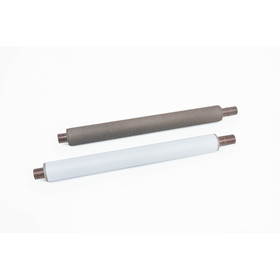
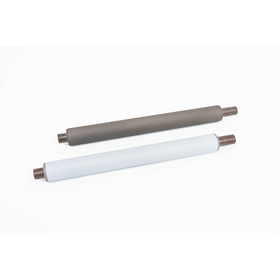
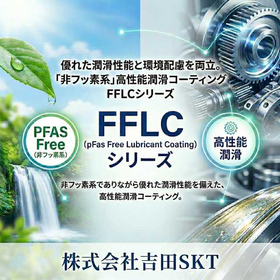
PFAS-free lubricating coating "FFLC Series"

High lubrication and low friction without fluorine. Next-generation coating compliant with PFAS regulations.

Due to the strengthening of PFAS regulations, there is an increasing demand for alternatives to fluoropolymer coatings. The "FFLC Series," developed exclusively by Yoshida SKT, is PFAS-free (non-fluorinated) and demonstrates excellent lubrication performance, achieving low friction and wear resistance for sliding and conveying components. It is ideal for semiconductor manufacturing equipment manufacturers who want to balance environmental compliance with performance maintenance. Yoshida SKT is one of the few authorized processors of Teflon(TM) coatings, with a track record of over 2,000 companies and hundreds of surface treatment technologies. We also welcome inquiries about switching from currently used fluorinated coatings. Detailed specifications, case studies, and selection guides can be found in our materials. Please download the materials and make use of them.

  • others
  • coating

Added to bookmarks

Bookmarks list

Bookmark has been removed

Bookmarks list

You can't add any more bookmarks

By registering as a member, you can increase the number of bookmarks you can save and organize them with labels.

Free membership registration

Functional Coating Agent FOC Series [Various Lineup Available]

The FOC series is a coating agent that selectively combines the advantages of organic and inorganic materials, allowing for the addition of new functions tailored to customer requirements.

Our company operates in the coating and fine chemicals business, conducting research and development, technical consulting, contract research, manufacturing and sales, and various evaluation tests for functional coatings, functional chemical raw materials, flame retardants, fireproof agents, and natural polymer-related technologies. "FOC" stands for "FECT Organic-modified-ceramic Coating," which signifies a hybrid of organic and inorganic materials. While conventional organic and inorganic paints have their representative advantages and disadvantages, as shown in the attached materials, the FOC series allows for the selection of the strengths of both organic and inorganic components, enabling the addition of new functions tailored to customer needs. It can be handled similarly to regular organic paints, and the coatings can accommodate a wide range of applications from on-site work to production line processes. Beyond the traditional passive functions of beautification and substrate protection, it is possible to combine functions that the coating film itself can actively exhibit. In the FOC series, you can select and combine functions from the functional table provided in the attached materials. We also offer a versatile lineup. *For more details, please contact us or download the catalog.

  • Coating Agent
  • Other polymer materials
  • coating

Added to bookmarks

Bookmarks list

Bookmark has been removed

Bookmarks list

You can't add any more bookmarks

By registering as a member, you can increase the number of bookmarks you can save and organize them with labels.

Free membership registration

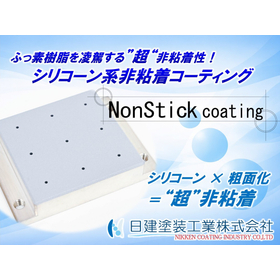
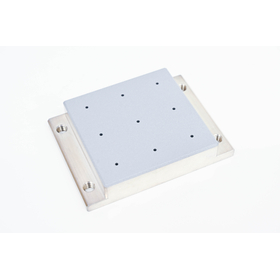
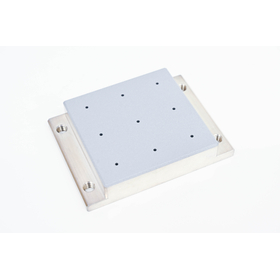
[Case Study on Molding Process] Reducing the Use of Release Agents in Molding Dies - Sample Provided

Significantly reduces the sticking of molded materials to the mold surface! Reduces the amount of release agent used, improving the production environment.

We would like to introduce a case where issues arising from the use of release agents in molding with materials that tend to stick were improved through surface treatment. ■ What we wanted to achieve in the molding process - A large amount of release agent was used because the molded rubber material stuck to the mold and could not be removed. We wanted to address the impact of release agent spraying on human health and the deterioration of the environment! ■ Background for selecting surface treatment - Since mass-produced items require several hours for a single molding, we wanted to reduce the effort of reprocessing surface treatments due to the large number of molds. - We wanted to avoid contamination of products due to wear or peeling of the surface treatment. - We also wanted to maintain the dimensional accuracy of the molds. ■ Effects achieved through surface treatment - We adopted a surface treatment that maintains dimensional accuracy and is resistant to peeling and wear. - By using it in conjunction with release agents, we successfully extended the lifespan of the surface treatment and reduced the amount of release agent used. ■ Currently, we are offering a trial set and a collection of case studies for improvements in the molding process! The case study collection can be viewed by downloading the PDF. You can apply for the sample book through the related links.

  • Surface treatment contract service
  • coating

Added to bookmarks

Bookmarks list

Bookmark has been removed

Bookmarks list

You can't add any more bookmarks

By registering as a member, you can increase the number of bookmarks you can save and organize them with labels.

Free membership registration

[Market Report] Global Market for Conformal Coatings

The global conformal coating market is expected to exceed 1.58 billion USD by 2031, driven by a CAGR of 5.8%.

The global conformal coating market is experiencing significant growth, underscoring its important role across various industries. In 2022, the market generated substantial revenue of approximately 899.1 million USD. This upward trend is expected to continue, with the market size projected to exceed 1.58 billion USD by 2031. This growth is supported by a solid compound annual growth rate (CAGR) of 5.8% during the forecast period from 2023 to 2031. Conformal coatings, which protect electronic components from environmental factors, have become essential in industries such as electronics, automotive, aerospace, and healthcare. These coatings provide a shield against moisture, chemicals, dust, and other contaminants that could compromise the performance and lifespan of delicate electronic systems. For application methods, please check the [PDF download] button or apply directly through the related links.

  • others
  • coating

Added to bookmarks

Bookmarks list

Bookmark has been removed

Bookmarks list

You can't add any more bookmarks

By registering as a member, you can increase the number of bookmarks you can save and organize them with labels.

Free membership registration

[Market Report] Global Market for Polyasparagine-based Coatings

The global market for polyasparagine-based coatings is expected to thrive, reaching 514.5 million USD by 2031.

The global polyaspartic acid-based coatings market is on an upward trend, demonstrating significant resilience and growth. In 2022, the market revenue was $347.6 million. According to forecasts, the compound annual growth rate (CAGR) is expected to be 4% during the forecast period from 2023 to 2031, with an estimated valuation of $514.5 million by 2031. Polyaspartic coatings have established themselves as versatile high-performance solutions across various industries, significantly contributing to the expansion of this market. The global market for polyaspartic coatings is characterized by technological innovation, with manufacturers continuously developing advanced formulations to meet evolving industry requirements. These coatings play a crucial role in extending the lifespan of infrastructure, reducing maintenance costs, and enhancing surface aesthetics. For application methods, please check the [PDF download] button or apply directly through the related links.

  • others
  • coating

Added to bookmarks

Bookmarks list

Bookmark has been removed

Bookmarks list

You can't add any more bookmarks

By registering as a member, you can increase the number of bookmarks you can save and organize them with labels.

Free membership registration

[Market Report] Global Graphene Coating Market

The global graphene coating market is expected to grow exponentially and reach 19 million USD by 2031.

The global graphene coating market is experiencing remarkable growth, with revenues reaching approximately 1.81 million USD in 2022. Recent market analysis indicates that the market is poised to exhibit a robust compound annual growth rate (CAGR) of 29.9% during the forecast period from 2022 to 2031. By 2031, the market valuation is estimated to reach 19 million USD. Graphene coatings, which incorporate graphene into their composition, have emerged as innovative solutions across various industries. These coatings offer unparalleled properties and advantages, including corrosion resistance, waterproofing, solar paint, and the ability to enhance structural integrity for a variety of applications. You can check the application method by clicking the [PDF Download] button or apply directly through the related links.

  • others
  • coating

Added to bookmarks

Bookmarks list

Bookmark has been removed

Bookmarks list

You can't add any more bookmarks

By registering as a member, you can increase the number of bookmarks you can save and organize them with labels.

Free membership registration

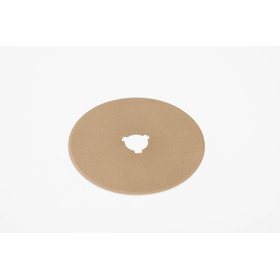
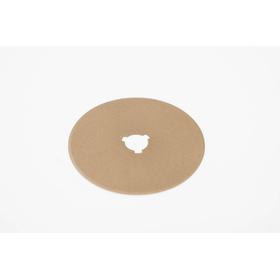
Suitable for "glass fusion prevention" - Ceramic DIP coating

[New Technology] Achieving prevention of fusion between glass and setters with ceramic coating using the DIP method.

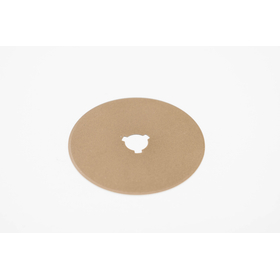
Do you have any concerns about products fusing to the setter during firing? Please consider this ceramic coating for improving yield and quality. We would like to introduce a ceramic coating using a dipping method that differs from conventional thermal spraying for the setters you are using. This is also featured on the following webpage: https://denki.narasaki.co.jp/ceramic-dipcoating-1-0 【Four Features】 ◆ High freedom of shape, capable of ceramic coating for 3D shapes at meter scale ◆ Ceramic coating possible for most high-performance materials ◆ Ceramic coating possible with an average thickness of 50μ ◆ Coating surface has good roughness and excellent smoothness (Ra 0.8 or less) 【Materials that can be coated】 *Main setter materials ■ Mullite ■ Alumina-based ■ Zirconia-based ■ SiC-based *Applicable to both porous and dense ceramics. *Ceramic coating is also possible for other materials. Please feel free to contact us.

Added to bookmarks

Bookmarks list

Bookmark has been removed

Bookmarks list

You can't add any more bookmarks

By registering as a member, you can increase the number of bookmarks you can save and organize them with labels.

Free membership registration