We have compiled a list of manufacturers, distributors, product information, reference prices, and rankings for recycling.
ipros is IPROS GMS IPROS One of the largest technical database sites in Japan that collects information on.

recycling Product List and Ranking from 175 Manufacturers, Suppliers and Companies | IPROS GMS

Last Updated: Aggregation Period:May 06, 2026~Jun 02, 2026
This ranking is based on the number of page views on our site.

recycling Manufacturer, Suppliers and Company Rankings

Last Updated: Aggregation Period:May 06, 2026~Jun 02, 2026
This ranking is based on the number of page views on our site.

  1. null/null
  2. 日清特殊金属 Hyogo//environment
  3. 薬進 Osaka//environment
  4. 4 null/null
  5. 5 甲商 Saitama//Resin/Plastic

recycling Product ranking

Last Updated: Aggregation Period:May 06, 2026~Jun 02, 2026
This ranking is based on the number of page views on our site.

  1. Wide-area certification system × waste rubber & waste plastic recycling
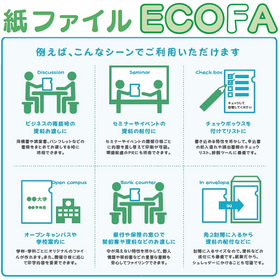
  2. Confidential Document Dissolution Processing Recycling Service "Eco Clean BOX" 薬進
  3. [Resin Nazenaze Series] Regarding Yellowing in Dark Places 甲商
  4. 4 Purchase, collection, and recycling of special metal materials and carbide scraps. 日清特殊金属
  5. 5 Super hard recycling 矢野金属

recycling Product List

271~300 item / All 314 items

Displayed results

[For Recycling] Reviving items on the brink of disposal. Reprocessing and recycling of super-hard tools.

Recycling worn carbide tools with chipped cutting edges instead of discarding them. Our pride in recycling processing.

In the crushing industry, the processing of used tools and the procurement costs of new tools can be challenging. In particular, carbide tools with chipped or broken cutting edges are often difficult to reuse in their current state, leading to cases where disposal is unavoidable. However, these tools may still contain usable parts. Our company leverages the technology of new manufacturing to process carbide tools from materials entrusted to us by customers, restoring tools that would otherwise be discarded to a like-new condition. This is expected to contribute to the reduction of waste and address environmental issues. 【Usage Scenarios】 - Reuse of used carbide tools - Waste reduction - Cost reduction 【Effects of Implementation】 - Reduction of disposal costs - Decrease in environmental impact - Control of new tool procurement costs

  • Processing Contract
  • recycling

Added to bookmarks

Bookmarks list

Bookmark has been removed

Bookmarks list

You can't add any more bookmarks

By registering as a member, you can increase the number of bookmarks you can save and organize them with labels.

Free membership registration

Recycling and regeneration processing of superhard tools for aerospace applications.

We propose recycled carbide tools for precision machining in the aerospace field.

In the aerospace field, precision machining of components requires high accuracy and reliability. Especially when performing complex shapes or fine machining, the sharpness and durability of the tools directly impact the quality of the products. Situations where carbide tools can no longer be used due to chipping or wear lead to increased costs and potential environmental burdens. Our company utilizes new manufacturing technologies to regenerate and recycle carbide tools entrusted to us, restoring them to a condition similar to new. This helps reduce the number of tools discarded and contributes to addressing environmental issues. 【Application Scenarios】 - Cutting machining of precision components in the aerospace field - Manufacturing of parts requiring complex shapes or fine machining - Reduction of production stoppage risks due to tool wear or damage 【Benefits of Implementation】 - Reduction in the cost of purchasing new tools - Decrease in environmental impact through reduced waste - Achievement of precision machining with stable quality

  • Processing Contract
  • recycling

Added to bookmarks

Bookmarks list

Bookmark has been removed

Bookmarks list

You can't add any more bookmarks

By registering as a member, you can increase the number of bookmarks you can save and organize them with labels.

Free membership registration

Recycling and regeneration processing of carbide tools for the energy industry.

Recycling and regenerating super hard tools that are on the verge of disposal for turbine blade applications.

In the energy industry, particularly in the manufacturing and maintenance of turbine blades, high-precision and durable cutting tools are essential. Damage or breakage of the tool's cutting edge directly leads to a decrease in processing accuracy and a decline in production efficiency, which can also affect the quality of the final product. In response to these challenges, our company offers the regeneration and recycling processing of carbide tools using new manufacturing technologies. We maximize the use of usable parts from tools that may be discarded, reviving them as tools with performance comparable to new ones. This also contributes to waste reduction and a decrease in environmental impact. 【Utilization Scenarios】 - Precision machining of turbine blades - Reuse of damaged or broken carbide tools - Addressing diverse processing needs through shape modification 【Effects of Implementation】 - Reduction in the cost of purchasing new tools - Decrease in environmental impact due to reduced waste - Maintenance and improvement of processing accuracy

  • Processing Contract
  • recycling

Added to bookmarks

Bookmarks list

Bookmark has been removed

Bookmarks list

You can't add any more bookmarks

By registering as a member, you can increase the number of bookmarks you can save and organize them with labels.

Free membership registration

[For Construction Machinery] Reviving Near-Discarded Items. Reprocessing and Recycling of Carbide Tools.

We restore super hard tools for heavy machinery parts to like-new condition, repairing chips and breaks.

In the construction machinery industry, durable tools that can withstand harsh working conditions are in high demand. Particularly in the processing of heavy machinery parts, high precision and long lifespan are directly linked to maintaining production efficiency and reducing costs. Broken or damaged carbide tools can lead to work interruptions and decreased processing accuracy, potentially resulting in unexpected cost increases. Our company addresses these challenges by utilizing new manufacturing technologies to process carbide tools from materials entrusted to us by customers, restoring them to like-new condition. Tools that would otherwise have to be discarded can be revitalized by utilizing their usable parts, contributing to a reduction in environmental impact. 【Usage Scenarios】 - Cutting processing of heavy machinery parts - Tool usage in harsh environments - High frequency of replacements due to tool damage or wear 【Benefits of Implementation】 - Reduction in tool costs - Maintenance and improvement of production efficiency - Reduction in waste volume

  • Processing Contract
  • recycling

Added to bookmarks

Bookmarks list

Bookmark has been removed

Bookmarks list

You can't add any more bookmarks

By registering as a member, you can increase the number of bookmarks you can save and organize them with labels.

Free membership registration

Recycling and regeneration processing of ultra-hard tools for semiconductors.

We will regenerate ultra-hard tools that are on the verge of being discarded for wafer cutting applications.

In the semiconductor industry, particularly in the field of wafer cutting, precise and stable processing accuracy is required. The loss or wear of cutting tool edges can directly lead to a decline in cutting quality and a deterioration in yield. Tools that have previously had to be discarded can once again demonstrate their performance through our recycling process. We also accommodate changes to shapes based on customer requests, reviving them as optimal tools for wafer cutting. 【Usage Scenarios】 - Tool wear and damage during wafer cutting - Extension of tool life in precision machining - Achieving both cost reduction and waste reduction 【Benefits of Implementation】 - Maintenance and improvement of cutting quality - Stabilization of productivity - Reduction of environmental impact

  • Processing Contract
  • recycling

Added to bookmarks

Bookmarks list

Bookmark has been removed

Bookmarks list

You can't add any more bookmarks

By registering as a member, you can increase the number of bookmarks you can save and organize them with labels.

Free membership registration

Reviving near-disposal molds. Reprocessing and recycling of carbide tools.

We restore worn or damaged carbide tools to like-new condition.

In the mold industry, especially for molding applications, precise machining accuracy and tool durability are required. If the cutting edge of the tool chips or breaks, it can directly lead to a decline in the quality of molded products and a decrease in production efficiency. Before disposing of them, please consider our recycling processing. We will process the materials entrusted to us by our customers using new manufacturing technologies to restore them to like-new condition. By cutting out only the usable parts and reviving them, we contribute to reducing waste and minimizing environmental impact. 【Usage Scenarios】 - When wear or damage occurs to carbide tools used for molding molds - When you want to achieve both cost reduction and environmental impact reduction 【Benefits of Implementation】 - Reduction in the cost of purchasing new tools - Reduction in environmental impact due to decreased waste - Maintenance of productivity through the extension of tool life

  • Processing Contract
  • recycling

Added to bookmarks

Bookmarks list

Bookmark has been removed

Bookmarks list

You can't add any more bookmarks

By registering as a member, you can increase the number of bookmarks you can save and organize them with labels.

Free membership registration

[Subsidy Consultant] Waste Recycling

Plastic recycling equipment and solar panel recycling equipment are eligible for subsidies!

Our company provides "Energy Saving Subsidy Consulting." Until now, approximately 1.5 million tons of waste plastic have been exported overseas as resources each year, with a significant portion going to China. However, since the end of December 2017, when China implemented a ban on the import of waste plastic, the accumulation of waste plastic domestically has become a problem. At Green Technology, we propose the most suitable subsidies for our customers from various options and take full responsibility for everything from application preparation to performance report creation. Please feel free to contact us when needed. [Main Equipment Renovations Eligible for Subsidies (Excerpt)] ■ Plastic Recycling Equipment: Introduction of waste plastic crushing, washing, and dehydration equipment, etc. ■ Lighting Equipment: Introduction of LED lighting devices, installation of LED emergency lights, installation of motion sensors ■ Power Receiving and Transforming Equipment: Upgrading to high-efficiency transformers, introduction of demand monitoring systems ■ Carbon Fiber Reinforced Plastic (FRP) Recycling Equipment ■ Solar Panel Recycling Equipment *For more details, please refer to the PDF materials or feel free to contact us.

  • Other contract services
  • Other services
  • recycling

Added to bookmarks

Bookmarks list

Bookmark has been removed

Bookmarks list

You can't add any more bookmarks

By registering as a member, you can increase the number of bookmarks you can save and organize them with labels.

Free membership registration

Industry-leading processing capability! Industrial waste disposal service <Processing flow materials available>

【Attention: Those in the Kanto, Kinki, Tokai, and Chugoku regions!】 We handle a wide variety of waste disposal at our own factory!

Our company processes a variety of diversifying waste with industry-leading processing capabilities. At the Senshu Plant, the introduction of the SSI shredder allows for the acceptance of difficult-to-process materials such as rolls, bulk bags, ropes, fishing nets, tires, fenders, and mattresses with springs. This document introduces our business activities and improvements at the plant. The flow of processing through mixed waste sorting equipment is also clearly summarized in an illustrated map. We respond to foreign matter contamination and promote resource recovery through thorough sorting. Please feel free to contact us if you have any requests. 【Features】 ■ Sakai Headquarters Factory - Maximum processing capacity is 1,520mm²/day, processed safely and appropriately - Cement raw material conversion ■ Senshu Plant - Processing capacity is approximately 1,000mm²/day, recycling of mixed waste - Acceptance of difficult-to-process materials is possible *For more details, please download the PDF or feel free to contact us. *Frequently asked questions are summarized on our website. Please take a look.

  • Other conveying machines
  • recycling

Added to bookmarks

Bookmarks list

Bookmark has been removed

Bookmarks list

You can't add any more bookmarks

By registering as a member, you can increase the number of bookmarks you can save and organize them with labels.

Free membership registration

What is thermal recycling? ~Recycling by burning waste to recover heat~

A biomass boiler that accommodates various fuels such as RPF, RDF, wood chips, wood pellets, and construction waste! Thermal recycling!

Thermal recycling (heat recovery) refers to the process of incinerating waste materials such as plastic products and recovering and utilizing the heat energy generated during this process. As the environmental impact of plastic waste is becoming a concern, thermal recycling is gaining attention in Japan for its purpose of effectively utilizing energy resources. The waste that is incinerated mainly consists of general and industrial waste, such as waste plastics, paper scraps, and wood scraps, particularly those that are difficult to recycle through conventional plastic recycling methods or are hard to sort. The waste heat recovered through thermal recycling is used for various applications, including power generation within facilities, heating, hot water supply, and heated swimming pools. **Features** - Waste with foreign substances can also be reused. - Reduces the use of fossil fuels. - Contributes to the prolongation of landfills. - Can suppress the generation of methane gas. In line with the concept of thermal recycling, Ikros treats various waste materials, such as wood scraps and waste plastics, as solid fuel and handles biomass boilers that can utilize the generated heat energy for various purposes. *For more details, please download the catalog or contact us.*

  • スクリーンショット 2025-03-18 132601.png
  • Boiler
  • recycling

Added to bookmarks

Bookmarks list

Bookmark has been removed

Bookmarks list

You can't add any more bookmarks

By registering as a member, you can increase the number of bookmarks you can save and organize them with labels.

Free membership registration

[Basic Knowledge] About Sheet Material Recycling

Material recycling of sheets used once! Contributing to the reduction of CO2 emissions.

Utilizing the temperature adjustment function, we have been producing a wide variety of sheets for many years. By combining the advantage of not needing to pelletize the raw materials with our unique large-scale Banbury mixer (kneader), we have made it possible to remold used tile carpets from office and store floors, which are sorted and crushed only at the substrate by our partner companies, back into the same product. This contributes to reducing CO2 emissions by decreasing waste disposal, landfill, and incineration. Additionally, we are also engaged in sheet molding to reuse plastic products that were previously discarded for different applications. While we mix materials using the Banbury mixer, this equipment can crush and knead materials other than hard materials like metals. As a practical example, we have mixed used rubber gaskets from refrigerators with the substrate of tile carpets to create sheets, transforming used products that were previously disposed of into new forms. Material recycling will become increasingly essential in the future. *For more details, please refer to the PDF document or feel free to contact us.

  • Contract manufacturing
  • Other machine elements
  • recycling

Added to bookmarks

Bookmarks list

Bookmark has been removed

Bookmarks list

You can't add any more bookmarks

By registering as a member, you can increase the number of bookmarks you can save and organize them with labels.

Free membership registration

[English Market Research Report] Lithium-Ion Battery Recycling Market

"Free samples" are currently being offered! Please check the application method from the [PDF download] button, or apply directly from the related links.

Concerns about environmental issues related to the disposal and recycling of lithium-ion batteries have led governments and regulatory agencies to implement stricter regulations and policies to promote battery recycling and reduce environmental pollution. In regions with stringent environmental regulations, such as the European Union and North America, manufacturers and recyclers are required to adhere to recycling targets and standards for lithium-ion batteries. Furthermore, initiatives such as the European Battery Directive and the U.S. Battery Recycling Act impose responsibilities on stakeholders throughout the battery value chain to encourage battery recycling and ensure the proper disposal and recycling of used batteries. This report investigates the global lithium-ion battery recycling market, summarizing the market overview, factors influencing market growth and opportunities, market size trends and forecasts, detailed analysis by various segments and regions, competitive landscape, and profiles of key companies.

  • Other services
  • recycling

Added to bookmarks

Bookmarks list

Bookmark has been removed

Bookmarks list

You can't add any more bookmarks

By registering as a member, you can increase the number of bookmarks you can save and organize them with labels.

Free membership registration

Material Recycling: Activities Towards Closed Recycling

We have started closed material recycling for injection molding materials!

As a responsibility of the molding factory, we have pursued the effective utilization of waste materials such as runners and defective products. While recycling them into general recycled materials is one achievement, we have reached a point where we can operate with 100% pure recycled materials as eDream. Mold with new materials → Collect products → Transform into recycled materials → Mold again → Collect again → ... This is truly closed material recycling. With the cooperation of our existing customers and partner companies, we have managed to bring this to fruition. If you are interested, please feel free to consult with us.

  • IMG_2605.jpg
  • Other services
  • Other contract services
  • Contract manufacturing
  • recycling

Added to bookmarks

Bookmarks list

Bookmark has been removed

Bookmarks list

You can't add any more bookmarks

By registering as a member, you can increase the number of bookmarks you can save and organize them with labels.

Free membership registration

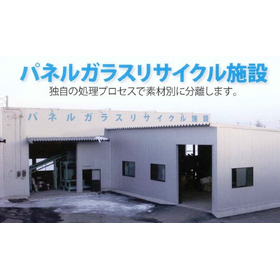
Panel Glass Recycling for the Automotive Industry

Automated sorting and recycling of glass and polarizers to support the reuse of automotive parts.

In the automotive industry, there is a demand for reducing environmental impact through the reuse and recycling of parts. In particular, glass components generated from end-of-life vehicles can pose challenges in material separation. Our company has developed a panel glass recycling business that automatically separates glass and polarizers through a unique processing method, recycling them by material. This contributes to improving the recycling efficiency of automotive parts. [Usage Scenarios] - Collection of glass components from end-of-life vehicles - Recycling processes at parts manufacturers - Material separation at automotive dismantling companies [Effects of Implementation] - Efficient separation of glass and polarizers - Increase in recyclable materials - Reduction of environmental impact

  • Separation device
  • recycling

Added to bookmarks

Bookmarks list

Bookmark has been removed

Bookmarks list

You can't add any more bookmarks

By registering as a member, you can increase the number of bookmarks you can save and organize them with labels.

Free membership registration

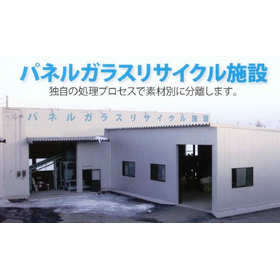
Panel Glass Recycling for Construction

Contributing to building material conversion! Automatic separation of glass and polarizing films for recycling.

In the construction industry, there is a demand for the sustainability and recycling of building materials. In particular, panel glass generated from demolition sites can pose challenges in its disposal. It is important to effectively reuse this panel glass to create new value as a building material. Our panel glass recycling utilizes a unique processing method to automatically separate glass and polarizers, allowing them to be used as resources. 【Usage Scenarios】 - Collection of panel glass from demolition sites - Promotion of reuse as building materials - Contribution to waste reduction 【Benefits of Implementation】 - Effective use of resources - Reduction of environmental impact - Contribution to the development of new building materials

  • Separation device
  • recycling

Added to bookmarks

Bookmarks list

Bookmark has been removed

Bookmarks list

You can't add any more bookmarks

By registering as a member, you can increase the number of bookmarks you can save and organize them with labels.

Free membership registration

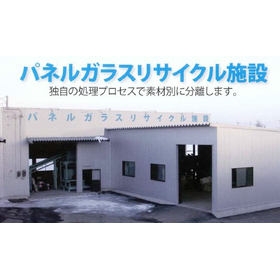
Panel glass recycling for home appliances

Automatic separation of glass and polarizing films! Recycling of home appliance panels.

In the home appliance industry, the recycling of parts from used products is emphasized for effective resource utilization and reducing environmental impact. In particular, the panel glass of LCD televisions is composed of different materials such as glass and polarizing film, and efficiently separating and recovering these materials poses a challenge. Improper processing can lead to a decrease in recycling rates and make it difficult to reuse materials. Our panel glass recycling employs a unique processing method that automatically separates glass and polarizing film by material, allowing for the recycling of both materials. 【Application Scenes】 - Recycling of LCD television panel glass - Recycling of plasma television front panels - Recycling of plasma television panel glass - Recycling of solar panel glass 【Benefits of Implementation】 - Improved recycling rates through automatic separation of glass and polarizing film by material - Effective utilization of resources, including polarizing film - Reduction of environmental impact

  • Separation device
  • recycling

Added to bookmarks

Bookmarks list

Bookmark has been removed

Bookmarks list

You can't add any more bookmarks

By registering as a member, you can increase the number of bookmarks you can save and organize them with labels.

Free membership registration

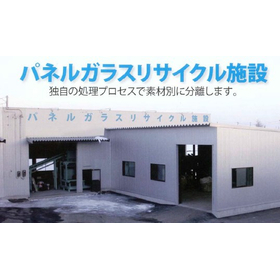
Panel glass recycling for optical equipment

Automatically separates glass and polarizing films for reuse as materials.

In the optical equipment industry, particularly in the field of lens materials, there is a demand for a stable supply of high-quality materials and a reduction in environmental impact. Traditional glass recycling has faced challenges, such as the separation of different materials like polarizing films. Our panel glass recycling utilizes a unique processing method that automatically separates polarizing films from liquid crystal television panel glass, allowing both glass and polarizing film to be recycled as materials. This contributes to the stable procurement of glass, which is a raw material for lens materials, and helps realize a sustainable, environmentally circular society. 【Usage Scenarios】 - Securing glass raw materials for lens manufacturing - Recycling and utilization of polarizing film - Efforts to reduce environmental impact 【Benefits of Implementation】 - Stable supply of high-quality glass raw materials - Effective use of resources through recycling - Corporate appeal for environmental contributions

  • Separation device
  • recycling

Added to bookmarks

Bookmarks list

Bookmark has been removed

Bookmarks list

You can't add any more bookmarks

By registering as a member, you can increase the number of bookmarks you can save and organize them with labels.

Free membership registration

Panel glass recycling for semiconductor manufacturing

Automatic separation technology by material for the recycling of special glass.

In the semiconductor manufacturing industry and in workplaces dealing with special glass, proper disposal of used glass materials and as much resource recovery as possible are required. In particular, special glass manufactured with advanced technology may have a complex recycling process due to its composition and accompanying materials. Our company has developed a panel glass recycling business that automatically separates glass and polarizing films by material through a unique processing method, addressing the recycling needs of special glass. 【Usage Scenarios】 - Waste disposal of special glass - Separation of recyclable materials - Contribution to reducing environmental impact 【Effects of Implementation】 - Efficient recycling through automatic separation by material - Recycling of glass and polarizing film - Potential reduction in waste disposal costs

  • Separation device
  • recycling

Added to bookmarks

Bookmarks list

Bookmark has been removed

Bookmarks list

You can't add any more bookmarks

By registering as a member, you can increase the number of bookmarks you can save and organize them with labels.

Free membership registration

Panel Glass Recycling for Art and Design

Automatically separate glass and polarizing plates for use as creative materials.

In the art and design industry, there is a demand for creative materials with unique textures and qualities. It is particularly important to find new value in existing materials and connect them to original expressions. However, utilizing waste materials and obtaining special materials can pose challenges. Our panel glass recycling process automatically separates glass and polarizing film from LCD TV panel glass through a unique processing method, providing them as new creative materials. 【Usage Scenarios】 - As materials for glass art - As embedding materials for resin art - As decorations for terrariums and aquariums - As materials for collage works 【Benefits of Implementation】 - Enables the use of materials with unique textures in creative activities - Contributes to environmentally conscious material selection - Expands the possibilities for new expressions

  • Separation device
  • recycling

Added to bookmarks

Bookmarks list

Bookmark has been removed

Bookmarks list

You can't add any more bookmarks

By registering as a member, you can increase the number of bookmarks you can save and organize them with labels.

Free membership registration

Panel Glass Recycling for Lighting

Automatically separate glass and polarizing films for reuse as glass raw materials.

In the lighting industry, uniform and high-quality glass materials are required for product quality and stable supply. In particular, the purity and granularity of the glass can affect the performance and durability of lighting fixtures. The use of inappropriate materials may lead to product defects and performance degradation. Our company is engaged in a business that automatically separates glass and polarizers from liquid crystal television panel glass through a unique processing process, recycling the glass as raw material for glass. 【Usage Scenarios】 - As glass raw material in lighting fixture manufacturing - As raw material in glass product manufacturing 【Benefits of Implementation】 - Stable supply of high-quality glass raw materials - Reduction of environmental impact through recycling

  • Separation device
  • recycling

Added to bookmarks

Bookmarks list

Bookmark has been removed

Bookmarks list

You can't add any more bookmarks

By registering as a member, you can increase the number of bookmarks you can save and organize them with labels.

Free membership registration

Panel Glass Recycling for Research and Development

Automatically separate glass and polarizing plates for use as experimental materials.

In the field of research and development, a stable supply of diverse materials and a reduction in environmental impact are required. In particular, the quality of the materials used in experiments and their procurement methods can affect the efficiency of research. Effectively reusing existing panel glass and utilizing it as new experimental materials contributes to cost reduction and improved sustainability. Our panel glass recycling automatically separates glass and polarizing films through a unique processing method, providing materials suitable for research and development purposes. 【Utilization Scenarios】 - Use of glass fragments as substrates for experiments - Evaluation of optical properties of polarizing film - Utilization of recycled materials in the development of new materials 【Effects of Implementation】 - Stable procurement of experimental materials - Reduction of research and development costs - Contribution to the reduction of environmental impact

  • Separation device
  • recycling

Added to bookmarks

Bookmarks list

Bookmark has been removed

Bookmarks list

You can't add any more bookmarks

By registering as a member, you can increase the number of bookmarks you can save and organize them with labels.

Free membership registration

Eliminate disposal costs and turn a profit! Purchase and recycle HCFC225.

We can handle about 10 cans of pale cans even in local areas. [Haven't you spent money to dispose of HCFC225?]

Items that were previously just discarded may be purchased by Revitalize. Our company handles the valuable treatment (purchase) and recycling of HCFC225. We can accommodate both local and regional requests. For valuable treatment (purchase), a sample evaluation is required. We will only need to collect a small sample from the used waste, and it won't incur any costs or trouble for you! Additionally, we provide information on appropriate alternatives and cleaning equipment for HCFC225, which will cease production at the end of 2019 due to the Ozone Layer Protection Law. If you are interested, please download the PDF or contact us.

  • Environmental Test Equipment
  • recycling

Added to bookmarks

Bookmarks list

Bookmark has been removed

Bookmarks list

You can't add any more bookmarks

By registering as a member, you can increase the number of bookmarks you can save and organize them with labels.

Free membership registration

Basic Knowledge of Plastic: Recycling of PP

Plastic pallets, rainwater storage layers, building materials, miscellaneous goods, etc.! Introducing the recycling applications of PP.

We will introduce the recycling of PP as basic knowledge about plastics. The code for PP from the Society of the Plastics Industry in the United States is number 5. Additionally, commonly recycled applications include plastic pallets, rainwater retention systems, building materials, and miscellaneous goods. If you have any requests or concerns regarding plastic recycling and product development, please feel free to contact us. 【Examples of Recycling Applications】 ■ Plastic Pallets ■ Rainwater Retention Systems ■ Building Materials ■ Miscellaneous Goods *For more details, please refer to the PDF document or feel free to contact us.

Added to bookmarks

Bookmarks list

Bookmark has been removed

Bookmarks list

You can't add any more bookmarks

By registering as a member, you can increase the number of bookmarks you can save and organize them with labels.

Free membership registration

Environmental impact reduction: Material recycling of used uniforms.

Your important uniform can be contributed to reducing environmental impact instead of being discarded.

Our company is engaged in a recycling business that collects used uniforms and returns them to the raw material stage to be re-manufactured as automotive interior materials. In response to the circular economy, we support companies' CSR and security measures, as well as reducing environmental impact through a consistent system. Since the materials are reused directly without incineration, this contributes to CO2 reduction and resource conservation. 【Features】 ■ Obtained Wide Area Certification No. 188 from the Ministry of the Environment ■ Contributes to SDGs Goals "12" and "13" ■ Properly manages "industrial waste" ■ Prevents uniforms with company names from leaking out and being misused for crimes ■ Contributes to CO2 reduction and resource conservation *For more details, please refer to the PDF document or feel free to contact us.

  • Other safety and hygiene products
  • recycling

Added to bookmarks

Bookmarks list

Bookmark has been removed

Bookmarks list

You can't add any more bookmarks

By registering as a member, you can increase the number of bookmarks you can save and organize them with labels.

Free membership registration

Recycling and regeneration processing of superhard tools for the mining industry.

Rejuvenation of cutting edge defects and damage of hard tools for excavation to like-new condition.

In mining excavation work, wear and damage to tools in harsh environments is unavoidable. In particular, the loss of cutting edges and tool breakage can lead to decreased work efficiency and unexpected cost increases. Our carbide tool regeneration and recycling process utilizes new manufacturing technology to process materials entrusted to us by customers, restoring them to like-new condition. This allows us to revive tools that would have otherwise been discarded by utilizing the usable parts. It also contributes to reducing waste and addresses environmental concerns. 【Usage Scenarios】 - Tool damage and wear at excavation sites - Cost reduction for frequently replaced tools - Environmental impact reduction through waste reduction 【Benefits of Implementation】 - Cost savings through tool lifespan extension - Reduced frequency of purchasing new tools - Environmental impact reduction through waste reduction

  • Processing Contract
  • recycling

Added to bookmarks

Bookmarks list

Bookmark has been removed

Bookmarks list

You can't add any more bookmarks

By registering as a member, you can increase the number of bookmarks you can save and organize them with labels.

Free membership registration

Recycling and regeneration processing of carbide tools for automotive parts manufacturing.

We restore worn or damaged cutting tools to like-new condition.

In the automotive parts processing industry, tools with excellent cutting performance are always required to achieve precise machining. Especially in the processing of complex-shaped parts and high-hardness materials, tool wear and breakage directly lead to reduced production efficiency and variations in machining accuracy. Before discarding, please consider our recycling processing. 【Usage Scenarios】 - When there is wear or breakage of carbide tools in parts processing - When aiming for cost reduction and reduced environmental impact - When wanting to accommodate various machining needs through shape changes 【Benefits of Implementation】 - Reusable with performance comparable to new tools - Environmental contribution through waste reduction - Improved cost performance

  • Processing Contract
  • recycling

Added to bookmarks

Bookmarks list

Bookmark has been removed

Bookmarks list

You can't add any more bookmarks

By registering as a member, you can increase the number of bookmarks you can save and organize them with labels.

Free membership registration

Recycling and regeneration processing of carbide tools for food processing and packaging.

Would you like to recycle hard tools used in food processing and packaging instead of discarding them?

In the packaging process of the food processing industry, precise cutting and shaping in a hygienic environment are required. Therefore, the carbide tools used must have high precision and durability. Tools that have blade defects or wear can lead to defective packaging materials and decreased production efficiency. Our company utilizes new manufacturing technologies to process carbide tools entrusted to us by customers, restoring them to like-new condition. Tools that would otherwise have to be discarded can be revitalized by utilizing their usable parts, contributing to cost reduction and a decrease in environmental impact. 【Usage Scenarios】 - Cutting films and sheets on packaging lines - Responding to wear and damage of carbide tools used in molding dies - Processing needs for special shapes 【Benefits of Implementation】 - Reduction in the cost of purchasing new tools - Decrease in environmental impact due to reduced waste - Maintenance of production lines through stable supply of tools

  • Processing Contract
  • recycling

Added to bookmarks

Bookmarks list

Bookmark has been removed

Bookmarks list

You can't add any more bookmarks

By registering as a member, you can increase the number of bookmarks you can save and organize them with labels.

Free membership registration