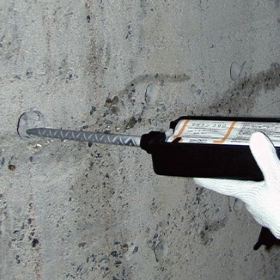
Epoxy Resin - Epoxy Molding Insulator (2)
This is an introduction to "epoxy resin."
If you have any questions, please feel free to contact us.
- Company:浪華合成
- Price:Other
Last Updated: Aggregation Period:Mar 04, 2026~Mar 31, 2026
This ranking is based on the number of page views on our site.
Last Updated: Aggregation Period:Mar 04, 2026~Mar 31, 2026
This ranking is based on the number of page views on our site.
Last Updated: Aggregation Period:Mar 04, 2026~Mar 31, 2026
This ranking is based on the number of page views on our site.
61~90 item / All 1518 items
This is an introduction to "epoxy resin."
If you have any questions, please feel free to contact us.
This is an introduction to "Unsaturated Polyester Resin (SMC/BMC)."
If you have any questions, please feel free to contact us.
Perfect for those considering sealing with epoxy resin!
At Nagahama Gosei, we accurately understand the properties of epoxy resin and use materials that meet our customers' needs to provide molded products that satisfy them. For more details, please contact us or refer to our catalog.
Softness like human skin! This ultra-soft modeling resin is perfect for figures, squishies, and anatomical models!
This is a super soft urethane resin that expresses the softness similar to human skin. It has sufficient strength even at low hardness and can express a softness like that of human skin. It can also be colored and is the ideal molding material for human body models, figures, and protective pads, in the form of a "human skin gel" concentrate. **Key Points of Human Skin Gel Concentrate (Milky White)** - **Incredible Softness!** This is a molding urethane resin that possesses a softness that has been nearly impossible to achieve at the user level until now. - **Three Hardness Options Available** You can choose from three levels of softness depending on your intended use: - Hardness 0 (like a cheek) - Hardness 7 (like a shoulder) - Hardness 15 (like a heel) - **Sufficient Strength** It has adequate strength even at low hardness, making it suitable for creating medical models, hobbies, and figures. - **Self-Adhesive Properties** The cured human skin gel has self-adhesive properties. If adhesion is a concern, please use talc powder or a separately sold surface coating agent. - **Custom Model Production Requests Accepted!** *For more details, please feel free to contact us.*
Outstanding bubble release! Incredible softness! A transparent type of ultra-soft molding resin that has a softness akin to human skin has arrived!
This is a transparent ultra-soft urethane resin that expresses the softness similar to human skin. It is ideal as a material for medical palpation models and original figures. There are two types available: hardness 0 (soft) and hardness 7 (normal). **Key Points of Human Skin Gel Concentrate (Transparent)** - **Incredible Softness!** This urethane resin has a softness that was nearly impossible to achieve at the user level until now. - **Excellent Bubble Release and Transparency!** Bubbles are easily released even with manual stirring, allowing for the molding of a highly transparent soft resin. There is no need for a vacuum degasser. - **Cures at Room Temperature!** It cures in 24 hours at room temperature (above 20°C). You can create it without an oven or similar equipment. - **Self-Adhesive Properties** The cured human skin gel has self-adhesive properties. If adhesion is a concern, please use a separately sold surface coating agent. *For more details, feel free to contact us.*
Transparency reaches its peak. Please experience the ultimate clarity of clear resin.
This is a transparent epoxy resin developed for wood river tables. It is a resin that combines high transparency and yellowing resistance, making it suitable not only for creating wood river tables but also for use as a casting resin. Additionally, it is designed with low viscosity and a long working time, allowing for good bubble release and enabling the removal of remaining bubbles to be done slowly.
【Technical Data Presentation】Achieving 3,000 cases annually! Capable of supporting both eutectic and lead-free! Packed with technical information such as BGA reballing that regenerates solder balls!
At K-All, we have accumulated various work methods and technical research, enabling rework operations even on devices coated with various underfill materials! Using techniques such as replacement, re-implementation, re-balling, re-heating, underfill filling, BGA jumpers, and POP implementation for BGA, LGA, QFN, etc., we solve various issues related to circuit boards and devices. In this document, we present technical materials regarding BGA rework technology. Hardened underfill materials seal the BGA, significantly improving strength and effectiveness; however, rework tasks such as removal and component replacement become more challenging than standard rework processes. Our company has been working diligently to ensure that rework operations can be performed even on devices coated with various underfill materials. [Features of Underfill] - Uses a one-component heat-curing epoxy resin - Can reduce external stress - Prevents stress concentration on the connection surface of solder balls - Widely used in mobile devices, including mobile phones *For more details, please contact us or download the catalog!

Thermoplastic elastomers such as polyurethane! By handling products of assured quality, we meet the needs of customers both domestically and internationally.
This catalog features products from Huafon TPU, which is handled by Nomura Trading. The company is certified with ISO 9001:2008, ISO 14001:2004, and OHSAS, ensuring quality stability through strict manufacturing management. By utilizing the resources of the Huafon Group companies for research and development and manufacturing management systems, we respond to the needs of domestic and international customers and provide solutions. We introduce a variety of products, including "Polyester-based TPU (general grade)" known for its excellent mechanical strength, and "Polyester-based TPU (extrusion and blow molding grade)." [Contents (excerpt)] ■ What is TPU ■ Features of Huafon TPU products ■ Performance comparison of TPU ■ Compatibility of TPU and various elastomers with rigid resins in two-color molding ■ Hardness range of TPU *For more details, please refer to the PDF document or feel free to contact us.
This is a document summarizing the material properties of 3D printer materials from Formlabs that are compatible with a variety of resins.
This document summarizes the physical properties of a wide range of resins that can be used with Formlabs' stereolithography 3D printers, the 'Form2 / Form3'. The Form2/Form3 is attractive for its compatibility with various resins, including "Tough," which is ABS-like and highly tough, "High Temp," which is heat-resistant, and "Castable," suitable for lost-wax casting, as well as "Draft," which is specialized for fast printing. This document outlines the physical properties of each resin that can be used with the Form2 and Form3, as well as their chemical compatibility with various liquids. By confirming properties such as strength and toughness to select the appropriate resin, it becomes possible to create models suitable for specific applications. [Features of the Document] ■ Physical Properties Listed It includes physical property values such as tensile modulus and flexural strength before and after post-curing. This information can help in selecting resins with the necessary characteristics for the intended use of the model. ■ Chemical Compatibility Listed It includes changes in weight when immersed in liquids such as water and mineral oil. You can verify resins suitable for the model's usage environment. *Please view the PDF data from the download button below.
[Mitarepo] How transparent does transparent resin become with a 3D printer? I tried it out!
"Mitarepo" is a series that introduces what can be done using various products with the concept of "I tried doing this!" From the wide range of product genres handled by System Create, we deliver useful information each time. The theme of Vol. 14 is "How transparent can 3D printer clear materials be?" In this issue, we used the clear resin of the light-curing 3D printer "Form 3+" to create a plate and tested how much transparency we could achieve. The materials examine the differences in transparency due to thickness and how much transparency can be obtained through finishing processes, with actual work being conducted to verify this. "Isn't transparent resin just at a translucent level?" "Does achieving transparency require a lot of work?" We will explain the concerns regarding the "work and finish" related to creating transparent models, along with actual shaping and work scenes, as well as comments from the technical staff! *You can download the materials from the button below.
How much high temperature can the nylon (PA) material of the powder sintering 3D printer 'Fuse1' withstand?
"Mitarepo" is a series that introduces what can be done using various products with the concept of "I tried doing this!" From the wide range of product categories handled by System Create, we deliver useful information each time. The theme of Vol. 24 is "How much high temperature can nylon (PA) resin for powder sintering 3D printers withstand?" This time, we tested the powder material "Nylon (PA)" of the powder sintering 3D printer "Fuse 1" by creating plates of varying thicknesses to see how much high temperature they can withstand. The materials will examine differences in deformation due to thickness, how long it takes to heat, and at what temperature it becomes soft, as well as whether deformation occurs when actually bent. "Is nylon (PA) really that heat-resistant?" "Even looking at the physical property table, the actual heat resistance is hard to understand!" We will explain the "usable temperature" concerning heat-resistant model production, along with photos of the work process and results, as well as comments from the technical staff! *You can download the materials from the button below.
What is the breaking point in kg for the nylon (PA) material of the powder sintering 3D printer "Fuse1"?
"Mitarepo" is a series that introduces what can be done using various products with the concept of "I tried doing this!" We will deliver useful information each time from the wide range of product genres handled by System Create. The theme of Vol. 27 is "How much weight can nylon (PA) resin, used for powder sintering 3D printer materials, withstand?" This time, we experimented by creating an original design hook using the powder material "Nylon (PA)" from the powder sintering 3D printer "Fuse 1," lifting heavy objects to see how many kilograms it can withstand without breaking. However, when checking the tensile strength on the material properties table, the values seem to be not much different from those of general PLA. "Even if Nylon 12 (PA) is strong, isn't 90 kg impossible?" "I don't think it seems that strong based on the material properties table values?" We will explain the "actual strength" that is concerning for model production requiring strength, along with photos of the verification process and results, as well as comments from the technical staff. Please take a look at the surprising results! *You can download the materials from the button below.
【Mitarepo】Challenging 3D Printing with Domestic Silicone Materials! | System Create
"Mitarepo" is a series that introduces what can be done using various products with the concept of "I tried doing this!" We deliver useful information each time from the wide range of product genres handled by System Create. In Vol. 103, we challenged open material printing using the liquid layered 3D printer "Lynxter S300X." The "Lynxter S300X," capable of 3D printing with two-component curing silicone materials, supports open material printing. Since silicone materials are widely available, they can be easily obtained domestically; however, there are few examples of utilizing commercially available silicone in 3D printing. Therefore, this time we used Shin-Etsu Silicone's two-component curing material, which is widely used in Japan, to test whether it can actually be printed! The document explains the process of successfully printing with silicone materials, along with images of the models. *You can download the document using the button below.*
This is a resin that improves the functionality of the existing transparent resin series and significantly enhances its toughness.
Since the launch of the transparent resin series, not only has the previously high demand for improvement in yellowness been reduced, but the toughness, which had high functional requirements, has also been significantly enhanced. Additionally, environmental considerations have been taken into account, and no antimony compounds, which are toxic and hazardous substances, have been used.
Assisting in the development of new products with our own high-performance materials.
The TSR series of photopolymer resins caters to a wide range of needs from prototyping to mass production. We will responsibly address any material defects.
Low-cost, high-precision photopolymer resin "TSR-851"
We have started selling the resin 'TSR-851', which enables high-precision and high-detail modeling at half the price of conventional light-curing resin. In recent years, with the spread of 3D printers, the available materials have become more advanced. As a result, the role of 3D printers in the manufacturing industry is becoming increasingly important. However, alongside this advancement, the prices of recent 3D printer materials have also risen significantly. On the other hand, many development sites in the manufacturing industry are being pressured to reduce development costs, leading to a clear need for lower material costs for 3D printers. Our new product, TSR-851, not only boasts excellent physical properties and quality but also realizes high precision and high detail that fully utilizes the performance of SLA, with a development theme of "providing it to the market at a lower price than any of our other materials!" We focused on achieving low cost in its development.
We will support the enhancement of added value through new material development!
We have newly developed and started selling a new binder material specifically for sand mold 3D printers that can directly create sand cores from CAD data, responding to customer needs: "Phenol: heat-resistant reinforced, gas-compatible specifications." With the addition of the phenol binder (adhesive) to our lineup, it has become possible to create sand molds with high heat resistance and hardness, making them suitable for more complex and thin-walled castings. The phenolic resin we are launching is one of the thermosetting resins. While the previous furan binder was self-hardening, the phenol binder is thermosetting. ◆ Binder lineup - Furan - Phenol We will continue to develop and propose original materials to support the enhancement of the added value of the products our customers are developing.
This is a resin that re-evaluates the cost of specialized materials, which is a challenge for 3D printers, and is aimed at discerning users who are not satisfied with the quality and finish of simple 3D printers.
In recent years, with the spread of 3D printers, the available materials have been advancing in functionality. As a result, the role of 3D printers in the manufacturing industry is becoming increasingly important. However, along with the advancement in functionality, the prices of 3D printer materials have been rising. On the other hand, many development sites in the manufacturing industry are also being pressured to reduce development costs, leading to a growing need for lower material costs for 3D printers. ◆ Features of TSR-852 ◆ - Minimal warping and deformation, good printability - Good reproducibility, dimensional accuracy, and sliding properties - Good post-processing characteristics such as support removal, washability, polishability, and paintability - Low moisture absorption and expansion of models after printing ◆ Applications of TSR-852 ◆ - Parts requiring impact strength - Prototyping parts made of polypropylene or HDPE (high-density polyethylene) - Parts requiring low-friction surfaces - Parts that possess both rigidity and flexibility - Prototypes requiring functionality or fit, such as snap-fit parts and hinges - Responding to the need for cost optimization to improve price competitiveness and align with prototyping development budgets
In response to strong requests from long-time users of Seemet for about 30 years, we have developed a new resin that not only pursues material properties and molding quality but also workability, which can also serve as a casting master.
In response to the strong demands from our existing customers, who have been discerning users of Seemet for about 30 years and are not satisfied with quality and finish, we have developed a new material, "TSR-886," which not only pursues resin properties and molding quality but also workability. ◆Features of TSR-886◆ - Low viscosity (compared to existing resins) - Good moldability (less shrinkage during curing, minimal moisture absorption, etc.) - Good removability of molded products and support materials - Excellent sanding and polishing properties, making it ideal as a casting master - Easy material storage as it is classified as "non-hazardous" and "non-toxic"
Completely solvent-free water-based adhesive agent! Perfect for improving the adhesion and bonding strength of water-based items!
In this document, we introduce "GEM-H," a xylene resin emulsified in water. It includes examples of use and the improvement effects on adhesion and bonding strength obtained by adding it to water-based items as a water-based adhesive agent. We encourage you to take a look.
Thermoplastic resin reinforced with cellulose fibers. Contains plant-derived materials, allowing for a reduction in petroleum-based materials. Generates little gas during molding processing and has almost no mold contamination.
The environmentally friendly resin "Celblen C" is a thermoplastic resin reinforced with cellulose fibers, a natural material. It contains plant-derived raw materials, allowing for a reduction in petroleum-based materials. Since no combustion residues are generated during incineration, it helps reduce waste. Because the cellulose fibers are dispersed microscopically, it has a clean appearance, unlike natural fiber reinforced resins. 【Features】 - Uses cellulose fibers as a substitute for glass fibers and talc. - Generates little gas during molding, resulting in minimal mold contamination. - Absorbs moisture and water, but has little effect on dimensions. - Has good fluidity. - Unlike glass fiber (GF) reinforced PP, it causes almost no wear on steel materials. *For more details, please refer to the PDF document or feel free to contact us.
Safe and error-free work is possible! A two-component mixed silicone suitable for molding complex shapes.
"Provil novo Light" is a low-viscosity silicone resin suitable for molding complex shapes. It consists of a dispensing gun, cartridge, and mixing tube, and the resin is uniformly mixed simply by pulling the lever of the gun. This allows for safe and error-free work. The mixed resin can be directly applied to the sample. For applications in small cavities or holes, attachments for fine work are available. 【Features】 ■ High precision transfer performance (< 0.1 μm) ■ Suitable for surface transfer on etched surfaces (max. 500:1) ■ Accurately reproduces treated surfaces in three dimensions ■ Moderately deformable, allowing for accurate reproduction of complex-shaped samples ■ No work errors due to the automatic mixing system *For more details, please refer to the PDF document or feel free to contact us.
Cures with two components: powder and liquid! A high-hardness transfer resin based on acrylic.
"Technovit 3040" is a fast-curing resin based on acrylic. It comes in yellow and black colors and cures with a two-component system of powder and liquid. It is suitable for casting shapes, positioning samples for transfer, hard-to-reach areas, vertical surfaces, and back sides. 【Features】 ■ Fast-curing resin based on acrylic ■ Cures with a two-component system of powder and liquid ■ Colors: Yellow, Black ■ Suitable for hard-to-reach areas, vertical surfaces, and back sides ■ Mixing ratio 1:1 - 3:1 (powder: liquid) *For more details, please refer to the PDF document or feel free to contact us.
Achieving gap-free resin embedding for all metal samples! Fast-curing, low-temperature polymerizable resin.
"Technovit 4000" is a fast-curing, low-temperature polymerization resin based on polyester. It cures with three components: powder, syrup I, and syrup II. Its low shrinkage during polymerization and perfect edge fit, along with excellent flow properties, allow for the embedding of complex-shaped samples. Its excellent adhesion to metals enables gap-free resin embedding for all metal samples. It is also suitable for samples with porous surfaces, small cracks, or cavities in unseen areas. 【Features】 ■ Cures with three components: powder, syrup I, and syrup II ■ Low shrinkage during polymerization and perfect edge fit ■ Excellent adhesion ■ Capable of embedding complex-shaped samples ■ Mixing ratio 2:2:1 (powder:syrup I:syrup II) *For more details, please refer to the PDF document or feel free to contact us.
Active in industries such as metal product manufacturing! Fast-curing resin based on acrylic.
"Technovit 4004" is a fast-curing resin based on acrylic. It cures with two components: powder and liquid. It is suitable for all samples that require a transparent embedding resin, especially when it is necessary to confirm the samples embedded during sample preparation. It is actively used not only in the metal manufacturing industry but also in the electronics industry. 【Features】 ■ Fast-curing resin based on acrylic ■ Cures with two components: powder and liquid ■ Mixing ratio 2:1 (powder: liquid) *For more details, please refer to the PDF document or feel free to contact us.
Also usable for electrochemical polishing of metal samples! Conductive cold-hardened acrylic resin.
"Technovit 5000" is a fast-curing resin based on acrylic. It cures with two components: powder and liquid. It contains copper powder, providing the conductivity necessary for SEM observation, and can also be used for the electrolytic polishing of metal samples. 【Features】 ■ Fast-curing resin based on acrylic ■ Cures with two components: powder and liquid ■ Contains copper powder ■ Has the conductivity required for SEM observation ■ Mixing ratio 2:1 (powder:liquid) *For more details, please refer to the PDF document or feel free to contact us.
It can be dissolved after hardening! A fast-curing resin with excellent machinability and polishing properties.
"Technovit 5071" is a fast-curing resin based on acrylic. It cures with two components: powder and liquid. After curing, it can be dissolved with acetone, dichloromethane, and other solvents. It has high adhesion and excellent machinability and polishing properties. 【Features】 - Fast-curing resin based on acrylic - Cures with two components: powder and liquid - Can be dissolved with acetone, dichloromethane, and other solvents - High adhesion - Excellent machinability and polishing properties *For more details, please refer to the PDF document or feel free to contact us.
Cold-cured resin that can be sliced to a thickness of 1μm for materials such as plastic, metal foil, paper, and fibers.
"Technovit 7100" is a resin composed of three components based on HEMA (2-hydroxyethyl methacrylate). It is suitable for use with a microtome during optical microscope examinations of material samples. For porous products, fibers, and paper, preliminary infiltration is recommended, while no additional infiltration treatment is necessary for plastics and metal foils. [Features] - Composed of three components based on HEMA - Samples embedded in resin can be sliced at the micron level - Practical for industrial applications - No additional infiltration treatment required for plastics and metal foils *For more details, please refer to the PDF document or feel free to contact us.
High quality! Introducing high-quality resin products that combine high reliability and ease of use!
The "Technotherm Catalog" features thermosetting resins for metal structure specimens from Kurzer. We clearly introduce products such as "Technotherm2000," which minimizes the gap with samples, as well as "Technotherm3000" and "Technotherm4000," along with their characteristics and recommended curing conditions. [Featured Products] ■Technotherm2000 ■Technotherm3000 ■Technotherm4000 *For more details, please refer to the PDF document or feel free to contact us.
Suitable for observation of samples using optical microscopy, a HEMA-based resin for enzymatic chemistry and immunology!
"Technovit 8100" is a resin based on HEMA suitable for observation of samples using optical microscopy. If the specimens are demineralized iliac crests or implanted biomaterials, they can be used not only for histological purposes but also for enzymology and immunology applications. It is suitable for specimen observation in histology, zoology, botany, enzymology, and immunology. 【Features】 ■ Based on HEMA suitable for observation using optical microscopy ■ Particularly suitable for specimen observation in histology, zoology, botany, enzymology, and immunology ■ Composed of nearly odorless plasticizers and hydrophilic resins ■ Especially suitable for cold curing (4 °C) ■ Service life is approximately 2 years *For more details, please refer to the PDF document or feel free to contact us.