We have compiled a list of manufacturers, distributors, product information, reference prices, and rankings for Mass Spectrometer.
ipros is IPROS GMS IPROS One of the largest technical database sites in Japan that collects information on.

Mass Spectrometer Product List and Ranking from 33 Manufacturers, Suppliers and Companies | IPROS GMS

Last Updated: Aggregation Period:Jan 14, 2026~Feb 10, 2026
This ranking is based on the number of page views on our site.

Mass Spectrometer Manufacturer, Suppliers and Company Rankings

Last Updated: Aggregation Period:Jan 14, 2026~Feb 10, 2026
This ranking is based on the number of page views on our site.

  1. サーモフィッシャーサイエンティフィック株式会社/Thermo Fisher Scientific K.K. Tokyo//Testing, Analysis and Measurement
  2. 日本ウォーターズ(米国本社 Waters Corporation)  Tokyo//Testing, Analysis and Measurement
  3. 一般財団法人材料科学技術振興財団 MST Tokyo//Testing, Analysis and Measurement
  4. 4 アズサイエンス 松本本社 Nagano//Trading company/Wholesale
  5. 5 Kyoritsu Electric Corporation Shizuoka//Industrial Electrical Equipment

Mass Spectrometer Product ranking

Last Updated: Aggregation Period:Jan 14, 2026~Feb 10, 2026
This ranking is based on the number of page views on our site.

  1. Triple Quadrupole Mass Spectrometer (LC-MS/MS) サーモフィッシャーサイエンティフィック株式会社/Thermo Fisher Scientific K.K.
  2. Stable Isotope Ratio Mass Spectrometer 'DELTA Q' サーモフィッシャーサイエンティフィック株式会社/Thermo Fisher Scientific K.K.
  3. Surface Ionization Mass Spectrometer (TIMS) "TRITON" サーモフィッシャーサイエンティフィック株式会社/Thermo Fisher Scientific K.K.
  4. 4 Orbitrap Astral Mass Spectrometer サーモフィッシャーサイエンティフィック株式会社/Thermo Fisher Scientific K.K.
  5. 5 Hybrid mass spectrometer "Q Exactive Focus" サーモフィッシャーサイエンティフィック株式会社/Thermo Fisher Scientific K.K.

Mass Spectrometer Product List

121~150 item / All 173 items

Displayed results

[TEM-EDX] Energy Dispersive X-ray Spectroscopy

It is an analytical method for qualitative and quantitative analysis of organic compounds.

Gas chromatography (GC) is classified as a type of chromatographic method that utilizes differences in the adsorption or distribution coefficients of gases against a stationary phase to separate components. Gas chromatography-mass spectrometry (GC/MS) allows for the qualitative and quantitative analysis of components by using a mass spectrometer to detect the components separated by GC, based on mass information. - Effective for analyzing components with relatively low molecular weights and high volatility - Capable of qualitative and quantitative analysis of trace organic components - Various introduction methods can be selected according to the state of the sample and the purpose - A wide range of organic component structure estimation is possible due to a rich library

  • 打ち合わせ.jpg
  • セミナー.jpg
  • Contract Analysis
  • Contract measurement
  • Contract Inspection
  • Mass Spectrometer

Added to bookmarks

Bookmarks list

Bookmark has been removed

Bookmarks list

You can't add any more bookmarks

By registering as a member, you can increase the number of bookmarks you can save and organize them with labels.

Free membership registration

Analysis of evolved gases and identification of polymer materials using GC/MS.

Principles and Applications of Pyrolysis GC/MS

Pyrolysis GC/MS is a gas chromatography-mass spectrometer equipped with a pyrolysis device in the sample introduction section. For polymer materials that previously required complex pretreatment, samples can now be introduced into the GC for analysis without pretreatment by heating and decomposing them with the pyrolysis device. Additionally, by varying the temperature conditions of the pyrolysis device and the sampling conditions (double-shot method), it is possible to obtain two different types of information, such as additives and polymer materials, separately from the same sample, making the analysis of unknown polymer materials easier.

Added to bookmarks

Bookmarks list

Bookmark has been removed

Bookmarks list

You can't add any more bookmarks

By registering as a member, you can increase the number of bookmarks you can save and organize them with labels.

Free membership registration

[Analysis Case] LC/MS/MS Analysis of Non-Specified Antioxidant (TBHQ)

Achieving quantitative analysis of TBHQ in low concentration food with a high recovery rate.

TBHQ (tert-Butylhydroquinone) is a compound used as an antioxidant in foods in countries such as the United States and China. However, in Japan, the import and sale of foods containing TBHQ is not permitted. As a result, imported foods may contain TBHQ, and if detected domestically, measures such as voluntary recalls are taken. This document presents examples of adding 0.1 ppm of TBHQ to various foods and measuring it using LC/MS/MS. In all cases, TBHQ was analyzed with a recovery rate of over 80%. We hope this will help ensure the safety and security of imported foods and raw materials.

Added to bookmarks

Bookmarks list

Bookmark has been removed

Bookmarks list

You can't add any more bookmarks

By registering as a member, you can increase the number of bookmarks you can save and organize them with labels.

Free membership registration

[Analysis Case] Quantitative Analysis of Acrylamide in Food

Participating in the FAPAS proficiency test ensures the accuracy of analytical values.

In 2002, it was announced that acrylamide, which may have carcinogenic properties, is generated when foods high in carbohydrates are heated at temperatures above 120°C (Figure 1), attracting attention. According to the Ministry of Agriculture, Forestry and Fisheries (MAFF) website, acrylamide is found in many foods, including fried potato snacks, toast, and coffee. At MST, we participate in the proficiency testing FAPAS and confirm that the absolute value of the z-score is 2 or below (satisfactory), allowing us to accurately quantify acrylamide in food using LC/MS/MS.

Added to bookmarks

Bookmarks list

Bookmark has been removed

Bookmarks list

You can't add any more bookmarks

By registering as a member, you can increase the number of bookmarks you can save and organize them with labels.

Free membership registration

[Analysis Case] Analysis of Mold Odor Causing Substances in Water

Analysis of trace amounts of mold odor-causing substances in water is possible.

Geosmin and 2-methylisoborneol (2-MIB) are produced by cyanobacteria or actinomycetes and are considered substances that cause odor and taste disturbances in drinking water sourced from surface water such as dams, lakes, and rivers, as well as being known as substances that cause musty odors. This case presents the results of measuring geosmin and 2-MIB contained in water. Detection at ppt (ng/L) levels is possible using GC/MS.

Added to bookmarks

Bookmarks list

Bookmark has been removed

Bookmarks list

You can't add any more bookmarks

By registering as a member, you can increase the number of bookmarks you can save and organize them with labels.

Free membership registration

[Case Study] Development of a Simultaneous Analysis Method for Pesticides

We will develop a custom analysis method for the target component!

At MST, we can accept requests for the consideration and development of analytical methods based on customer needs. In this example, we developed a simultaneous analysis method for pesticide components in water. Traditionally, pesticide analysis has been complicated due to separate pretreatment and measurement methods for each component. If multiple components can be measured at once, it can reduce sample volume and analysis costs, enabling more efficient analysis. In this example, we established a method that allows for easy confirmation of the presence of approximately 70 pesticide components down to low concentration levels by using solid-phase extraction for pretreatment and LC/MS/MS for measurement.

Added to bookmarks

Bookmarks list

Bookmark has been removed

Bookmarks list

You can't add any more bookmarks

By registering as a member, you can increase the number of bookmarks you can save and organize them with labels.

Free membership registration

[Analysis Case] Analysis of Triglycerides in Food by GC/MS

It is possible to separate and qualitatively analyze triglycerides without decomposition.

Biological samples and foods contain multiple triglycerides with different fatty acid compositions. In the analysis of total fatty acids, triglycerides are broken down into glycerol and fatty acids for measurement, but information about the combination of fatty acids in the triglyceride state is lost. Here, we present a case study that analyzes the fatty acid composition of triglycerides in food by directly analyzing them using GC/MS.

  • Contract Analysis
  • Mass Spectrometer

Added to bookmarks

Bookmarks list

Bookmark has been removed

Bookmarks list

You can't add any more bookmarks

By registering as a member, you can increase the number of bookmarks you can save and organize them with labels.

Free membership registration

[Analysis Case] Component Analysis of Tears and Saliva

Quantitative analysis is possible with body fluids other than blood and urine.

To understand the pharmacokinetics of drugs, it is important to know the concentration of drugs in body fluids. While blood is generally used for quantitative analysis of drugs absorbed into the body, recent years have seen a growing interest in the analysis of body fluids such as tears and saliva, which are less burdensome to collect than blood. At MST, it is possible to quantitatively analyze components contained in not only blood and urine but also tears and saliva with high sensitivity using LC/MS/MS. Below are examples of glucose analysis in tears and 5-fluorouracil analysis in saliva.

Added to bookmarks

Bookmarks list

Bookmark has been removed

Bookmarks list

You can't add any more bookmarks

By registering as a member, you can increase the number of bookmarks you can save and organize them with labels.

Free membership registration

[Analysis Case] Quantification of Diacetyl in Beverages

The amount of diacetyl can be evaluated by GC/MS.

Diacetyl, which has a buttery smell, is known as an off-flavor (off-odor) in beverages and significantly affects the flavor of products. In particular, in the brewing industry, even minor differences in concentration at the ppb level can influence the aroma of the product, making it useful to sensitively quantify diacetyl concentration for quality assessment and product development. This document presents a case where trace amounts of diacetyl in beverages, which could not be evaluated by standard GC/MS measurements, were quantifiable through derivatization treatment.

Added to bookmarks

Bookmarks list

Bookmark has been removed

Bookmarks list

You can't add any more bookmarks

By registering as a member, you can increase the number of bookmarks you can save and organize them with labels.

Free membership registration

Analysis of odor components using GCMS analysis method.

It is an analytical method for separating and qualitatively and quantitatively analyzing optical isomers and cis-trans isomers.

The analysis of odor components is effective for evaluating the scent that characterizes a product and for identifying the causes of unpleasant odors. Many odor components exist as stereoisomers, and isomers can have completely different scents from each other. When distinguishing and analyzing stereoisomers, methods such as NMR may be used; however, this case will introduce an example using GC/MS. Chromatography allows for the clear separation and evaluation of target components from other components. Additionally, by using columns designed for isomer separation, it is possible to evaluate various stereoisomers that cannot be separated using general-purpose columns. Measurement method: GC/MS Product fields: Cosmetics, daily necessities, food, environment Analysis objectives: Composition evaluation, identification, product investigation For more details, please download the materials or contact us.

Added to bookmarks

Bookmarks list

Bookmark has been removed

Bookmarks list

You can't add any more bookmarks

By registering as a member, you can increase the number of bookmarks you can save and organize them with labels.

Free membership registration

Gas Chromatograph - Time-of-Flight Mass Spectrometer

A method for separating components by analyzing volatile components and utilizing differences in gas adsorption or distribution coefficients with respect to the stationary phase.

The gas chromatography time-of-flight mass spectrometer (GC-TOF MS) allows for the acquisition of precise mass information by using a time-of-flight mass spectrometer to detect components separated by GC. Compared to the integer mass information obtained from a typical quadrupole mass spectrometer, the accuracy of qualitative analysis is improved. Additionally, it is equipped with various ionization methods; the hard ionization method, EI, provides partial structural information, while the soft ionization method, FI, yields molecular weight information. By combining different ionization methods, the range of analytes that can be qualitatively analyzed is expanded. Furthermore, it is also possible to directly introduce samples into the ionization chamber, allowing for the evaluation of samples that are difficult to introduce via GC, such as thermally unstable substances and non-volatile compounds.

  • Contract measurement
  • Contract Analysis
  • Mass Spectrometer

Added to bookmarks

Bookmarks list

Bookmark has been removed

Bookmarks list

You can't add any more bookmarks

By registering as a member, you can increase the number of bookmarks you can save and organize them with labels.

Free membership registration

[Analysis Case] Identification and Quantitative Evaluation of Solvents and Additives in LIB Electrolytes

Qualitative and quantitative evaluation is possible from the sampling of the electrolyte.

The electrolyte of lithium-ion secondary batteries can be qualitatively and quantitatively analyzed using GC/MS. In the example below, ethylene carbonate (EC) and ethyl methyl carbonate (EMC) were identified as organic solvents, and vinylene carbonate (VC) was identified as an additive. It is also possible to determine the composition ratio of the solvents and the content of the additives. Additionally, other additives such as fluoroethylene carbonate (FEC) and ethylene sulfite (ES) can also be evaluated.

  • c0259-2.jpg
  • c0259-3.jpg
  • C0259-4.jpg
  • Contract Analysis
  • Contract measurement
  • Mass Spectrometer

Added to bookmarks

Bookmarks list

Bookmark has been removed

Bookmarks list

You can't add any more bookmarks

By registering as a member, you can increase the number of bookmarks you can save and organize them with labels.

Free membership registration

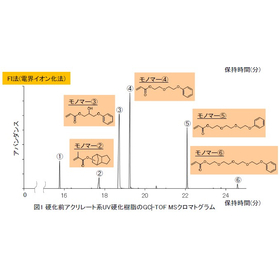
[Analysis Case] Composition Analysis of UV Curing Resin

The identification capability is enhanced when combined with soft ionization methods.

UV-curable resins harden quickly when exposed to ultraviolet light and are widely used as coating materials and adhesives due to their ease of use. In acrylate resins, which are commonly used materials, the molecular ions of acrylate monomers are difficult to detect using the conventional ionization method of EI in GC/MS analysis, leading to insufficient structural estimation. Here, we introduce a case where, in addition to the partial structural information obtained from the conventional EI method, the use of the soft ionization method FI enabled the detection of molecular ions, allowing for the estimation of the structure of acrylate monomers.

  • c0580-2.jpg
  • c0580-3.jpg
  • Contract Analysis
  • Contract measurement
  • Mass Spectrometer

Added to bookmarks

Bookmarks list

Bookmark has been removed

Bookmarks list

You can't add any more bookmarks

By registering as a member, you can increase the number of bookmarks you can save and organize them with labels.

Free membership registration

Agilent 5977B GC/MSD system

Maintaining high productivity in the lab for many years! A super-sensitive ion source expands the new possibilities of GC/MS.

The "Agilent 5977B GC/MSD system" achieves industry-leading instrument detection limits (IDL) and the highest level of S/N ratio through its ultra-high sensitivity ion source (HES). By increasing the MS signal by up to 10 times, it supports the evolution of current single quadrupole GC/MS labs. The improvement in MS sensitivity allows for a reduction in sample size and operational cost savings in transportation, storage, preparation, and disposal. 【Features】 ■ Robustness and reliability maintain high productivity in the lab over the years. ■ MassHunter - Functionality and flexibility for both quantitative and qualitative analysis and MSD ChemStation. ■ Bidirectional communication between GC and MSD enhances lab operational efficiency and safety. ■ Eco-friendly features reduce time and costs. *For more details, please refer to the PDF document or feel free to contact us.

  • Analytical Equipment and Devices
  • Mass Spectrometer

Added to bookmarks

Bookmarks list

Bookmark has been removed

Bookmarks list

You can't add any more bookmarks

By registering as a member, you can increase the number of bookmarks you can save and organize them with labels.

Free membership registration

Agilent 6546 LC/Q-TOF

Reliable analysis is possible! Achieving a wide dynamic range, high resolution, and excellent isotope accuracy simultaneously.

The "Agilent 6546 LC/Q-TO" is a system designed to enhance laboratory productivity in comprehensive workflows such as metabolomics research, food safety, and food authenticity analysis. It is equipped with 10GHz data acquisition technology, achieving a wide dynamic range, high resolution, and excellent isotope accuracy simultaneously. Additionally, with the Q-RAI or All Ions acquisition modes, it allows for simultaneous target screening and suspect screening. 【Features】 ■ Equipped with 10GHz data acquisition technology ■ Q-RAI or All Ions acquisition modes ■ Metabolomics research - Improved resolution - Wide dynamic range and accurate isotope ratios *For more details, please refer to the PDF document or feel free to contact us.

  • Analytical Equipment and Devices
  • Mass Spectrometer

Added to bookmarks

Bookmarks list

Bookmark has been removed

Bookmarks list

You can't add any more bookmarks

By registering as a member, you can increase the number of bookmarks you can save and organize them with labels.

Free membership registration

Mass spectrometer 'InfinityLab LC/MSD iQ'

The fusion of a smart mass selection detector and smart software! It can detect accurately.

The mass spectrometer 'InfinityLab LC/MSD iQ' maintains a comfortable lab environment and is a user-friendly, compact LC/MS system designed as a mass-selective detector for LC. It can also accommodate pumps in the same space and is portable. Even for compounds that do not absorb UV or are difficult to separate, the specificity and selectivity of the MS allow for rapid and accurate detection of compounds. Additionally, the intuitive OpenLab Chromatography Data System software, well-regarded for LC and GC, allows for easy operation of the mass spectrometry component. 【Features】 ■ Can be stacked on LC modules, reducing lab space ■ Operates on standard 100V power, making it suitable for LC labs ■ No need for atmospheric exposure during maintenance of the capillary interface ■ WalkUp software enables open access operation by multiple operators ■ Significantly reduces unexpected downtime and improves operational efficiency *For more details, please refer to the PDF materials or feel free to contact us.

  • Analytical Equipment and Devices
  • Mass Spectrometer

Added to bookmarks

Bookmarks list

Bookmark has been removed

Bookmarks list

You can't add any more bookmarks

By registering as a member, you can increase the number of bookmarks you can save and organize them with labels.

Free membership registration

Quantitative Analysis of Butylene Glycol and Its Decomposition Products in Nickel Plating Solution

Publication on the purpose of plating solution component analysis and the quantification of butanediol!

This document presents a quantitative analysis of butylene glycol and its decomposition products in nickel plating solutions. Quantifying butylene glycol was challenging due to the influence of primary brighteners and inorganic salts, but high-sensitivity analysis has become possible using the LC-MS method. If you have any requests regarding the qualitative and quantitative analysis of plating additives, please consult our technical sales department. [Contents] ■ Purpose of plating solution component analysis ■ Analysis of electrolytic nickel plating solution brighteners ■ Quantification of butylene glycol *For more details, please refer to the PDF document or feel free to contact us.

  • Contract Analysis
  • Contract measurement
  • Mass Spectrometer

Added to bookmarks

Bookmarks list

Bookmark has been removed

Bookmarks list

You can't add any more bookmarks

By registering as a member, you can increase the number of bookmarks you can save and organize them with labels.

Free membership registration

Oil consumption measurement mass spectrometer LubeSense

Process mass spectrometer for oil consumption measurement using the SO2 tracer method.

LubeSense is a process mass spectrometer for measuring oil consumption using the SO2 tracer method, combining IMR-MS and GasOxidizer.

  • Analytical Equipment and Devices
  • Other environmental analysis equipment
  • Mass Spectrometer

Added to bookmarks

Bookmarks list

Bookmark has been removed

Bookmarks list

You can't add any more bookmarks

By registering as a member, you can increase the number of bookmarks you can save and organize them with labels.

Free membership registration

CO2 purity measurement mass spectrometer CO2Sense

Feed gas monitoring and purity analysis of food and beverage grade carbon dioxide.

CO2Sense is a real-time mass spectrometer developed for the quantification of trace impurities in carbon dioxide used in food and beverages.

  • Analytical Equipment and Devices
  • Other environmental analysis equipment
  • Odor Testing
  • Mass Spectrometer

Added to bookmarks

Bookmarks list

Bookmark has been removed

Bookmarks list

You can't add any more bookmarks

By registering as a member, you can increase the number of bookmarks you can save and organize them with labels.

Free membership registration

Hydrogen purity measurement mass spectrometer HydrogenSense

Real-time analysis of trace gas components (impurities) in hydrogen at hydrogen production bases, storage tanks, and hydrogen stations.

The HydrogenSense mass spectrometer, which incorporates two types of mass spectrometry techniques—Ion Molecular Reaction (IMR) and Electron Impact Ionization (EI)—in a single unit, enables real-time simultaneous measurement of multiple gas components and analyzes impurities contained in hydrogen for PEM fuel cells.

  • Analytical Equipment and Devices
  • Mass Spectrometer

Added to bookmarks

Bookmarks list

Bookmark has been removed

Bookmarks list

You can't add any more bookmarks

By registering as a member, you can increase the number of bookmarks you can save and organize them with labels.

Free membership registration

Real-time gas mass spectrometer for fuel cell testing PEMSense

Real-time gas component measurement with anode and cathode.

PEMSense is a mass spectrometer optimized for real-time measurement of H2, N2, O2, H2O, CO, CO2, and other gases in PEM fuel cells.

  • Analytical Equipment and Devices
  • Mass Spectrometer

Added to bookmarks

Bookmarks list

Bookmark has been removed

Bookmarks list

You can't add any more bookmarks

By registering as a member, you can increase the number of bookmarks you can save and organize them with labels.

Free membership registration

[Analysis Case] Analysis of Amino Acids and Dipeptides in Fermented Foods

It is possible to visualize amino acids and dipeptides with distinct characteristics for each raw material!

Amino acids related to the taste and umami of food are widely known. Additionally, "dipeptides," which consist of two amino acids, possess different physical and functional properties compared to amino acids and have recently attracted attention as functional components in fermented foods such as soy sauce and miso. At Kaneka Techno Research, we can conduct highly accurate analysis and evaluation using liquid chromatography-time-of-flight mass spectrometry (LC-TOFMS) and a library of amino acids and dipeptides (approximately 400 types). Here, we present an analysis case of amino acids and dipeptides in commercially available miso. [Case Overview] ■ Analysis Samples: Commercially available miso (3 types of soybean miso, 5 types of barley miso, 3 types of rice miso, totaling 11 types) ■ Analysis Equipment: SCIEX Triple TOF6600 (LC-TOFMS) *For more details, please refer to the PDF document or feel free to contact us.

Added to bookmarks

Bookmarks list

Bookmark has been removed

Bookmarks list

You can't add any more bookmarks

By registering as a member, you can increase the number of bookmarks you can save and organize them with labels.

Free membership registration

[Analysis Case] Analysis of Triglycerides in Edible Oils (LC-TOFMS)

It is possible to estimate the structure and fatty acid composition of triglycerides!

One of the important components among the nutrients in food is lipids, and over 90% of the lipids contained in edible oils are composed of triglycerides (TG). TG has a structure where three molecules of fatty acids are esterified to glycerol. In recent years, due to increasing health awareness, omega-3 fatty acids (such as alpha-linolenic acid) and medium-chain fatty acids have also gained attention as components of TG. However, to clarify the structure of TG, structural analysis through mass spectrometry and analysis of the constituent fatty acids are necessary. Liquid chromatography-time-of-flight mass spectrometry (LC-TOFMS) is effective for the analysis of these TGs, and the structure and constituent fatty acids of TG can be estimated from the MS spectrum and MS/MS spectrum. Here, we present examples of analyses of commercially available edible oils. ■ Analysis Samples Five types of commercially available edible oils (rapeseed oil, sesame oil, olive oil, flaxseed oil, MCT oil) ■ Analysis Equipment SCIEX Triple TOF6600 (LC-TOFMS) ■ Analysis Method After dissolving the sample in tetrahydrofuran (THF), it was appropriately diluted with methanol for LC-TOFMS analysis. ■ Analysis Results For details, please refer to the PDF document.

Added to bookmarks

Bookmarks list

Bookmark has been removed

Bookmarks list

You can't add any more bookmarks

By registering as a member, you can increase the number of bookmarks you can save and organize them with labels.

Free membership registration

C&V Technics Co., Ltd. Company Profile

A value-creation engineering company with vacuum technology and plasma technology as core technologies.

C&V Technics Co., Ltd. is an engineering company focused on value creation, comprised of members who have been active in the semiconductor electronic components field for the past 30 years. Our core technologies are the vacuum technology and plasma technology that we have cultivated over many years. We aim to be a company centered on roll coater equipment business using vacuum processes, seeking the ideal state for the next 5 to 10 years. We contribute to the fields of plasma application equipment and analytical instruments with our vacuum technology and low-temperature technology. 【Business Activities】 ■ Development, design, and manufacturing of ion attachment mass spectrometers ■ Design and manufacturing of RtoR vacuum deposition equipment ■ Consulting services in the vacuum and low-temperature fields *For more details, please refer to the PDF materials or feel free to contact us.

  • Analytical Equipment and Devices
  • Other processing machines
  • Mass Spectrometer

Added to bookmarks

Bookmarks list

Bookmark has been removed

Bookmarks list

You can't add any more bookmarks

By registering as a member, you can increase the number of bookmarks you can save and organize them with labels.

Free membership registration

[Technical Document] Analysis of PFOS and PFOA in Drinking Water

Introduction of analysis methods for PFOS and PFOA in tap water using LCMS.

Perfluorooctanesulfonic acid (PFOS) and perfluorooctanoic acid (PFOA), which are types of perfluorinated compounds (PFCs), are regulated under the "Stockholm Convention on Persistent Organic Pollutants (POPs Convention)." In Japan, as per the notification from the Director of the Water Supply Division of the Ministry of Health, Labour and Welfare (Notification No. 0330-1 to 4), the positioning of PFOS and PFOA in drinking water quality regulations was elevated from a matter requiring consideration to a water quality management target item starting in April 2020. The target value for these substances in water quality is set at a total of 50 ng/L. The testing method for water quality management target items (Target 31) specifies a method that combines solid-phase column pre-treatment with 1000-fold concentration and LC/MS measurement using reverse-phase chromatography. This report introduces an example of concentration pre-treatment and separation conducted in accordance with this testing method.

  • Water quality testing
  • Mass Spectrometer

Added to bookmarks

Bookmarks list

Bookmark has been removed

Bookmarks list

You can't add any more bookmarks

By registering as a member, you can increase the number of bookmarks you can save and organize them with labels.

Free membership registration

Technical Data: Analysis of PFOS Alternative Organic Fluorine Compounds

Introduction of an analysis method for PFOS alternative organic fluorine compounds using LCMS.

Perfluorinated compounds (PFCs) have been widely used in applications such as surfactants, surface treatment agents, and water repellents. However, due to their persistence and toxicity to living organisms, as well as their difficulty in degradation in the environment, they are regulated under the Stockholm Convention (POPs Treaty). Research is being conducted on alternative substances to long-chain alkyl PFCs, represented by PFOS and PFOA. Investigations are being carried out on the physical properties and actual conditions of PFCs with lower biological persistence, including short-chain alkyls, alkyl ethers, and cyclic structures. In this study, we introduce the results of establishing an analytical method using LC/MS and investigating a pretreatment method for environmental water samples, using a PFOS alternative substance with distinctive structural features as a model substance. *For more details, please refer to the PDF document or feel free to contact us.*

  • Water quality testing
  • Mass Spectrometer

Added to bookmarks

Bookmarks list

Bookmark has been removed

Bookmarks list

You can't add any more bookmarks

By registering as a member, you can increase the number of bookmarks you can save and organize them with labels.

Free membership registration

[Water Quality Testing and Environmental Measurement] Thorough inspection system to investigate the causes of water and air issues.

Emphasizing a scientific approach to "water" and "air"! We have established a robust system.

We emphasize a scientific approach to "water" and "air," analyzing and measuring the causes of "invisible" troubles into "visible forms" based on high-precision analytical data. To achieve this, it is essential to not only introduce various equipment but also to enhance the skills and know-how of our staff, as well as to establish an appropriate testing environment. In June 2011, our company relocated the existing testing room due to the expansion of our office building. We have introduced new equipment and transformed into a new testing room, establishing a robust system. [Equipment Owned] ■ High-Performance Liquid Chromatography-Mass Spectrometry ■ Gas Chromatography-Mass Spectrometry ■ Luminescence Spectrometry Mass Spectrometry ■ Ion Chromatography (IC) ■ Scanning Electron Microscope (SEM-EDX) ■ X-ray Diffraction Analysis Equipment *For more details, please refer to the PDF document or feel free to contact us.

  • Other contract services
  • Contract Inspection
  • Contract measurement
  • Mass Spectrometer

Added to bookmarks

Bookmarks list

Bookmark has been removed

Bookmarks list

You can't add any more bookmarks

By registering as a member, you can increase the number of bookmarks you can save and organize them with labels.

Free membership registration

Search Keywords Related to Mass Spectrometer