We have compiled a list of manufacturers, distributors, product information, reference prices, and rankings for Mass Spectrometer.
ipros is IPROS GMS IPROS One of the largest technical database sites in Japan that collects information on.

Mass Spectrometer Product List and Ranking from 33 Manufacturers, Suppliers and Companies | IPROS GMS

Last Updated: Aggregation Period:Jan 14, 2026~Feb 10, 2026
This ranking is based on the number of page views on our site.

Mass Spectrometer Manufacturer, Suppliers and Company Rankings

Last Updated: Aggregation Period:Jan 14, 2026~Feb 10, 2026
This ranking is based on the number of page views on our site.

  1. サーモフィッシャーサイエンティフィック株式会社/Thermo Fisher Scientific K.K. Tokyo//Testing, Analysis and Measurement
  2. 日本ウォーターズ(米国本社 Waters Corporation)  Tokyo//Testing, Analysis and Measurement
  3. 一般財団法人材料科学技術振興財団 MST Tokyo//Testing, Analysis and Measurement
  4. 4 アズサイエンス 松本本社 Nagano//Trading company/Wholesale
  5. 5 Kyoritsu Electric Corporation Shizuoka//Industrial Electrical Equipment

Mass Spectrometer Product ranking

Last Updated: Aggregation Period:Jan 14, 2026~Feb 10, 2026
This ranking is based on the number of page views on our site.

  1. Triple Quadrupole Mass Spectrometer (LC-MS/MS) サーモフィッシャーサイエンティフィック株式会社/Thermo Fisher Scientific K.K.
  2. Stable Isotope Ratio Mass Spectrometer 'DELTA Q' サーモフィッシャーサイエンティフィック株式会社/Thermo Fisher Scientific K.K.
  3. Surface Ionization Mass Spectrometer (TIMS) "TRITON" サーモフィッシャーサイエンティフィック株式会社/Thermo Fisher Scientific K.K.
  4. 4 Orbitrap Astral Mass Spectrometer サーモフィッシャーサイエンティフィック株式会社/Thermo Fisher Scientific K.K.
  5. 5 Hybrid mass spectrometer "Q Exactive Focus" サーモフィッシャーサイエンティフィック株式会社/Thermo Fisher Scientific K.K.

Mass Spectrometer Product List

31~60 item / All 173 items

Displayed results

High-resolution mass spectrometer (LC-QTof) Xevo G3 QTof

Reliable characteristic analysis - A mass spectrometer that maximizes information about the analysis species.

By using the Xevo G3 QTof, you can maximize the information about the analysis species from samples, enhancing the reliability of results from detailed characterization to accurate quantification. It simplifies and expands the characterization and evaluation of properties, from unstable low molecular weight compounds to complex biopharmaceuticals. By updating the design of the ion optical system and incorporating core technologies that achieve comprehensive quantification capabilities, consistent robustness and performance have been achieved. 【Features】 - Improved permeability of unstable low molecular compounds maximizes coverage of analysis species - Enhanced quantitativeness and expanded dynamic range within and between spectra enable optimal comprehensive quantification/qualitative analysis for screening and target applications - Improvements in the ion optical system lead to a more reliable and robust system - Achieves high levels of accuracy and reproducibility

  • Analytical Equipment and Devices
  • Mass Spectrometer

Added to bookmarks

Bookmarks list

Bookmark has been removed

Bookmarks list

You can't add any more bookmarks

By registering as a member, you can increase the number of bookmarks you can save and organize them with labels.

Free membership registration

Ion Mobility High-Resolution Mass Spectrometer Cyclic IMS

When you feel the limitations of MS selectivity - Achieving separation of co-eluting isomers with dramatically improved mobility resolution.

With the SELECT SERIES Cyclic IMS, ions can be selected based on both mass and mobility. By combining ion mobility and mass spectrometry, isomers can be separated based on shape and m/z, allowing for the measurement of ion collision cross-section (CCS) and obtaining very clean mass spectral data. Traditional mobility cells were linear, but by making them circular, the mobility resolution has dramatically improved. Ions can be repeatedly cycled within the cell, and the number of repetitions can be freely set.

  • Analytical Equipment and Devices
  • Mass Spectrometer

Added to bookmarks

Bookmarks list

Bookmark has been removed

Bookmarks list

You can't add any more bookmarks

By registering as a member, you can increase the number of bookmarks you can save and organize them with labels.

Free membership registration

High-Resolution Mass Spectrometer (QTof) SELECT SERIES MRT

Exceeding high-resolution MS - consistent mass resolution across a wide m/z range and scan rate, along with high mass accuracy.

Using the state-of-the-art multi-reflecting time-of-flight mass spectrometry (MRT) technology, the SELECT SERIES MRT enables clear compound identification even in very complex samples, regardless of the scan rate, thanks to its high resolution and high specificity. The class-leading ToF mass resolution is achieved through innovative ion beam multi-reflection. This technology allows for high resolution and mass accuracy at sub-ppm levels across a wide m/z range, enabling very detailed structural characterization and overcoming many scientific challenges. 【Features】 - Consistently ppb level mass accuracy (<500ppb) - High mass resolution unaffected by measurement speed (>300,000 FWHM; 30Hz) - High data quality for both MS and MS/MS - Compatible with MS imaging (DESI, MALDI) and LC-MS applications

  • Analytical Equipment and Devices
  • Mass Spectrometer

Added to bookmarks

Bookmarks list

Bookmark has been removed

Bookmarks list

You can't add any more bookmarks

By registering as a member, you can increase the number of bookmarks you can save and organize them with labels.

Free membership registration

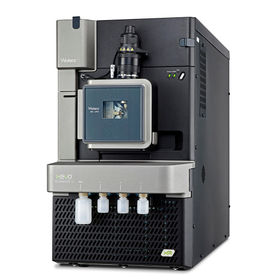
Tandem Quadrupole Mass Spectrometer Xevo TQ Absolute

Are you satisfied with just high sensitivity? - Ultra-high sensitivity LC-MS/MS that maintains stable operation for a long time and is easy to maintain.

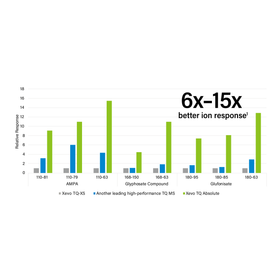
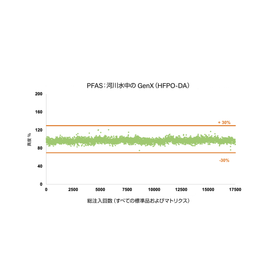
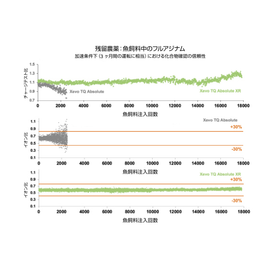
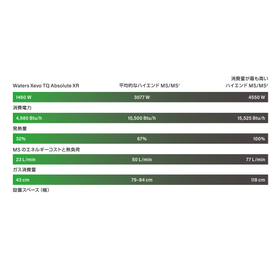
Many people are struggling with systems that are prone to contamination and time-consuming maintenance. The Xevo TQ Absolute, known for its resistance to contamination thanks to the "ZSpray Ion Source," along with a new source shield, minimizes contamination of the ion source from sample matrices and salts in the mobile phase. It also allows for the removal of neutral molecules before the mass separation section (StepWave XS), concentrating ions for introduction into the mass separation section. This helps maintain the system in a "good condition" for a longer period, maximizing uptime. As a latest high-sensitivity model, it achieves higher sensitivity and lower quantitation limits. Additionally, it is more compact compared to conventional products, reducing power and gas consumption by about 50%, and also decreasing heat generation by approximately 50%. 【Features】 - Sensitivity to anionic compounds improved by up to 15 times (compared to previous products) - Ensures consistent robustness and reproducibility, maintaining performance and productivity over a longer period - Reduces electricity and gas consumption by about 50% compared to typical high-performance TQ mass spectrometers, with heat generation also reduced by about 50%

  • XevoTQAbsolute_1.png
  • XevoTQAbsolute_2.png
  • XevoTQAbsolute_3.png
  • XevoTQAbsolute_4.png
  • XevoTQAbsolute_5.png
  • Mass Spectrometer
  • Analytical Equipment and Devices
  • Mass Spectrometer

Added to bookmarks

Bookmarks list

Bookmark has been removed

Bookmarks list

You can't add any more bookmarks

By registering as a member, you can increase the number of bookmarks you can save and organize them with labels.

Free membership registration

Tokyo Electron's lineup enables diverse mass spectrometry.

From trace gas analysis to atmospheric pressure sampling, a mass spectrometer equipped with high-performance models as an upgraded analytical device for both standalone measurements and systems!

We would like to introduce the lineup of Tokyo Electric, which enables diverse mass spectrometry. Specifically, the following types of mass analysis will be possible. 【Features】 ■ Ultra-trace gas analysis at E-15 Pa·m3/sec ■ High-precision mass analysis at E-13 Pa range under ultra-high vacuum ■ High-precision measurement of elements and compounds ■ Real-time analysis at atmospheric pressure (such as exhaled air and combustion gases) *For detailed mechanisms of diverse and high-precision mass analysis, please download the PDF for more information.

  • Analytical Equipment and Devices
  • Mass Spectrometer

Added to bookmarks

Bookmarks list

Bookmark has been removed

Bookmarks list

You can't add any more bookmarks

By registering as a member, you can increase the number of bookmarks you can save and organize them with labels.

Free membership registration

Mass spectrometer (LC/MSD) that can maintain a comfortable laboratory environment.

The pump can also be stored in the same row and is portable. It is an easy-to-use and compact LC/MS system designed as a mass-selective detector for LC.

The "InfinityLab LC/MSD iQ" is an easy-to-use and compact LC/MS system designed as a mass-selective detector for LC. Even for compounds that do not have UV absorption or are difficult to separate, the specificity and selectivity of the MS allow for rapid and accurate detection of compounds. Additionally, the intuitive operation of the mass spectrometry component is possible with the well-regarded OpenLab chromatography data system software for LC and GC. 【Features】 ■ Can be stacked on LC modules, reducing lab space ■ Can be used with a standard 100V power supply, making it suitable for LC labs ■ No need for atmospheric exposure during maintenance of the capillary interface ■ Open access operation by multiple operators is possible with WalkUp software ■ Significantly reduces unexpected downtime and improves operational efficiency *For more details, please refer to the PDF materials or feel free to contact us.

  • Analytical Equipment and Devices
  • Mass Spectrometer

Added to bookmarks

Bookmarks list

Bookmark has been removed

Bookmarks list

You can't add any more bookmarks

By registering as a member, you can increase the number of bookmarks you can save and organize them with labels.

Free membership registration

Mass spectrometer "QuickProbe GC/MS System"

Results can be obtained in less than a minute! Compounds including isomers can be identified with high reliability.

The "QuickProbe GC/MS System" is a system that allows various forms of samples, such as powders, tablets, and liquids, to be loaded into a probe and introduced directly into the MS with minimal preprocessing. Results can be obtained in less than a minute. This product, designed for the analysis of seized drugs in the forensic field where diverse sample handling is required, contributes to improving laboratory productivity. 【Features】 ■ Rapid heating and separation enabled by the QuickProbe inlet and short separation column ■ High reliability in identifying compounds, including isomers, using libraries such as NIST ■ Probes, probe holders, and inlet liners with frits necessary for measurement are provided in a touchless package to prevent contamination ■ Samples can be introduced directly into the MS with minimal preprocessing by simply loading them into the probe *For more details, please refer to the PDF document or feel free to contact us.

  • Analytical Equipment and Devices
  • Mass Spectrometer

Added to bookmarks

Bookmarks list

Bookmark has been removed

Bookmarks list

You can't add any more bookmarks

By registering as a member, you can increase the number of bookmarks you can save and organize them with labels.

Free membership registration

Gas Chromatograph Mass Spectrometer Pursuing High Sensitivity and Stability

Provides the necessary sensitivity and dynamic range for each analysis! A gas chromatograph mass spectrometer with a new detector. It generates high productivity.

Introducing the Clarus SQ 8 GC/MS (Gas Chromatograph Mass Spectrometer). With the adoption of the new "Clarifi" Detector, the Clarus SQ 8 GC/MS pursues further sensitivity and stability, providing the necessary sensitivity and dynamic range for each analysis, resulting in high throughput and productivity. Additionally, it features the new ion source, SMARTsource, which enhances maintenance by further pursuing plug-in capabilities. 【Features】 ◆ Adoption of the new "Clarifi" Detector, achieving high sensitivity and stability ◆ Adoption of a new ion source, improving maintenance with further pursuit of plug-in capabilities ◆ Expansion of analytical methods with the GC sampler TurboMatrix series and Swafer technology *For more details, please refer to the PDF document or feel free to contact us.

  • Other industrial robots
  • Other physicochemical equipment
  • Gas Generator
  • Mass Spectrometer

Added to bookmarks

Bookmarks list

Bookmark has been removed

Bookmarks list

You can't add any more bookmarks

By registering as a member, you can increase the number of bookmarks you can save and organize them with labels.

Free membership registration

[GDMS] Glow Discharge Mass Spectrometry

Dissociate and fragment specific mass ions, and detect them with a mass spectrometer.

GDMS is a method for analyzing the composition of solid samples, allowing simultaneous analysis from major components to trace elements, and performing semi-quantitative analysis of impurities present in the sample. The concentration conversion uses the relative sensitivity factor (RSF) associated with the device. The analytical values are derived from the ion intensities of the major component elements and the target elements, calculated using the RSF, resulting in semi-quantitative values. - Bulk analysis is possible from trace elements (ppb level) to major component levels. - Depth profile analysis on the order of micrometers and thin film analysis are possible. - By using conductive materials and auxiliary electrodes, analysis of semiconductor materials and insulating materials is also possible. - High mass resolution allows for the removal of interfering ions. - Measurement is possible for almost all elements below Li, excluding hydrogen and noble gases. - Isotope ratio measurement is possible.

  • 打ち合わせ.jpg
  • セミナー.jpg
  • Contract Analysis
  • Contract measurement
  • Contract Inspection
  • Mass Spectrometer

Added to bookmarks

Bookmarks list

Bookmark has been removed

Bookmarks list

You can't add any more bookmarks

By registering as a member, you can increase the number of bookmarks you can save and organize them with labels.

Free membership registration

[Analysis Case] Evaluation of the Functional Ingredient Glucosylceramide

Qualitative analysis by LC/MS and quantitative analysis examples by HPLC.

Glucosylceramide (plant ceramide), one of the glycosphingolipids, has been reported to have moisturizing effects and improvements for atopic dermatitis, making it a component of interest in the beauty field. Although the main structural components of glucosylceramide vary among plants, qualitative analysis can be performed using LC/MS. Additionally, since glucosylceramide has multiple molecular species even from the same plant source, quantitative analysis can be conducted with high precision using an evaporative light scattering detector (ELSD).

Added to bookmarks

Bookmarks list

Bookmark has been removed

Bookmarks list

You can't add any more bookmarks

By registering as a member, you can increase the number of bookmarks you can save and organize them with labels.

Free membership registration

[Analysis Case] Comparative Quantitative Analysis of Ergothioneine in Mushrooms

Case studies of quantitative analysis of functional ingredients

Ergothioneine is an amino acid homolog discovered in ergot, known for its strong antioxidant properties and anti-photoaging effects, and research and development are ongoing in the fields of medicine and beauty. Since humans cannot produce ergothioneine in their bodies, they obtain it from sources rich in it, such as certain mushrooms. An analysis of eight types of mushrooms using LC/MS/MS revealed that ergothioneine was detected in all of them. Quantitative analysis was conducted on three types of mushrooms from the Pleurotaceae family, which are said to have high ergothioneine content.

Added to bookmarks

Bookmarks list

Bookmark has been removed

Bookmarks list

You can't add any more bookmarks

By registering as a member, you can increase the number of bookmarks you can save and organize them with labels.

Free membership registration

[Analysis Case] Evaluation of Organic Residue Amount in Cleaning Rinse Solution

Evaluation using TOC and LC/MS/MS is possible!

Organic contamination during the manufacturing process significantly affects product performance. In the analysis of organic substances in liquid samples, such as rinse solutions in the cleaning process, evaluations can be conducted using Total Organic Carbon (TOC) analyzers and Liquid Chromatography-Tandem Mass Spectrometry (LC/MS/MS). Here, we present an example of evaluation using TOC and LC/MS/MS for NPnEO (Nonylphenol Ethoxylate), one of the industrial surfactants.

Added to bookmarks

Bookmarks list

Bookmark has been removed

Bookmarks list

You can't add any more bookmarks

By registering as a member, you can increase the number of bookmarks you can save and organize them with labels.

Free membership registration

[Analysis Case] Analysis of Odorous Components in Olive Oil

Identification of odor components causing differences in products through GC/MS comparison.

When an unusual odor arises from food, it is important to identify the components that cause it. In foods containing various odor components, trace elements can significantly contribute to the overall smell, and the balance of component quantities can lead to substantial differences in odor. Therefore, it is necessary to narrow down the candidate components by comparing the odorous product with a normal product. Here, we present a case study that compares new olive oil and old olive oil using GC/MS to analyze the odor components responsible for the unusual smell.

Added to bookmarks

Bookmarks list

Bookmark has been removed

Bookmarks list

You can't add any more bookmarks

By registering as a member, you can increase the number of bookmarks you can save and organize them with labels.

Free membership registration

[Analysis Case] Investigation of Degradation of Solid Polymer Fuel Cell Electrolyte Membrane

Evaluation of degradation leachate components by LC/MS and IC.

Solid polymer electrolyte fuel cells (PEFC) are attracting attention for their high output at room temperature, making them suitable for automotive applications, home cogeneration, and mobile use. In this study, we simulated the degradation of solid polymer electrolyte membranes using Fenton's reagent (a solution of hydrogen peroxide and iron ions) and investigated the degradation byproducts in the solution. Composition information of the degradation byproducts was obtained using LC/MS, while information on the eluted ions was acquired using IC.

Added to bookmarks

Bookmarks list

Bookmark has been removed

Bookmarks list

You can't add any more bookmarks

By registering as a member, you can increase the number of bookmarks you can save and organize them with labels.

Free membership registration

[Analysis Case] High-Sensitivity Analysis of Nitrogen Compounds by GC

Analysis of nitrogen compounds using GC/MS/NPD (Nitrogen Phosphorus Detector).

When analyzing samples containing nitrogen compounds using GC, simultaneous measurement with MS (mass spectrometer) and NPD (nitrogen-phosphorus detector) allows for the detection of components that do not appear as peaks in the MS, enabling the acquisition of MS spectra from their retention times for qualitative analysis. In this case, a sample containing trace amounts of the nitrogen-containing compound trimethylamine was measured using GC/MS/NPD. A peak that was buried in the baseline in the MS was confirmed by the NPD, allowing for the qualitative identification of trimethylamine from the mass spectrum at the same retention time.

  • Contract Analysis
  • Mass Spectrometer

Added to bookmarks

Bookmarks list

Bookmark has been removed

Bookmarks list

You can't add any more bookmarks

By registering as a member, you can increase the number of bookmarks you can save and organize them with labels.

Free membership registration

Liquid Chromatography-Fourier Transform Mass Spectrometry

High-resolution and high-precision analysis is possible with the OrbitrTM mass spectrometer (HRMS).

Liquid chromatography (LC) is a method for separating components in a liquid based on differences in the interactions between the stationary phase and the mobile phase. Liquid chromatography-Fourier transform mass spectrometry (LC-FTMS) utilizes a Fourier transform mass spectrometer to detect components separated by LC, allowing for the acquisition of precise mass information to four decimal places with high resolution. Therefore, when focusing on secondary isotope ions, it is possible to separate peaks derived from 13C and 34S, enabling more accurate composition estimation with higher resolution and precision compared to quadrupole or time-of-flight mass spectrometers. Additionally, it is possible to perform multi-stage MS/MS (MSn) using an ion trap, allowing for the acquisition of fragment ions for specific ions. Various methods can be combined for MSn fragmentation, enabling accurate qualitative analysis of unknown compounds by performing MSn in combination.

  • アナライザー.png
  • 装置構成.png
  • Contract measurement
  • Mass Spectrometer

Added to bookmarks

Bookmarks list

Bookmark has been removed

Bookmarks list

You can't add any more bookmarks

By registering as a member, you can increase the number of bookmarks you can save and organize them with labels.

Free membership registration

[Analysis Case] Analysis of the Concentration of Functional Ingredients in Blood Components

Case study on the evaluation of resveratrol concentration in blood.

Measurement method: LC/MS Product field: Food and pharmaceuticals Analysis purpose: Composition evaluation and identification

  • Contract measurement
  • Contract Inspection
  • Mass Spectrometer

Added to bookmarks

Bookmarks list

Bookmark has been removed

Bookmarks list

You can't add any more bookmarks

By registering as a member, you can increase the number of bookmarks you can save and organize them with labels.

Free membership registration

[Analysis Case] Investigation of the Causes of Yellowing in Polyurethane

By using PDA and MS in LC, it is possible to qualitatively analyze colored extracts.

Many organic materials (resins) may discolor due to aging and other factors. The causes include the formation of conjugated double bonds within the polymer, the degradation of additives contained in the resin, and the transfer of surrounding substances, among others. When the degradation of additives is the cause, the responsible substances can be analyzed by elution using methods such as LC or GC. Here, we provide an overview of the causes of resin discoloration and analysis methods, and introduce a case where the coloring substances responsible for yellowing in polyurethane were separated by LC and qualitatively identified using a combination of PDA and MS.

  • Contract Analysis
  • Contract measurement
  • Mass Spectrometer

Added to bookmarks

Bookmarks list

Bookmark has been removed

Bookmarks list

You can't add any more bookmarks

By registering as a member, you can increase the number of bookmarks you can save and organize them with labels.

Free membership registration

[Analysis Case] Identification Analysis of Pigments by Direct MS Method (C0611)

Estimate the molecular weight, chemical formula, and structural formula of pigments using a high-resolution mass spectrometer!

We offer identification analysis of pigments using the direct MS method (C0611). Due to the insolubility of pigments in solvents, chromatographic separation is not possible, and the analytical methods are limited. However, evaluation can be performed using the direct MS method, which directly introduces the sample into the mass spectrometer. There are several techniques within the direct MS method, and it is necessary to choose the appropriate one based on the properties of the sample. In a case where pigments in toner were measured, molecular ions were detected, allowing for structural estimation. [Measurement and Processing Methods] ■ Others *For more details, please download the PDF or feel free to contact us.

Added to bookmarks

Bookmarks list

Bookmark has been removed

Bookmarks list

You can't add any more bookmarks

By registering as a member, you can increase the number of bookmarks you can save and organize them with labels.

Free membership registration

【PCB Analysis】The disposal deadline for PCB waste is approaching.

We provide support for proper disposal. We can accommodate measurements using mass spectrometers such as GC/HRMS for PCB-containing coatings.

What is PCB? PCB stands for Polychlorinated Biphenyl, which is an artificially created chemical substance that is primarily oily in nature. It is characterized by its difficulty to dissolve in water, high boiling point, resistance to thermal decomposition, non-flammability, and high electrical insulation properties. Additionally, due to its chemically stable nature, it has been used in various applications such as insulating oil for electrical equipment, heat transfer fluids in heat exchangers, and non-carbon paper. However, due to its property of easily dissolving in fats, it gradually accumulates in the body and has been reported to cause various symptoms. As a result, both its production and import are currently prohibited. PCB-containing coatings It is known that PCB was added as a plasticizer in some chlorinated rubber-based paints. These paints were used for coating steel structures such as bridges and buildings during the period of rapid economic growth, and now, these structures are at a point where repairs or renovations are needed. In October 2019, the "Measurement Methods for Low Concentration PCB Containing Waste (4th Edition)" was published by the Ministry of the Environment, which specifies that the analysis method is limited to measurements using mass spectrometers such as GC/HRMS.

  • Other measurement, recording and measuring instruments
  • Mass Spectrometer

Added to bookmarks

Bookmarks list

Bookmark has been removed

Bookmarks list

You can't add any more bookmarks

By registering as a member, you can increase the number of bookmarks you can save and organize them with labels.

Free membership registration

Triple Quadrupole Mass Spectrometer "Agilent 6400 Series"

Excellent sensitivity and reliability! Triple quadrupole mass spectrometer with system robustness.

The "Agilent 6400 Series" is a triple quadrupole mass spectrometer equipped with iFunnel technology. It achieves a 6-digit dynamic range and class-leading sensitivity, reducing the need for sample preparation work. With an orthogonal nebulizer and high drying efficiency, it eliminates the need for splitting at typical flow rates, while also reducing contamination of the ion optics and background. 【Features】 ■ Sensitivity in the femtogram range ■ Robust and reliable performance ■ Wide range of ion source options to accommodate various applications ■ Easy operation ■ Improved sensitivity and speed with a high-pressure collision cell *For more details, please refer to the PDF materials or feel free to contact us.

  • Analytical Equipment and Devices
  • Mass Spectrometer

Added to bookmarks

Bookmarks list

Bookmark has been removed

Bookmarks list

You can't add any more bookmarks

By registering as a member, you can increase the number of bookmarks you can save and organize them with labels.

Free membership registration

Agilent 7250 GC/Q-TOF system

Simplifying identification and quantification! Achieving reliability in various analyses from routine workflows to advanced research.

The "Agilent 7250 GC/Q-TOF System" is a tool for the identification, quantification, and interpretation of compounds that can be analyzed by GC. It is capable of acquiring full-spectrum high-resolution precise mass data over a wide dynamic range. It is equipped with an EI ion source that provides low-energy EI functionality. 【Features】 ■ High sensitivity detection ■ Accurate quantification ■ Molecular formula estimation capability ■ Simplification of spectra ■ Reproducible data *For more details, please refer to the PDF document or feel free to contact us.

  • Analytical Equipment and Devices
  • Mass Spectrometer

Added to bookmarks

Bookmarks list

Bookmark has been removed

Bookmarks list

You can't add any more bookmarks

By registering as a member, you can increase the number of bookmarks you can save and organize them with labels.

Free membership registration

Technical Information Magazine 202301-02 High-Resolution MALDI-MS

This introduces examples of chemical structure analysis of surfactants that combine precise mass measurements using high-resolution MALDI-MS with new analytical methods.

The technical information magazine The TRC News provides the latest information on analytical techniques that are useful for research and development, solving production troubles, and quality control. [Abstract] In recent years, with the spread of high-resolution mass spectrometers, the amount of information obtained from mass spectrometry has significantly increased, while the time required for analysis has also risen. In response, efforts are being made to efficiently analyze by grasping the overall picture of mass spectra using new analytical methods. This article presents examples of chemical structure analysis of surfactants combining precise mass measurements using high-resolution MALDI-MS and new analytical methods, as well as a case study on tracking the reactions of epoxy resins. [Table of Contents] 1. Introduction 2. Kendrick Mass Defect (KMD) Analysis 3. Chemical Structure Analysis of Surfactants 4. Tracking the Curing Reactions of Epoxy Resins 5. Conclusion

  • Contract Analysis
  • Contract measurement
  • Technical and Reference Books
  • Mass Spectrometer

Added to bookmarks

Bookmarks list

Bookmark has been removed

Bookmarks list

You can't add any more bookmarks

By registering as a member, you can increase the number of bookmarks you can save and organize them with labels.

Free membership registration

Technical Information Magazine 202303-02 Ion Mobility Mass Spectrometer

This presentation introduces the features of the ion mobility mass spectrometer introduced at the Toray Research Center, along with examples of disulfide bond position analysis and glycan structure analysis.

The technical information magazine The TRC News provides the latest information on analytical techniques that are useful for research and development, solving production troubles, and quality control. [Abstract] Ion mobility mass spectrometry can separate structural isomers with the same mass that traditional mass spectrometers cannot, making it promising for various applications such as characterization of antibody drugs and ADCs, glycan structure analysis, binding site analysis, peptide mapping, impurity analysis of nucleic acid drugs, bioanalysis of oligonucleotides, and comprehensive analysis of biomarkers. This article introduces the features of the ion mobility mass spectrometer introduced at the Toray Research Center and presents examples of disulfide bond position analysis and glycan structure analysis. [Table of Contents] 1. Introduction 2. Overview of the Analytical Method 3. Analytical Examples 4. Conclusion

  • Contract Analysis
  • Contract measurement
  • Technical and Reference Books
  • Mass Spectrometer

Added to bookmarks

Bookmarks list

Bookmark has been removed

Bookmarks list

You can't add any more bookmarks

By registering as a member, you can increase the number of bookmarks you can save and organize them with labels.

Free membership registration

Quadrupole Mass Spectrometer "TDS1200II"

A quadrupole mass spectrometer capable of real-time detection with high sensitivity!

The "TDS1200II" is an analytical device that detects in real-time the components released from a sample when it is heated with infrared radiation in an ultra-high vacuum environment using a quadrupole mass spectrometer (QMS). This product is equipped with a load lock, which is essential for improving measurement efficiency and maintaining a high-quality ultra-high vacuum environment in the analysis chamber, eliminating the need to set the sample after bringing the pressure in the analysis chamber to atmospheric pressure. Additionally, the arrangement of the QMS achieves high sensitivity. 【Features】 ■ High sensitivity ■ QMS arrangement ■ Load lock equipped ■ Real-time detection ■ Maintenance of a high-quality ultra-high vacuum environment *For more details, please refer to the catalog or feel free to contact us.

  • Analytical Equipment and Devices
  • Mass Spectrometer

Added to bookmarks

Bookmarks list

Bookmark has been removed

Bookmarks list

You can't add any more bookmarks

By registering as a member, you can increase the number of bookmarks you can save and organize them with labels.

Free membership registration

Soft Ionization Mass Spectrometer AirSense

High-speed real-time analysis of composite gas components (over 1 msec per mass)

The Soft Ionization Mass Spectrometer AirSense is a multi-component mass spectrometer capable of simultaneously detecting both organic and inorganic components (online or offline).

  • Analytical Equipment and Devices
  • Mass Spectrometer

Added to bookmarks

Bookmarks list

Bookmark has been removed

Bookmarks list

You can't add any more bookmarks

By registering as a member, you can increase the number of bookmarks you can save and organize them with labels.

Free membership registration

Hydrogen and Helium Mass Spectrometer HSense

High-speed, high-sensitivity online process mass spectrometer for hydrogen and helium.

The HSense mass spectrometer for hydrogen and helium has been developed to meet the needs of highly dynamic hydrogen and helium analysis. It separates hydrogen and helium in less than one second and quantifies them over a wide concentration range from 1 ppm to 100%. It is equipped with a gas conditioning unit, which ensures it is not affected by changes in moisture concentration in the sample gas.

  • Analytical Equipment and Devices
  • Mass Spectrometer

Added to bookmarks

Bookmarks list

Bookmark has been removed

Bookmarks list

You can't add any more bookmarks

By registering as a member, you can increase the number of bookmarks you can save and organize them with labels.

Free membership registration

Soft Ionization + EI Dual Mass Spectrometer CombiSense

Unique combination: IMR-MS + EI-MS

The CombiSense real-time combined gas mass spectrometer is a unit that combines two mass spectrometry techniques: soft ionization technology with low ionization energy and electron collision ionization method. It allows for the simultaneous real-time measurement of individual organic and inorganic gas components in a mixed gas using a single unit. The response speed is quick, at several tens of milliseconds, making it ideal for quantifying trace components in the ppb range.

  • Analytical Equipment and Devices
  • Mass Spectrometer

Added to bookmarks

Bookmarks list

Bookmark has been removed

Bookmarks list

You can't add any more bookmarks

By registering as a member, you can increase the number of bookmarks you can save and organize them with labels.

Free membership registration

Oil Dilution Rate Measurement Mass Spectrometer FuelSense

Mass spectrometer for measuring oil dilution rate

FuelSense is a mass spectrometer based on IMR-MS, specialized in measuring oil dilution rates.

  • Analytical Equipment and Devices
  • Other environmental analysis equipment
  • Mass Spectrometer

Added to bookmarks

Bookmarks list

Bookmark has been removed

Bookmarks list

You can't add any more bookmarks

By registering as a member, you can increase the number of bookmarks you can save and organize them with labels.

Free membership registration

[Analysis Case] Real-time Aroma Analysis of Coffee (SIFT-MS)

This paper presents a case study evaluating the orthonasal and retronasal aromas of coffee using SIFT-MS.

[Analysis Sample] Commercial drip coffee [Analysis Device] SIFT-MS: Manufactured by Syft [Analysis Results] Using SIFT-MS, we measured the orthonasal aroma and retronasal aroma of coffee. The results of quantifying two representative aroma components of coffee, Phenol and Pyridine, are shown in Figures 1 and 2. In the orthonasal aroma analysis, we were able to capture the emergence of Phenol and Pyridine immediately after brewing. The average concentrations of each component over approximately 100 seconds from the start of brewing were 62 ppb for Phenol and 152 ppb for Pyridine. In the retronasal aroma analysis, both components showed the highest values immediately after swallowing, with average concentrations in the exhaled breath right after swallowing being 1.7 ppb for Phenol and 7.7 ppb for Pyridine. Additionally, although the concentrations of each component decreased over approximately 150 seconds after swallowing, we were able to capture the lingering aroma. [Summary] Real-time analysis using SIFT-MS allows us to capture the components related to the aroma release from beverages such as coffee and the aftertaste following consumption. Furthermore, quantification of aroma components in the ppb range is possible.

Added to bookmarks

Bookmarks list

Bookmark has been removed

Bookmarks list

You can't add any more bookmarks

By registering as a member, you can increase the number of bookmarks you can save and organize them with labels.

Free membership registration

Search Keywords Related to Mass Spectrometer