We have compiled a list of manufacturers, distributors, product information, reference prices, and rankings for Microscope.
ipros is IPROS GMS IPROS One of the largest technical database sites in Japan that collects information on.

Microscope Product List and Ranking from 71 Manufacturers, Suppliers and Companies | IPROS GMS

Last Updated: Aggregation Period:Jul 01, 2026~Jul 28, 2026
This ranking is based on the number of page views on our site.

Microscope Manufacturer, Suppliers and Company Rankings

Last Updated: Aggregation Period:Jul 01, 2026~Jul 28, 2026
This ranking is based on the number of page views on our site.

  1. null/null
  2. 松電舎 Osaka//Testing, Analysis and Measurement
  3. 東邦化研 材料解析部 Saitama//Testing, Analysis and Measurement
  4. 4 斉藤光学 営業部 Kanagawa//Testing, Analysis and Measurement
  5. 5 アクティブウェーブ Osaka//Optical Instruments

Microscope Product ranking

Last Updated: Aggregation Period:Jul 01, 2026~Jul 28, 2026
This ranking is based on the number of page views on our site.

  1. Digital Microscope "VHX-X1 Series"
  2. [Technical Documentation] Basic Operations for Taking Clear Photos
  3. [Case Study] Surface Cross-Section Analysis of Brass with Zinc Depletion 東邦化研 材料解析部
  4. 4 Microscope Maintenance Guide
  5. 4 CMX Series for Semiconductor Testing 千代田光機

Microscope Product List

241~248 item / All 248 items

Displayed results

Features of the digital microscope

Overwhelming cost performance! The configuration is optimized without waste according to your usage needs.

We would like to introduce the features of our "Digital Microscope." With overwhelming cost performance, we are committed to high customer satisfaction. It is also suitable for the installation of multiple units in various business locations and inspection departments. The camera resolution can be selected from the standard 3 million pixels (standard/high speed) and the optional 5 million pixels (standard/high speed), achieving overwhelming high resolution through the fusion of industry-leading lens performance that surpasses traditional microscopes. [Features] ■ Price is less than half that of conventional models with equivalent performance ■ Suitable for the installation of multiple units in various business locations and inspection departments ■ Overwhelming high resolution with a 5 million pixel camera ■ Can be freely customized by adding options ■ System upgrades are possible as needed *For more details, please refer to the PDF document or feel free to contact us.

  • Microscope
  • Microscope

Added to bookmarks

Bookmarks list

Bookmark has been removed

Bookmarks list

You can't add any more bookmarks

By registering as a member, you can increase the number of bookmarks you can save and organize them with labels.

Free membership registration

[Column] Lighting Methods for Digital Microscopes

Maximize your potential! An explanation of the illumination methods for digital microscopes!

Digital microscopes have five illumination methods: simultaneous incident illumination, side illumination, transmitted illumination, polarized illumination, and diffused illumination. By selecting the appropriate illumination method based on the differences in the subject, more accurate and clearer observations can be made. This column explains the illumination methods of digital microscopes. If you are unsure about the appropriate illumination method and feel that you are not fully utilizing the power of the microscope, please check it out. For more details, please refer to the related links. [Content Overview] ■ Illumination methods for digital microscopes - Coaxial incident illumination / side illumination / transmitted illumination / polarized illumination / diffused illumination *Detailed content of the column can be viewed through the related links. For more information, please feel free to contact us.

  • Microscope
  • Microscope

Added to bookmarks

Bookmarks list

Bookmark has been removed

Bookmarks list

You can't add any more bookmarks

By registering as a member, you can increase the number of bookmarks you can save and organize them with labels.

Free membership registration

【コラム】デジタルマイクロスコープの倍率

倍率は高いほどいい?倍率の計算法、適切な倍率の選び方などをまとめて解説します!

当コラムでは、デジタルマイクロスコープの選定時に重要となる 「倍率」についてご紹介しております。 倍率ごとに観察できる対象物の考え方や、倍率の計算法、適切な倍率の 選び方などをまとめて解説。 詳しい内容は、関連リンクをご覧ください。 【掲載内容】 ■倍率は高いほどいい? ■デジタルマイクロスコープの倍率の計算方法 ■デジタルマイクロスコープの性能を決める分解能と開口数 ■大切なスペックは光学性能 ※コラムの詳細内容は、関連リンクより閲覧いただけます。  詳しくは、お気軽にお問い合わせ下さい。

  • Microscope
  • Microscope

Added to bookmarks

Bookmarks list

Bookmark has been removed

Bookmarks list

You can't add any more bookmarks

By registering as a member, you can increase the number of bookmarks you can save and organize them with labels.

Free membership registration

[Column] Digital Microscope and Depth Synthesis

What are deep synthesis and all-focus images? We will also introduce live depth synthesis performed in real-time!

This column provides a detailed explanation of "depth composition," which is crucial for obtaining high-precision images using a digital microscope, including its mechanisms and applications. It also touches on "live depth composition performed in real-time." For more details, please refer to the related links. 【Content Overview】 ■ What is depth composition and all-focus images? - What is depth composition? - Is it harder to focus at higher magnifications? - Composing all-focus images with different focal points - The more complex the shape of the subject, the more images are needed for depth composition ■ Live depth composition performed in real-time *For detailed content of the column, you can view it through the related links. Please feel free to contact us for more information.

  • Microscope
  • Microscope

Added to bookmarks

Bookmarks list

Bookmark has been removed

Bookmarks list

You can't add any more bookmarks

By registering as a member, you can increase the number of bookmarks you can save and organize them with labels.

Free membership registration

[Column] Digital Microscope and Differential Interference

Maximize the benefits of introduction! This explains the principle of differential interference and the mechanism of differential interference observation.

This column provides a detailed explanation of "differential interference," an important technique for observing colorless and transparent objects using a digital microscope. Please understand the method of differential interference observation to maximize the benefits of introducing a digital microscope. For more details, please refer to the related links. [Content Highlights (Partial)] ■ What is differential interference? - Adding contrast to the light according to the thickness of the observed object ■ Features of differential interference observation and captured images - Contrast is created depending on the thickness of the object - Directionality is introduced in the way shadows are cast - No halo (light ring) is produced around the object *For more detailed information about the column, you can view it through the related links. Please feel free to contact us for further inquiries.

  • Microscope
  • Microscope

Added to bookmarks

Bookmarks list

Bookmark has been removed

Bookmarks list

You can't add any more bookmarks

By registering as a member, you can increase the number of bookmarks you can save and organize them with labels.

Free membership registration

[Column] What is the HDR function of a digital microscope?

It is possible to shoot with the highlights suppressed in the blown-out areas! A clear explanation of the HDR function.

When considering the performance of digital microscopes, it is important to take into account the element of "HDR (High Dynamic Range)." This column provides a clear summary of the HDR function of digital microscopes, so please use it as a reference. For more details, please see the related links. [Contents (partial)] ■ What is HDR (High Dynamic Range)? - What is dynamic range? - What is HDR (High Dynamic Range)? - How HDR works *You can view the detailed content of the column from the related links. For more information, please feel free to contact us.

  • Microscope
  • Microscope

Added to bookmarks

Bookmarks list

Bookmark has been removed

Bookmarks list

You can't add any more bookmarks

By registering as a member, you can increase the number of bookmarks you can save and organize them with labels.

Free membership registration

[Column] How to Choose a Digital Microscope for Inspection

First, properly confirm your company's needs and requirements! Explaining the key points for choosing a digital microscope.

This column explains how to choose digital microscopes specifically for inspection purposes. We have summarized key points for selecting digital microscopes based on different objectives, so please use this as a reference for comparing products before making a purchase. For more details, please refer to the related links. 【Content Overview (Partial)】 ■ Points to consider when choosing digital microscopes for inspection - Magnification (field of view) - Working distance - Display speed - Whether work such as installation or processing is required during magnified observation *You can view the detailed content of the column from the related links. For more information, please feel free to contact us.

  • Microscope
  • Microscope

Added to bookmarks

Bookmarks list

Bookmark has been removed

Bookmarks list

You can't add any more bookmarks

By registering as a member, you can increase the number of bookmarks you can save and organize them with labels.

Free membership registration

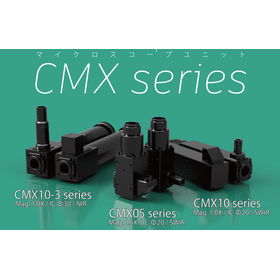
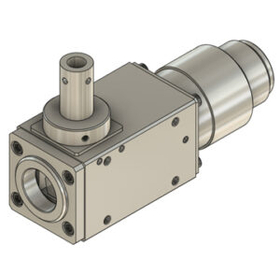
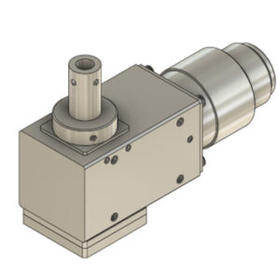
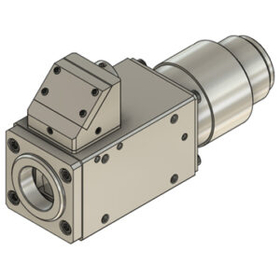
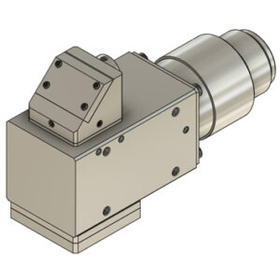
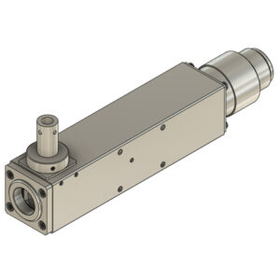
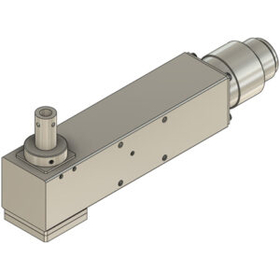
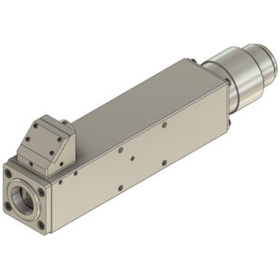
CMX Series for Semiconductor Testing

A microscope unit suitable for exterior and interior inspection of wafers in FA applications.

In the semiconductor industry, the inspection process involves detecting minute defects and foreign substances on wafers, which is a critical issue that affects product quality and yield. Particularly, as manufacturing processes become more advanced, there is a demand for inspections with higher precision. The CMX series supports a wide range of wavelengths from visible light to short-wave infrared, enabling high-precision image acquisition for both external and internal inspections of wafers. 【Application Scenarios】 - External inspection of wafers - Foreign substance inspection inside wafers - Quality control of semiconductor devices 【Benefits of Implementation】 - Improved quality through high-precision inspections - Enhanced yield - Reduced inspection time

  • ?マイクロスコープユニット『CMXシリーズ』 画像2.jpg
  • ?マイクロスコープユニット『CMXシリーズ』 画像3.jpg
  • ?マイクロスコープユニット『CMXシリーズ』 画像4.jpg
  • ?マイクロスコープユニット『CMXシリーズ』 画像5.jpg
  • ?マイクロスコープユニット『CMXシリーズ』 画像6.jpg
  • ?マイクロスコープユニット『CMXシリーズ』 画像7.jpg
  • ?マイクロスコープユニット『CMXシリーズ』 画像8.jpg
  • ?マイクロスコープユニット『CMXシリーズ』 画像9.jpg
  • ?マイクロスコープユニット『CMXシリーズ』 画像10.jpg
  • Microscope
  • Microscope

Added to bookmarks

Bookmarks list

Bookmark has been removed

Bookmarks list

You can't add any more bookmarks

By registering as a member, you can increase the number of bookmarks you can save and organize them with labels.

Free membership registration